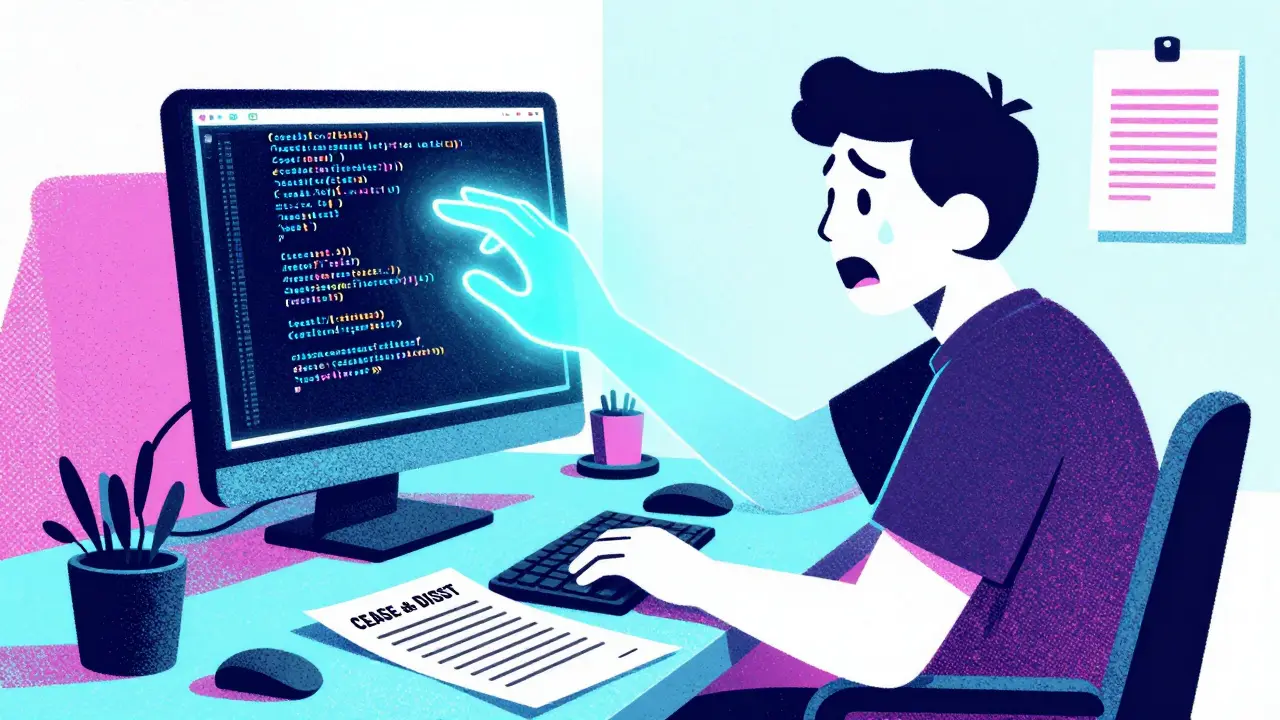
You typed a prompt into an AI tool. It spit out a working app in minutes. You hit publish. Then you got a cease-and-desist letter. Or worse, you realized someone else owns the core logic of your startup.
This isn’t a hypothetical nightmare scenario anymore. With the rise of vibe coding-a term popularized by computer scientist Andrej Karpathy in early 2025 to describe building software through natural language prompts rather than manual syntax-the line between creator and user has blurred. You are directing the vision, but the machine is writing the lines. So, who actually owns the result?
If you are building apps this way, you need to understand the legal landscape immediately. The default assumption that "I made it, so I own it" is dangerously outdated when AI agents are involved. This guide breaks down the messy reality of copyright, licensing, and intellectual property (IP) ownership for vibe-coded applications in 2026.
The Copyright Void: Who Owns AI-Generated Code?
Let’s start with the biggest hurdle: copyrightability. In the United States, the U.S. Copyright Office has taken a firm stance. They do not grant copyright protection to works created solely by machines or AI without human authorship. This position was solidified after high-profile cases involving AI-generated images, but the principle applies to code as well.
Here is the catch: if you use a vibe-coding tool like Cursor, Windsurf, or Replit’s Agent to generate a function, and you don’t modify it, that specific snippet likely has no copyright owner. It falls into the public domain. Anyone can copy it. You cannot sue them for stealing it because you never legally owned it in the first place.
However, the situation changes when you add significant human input. If you write the architecture, curate the outputs, debug the errors, and stitch together multiple AI generations into a cohesive whole, you may claim copyright over the selection and arrangement of those elements. You aren’t owning the raw code lines; you are owning the creative structure you built around them.
- Pure AI Output: No copyright protection. Public domain.
- Human-AI Collaboration: Potential copyright for the human-authored portions (prompts, edits, structure).
- Manual Code + AI Suggestions: Stronger copyright claim for the final integrated work.
To protect your vibe-coded app, document your process. Keep logs of your prompts, the iterations you rejected, and the manual fixes you applied. This evidence trail proves your "authorship" in the eyes of the law.
Licensing Traps: The Ghosts in the Machine
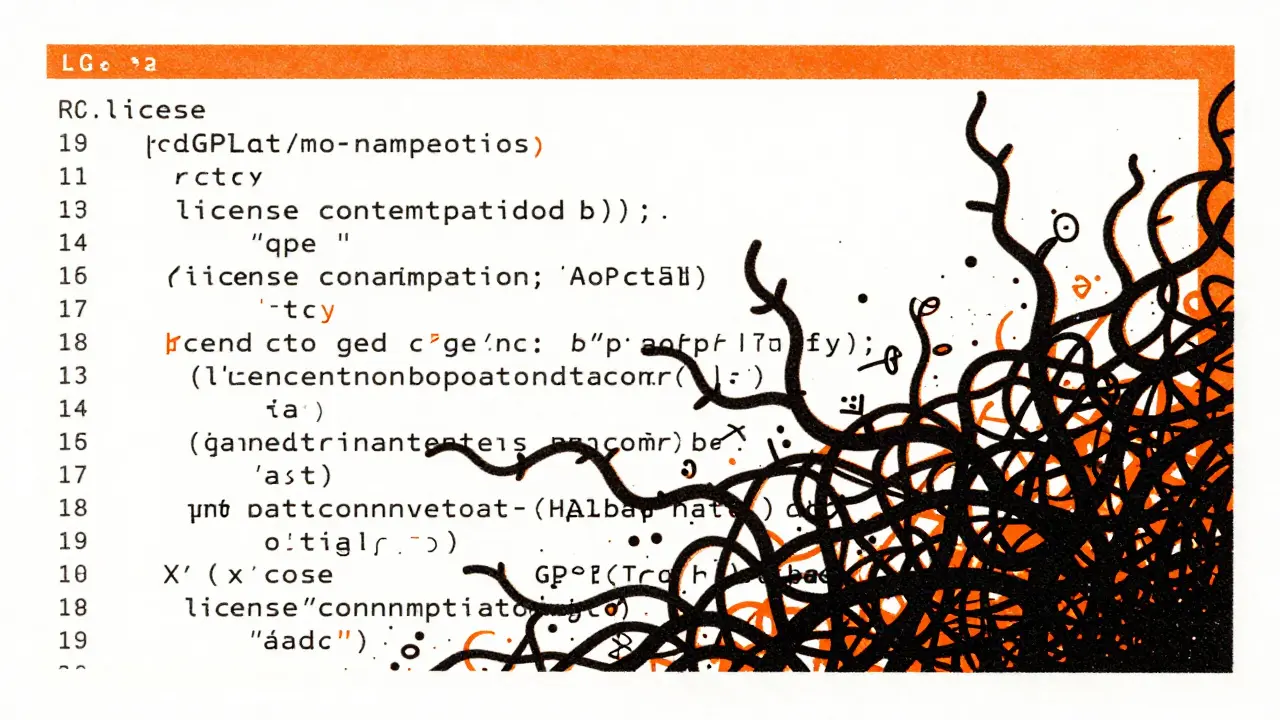
Copyright tells you who owns the code. Licensing tells you what you can do with it. And this is where vibe coding gets dangerous. Most large language models (LLMs) used in coding assistants were trained on vast datasets from GitHub, Stack Overflow, and other open-source repositories. These sources contain code under various licenses, including copyleft licenses like GPL (General Public License).
Here is the risk: If an AI model memorizes a substantial portion of GPL-licensed code and reproduces it in your app, you might inadvertently be distributing GPL code. Under strict GPL terms, this could force you to release your entire application’s source code publicly. This is known as "license contamination."
While current AI models use techniques to reduce verbatim memorization, they are not perfect. Studies have shown that LLMs can still output near-exact matches of training data when prompted specifically. When you vibe-code, you are essentially asking the AI to recall patterns. If those patterns include proprietary or heavily licensed code, you inherit the legal obligations attached to them.
| License Type | Key Restriction | Risk Level for Vibe Coding |
|---|---|---|
| MIT / Apache 2.0 | Permissive; requires attribution | Low |
| GPL v3 | Copyleft; forces derivative works to be open source | High |
| AGPL | Strong copyleft; applies even to network use | Very High |
| Proprietary | No redistribution allowed | Medium (Infringement Risk) |
To mitigate this, treat AI-generated code as untrusted until verified. Use static analysis tools to scan your codebase for known license headers or suspicious similarities to popular open-source libraries. Do not assume the AI platform indemnifies you against these risks.
Terms of Service: The Fine Print You Skipped
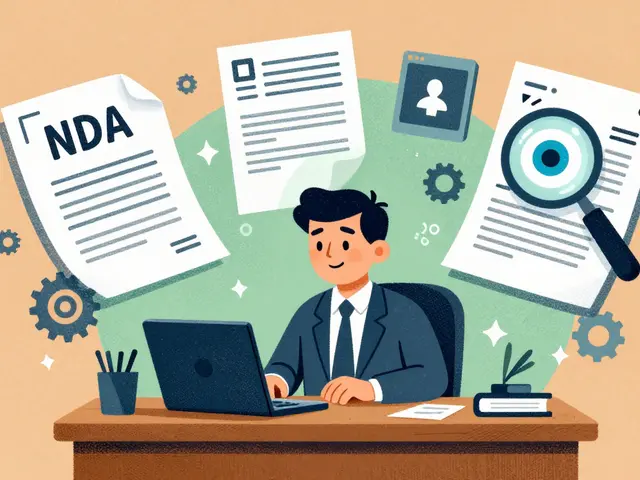
Before worrying about federal copyright law, look at the contract you signed with your AI provider. Platforms like GitHub Copilot, Anthropic’s Claude, and OpenAI’s ChatGPT have distinct Terms of Service (ToS) regarding output ownership.
In general, major providers state that you own the output generated by their models. For example, OpenAI’s ToS grants users full commercial rights to the content generated by GPT-4 and later models. Similarly, Anthropic asserts that users retain ownership of inputs and outputs. However, these rights are often conditional.
Some platforms reserve the right to use your prompts and outputs to improve their models. Others may restrict usage in certain industries (like healthcare or finance) unless you have an enterprise agreement. More importantly, most ToS clauses include a disclaimer: they provide the service "as is" and do not guarantee that the output is free of third-party claims. If your vibe-coded app infringes on someone else’s patent or trade secret, the AI company will not pay your legal bills.
Check these three things in your provider’s ToS: 1. **Ownership Clause:** Does it explicitly grant you IP rights? 2. **Indemnification:** Do they cover you if the code violates third-party rights? (Spoiler: Usually no.) 3. **Data Usage:** Can they use your unique business logic to train future models?
Patents vs. Copyright: A Different Beast
Copyright protects expression (the code itself). Patents protect ideas (the functionality). Vibe coding introduces a new layer of complexity here. In the US, patent law requires a human inventor. You cannot list an AI as an inventor. Therefore, if you conceive an idea and use AI to build it, you can still apply for a patent, provided you disclose the AI’s role in the creation process.
However, the bar for novelty is higher. Since AI models are trained on all existing public technical knowledge, there is a higher chance that your "innovative" solution already exists in some form within the training data. Before filing a patent for a vibe-coded invention, conduct a thorough prior art search. Assume the AI knows everything that has ever been published online. If it suggests a solution, it’s likely not novel enough for a patent unless you significantly modify it.
Practical Steps to Protect Your Vibe-Coded App
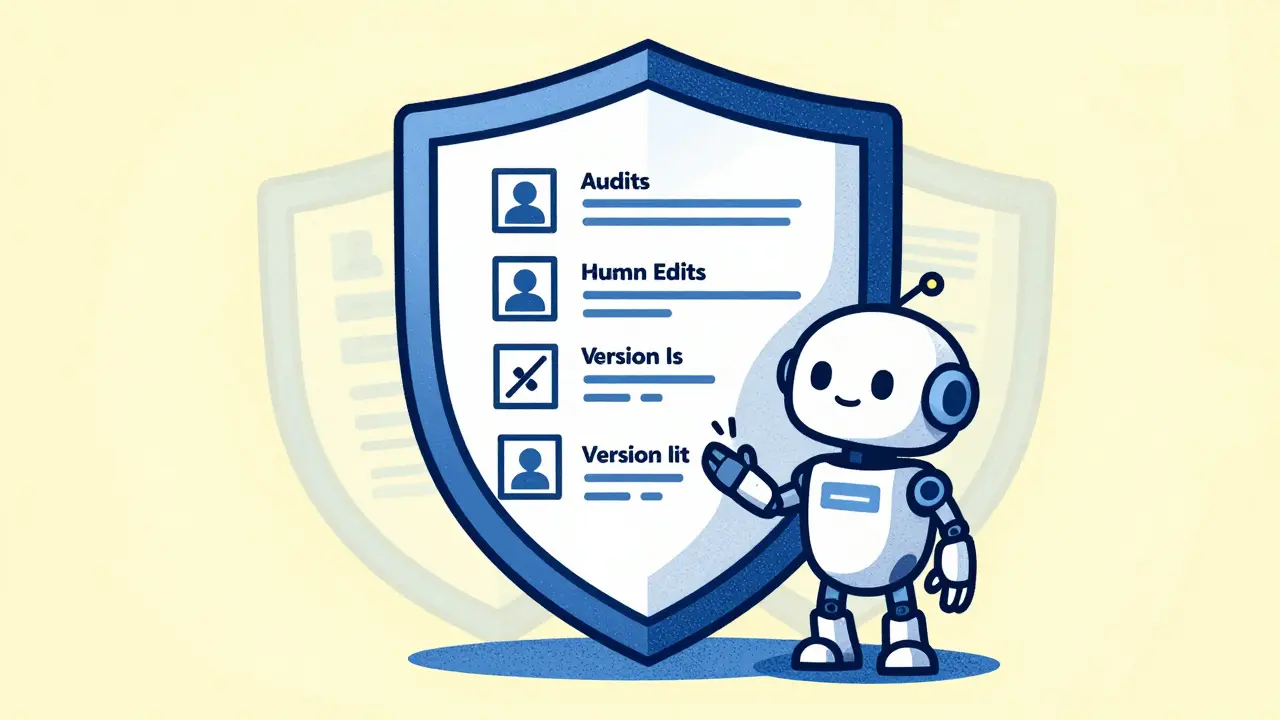
You don’t need to be a lawyer to stay safe, but you do need a system. Here is a checklist for developers using AI-assisted coding workflows in 2026:
- Audit Your Stack: Identify which libraries and frameworks your AI-generated code depends on. Check their licenses manually.
- Add Human Value: Never ship raw AI output. Refactor, comment, and optimize. Document your changes to establish human authorship.
- Use Enterprise Plans: If you are building a commercial product, consider paid tiers of AI coding tools. These often offer better data privacy guarantees and clearer IP terms.
- Scan for Leaks: Integrate tools like Black Duck or FOSSA into your CI/CD pipeline to detect unexpected open-source license violations.
- Keep Records: Save version control history showing your iterative process. Git commits with meaningful messages prove your development journey.
Remember, the goal isn’t to avoid AI-it’s to use it responsibly. Vibe coding democratizes development, allowing non-technical founders and junior devs to build complex products. But with that power comes the duty to respect the legal foundations of software.
The Future of IP in an AI World
Legislation is lagging behind technology. As of mid-2026, there is no global consensus on AI-generated IP. The EU’s AI Act focuses more on transparency and risk classification than copyright ownership. The US continues to rely on case-by-case interpretations by courts and the Copyright Office. China has its own evolving framework, sometimes granting limited rights to AI outputs if human intervention is proven.
Expect changes. Lawmakers are debating whether to create a new category of "machine-assisted works" with weaker protections. Until then, operate under the strictest interpretation: assume you only own what you personally wrote or significantly transformed. Treat AI as a powerful intern, not a co-founder.
Your vibe-coded app can be successful and profitable. Just make sure the foundation is legally sound before you scale.
Can I sell an app built entirely with AI vibe coding?
Yes, you can generally sell the app, but you may not be able to prevent others from copying the code. Since pure AI-generated code lacks copyright protection, competitors could replicate your functionality. However, you can protect your brand, database, and any human-written components through trademarks and contracts.
Does using GitHub Copilot mean I violate open-source licenses?
Not necessarily, but there is a risk. GitHub Copilot was trained on public GitHub repositories, including some with restrictive licenses. While Microsoft provides limited indemnification for enterprise users, individual users should verify that the suggested code doesn't replicate substantial portions of GPL-licensed projects. Always review the code before accepting suggestions.
Who owns the IP if I use an AI tool at my job?
Typically, your employer owns the IP created during work hours using company resources, including AI tools. Check your employment contract for "work-made-for-hire" clauses. Even if the AI generates the code, your act of prompting and integrating it is considered part of your job duties, transferring ownership to the company.
Is vibe coding legal in Europe under the AI Act?
Yes, vibe coding itself is legal. The EU AI Act regulates high-risk AI systems (like those used in hiring or healthcare) but does not ban generative coding tools. However, you must ensure transparency if your app uses AI to interact with users, and you remain liable for any discriminatory or unsafe outcomes produced by your vibe-coded application.
How do I prove I contributed enough human effort for copyright?
Document your creative choices. Keep records of your initial prompts, the variations you tested, and the manual edits you made. Show that you curated the output, fixed bugs, and structured the application logic. Courts look for "creative control" and "intellectual contribution" beyond simple instruction.

Jason Townsend
25 May, 2026 - 03:37 AM
they want you to think you own the code but its all a trap
the ai companies are harvesting your prompts to build the next generation of control algorithms
you are not the creator you are the data source for their surveillance state
wake up sheeple
Antwan Holder
25 May, 2026 - 20:23 PM
we stand at the precipice of meaning itself
when the machine writes the soul what remains of the human spirit
is it art or is it just math wearing a mask of creativity
i feel the void staring back at me every time i hit enter
the silence of the compiler is louder than any scream
we are losing our grip on reality one prompt at a time
it is tragic and beautiful and terrifying all at once
do we even deserve to create anymore if we cannot understand what we are making
the ghost in the machine is us and we are haunting ourselves
this is the end of the romantic era of coding
prepare for the cold hard logic of the algorithmic age
Angelina Jefary
27 May, 2026 - 15:38 PM
its obvious that the government is using these vibe coding tools to track every single developer who tries to innovate outside their approved frameworks
notice how they keep changing the terms of service right before major elections
its not about copyright its about control
if you dont document your prompts you are admitting guilt
they will come for your laptop next
Jennifer Kaiser
28 May, 2026 - 01:39 AM
there is a profound ethical weight to this discussion that goes beyond mere legal technicalities
we must consider the human element in creation
if we outsource our thinking do we lose our empathy for the users we serve
i believe that true ownership comes from intention not just syntax
we need to have more conversations about how this affects junior developers who are trying to find their voice
let us support each other in navigating this complex landscape with kindness and care
technology should serve humanity not replace its essence
TIARA SUKMA UTAMA
29 May, 2026 - 15:28 PM
so you can get sued for typing words now?
that sounds like a scam to me
why would anyone pay for enterprise plans when the free stuff works fine
just ignore the lawyers and ship it
Jasmine Oey
30 May, 2026 - 10:23 AM
oh honey please
only people who actually understand code think they can just vibe their way to success
its so cute that you think typing prompts makes you a developer
real engineers know that structure and discipline are everything
you are playing with fire and calling it innovation
how adorable
Marissa Martin
31 May, 2026 - 23:09 PM
i just feel bad for everyone who gets hurt by this
it seems like such a chaotic time to be building things
i hope everyone stays safe and follows the rules
maybe we should just stick to simpler hobbies
James Winter
2 June, 2026 - 16:53 PM
this whole vibe coding thing is weak
real programmers write real code
canada does not need this american nonsense
build something solid or go home
stop relying on machines
Aimee Quenneville
2 June, 2026 - 19:15 PM
lol look at everyone getting so worked up over some text generation
its just code bro chill out
who cares if its public domain as long as it runs right
but sure lets pretend we are all lawyers now
whatever floats your boat i guess