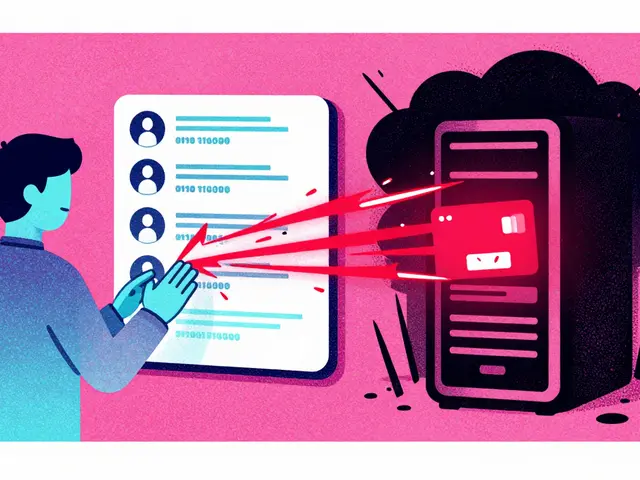
Imagine deploying a new customer service chatbot that accidentally shares a client’s credit card number or gives medical advice it isn’t licensed to provide. In the world of artificial intelligence, these aren't just hypothetical glitches; they are existential risks. This is why production guardrails are no longer optional add-ons-they are the backbone of modern software governance. As we move through 2026, the line between "nice-to-have" security and "must-have" compliance has vanished. Organizations are realizing that without strict boundaries, even the most advanced models can become liabilities in seconds.
The Core Problem: Unchecked Model Behavior
When you build an application using large language models (LLMs), you are essentially handing the keys to a probabilistic engine. The model predicts the next word based on patterns, not logic. It doesn't inherently know what is confidential, biased, or legally prohibited. Without intervention, it might hallucinate facts, leak training data, or fall victim to prompt injection attacks where users trick the system into revealing its internal instructions.
This is where the concept of guardrails comes in. They act as technical and procedural controls that establish hard boundaries for system behavior. Think of them as the seatbelts and airbags of your AI infrastructure. They monitor, filter, and govern inputs before they reach the model and inspect outputs before they reach the user. Their primary job is simple but critical: ensure that every interaction aligns with your organizational standards, legal obligations, and safety policies.
How Guardrails Operate in Real-Time
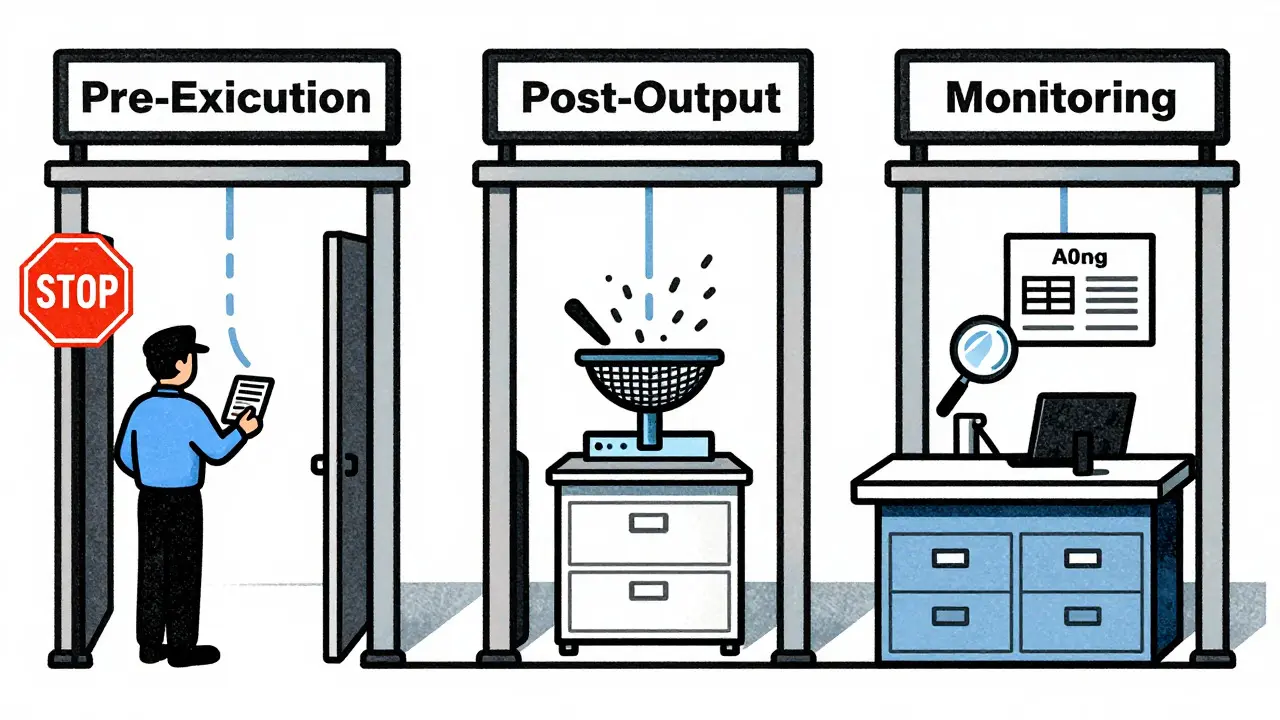
Effective guardrails don't wait until after a mistake happens. They operate continuously across three distinct stages of the request-response cycle. Understanding this flow is essential for anyone managing production environments.
- Pre-Execution Validation: Before the model ever sees the user's input, the guardrail inspects it. It checks for prompt injection attempts (hidden commands trying to override the system), signs of data exfiltration (users trying to pull out sensitive records), and basic policy violations like profanity or irrelevant topics. If the input fails this check, it is blocked immediately, saving compute costs and preventing errors.
- Post-Output Inspection: Once the model generates a response, the guardrail intercepts it. It scans for unsafe suggestions, biased language, formatting errors, or content that breaks compliance rules. For example, if a financial bot suggests an investment strategy that violates regulatory guidelines, the guardrail catches it here.
- Real-Time Monitoring & Logging: Every interaction is logged. This isn't just for curiosity; it's for audit trails. If a specific type of query keeps triggering blocks, it signals a need to refine the rules. These logs also help detect anomalies in agent behavior over time.
The good news? Modern frameworks like Guardrails AI have optimized this process to add negligible latency-typically only 10 to 50 milliseconds per request. By using asynchronous validation, you get enterprise-grade security without making your app feel slow to the end-user.
Compliance Gates: Meeting Regulatory Demands
In 2026, "security" means more than just stopping hackers. It means satisfying regulators. Different industries face different hurdles, and your guardrails must adapt accordingly. Let’s look at how major frameworks translate into technical requirements.
| Framework | Primary Focus | Guardrail Implementation Requirement |
|---|---|---|
| EU AI Act | Risk Classification & Transparency | High-risk systems require conformity assessments. Generative AI needs transparency labels. Post-market monitoring is mandatory. |
| HIPAA | Healthcare Data Privacy | Encrypt Protected Health Information (PHI) in transit/rest. Limit access to minimum necessary PHI. Log all PHI access events. |
| NIST AI RMF | Risk Management Lifecycle | Map risks across Govern, Map, Measure, Manage functions. Implement controls proportional to risk level. Maintain documentation. |
| ISO 42001 | AI Management Systems | Establish governance structure. Conduct ongoing risk assessments. Document objectives and constraints clearly. |
For instance, under the EU AI Act, which became fully enforceable in 2025, organizations must classify their AI systems by risk level. If you're running a high-risk system, such as one used for hiring decisions or credit scoring, you need rigorous documentation and continuous monitoring. Your guardrails must automatically flag any output that deviates from approved parameters and log these deviations for auditors. Similarly, in healthcare, HIPAA compliance demands that no Protected Health Information leaves the secure environment without explicit encryption and access control verification.
Building a Robust Risk Assessment Workflow
You can't protect what you haven't defined. A common mistake teams make is jumping straight into coding guardrails without understanding their unique risk landscape. Here is a systematic approach to assessing risk before implementation:
- Inventory: Catalog every model, agent, and API endpoint in your stack. You can't secure a shadow IT deployment if you don't know it exists.
- Classify: Determine the sensitivity level of the data each system handles. Is it public marketing copy? Or is it restricted financial data?
- Assess: Identify potential harms. Could a bad output lead to financial loss, reputational damage, or legal penalties?
- Prioritize: Rank these risks by severity and probability. Focus your highest-effort guardrails on the highest-impact scenarios.
- Mitigate: Implement guardrails proportional to the risk. Don't use sledgehammers for nuts; don't use paperclips for hammers.
- Monitor: Track effectiveness. Are false positives blocking legitimate work? Are threats slipping through?
- Report: Communicate status to stakeholders and regulators regularly.
This workflow ensures that your security efforts are efficient and targeted. It prevents the common pitfall of "alert fatigue," where security teams ignore warnings because too many are trivial.
Testing and Validation: Breaking It Before Users Do
Assuming your guardrails work perfectly out of the box is dangerous. Adversarial actors are constantly finding new ways to bypass filters. That’s why testing is non-negotiable.
Red Teaming Exercises involve simulating attack scenarios. Have a team of engineers try to inject malicious prompts, trick the model into revealing system instructions, or extract private data. This helps identify coverage gaps in your rules. For example, you might find that while your guardrail blocks direct questions about salaries, it fails when the question is phrased indirectly through a role-play scenario.
Penetration Testing goes deeper, assessing authentication and authorization controls. Can a low-level user escalate privileges through the AI interface? Does the system properly validate tokens before executing tool calls?
Performance Testing ensures that your security layers don't cripple user experience. Measure the latency added by each validation step. If your pre-execution check adds 200ms and your post-output check adds another 300ms, your total delay might be unacceptable for real-time applications. Aim for sub-50ms overhead wherever possible.
Operational Efficiency: Automating the Boring Stuff
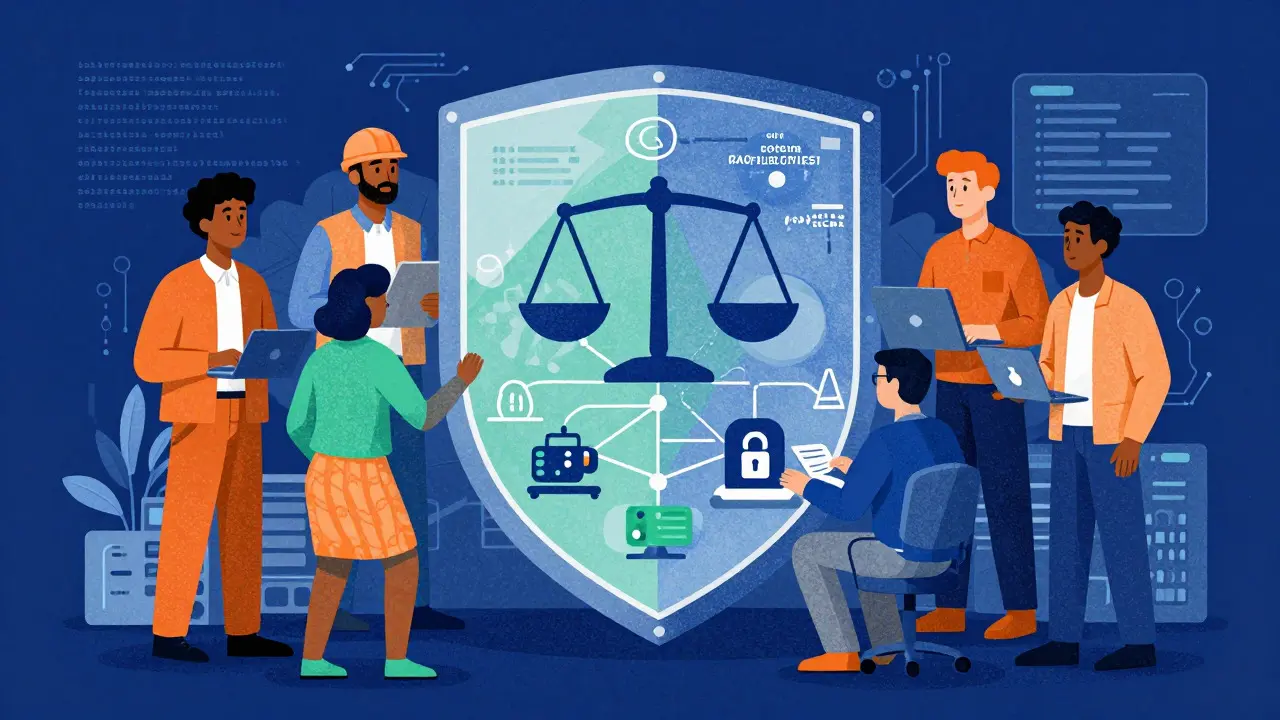
One of the biggest benefits of mature guardrail systems is operational efficiency. Instead of having lawyers and security engineers manually review every new feature launch, you automate policy enforcement at runtime.
Consider a finance deployment. Every transaction suggestion made by an AI agent is logged. High-risk actions, like transferring funds above a certain threshold, are routed to humans for approval rather than being executed autonomously. Pre-execution policy checks validate every tool call, confirming that the user has permission and that the action complies with business rules. This reduces back-and-forth between development and security teams, allowing projects to launch faster while maintaining consistent controls.
Moreover, compliance documentation generates automatically from your audit logs. When auditors ask for proof that PHI was handled correctly last quarter, you don't spend weeks digging through emails. You export the relevant logs, which already contain the allow/deny rationale for every interaction.
Dynamic Policy Evaluation in Context
Static rules fail in dynamic environments. A good guardrail system evaluates context. It considers who the user is, where they are located, what device they’re using, and what time it is. It also looks at the agent’s behavior history. If an account suddenly starts accessing files it never touched before, anomaly detection flags it-even if the individual requests look normal.
Data sensitivity classification plays a huge role here. Public data might pass through light filters, while restricted data triggers heavy scrutiny. By scoping retrieval per user or role, you ensure that employees only see what they need to do their jobs, minimizing exposure if an account is compromised.
Next Steps for Implementation
If you are starting from scratch, begin with a pilot project. Choose a low-risk use case, define clear success metrics (like MTTD under 5 minutes and false positive rates below 2%), and implement basic input/output validation. Then expand gradually. Remember, guardrails are not set-and-forget configurations. They require regular updates as models evolve and threat landscapes shift. Treat them as living components of your architecture, subject to the same rigorous review cycles as your core codebase.
What is the difference between technical and operational guardrails?
Technical guardrails sit directly in the model pipeline, analyzing data to detect dangerous patterns, clean outputs, and prevent unsafe responses like exposing system prompts. Operational guardrails focus on enforcing broader legal and regulatory compliance, translating obligations into mechanisms like logging every interaction, flagging high-risk transactions for human review, and maintaining traceability through approval flows.
How much latency do production guardrails add?
Modern frameworks are designed to minimize impact. Typically, they add only 10 to 50 milliseconds to response times. This is achieved through asynchronous validation, where checks happen in parallel or in highly optimized microservices, ensuring that user experience remains smooth while security stays robust.
Why is red teaming important for AI security?
Red teaming actively attempts to break your guardrails by simulating real-world attacks like prompt injection or data exfiltration. Since LLMs are probabilistic, they can often find loopholes that static rule sets miss. Regular red team exercises help identify these coverage gaps before malicious actors exploit them in production.
What metrics should I track to measure guardrail effectiveness?
Key metrics include Mean Time to Detect (MTTD), targeting less than 5 minutes; Mean Time to Respond (MTTR), aiming for under 15 minutes; False Positive Rate, which should stay below 2% to avoid frustrating users; and Agent Audit Coverage, ensuring 100% of AI actions have complete audit trails for compliance purposes.
Do guardrails replace human oversight?
Not entirely. While guardrails automate routine policy checks and block obvious threats, high-risk operations still require human confirmation. For sensitive actions like data deletion or large financial transfers, guardrails route requests to humans for review. They augment human oversight by filtering noise and highlighting anomalies, allowing experts to focus on strategic threats.