Imagine building a chatbot for your company. You want it to launch globally next month. But before you hit "deploy," you have to figure out if your data is legal in Europe, if your model needs a specific label in China, or if the US government is suddenly watching your back door. That is the reality for anyone working with Generative AI is artificial intelligence systems capable of creating new text, images, video, and audio from prompts. By mid-2026, the regulatory landscape has shifted from loose guidelines to hard laws. While every major economy wants to win the AI race, they are using very different rules to get there. This creates a complex puzzle for businesses trying to operate across borders.
The Big Picture: Where We Stand in 2026
Regulation isn't just about stopping bad things; it's about defining how AI fits into society. The pace of change is startling. According to the St. Louis Fed, global generative AI adoption hit 54.6% in 2025, jumping 10 percentage points in just one year. To put that in perspective, personal computers took decades to reach similar work adoption rates. Because the technology spread so fast, governments rushed to catch up. In 2024 alone, U.S. federal agencies introduced 59 AI-related regulations, double the previous year. Globally, legislative mentions of AI rose by 21.3% across 75 countries. It’s no longer a niche tech issue; it’s a core part of business infrastructure.
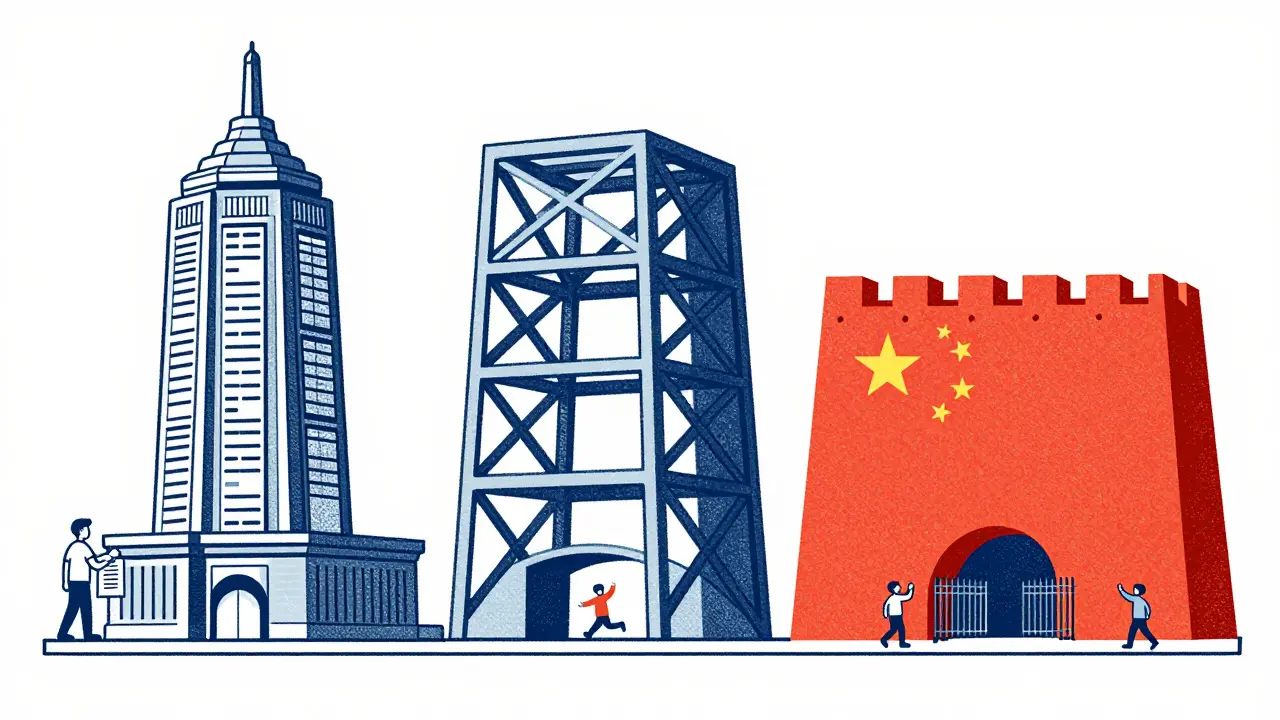
The main players-the EU, the US, and China-have taken distinct paths. The European Union went first with comprehensive legislation. The United States pulled back on federal mandates to boost innovation. China focused heavily on content control and data sovereignty. These three approaches form the triangle of modern AI governance, and understanding them is essential for any organization planning to scale.
Europe: The Rule-Setter
The EU AI Act is a comprehensive risk-based regulation for artificial intelligence in the European Union. It came into full effect in August 2025 and remains the most detailed framework in the world. Instead of banning AI, it categorizes it by risk. Low-risk apps (like spam filters) face minimal rules. High-risk apps (like hiring tools or medical devices) need rigorous testing. General-purpose models that could cause systemic harm, like large language models, require transparency and copyright compliance.
For companies, this means paperwork. If you deploy a high-risk AI system in Germany or France, you must document your training data, assess bias, and allow human oversight. The EU also pushed for a Code of Practice to help developers self-regulate on technical standards. Critics argue it’s too heavy for startups, but supporters say it sets a global baseline for safety. If you’re selling to Europe, assume the highest level of scrutiny applies to your product.
United States: Innovation First
The U.S. approach looks very different. In January 2025, the administration issued Executive Order 14179, which revoked the previous 2023 order on "Safe, Secure, and Trustworthy" AI. The new directive focuses on removing federal barriers to keep the U.S. dominant in AI development. There is no single federal law governing all AI. Instead, regulation happens sector by sector. The Federal Trade Commission (FTC) watches for deceptive practices. The Department of Labor looks at workplace impacts. State laws fill the gaps, with places like California and New Jersey enacting their own specific rules.
This fragmented approach gives flexibility but creates confusion. A company might be compliant in Texas but non-compliant in California. The goal is speed. By avoiding a blanket federal ban or strict licensing regime, the U.S. hopes to let companies iterate faster than competitors. However, this also means consumers rely more on market forces and litigation rather than upfront regulatory protection.
China: Control and Sovereignty
China’s Interim Measures for the Management of Generative Artificial Intelligence Services took effect in August 2023, making it one of the first direct administrative regulations for GenAI. The focus here is on stability and national security. Providers must ensure "lawful data use," meaning training data must be legally sourced and user consent obtained. Content moderation is strict; AI-generated material must not undermine state authority or violate socialist core values.
A key feature is labeling. AI-generated content often requires visible watermarks or metadata tags to distinguish it from human-made work. Data localization is another major hurdle. Data used to train models for Chinese users often must stay within China’s borders. For global companies, this creates a technical headache: maintaining separate data pipelines for China versus the rest of the world. It’s a trade-off between market access and operational complexity.
Where They Agree: Convergence Points
Despite the differences, some trends are universal. Transparency is the biggest one. Virtually every major framework now requires some form of disclosure when AI is involved. Whether it’s a label on an image or a notice in a chat window, users expect to know they are interacting with a machine. Risk management is another shared focus. Companies report managing an average of four AI-related risks now, up from two in 2022. Privacy, explainability, and reputation are top concerns.
International bodies are also pushing for alignment. The OECD, UN, and African Union released governance frameworks in 2024 emphasizing responsible AI principles. While these aren’t binding laws, they influence national policies. There’s a growing consensus that AI needs provenance (where it comes from), explainability (how it works), and accountability (who is responsible when it fails). This shift treats AI less as a novelty and more as critical infrastructure, like electricity or the internet.
Practical Challenges for Businesses
Knowing the rules is one thing; following them is another. Compliance is expensive and time-consuming. McKinsey found that organizations take an average of 6.2 months to establish effective AI governance frameworks. Skills gaps are real; 78% of organizations now require dedicated AI compliance officers, up from 32% in 2023. Legacy systems don’t always play nice with new AI tools, citing integration issues as a top barrier.
Here is a quick comparison of the major regulatory approaches:
| Jurisdiction | Key Framework | Primary Focus | Data Requirements | Content Labeling |
|---|---|---|---|---|
| European Union | EU AI Act | Risk-based safety & transparency | High documentation standards | Mandatory for high-risk & GPAI |
| United States | Executive Order 14179 / Sectoral Laws | Innovation & competitive dominance | Varies by state/sector | Voluntary or case-by-case |
| China | Interim Measures (2023) | Content control & data sovereignty | Strict localization & lawful sourcing | Mandatory watermarks/metadata |
Navigating these differences requires a robust strategy. Many companies adopt a "highest common denominator" approach, designing their AI systems to meet the strictest requirements (usually EU) and then adapting downward for other markets. Others build modular architectures where data flows are separated by region. Neither is cheap, but both are necessary to avoid legal pitfalls.
What Comes Next?
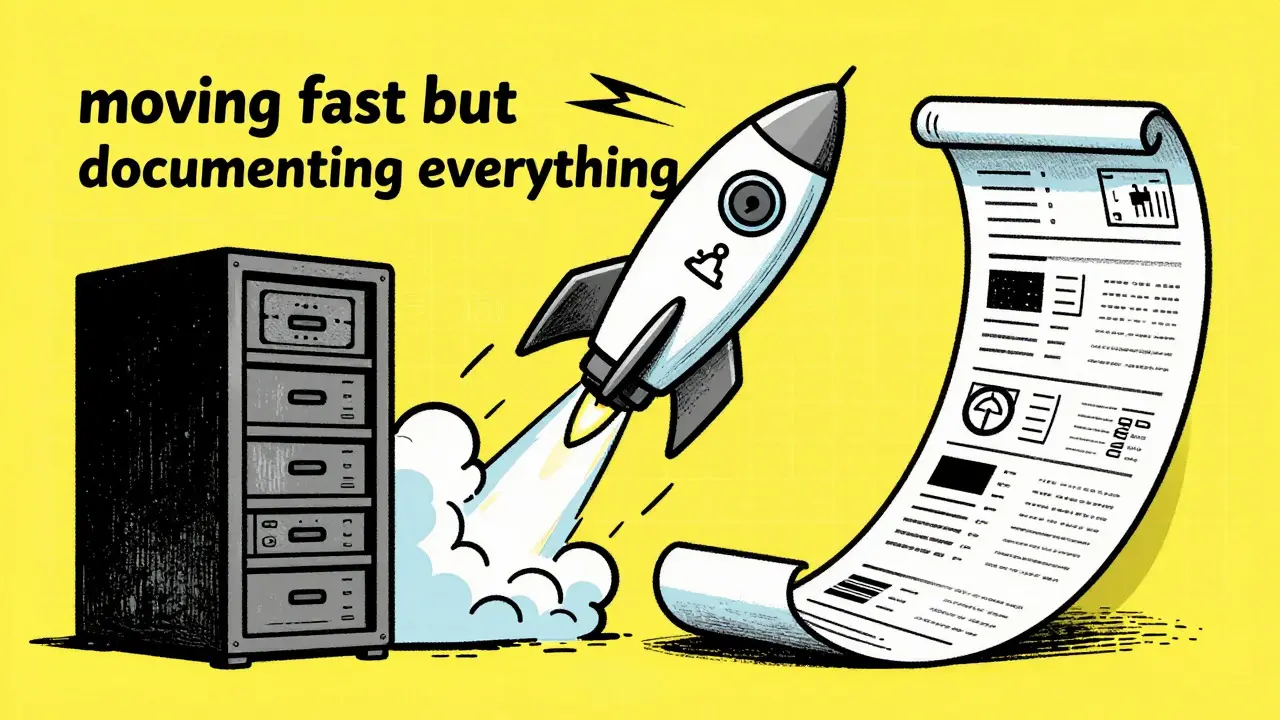
Experts predict increased harmonization of transparency rules in the coming years. Dr. Yoshua Bengio suggests we may see the first major cross-jurisdictional enforcement actions by 2027, where a single AI system violates multiple countries' laws simultaneously. Enforcement will get tougher. Initial frameworks are moving from proposal to implementation, and regulators are gaining experience. For businesses, this means the era of "move fast and break things" is ending. The new mantra is "move fast, measure impact, and document everything."
The gap between recognizing risks and taking action is closing. Governments are showing urgency, and companies are responding with investment. Global AI governance funding is surging, with nations pledging billions to secure their AI infrastructure. Whether this leads to a unified global standard or a patchwork of conflicting rules remains to be seen. But one thing is clear: AI regulation is here to stay, and it’s becoming a core part of business strategy.
Is the EU AI Act applicable to US companies?
Yes, if you offer AI products or services to customers in the EU, the AI Act applies regardless of where your company is headquartered. This extraterritorial scope makes it crucial for global firms to comply with EU standards even if they don't have a physical office in Europe.
What is the biggest difference between US and EU AI regulation?
The EU uses a prescriptive, risk-based law that defines specific obligations for different types of AI. The US relies on a fragmented, sector-specific approach with fewer federal mandates, prioritizing innovation and leaving much of the rule-making to states and existing consumer protection laws.
How does China regulate data for generative AI?
China requires "lawful data use," which includes obtaining user consent and ensuring legal sourcing. Additionally, data localization rules often require that data processed for Chinese users stays within China, forcing companies to maintain separate data infrastructures for the Chinese market.
Do I need to label AI-generated content everywhere?
In China, labeling is mandatory via watermarks or metadata. In the EU, it is required for high-risk and general-purpose AI models under certain conditions. In the US, it is largely voluntary or dependent on specific industry regulations. Best practice is to implement transparent labeling globally to build trust and prepare for stricter future rules.
What is "sovereign AI" in a regulatory context?
Sovereign AI refers to keeping data, models, and compute resources under controlled national or organizational boundaries. It has become a major regulatory concept as countries seek to reduce dependence on foreign AI infrastructure and ensure their digital assets remain subject to local laws.