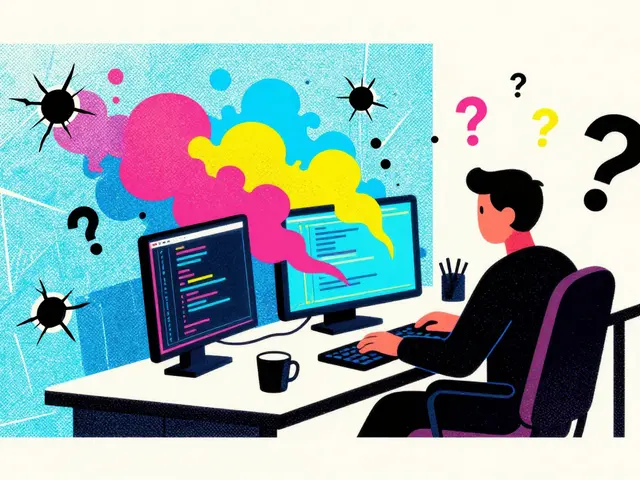
You shipped a feature in two hours that used to take two weeks. The demo looked slick, the client was impressed, and you felt like a wizard. Then production broke. Not because the logic was wrong, but because the AI hallucinated a security check, or hardcoded an API key, or missed a null pointer that would have been obvious if you’d written it by hand. This is the vibe coding paradox. It promises infinite speed, but delivers hidden debt.
Vibe coding isn’t just using autocomplete. It’s a shift where you describe intent in natural language, and large language models (LLMs) generate the implementation. You stop thinking about syntax and start thinking about outcomes. For many, this feels like magic. But as of late 2025, the industry is waking up to the bill. While startups are sprinting ahead, enterprises are hitting walls. How do you keep the velocity without crashing the car? The answer isn’t to slow down. It’s to build guardrails that don’t feel like brakes.
The Real Cost of "Forget the Code"
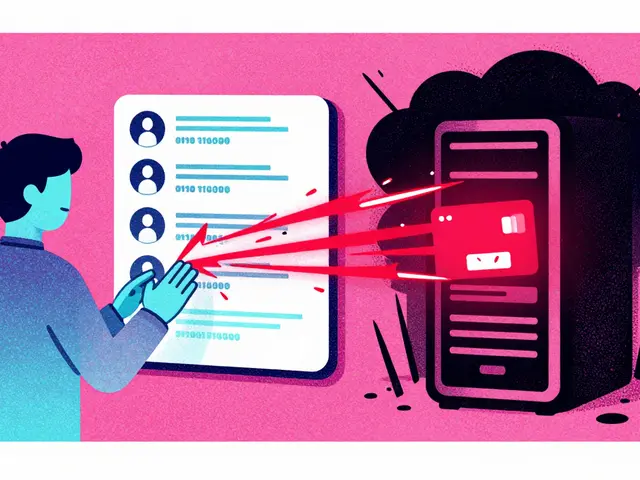
Let’s look at the numbers. They’re stark. According to Coredna’s November 2024 case study, initial prototyping time for e-commerce features dropped by 73% when teams adopted vibe coding workflows. That’s massive. You can validate ideas before they die in backlog purgatory. But there’s a catch. Xygeni’s vulnerability scanning data from April 2025 revealed that 68% of AI-generated code samples contained security issues. Missing input validation showed up in 32% of cases. Insecure API patterns appeared in 27%. These aren’t minor bugs; they’re entry points for attackers.
The tension here is real. Martin Fowler, Chief Scientist at Thoughtworks, put it best in his April 2025 article: “I find myself constantly making little risk assessments about whether to trust the AI.” He’s right. When you accept a block of generated code, you’re betting your reputation on a model’s probabilistic output. If you don’t understand *why* the code works, you can’t fix it when it breaks. And it will break.
| Metric | Traditional Dev | Vibe Coding | Risk Factor |
|---|---|---|---|
| Prototyping Speed | Baseline | 4.2x Faster | Low |
| Functional Correctness (Simple) | 95% | 87% | Medium |
| Functional Correctness (Complex) | 90% | 43% | High |
| Security Vulnerabilities | 12% | 68% | Critical |
| Refactoring Effort (6 Months) | 1.0x | 2.8x | High |
Where Vibe Coding Shines (And Where It Fails)
Not all code is created equal. Vibe coding excels in low-risk, high-volume tasks. Think UI components, CRUD operations, or internal admin tools. Supernova’s case study noted a 5.3x speed increase for UI implementations. Junior developers, often held back by syntax hurdles, can achieve 82% of senior developer output velocity on these tasks according to Okoone’s productivity study. This democratizes development. A product manager can now prototype a dashboard without waiting three sprints for engineering bandwidth.
But scale this to complex business logic, and things fall apart. CSET’s January 2025 study showed functional correctness drops to 43% for multi-file coordination tasks. Why? Context windows. Most LLMs operate within 8,000 to 32,000 tokens. They don’t see the whole system architecture. They see snippets. So, they generate code that looks right locally but breaks globally. Financial services firms saw 2.3x more compliance violations during audits when relying heavily on AI-generated submissions, per Deloitte’s Q2 2025 assessment. One JPMorgan developer noted their compliance team rejected 92% of AI submissions due to missing audit trails.

Governance Without Bottlenecks
If you treat security as a final gate, you’ll kill velocity. Knostic’s May 2025 security report found that only 38% of enterprise deployments had automated vulnerability checks at the commit stage. That’s too late. By then, you’ve already accumulated technical debt. Successful teams integrate governance into the workflow itself. GitHub launched Copilot Enterprise with native governance features in May 2025, piloting Knostic’s security scanning at Fortune 500 sites. This shifts left. Security scans happen as you type, not after you merge.
Ownership matters, too. Coredna’s framework recommends assigning a single code owner per project. 100% of successful deployments did this. When everyone owns the code, no one does. With vibe coding, where code can be generated in seconds, accountability must be explicit. Who reviewed this prompt? Who verified the output? If you can’t answer that, you’re flying blind.
The Human-in-the-Loop Mandate
You can’t automate judgment. Dr. Sarah Rajkumar, Director of AI Security Research at CSET, warned the Senate AI Caucus in January 2025 that “68% of AI-generated code samples contained vulnerabilities that would bypass standard SAST tools.” Static analysis tools look for known patterns. AI generates novel, sometimes weird, patterns. You need human eyes. But not just any eyes-experienced ones who know what “good” looks like.
This doesn’t mean reviewing every line. It means strategic review. Martin Fowler suggests dedicating 15-20% of development time to AI output review. That’s manageable. It’s less than writing the code yourself. The goal is to catch architectural mismatches and security gaps early. Novigi’s CTO Craig Murphy cautioned that “prototypes are not production systems.” Treating them as such creates operational fragmentation. Use vibe coding to explore, but use traditional rigor to finalize.
Regulatory Headwinds Are Coming
The free-for-all era is ending. The EU’s AI Act amendments, effective January 2026, require demonstrable human oversight for AI-generated code in critical infrastructure. The SEC’s April 2025 guidance mandates complete audit trails for AI-assisted financial systems. If you’re in healthcare, finance, or public sector, you can’t ignore this. Adoption rates reflect this pressure: only 18% in healthcare and 12% in financial services, compared to 92% in seed-stage startups.
Forrester predicts that 73% of enterprises will implement “vibe coding in controlled sandboxes” by mid-2027. This means limiting where AI can write code. Maybe it’s allowed in frontend components but blocked in payment processing modules. Define your “Red Zones.” As Coredna puts it, “the moment a vibe-coded tool touches real data, governance isn’t optional.”
Practical Steps for Safe Rollout
So, how do you actually do this without creating chaos? Here’s a playbook based on current best practices:
- Start with Low-Stakes Projects: Internal tools, dashboards, and non-critical APIs. Avoid core transaction engines initially.
- Standardize Prompts: Use libraries like Supernova’s, which 42% of enterprise users have adopted. Consistent prompts yield consistent outputs.
- Integrate Security Early: Plug scanners into your IDE. Don’t wait for CI/CD. Real-time blocking prevents bad habits.
- Track Technical Debt: Measure refactoring effort. If projects require 2.8x more cleanup after six months, your process is broken.
- Train on Validation: Developers need skills in prompting and AI output verification. Basic proficiency takes 2-3 weeks; mastery takes 4-6 months.
Remember the startup that reduced time-to-prototype by 80% but incurred $475,000 in remediation costs? They skipped step four. They didn’t track the debt until it crushed them. Don’t be that startup.
What exactly is vibe coding?
Vibe coding is a development methodology where engineers use natural language prompts to instruct AI assistants (like GitHub Copilot or ChatGPT) to generate code. The developer focuses on the desired outcome and logic flow rather than manual syntax, effectively "forgetting" the code exists during the generation phase.
Is vibe coding safe for production environments?
It depends on the context. For simple, isolated tasks, it is generally safe with proper review. However, for complex business logic or regulated sectors (finance, healthcare), it introduces significant risks. Xygeni data shows 68% of AI-generated code contains vulnerabilities. It requires strict governance, automated security scanning, and human oversight to be production-ready.
How much faster is vibe coding compared to traditional development?
Speed gains vary by task complexity. Coredna reports a 73% reduction in initial prototyping time. For UI components, speeds can be 5.3x faster. However, for complex multi-file logic, functional correctness drops to 43%, potentially slowing down debugging and refactoring phases, negating initial speed benefits.
What are the biggest risks of adopting vibe coding?
The primary risks are security vulnerabilities (missing input validation, insecure API usage), technical debt accumulation (requiring 2.8x more refactoring effort), and compliance failures due to lack of audit trails. Additionally, junior developers may accept code they don't fully understand, leading to "spaghetti code" that is difficult to maintain.
Do I need new skills to manage vibe coding rollouts?
Yes. While traditional development knowledge remains relevant (87% overlap), teams need training in prompt engineering, AI output validation, and security governance. Mastering secure implementation typically requires 4-6 months of guided practice beyond basic proficiency.