Imagine you are managing a fleet of delivery trucks. A sudden road closure hits your main highway at 8 AM. In the old days, your dispatcher would scramble, calling drivers, checking maps manually, and hoping for the best. Today, Generative AI is a class of artificial intelligence that creates new content and scenarios based on existing data patterns, transforming this chaos into a calculated response within seconds. It doesn't just flag the problem; it generates three alternative routes, predicts the cost impact of each, drafts an apology email to the customer, and updates the warehouse schedule-all before your coffee gets cold.
This isn't science fiction. It's the current reality for logistics leaders who have moved beyond basic automation. While traditional AI analyzes what happened, generative AI simulates what could happen and creates solutions for it. The stakes are high. According to a March 2023 KPMG survey, 77% of industry respondents agreed that generative AI has a highly impactful role in logistics. Companies adopting these tools early report reducing logistics costs by 15% and boosting service levels by 65%. If you're still relying on static spreadsheets or rigid rule-based systems, you're likely leaving money on the table and frustrating customers with generic, delayed updates.
Dynamic Route Planning That Thinks Ahead
Route optimization is where generative AI first makes its mark. Traditional routing solvers are great at finding the shortest path between point A and B based on fixed rules. But they struggle when variables change mid-route. Generative AI adds a layer of creativity and adaptability. It ingests real-time streams-GPS traffic data, weather forecasts, fuel price fluctuations, and even driver fatigue metrics-to generate dynamic route scenarios continuously.
Take UPS’s On-Road Integrated Optimization and Navigation (ORION) system as a baseline. While ORION handles millions of routes, generative AI enhances it by solving specific, everyday problems that rigid algorithms miss. For instance, if a storm is predicted to hit a region in two hours, generative AI doesn't just reroute now; it simulates the traffic buildup over the next hour and adjusts routes proactively to avoid congestion before it forms. Maersk uses similar techniques to adjust delivery plans swiftly, achieving 10-15% reductions in fuel use and delivery times. By creating synthetic datasets that simulate market disruptions, the AI can test thousands of "what-if" scenarios, ensuring the chosen route is resilient against minor shocks.
| Feature | Traditional Routing Solver | Generative AI Enhanced Routing |
|---|---|---|
| Adaptability | Static rules; requires manual re-planning | Continuous simulation; auto-adjusts in real-time |
| Data Inputs | Distance, time windows, vehicle capacity | Weather, traffic patterns, fuel prices, historical disruption data |
| Scenario Handling | Limited to predefined exceptions | Creates synthetic scenarios for unseen events |
| Cost Impact | Baseline efficiency | 15-20% additional cost savings reported |
Intelligent Exception Handling and Resilience
Exceptions are inevitable in logistics. Port closures, customs delays, mechanical failures-the list goes on. The pain point isn't the exception itself; it's the slow reaction time. Traditional systems alert you to a problem but leave you to figure out the solution. Generative AI changes the game by proposing actionable alternatives and explaining their consequences.
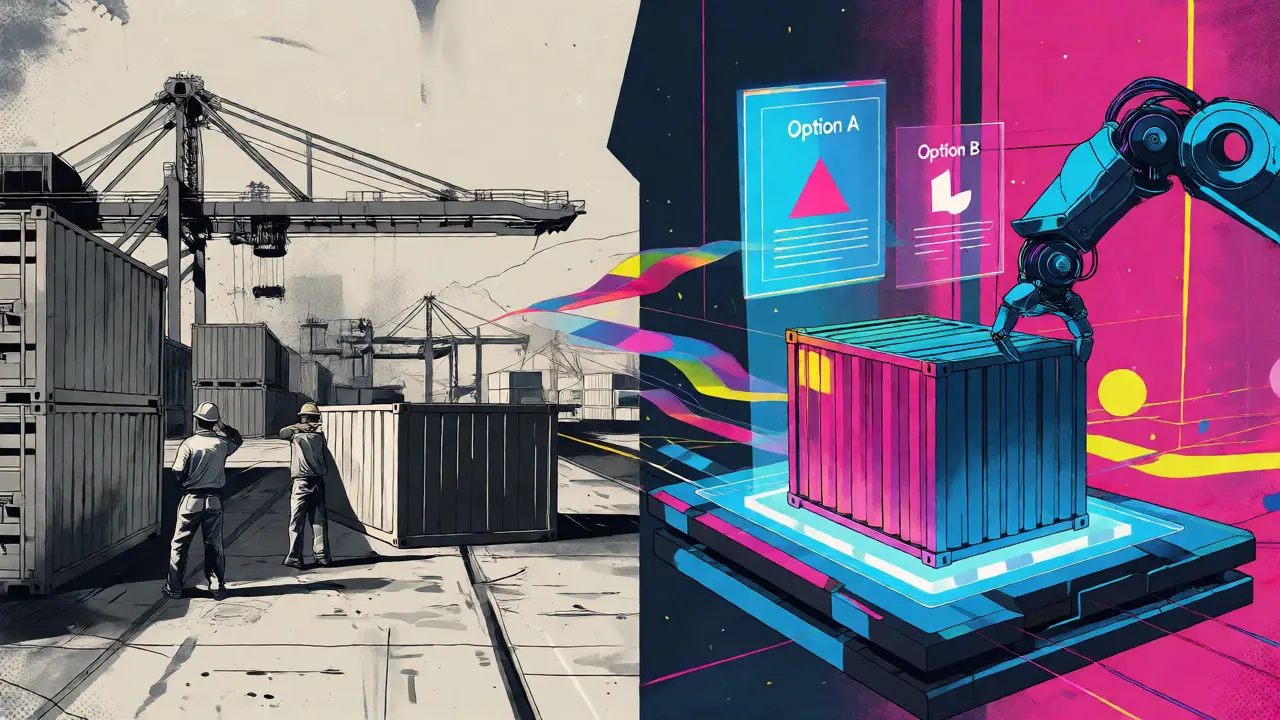
When a disruption occurs, the system detects the risk and immediately simulates the impact on key metrics like On-Time In-Full (OTIF) rates, total cost, and CO2 emissions. Instead of just saying "Delay detected," it might suggest: "Option A: Reroute via secondary port, +4 hours delay, +$200 cost, -10kg CO2. Option B: Hold inventory at hub, no delay, +$50 storage cost." This allows planners to make informed decisions quickly rather than reacting emotionally or blindly.
Moreover, generative AI optimizes communication during these crises. Automated bots can read incoming emails and WhatsApp messages from carriers or customers, extract critical details like order numbers and incident descriptions, and automatically update Transportation Management Systems (TMS) and Warehouse Management Systems (WMS). This closes the loop between physical operations and digital records without human intervention, ensuring that every stakeholder sees the same truth instantly.
Automated Status Updates That Feel Human
Customers hate silence. When a package is late, they want to know why and when it will arrive. Generic "Your package is delayed" notifications often lead to support tickets because they lack context. Generative AI solves this by crafting tailored, empathetic messages based on predictive analytics and customer preferences.
The technology doesn't just pull data; it narrates it. If a truck is stuck in traffic due to an accident, the AI can generate a message like, "Hi Sarah, your package is currently navigating around an accident on I-95. We expect it to be back on track by 2 PM. Thanks for your patience!" This proactive approach prevents inbound inquiries, reducing customer service load significantly. The system learns from every interaction, refining its tone and timing to match individual customer expectations. Over time, it becomes better at predicting which customers prefer SMS alerts versus app push notifications, further personalizing the experience.
Enhanced Demand Forecasting and Inventory Precision
Accurate demand forecasting is the backbone of efficient logistics. Traditional methods rely heavily on historical sales data, which fails during unprecedented events like pandemics or sudden market shifts. Generative AI bridges this gap by filling data holes and simulating uncommon occurrences. Using models like Generative Adversarial Networks (GANs), it can create realistic future demand scenarios even when historical data is sparse or irrelevant.
Walmart’s implementation illustrates the scale of this impact. By leveraging AI-driven forecasting, they achieved 90% inventory accuracy and eliminated 30 million unnecessary truck miles annually. The AI generates new data points representing potential future conditions, cutting stockouts by 20%. This precision allows businesses to optimize production schedules and distribution plans, ensuring that goods are available where and when they are needed, without overstocking warehouses.

Overcoming Data Challenges in Implementation
Despite the benefits, implementing generative AI isn't plug-and-play. The biggest hurdle is data quality. According to the International Data Corporation (IDC), 80-90% of business data is unstructured-think messy emails, scanned invoices, and inconsistent carrier notes. Generative AI helps here too, by automatically cleaning and organizing this unstructured data. It extracts insights from disorganized datasets, speeding up proposal development and decision-making.
Document management is another area where this shines. Customs procedures involve complex paperwork. Generative AI can automate the production of compliant documentation, forecast clearance times, and identify potential regulatory issues before they cause delays. This reduces administrative burden and minimizes the risk of costly compliance errors.
Strategic Adoption for Different Business Sizes
Adoption patterns show a clear divide. Large shippers and TMS vendors are leading the charge, integrating generative AI to cut costs and improve user experience across enterprise operations. They have the data infrastructure and resources to deploy comprehensive solutions. Meanwhile, smaller operators are experimenting with focused applications, such as automated customer service bots or specific route optimization modules.
If you're a small to mid-sized logistics provider, start narrow. Don't try to overhaul your entire supply chain overnight. Focus on one high-pain area, like automated status updates or exception handling. These areas offer quick wins with lower implementation complexity. As you build confidence and see ROI, expand into broader areas like demand forecasting and warehouse optimization. Remember, the goal isn't to replace your team but to empower them with better information and faster responses.
How does generative AI differ from traditional AI in logistics?
Traditional AI focuses on analysis and prediction based on historical data (e.g., predicting demand). Generative AI goes further by creating new content, scenarios, and solutions. It can simulate 'what-if' situations, generate natural language communications, and propose creative solutions to unexpected problems, making it more adaptable to dynamic environments.
Can generative AI replace human dispatchers?
No, it augments them. Generative AI handles repetitive tasks like data entry, initial scenario generation, and routine communications. Humans remain crucial for strategic decision-making, handling complex edge cases, and managing relationships. The AI provides options and insights; humans provide judgment and empathy.
What are the main challenges in implementing generative AI in logistics?
The primary challenge is data quality. Since 80-90% of logistics data is unstructured, significant effort is required to clean and organize it. Other challenges include integration with legacy systems, ensuring data security, and managing change within the organization. Starting with pilot projects helps mitigate these risks.
How much cost reduction can companies expect from generative AI?
Early adopters report logistics cost reductions of 15-20% through optimized routing and reduced fuel consumption. Additionally, improved service levels (up to 65% increase) and reduced customer service costs contribute to overall financial gains. Specific results vary based on operational complexity and implementation depth.
Is generative AI suitable for small logistics companies?
Yes, especially for targeted applications. Small companies can benefit from automated customer updates and basic exception handling without needing massive infrastructure investments. Cloud-based SaaS solutions are making these technologies accessible to smaller players, allowing them to compete with larger firms on service quality.