If you're building or deploying Generative AI in Europe, the rules of the game have changed. You can no longer just ship a model and hope for the best. The European Union Artificial Intelligence Act (AI Act) is now live, and it’s not just a suggestion-it’s law. For developers and businesses, this means navigating a complex web of transparency requirements, copyright checks, and strict deadlines that could cost millions if ignored.
The biggest misconception? That all AI is regulated the same way. It isn’t. The EU took a risk-based approach, treating a spam filter differently than an algorithm deciding your loan application. But where does GenAI fit? Most generative tools fall under "General-Purpose AI" (GPAI), a category with its own specific set of heavy lifting required from providers. As of late 2026, we are deep in the implementation phase. If you haven't updated your compliance strategy, you’re already behind. Here’s exactly what you need to know about risk classes, who bears the burden, and how to stay on the right side of the regulators.
Understanding the Four-Tier Risk Framework
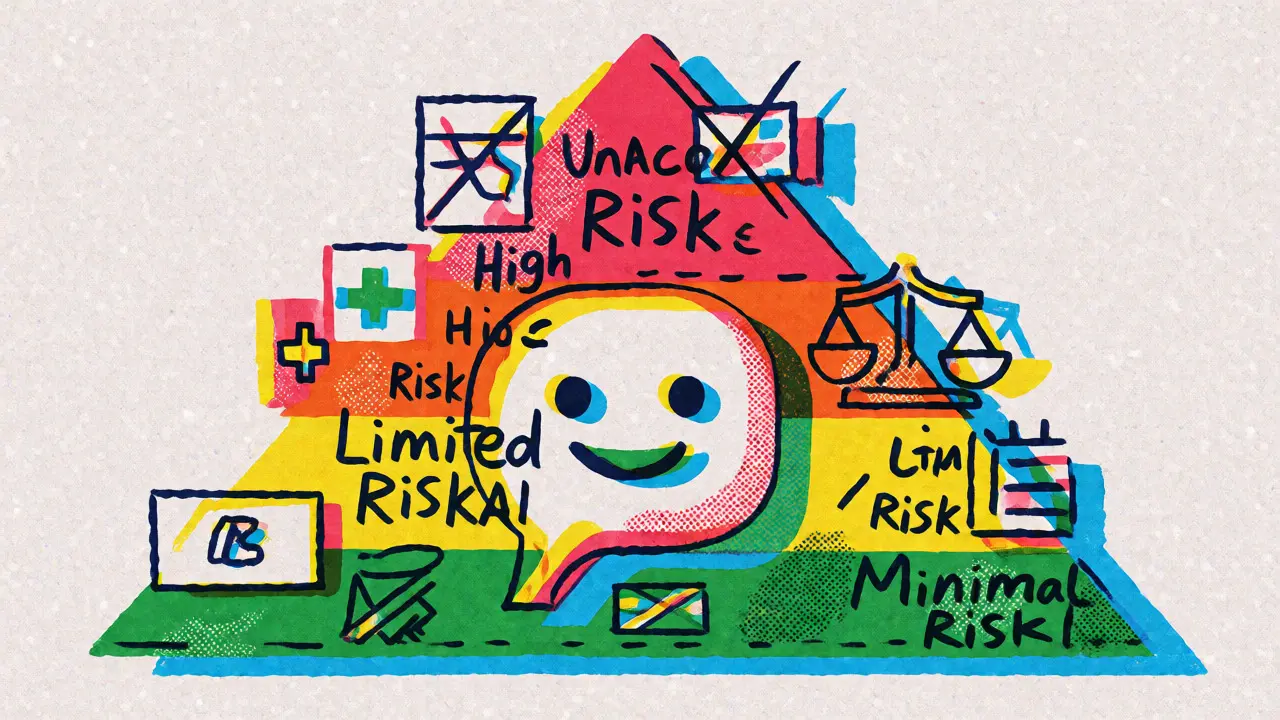
To grasp why your chatbot has different rules than a medical diagnostic tool, you have to look at the hierarchy. The AI Act doesn't regulate technology; it regulates impact. It sorts every AI system into one of four buckets based on the potential harm it can cause to people and society.
- Unacceptable Risk: These are banned outright. Think social scoring systems used by governments or real-time remote biometric identification in public spaces (with narrow exceptions). If your product falls here, you don't get a compliance checklist-you get a shutdown order.
- High Risk: This includes AI used in critical areas like employment screening, education grading, credit scoring, and law enforcement. These systems face strict pre-market conformity assessments, continuous monitoring, and human oversight requirements.
- Limited Risk: This is where most Generative AI lives. The core obligation here is transparency. Users must know they are interacting with a machine, and AI-generated content must be labeled.
- Minimal Risk: Spam filters, video games, and inventory management bots. These face no specific regulatory obligations beyond general consumer protection laws.
Why does this matter for you? Because misclassifying your product is the fastest way to incur fines. A simple text generator might seem harmless, but if it’s used to draft legal contracts without human review, it might edge closer to high-risk territory depending on the deployment context. The line is blurry, but the penalties are sharp.
Where Generative AI Fits: The GPAI Category
Generative AI models, like large language models (LLMs) or image generators, are treated as General-Purpose AI (GPAI). This is a crucial distinction. The EU recognizes that a single foundation model can be fine-tuned for thousands of different uses-from writing code to diagnosing diseases. Regulating every downstream use case individually would be impossible, so the Act places the primary burden on the model provider.
This upstream responsibility means that if you are the company training the base model, you carry the heaviest load. If you are a startup building an app on top of GPT-4 or Llama 3, your obligations are lighter, but they aren't zero. You still need to ensure your application meets transparency standards. The regulation kicked off its major GPAI phase on August 2, 2025, meaning providers have been under scrutiny for over a year now.
The logic is straightforward: since the provider controls the training data and architecture, they are best positioned to document risks and ensure copyright compliance. Downstream users rely on these disclosures to make informed decisions. If your provider hasn't given you a "model card," you’re flying blind.
Key Obligations for GPAI Providers
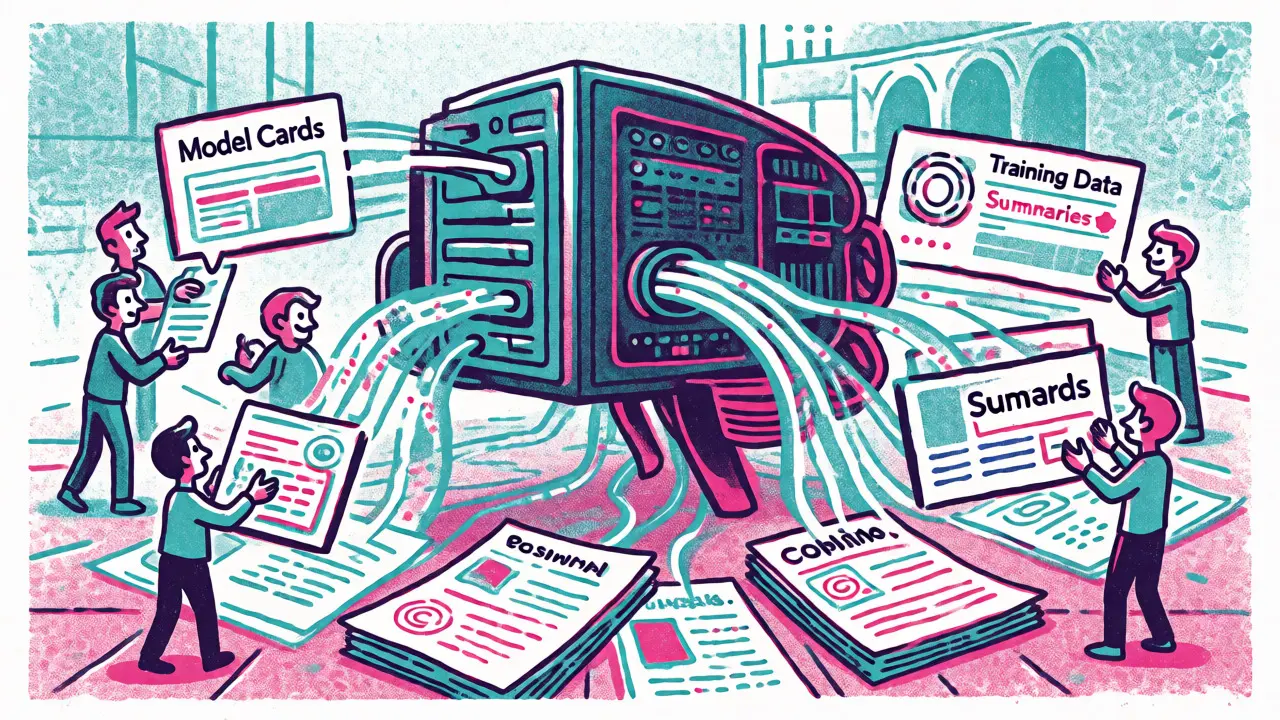
If you are providing a generative model, you cannot hide behind proprietary black boxes anymore. The AI Act demands radical transparency. Starting in August 2025, providers had to implement several concrete measures. Let’s break down what this actually looks like in practice.
- Copyright Policy: You must prove you respect EU copyright laws. This involves implementing mechanisms to honor opt-outs from rights holders and ensuring fair attribution. It’s not enough to say "we scraped the internet." You need a policy that actively manages intellectual property conflicts.
- Training Data Summary: You must publish a sufficiently detailed summary of the content used to train your model. The European Commission provided templates for this. The goal? To allow researchers and competitors to understand what your model knows and where it might have biases.
- Technical Documentation: Keep a "black-box" dossier. Regulators need to see how the model was built, tested, and validated. This isn't public-facing marketing fluff; it's engineering documentation ready for audit.
- Model Cards: Provide customers with clear information on capabilities and limitations. What tasks is the model good at? Where does it hallucinate? Who should not use it?
For high-impact GPAI models-those trained with massive compute budgets-the bar is even higher. These models require thorough evaluations and mandatory reporting of serious incidents to the European Commission. If your model fails spectacularly in a way that causes harm, you have to report it. Fast.
Transparency Rules for Developers and Users
Not everyone is a model trainer. Many companies deploy existing APIs. Does the Act apply to them? Yes, through Article 50 transparency rules, which fully entered into force in August 2026. The core principle is simple: humans must know when they are dealing with AI.
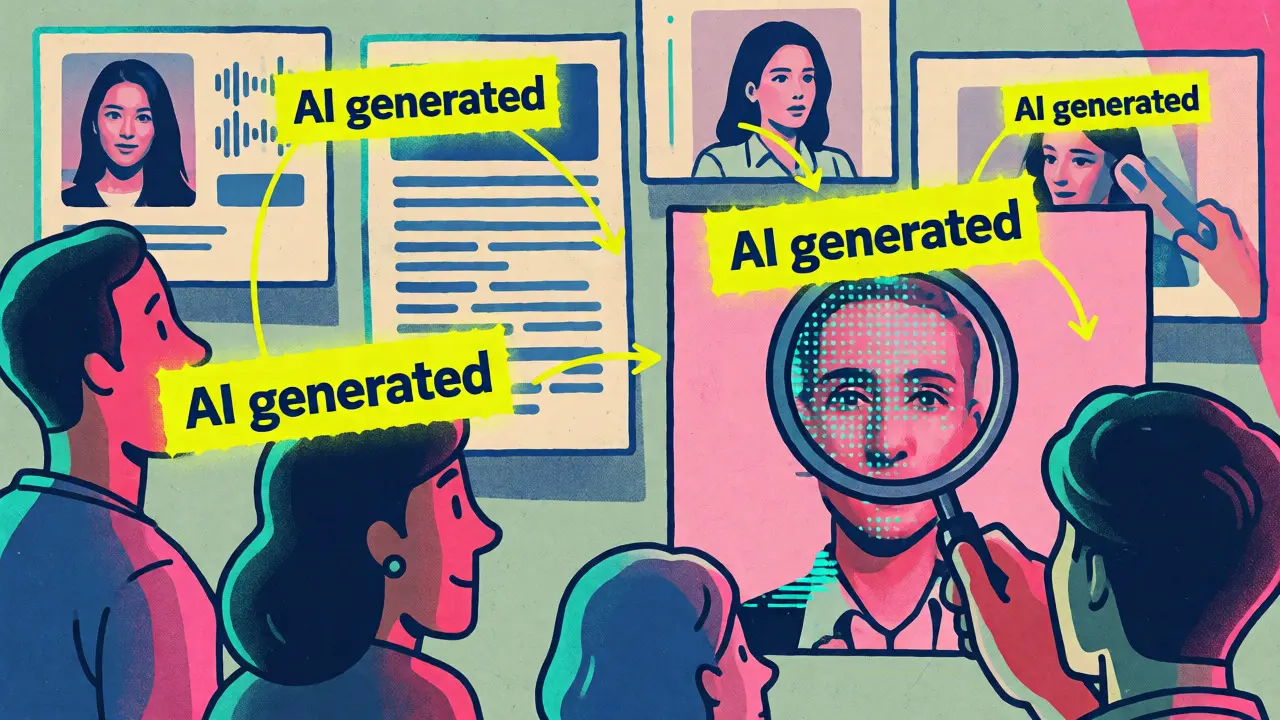
If your application interacts directly with people, you need to disclose that the interaction is automated. If your tool generates synthetic audio, images, or video, it must be clearly marked as artificially generated. This is particularly strict for deepfakes. Text published to inform the public on matters of public interest also needs labeling if it’s AI-generated.
| Role | Primary Obligation | Key Deliverable | Deadline Status |
|---|---|---|---|
| GPAI Provider | Copyright & Training Transparency | Public Training Data Summary | Active (Since Aug 2025) |
| High-Impact Model Provider | Evaluation & Incident Reporting | Serious Incident Reports | Active (Since Aug 2025) |
| Deployer / Developer | User Awareness | AI Disclosure Labels | Active (Since Aug 2026) |
| High-Risk System User | Human Oversight & Logging | Conformity Assessment Docs | Phasing In (2026-2027) |
Don't underestimate the "labeling" requirement. It’s not just a small footnote. For news outlets using AI to summarize articles, or marketing agencies generating ad copy, visible disclosure is now a legal necessity. Failure to label can lead to accusations of deceptive practices.
The Cost of Non-Compliance
Ignoring the AI Act is expensive. The penalties are tiered, mirroring the risk levels. For prohibited practices, fines can hit €35 million or 7% of global annual turnover. For most other violations-including failure to meet transparency or copyright obligations-the cap is €15 million or 3% of global turnover.
While GPAI-specific fines were initially deferred until August 2026, they are now fully enforceable. This shift moved the conversation from "what should we do?" to "can we afford not to do it?" Companies like Meta and OpenAI have had to adjust their European strategies significantly, often offering different terms or features in the EU compared to the US.
Beyond fines, there’s reputational damage. Being flagged by the AI Office (the central supervisory body) signals to enterprise clients that your vendor is risky. In B2B deals, compliance is becoming a standard due diligence question, much like GDPR was a decade ago.
Practical Steps for Compliance in 2026
So, what do you actually do today? Whether you're a startup or an enterprise, here’s a checklist to keep you safe.
- Audit Your Models: Determine if you are a provider or a deployer. If you fine-tune a model significantly, you might be considered a provider of a new GPAI model.
- Check Copyright Hygiene: Ensure your training pipelines respect robots.txt and opt-out mechanisms. Document your sources.
- Implement Disclosure UI: Add clear badges or messages in your user interface stating "This content is AI-generated" or "You are chatting with an AI."
- Request Vendor Docs: If you use third-party APIs, demand their model cards and training summaries. If they can't provide them, consider switching vendors.
- Monitor National Sandboxes: By August 2026, every EU member state had to launch an AI regulatory sandbox. Use these environments to test new features with reduced regulatory friction before full rollout.
The landscape is evolving. The European Commission proposed the "Digital Omnibus" package in late 2025 to simplify some timelines, but don't count on delays. The core principles of transparency and accountability are here to stay. Treat the AI Act not as a hurdle, but as a framework for building trustworthy products that enterprises will actually buy.
Does the EU AI Act apply to companies outside the EU?
Yes. If your AI system is placed on the market within the EU or its output is used within the EU, the Act applies regardless of where the provider is located. This extraterritorial reach mirrors GDPR, forcing global tech giants to comply with European standards.
What is the difference between GPAI and High-Risk AI?
GPAI refers to general-purpose models (like LLMs) that can be adapted for many tasks, primarily subject to transparency and copyright rules. High-Risk AI refers to specific applications in sensitive sectors (like hiring or healthcare) that undergo strict conformity assessments and require human oversight. A GPAI model can be used *in* a high-risk application, triggering both sets of obligations.
Do I need to label every piece of AI-generated content?
Not every single word. The requirement focuses on content that could deceive users about its origin, such as deepfakes, synthetic media, and text intended to inform the public on matters of public interest. Internal drafts or non-public creative brainstorming may not require explicit labeling, but public-facing outputs generally do.
How do AI regulatory sandboxes help companies?
Sandboxes allow companies to test innovative AI solutions in a controlled environment under regulatory supervision. They offer guidance, temporary relief from certain compliance burdens, and feedback from authorities. This helps startups navigate complex rules without facing immediate heavy penalties for minor technical missteps during testing.
What happens if my AI provider doesn't give me a model card?
As a deployer, you rely on the provider's documentation to assess risk. If they fail to provide necessary transparency details, you assume greater liability for how the model performs in your application. It is advisable to contractually require providers to supply up-to-date model cards and training summaries to mitigate your own compliance risk.