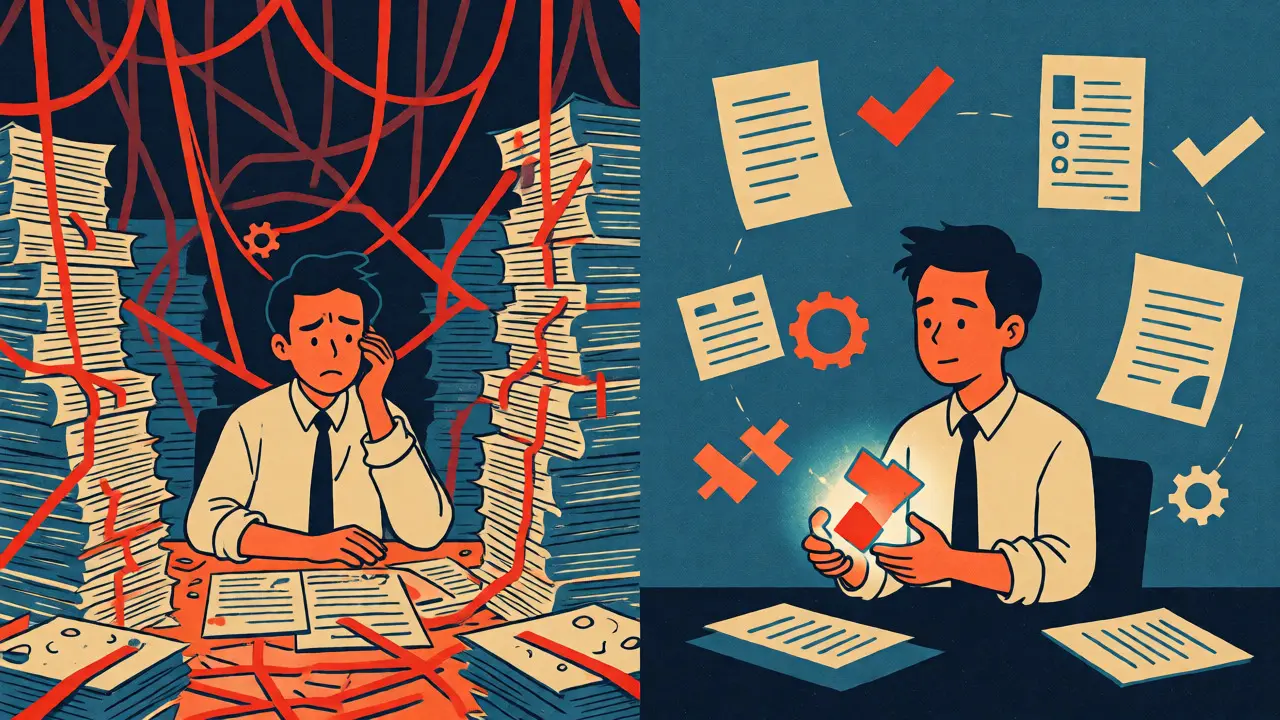
Imagine spending three hours drafting a single course syllabus, tweaking every policy clause to ensure it covers both academic integrity and the new reality of students using ChatGPT. Now imagine doing it in ten minutes, with the AI handling the heavy lifting while you focus on the pedagogical strategy. This isn't a hypothetical future; it's the current state of education operations for forward-thinking institutions.
The integration of Generative AI into educational workflows has moved beyond novelty. By late 2023 and into 2024, tools like Microsoft Copilot, Gemini, and specialized platforms like Magic School began reshaping how educators design course documents. The core promise is simple: offload routine curriculum design tasks-drafting syllabi, structuring lesson plans, and creating detailed rubrics-to AI systems that produce structured text in seconds. But here’s the catch: speed doesn’t equal quality. A 2024 study published in the CITE Journal analyzed 310 AI-generated lesson plans and found that while they were structurally plausible, many lacked the deep alignment with content standards required for effective teaching. So, how do we leverage these tools without compromising educational integrity?
Key Takeaways
- Syllabi as Policy Tools: Generative AI helps draft comprehensive syllabi that explicitly codify rules for student AI use, ranging from full encouragement to strict prohibition.
- Lesson Plan Efficiency: Specialized tools can generate standards-aligned lesson structures (e.g., Utah Core Standards) in under a minute, but require human review for cognitive demand and bias.
- Rubric Generation: AI excels at creating multi-level analytic rubrics (Exemplary to Beginning), ensuring consistency across large classes or multiple instructors.
- The Human-in-the-Loop: AI is an assistant, not a replacement. Educators must verify accuracy, adjust for local context, and maintain ethical oversight.
Reimagining the Syllabus: From Static Document to Dynamic Policy
Traditionally, a syllabus was a static contract outlining what would be taught and how students would be graded. Today, it’s also a regulatory document governing the use of artificial intelligence itself. Institutions are increasingly using generative AI to draft these complex policy statements, ensuring clarity and consistency.
Consider the approach taken by the University of Texas at San Antonio (UTSA). They provide sample syllabus statements that instructors can adapt. One permissive model encourages students to explore tools like ChatGPT for all assignments, provided they cite the tool version and append their exact prompts and the AI’s responses. Another model sets a hard cap: no more than 25% of student work should be AI-generated. At the other end of the spectrum, some instructors forbid AI entirely, classifying any generated content as academic dishonesty.
How does this help operations? Instead of agonizing over legalistic phrasing, instructors can prompt an LLM: "Draft a syllabus policy statement allowing AI use for brainstorming only, requiring APA citation of the tool and prompt." The AI generates a clear, professional paragraph in seconds. You then tweak it to fit your specific course tone. This shifts the operational burden from writing to reviewing, saving hours per semester.
Lesson Planning: Speed vs. Pedagogical Depth
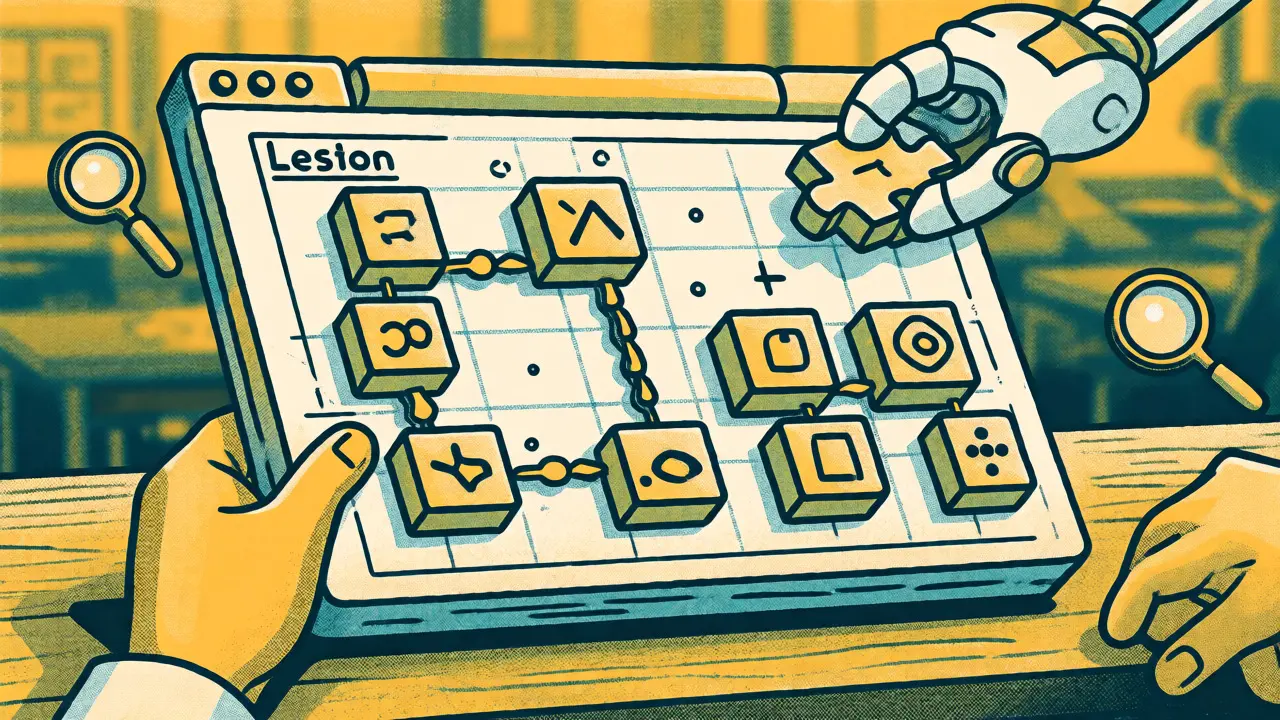
For K-12 and higher education teachers, lesson planning is often the most time-consuming part of the job. Enter domain-specific platforms like SchoolAI and Magic School. These tools aren't just generic chatbots; they are engineered with educational templates.
In a demonstration by educator Katie Blunt, using Magic School to create a sixth-grade math lesson plan took less than a minute. The teacher selects the grade level, inputs a standard (like ratio and proportions), and clicks "generate." The output includes learning intentions, success criteria, guided practice, independent practice, and homework. It’s a complete structural skeleton.
However, a critical look at the data raises red flags. The same CITE Journal study mentioned earlier evaluated 2,230 individual learning activities generated by ChatGPT, Gemini, and Microsoft Copilot. The findings? While the volume was impressive, the cognitive demand varied wildly. Some activities were superficial, merely restating facts rather than fostering inquiry. This highlights a key operational rule: AI provides the structure; humans provide the rigor.
To mitigate this, successful educators use a multi-step prompting framework. First, ask the AI for three different activity ideas aligned to a specific objective. Second, select the best idea and ask the AI to refine it for a specific learner profile (e.g., English Language Learners). Third, manually insert checks for bias and factual accuracy. This iterative process turns AI from a lazy shortcut into a powerful brainstorming partner.
Automating Assessment: Creating Consistent Rubrics
Grading is subjective, inconsistent, and exhausting. Rubrics aim to fix this, but creating them from scratch is tedious. Generative AI shines here because rubrics are highly structured entities. They consist of criteria, performance levels, and descriptive indicators.
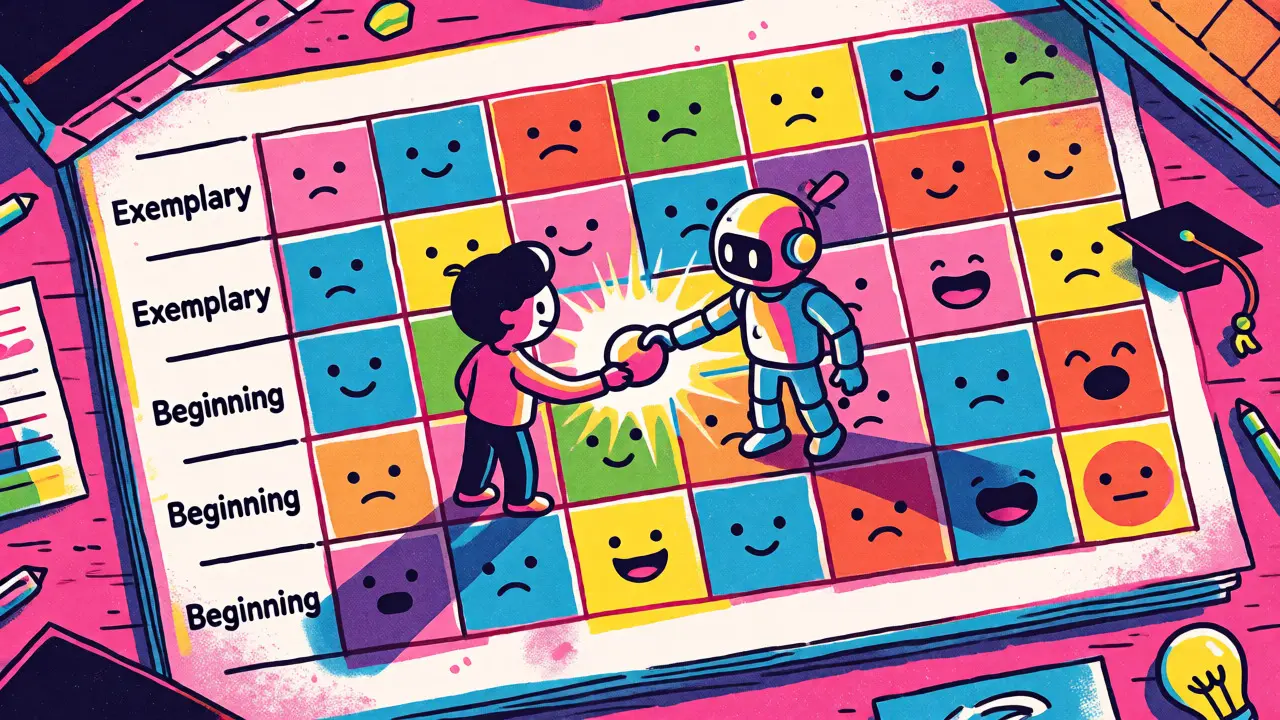
Microsoft’s "Generative AI for Teaching Bootcamp" explicitly trains educators to use AI for rubric creation. The workflow typically involves defining the assessment task and learning objectives, then asking the AI to generate a four-level analytic rubric. For example, you might prompt: "Create a 4-level rubric for a high school history essay on the causes of World War I. Levels: Exemplary, Proficient, Developing, Beginning. Criteria: Thesis Statement, Evidence Use, Organization, Mechanics."
The AI will output a table-like structure with detailed descriptions for each cell. "Exemplary Thesis" might read: "The thesis clearly states a specific argument about causality..." while "Beginning Thesis" reads: "The thesis is vague or missing." This ensures that every instructor in a department grades against the same explicit standards. Operational benefit? Faster grading, fewer student disputes, and easier calibration among teaching assistants.
Comparison of Educational AI Tools
Not all tools serve the same purpose. Choosing the right one depends on whether you need general drafting power or specific pedagogical scaffolding.
| Tool Type | Examples | Best For | Limitations |
|---|---|---|---|
| General Purpose LLMs | ChatGPT, Claude, Gemini | Drafting syllabi policies, brainstorming ideas, generating rubric text | Lacks built-in alignment to specific state standards; requires strong prompting skills |
| Specialized EdTech Platforms | Magic School, SchoolAI, Skill Struck | Standards-aligned lesson plans, differentiation, OER creation | Subscription costs; limited to supported standards/grade levels |
| Institutional Suites | Microsoft Copilot for Education | Integration with Office/LMS, secure data handling, enterprise-wide adoption | Learning curve; may feel rigid compared to flexible startups |
Operational Risks and Mitigation Strategies
Adopting generative AI in education operations isn't without risk. The primary concerns are hallucination (factual errors), bias, and plagiarism. If an AI-generated lesson plan contains historical inaccuracies, students learn incorrect information. If a rubric reflects cultural biases, it disadvantages certain groups of learners.
Mitigation starts with transparency. UTSA’s guidelines suggest requiring students to disclose AI use. Similarly, institutions should mandate that AI-generated materials be reviewed by subject matter experts before distribution. Think of AI as a junior associate: great for first drafts, terrible for final decisions without supervision.
Another risk is deskilling. If teachers rely too heavily on AI for lesson planning, do they lose the ability to design instruction independently? Professional development, such as the 6-hour Microsoft Learn bootcamp, addresses this by teaching prompting techniques that keep the educator in control. The goal is augmentation, not automation of thought.
The Future: Co-Creative Curriculum Design
We are moving toward a co-creative model. In this scenario, AI handles the scalable, repetitive aspects of education operations: formatting, initial drafting, and consistency checks. Humans handle the nuanced, contextual, and relational aspects: understanding student needs, adjusting for classroom dynamics, and inspiring curiosity.
Emerging domains like AI Literacy are themselves being taught using AI-generated resources. Rensselaer Polytechnic Institute’s AI Literacy Toolkit, for instance, uses AI to help define core competencies and skill benchmarks. This meta-use case shows that the technology is evolving alongside its application.
For business leaders in EdTech and institutional administrators, the takeaway is clear: invest in training, not just tools. The software is ready. The gap lies in human capability to direct it effectively. Those who master the art of prompting, reviewing, and integrating AI outputs will see significant gains in operational efficiency and educational quality.
Frequently Asked Questions
Can AI replace human teachers in lesson planning?
No. AI acts as an assistant that speeds up drafting and structuring. However, studies show AI-generated plans often lack deep pedagogical alignment and cognitive rigor. Human educators are essential for verifying accuracy, adjusting for student context, and applying professional judgment.
How should institutions regulate student AI use in syllabi?
Institutions should adopt clear, tiered policies. Examples include encouraging AI use with mandatory citation, capping AI-generated content at a percentage (e.g., 25%), or restricting AI to ungraded brainstorming. Policies must specify citation formats (tool version, prompt, response) to maintain academic integrity.
What are the risks of using AI for grading rubrics?
The main risks are inconsistency and embedded bias. AI might generate rubric descriptors that are vague or culturally biased. To mitigate this, educators should review and edit AI-generated rubrics to ensure they align with specific learning objectives and institutional values before use.
Which AI tools are best for K-12 lesson planning?
Specialized platforms like Magic School and SchoolAI are often better than general LLMs for K-12 because they integrate directly with state standards (e.g., Common Core, Utah Core). They provide structured templates for learning intentions, success criteria, and differentiation, reducing the need for complex prompting.
Does using AI in education save money?
It saves time, which translates to cost savings in labor. Teachers spend less hours on administrative drafting and more on student interaction. However, there are subscription costs for premium tools and investment in professional development to train staff effectively.