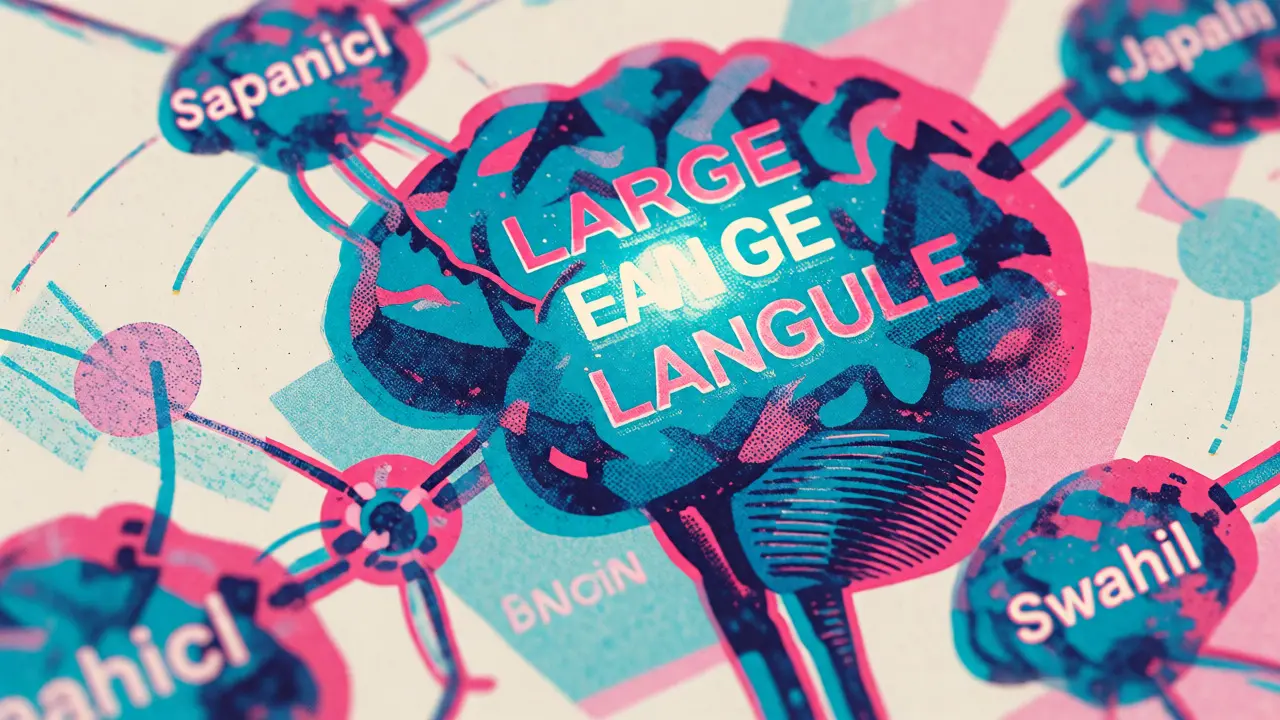
You built a powerful Large Language Model. It speaks fluent English. But when you ask it to handle Spanish, Japanese, or Swahili, the quality drops off a cliff. Why? Because most Large Language Models are trained on data that is heavily skewed toward English. This imbalance creates a gap in performance for other languages.
Cross-lingual fine-tuning is the process of closing that gap. It’s not just about translating instructions; it’s about teaching the model how to think in a new language using its existing knowledge. Recent breakthroughs, like the X-CIT method, show we can adapt these models with surprising efficiency. Let’s look at how this works and why it matters for your projects.
The Problem With Standard Multilingual Training
Most open-source models, such as Llama-2, start with a massive pre-training corpus. That corpus is mostly English. When you try to use these models for non-English tasks out of the box, they often struggle with nuance, grammar, and cultural context.
Traditional approaches involved simple supervised fine-tuning (SFT) using translated instruction data. You take an English dataset, translate it, and train the model. This works, but it’s inefficient. The model learns to map tokens rather than understanding the underlying semantic structure. It’s like trying to learn French by memorizing a dictionary instead of having conversations.
This leads to what researchers call "semantic misalignment." The model knows the words, but it doesn’t truly grasp the meaning in the target language. To fix this, we need methods that mimic how humans actually acquire a second language.
X-CIT: Learning Like a Human
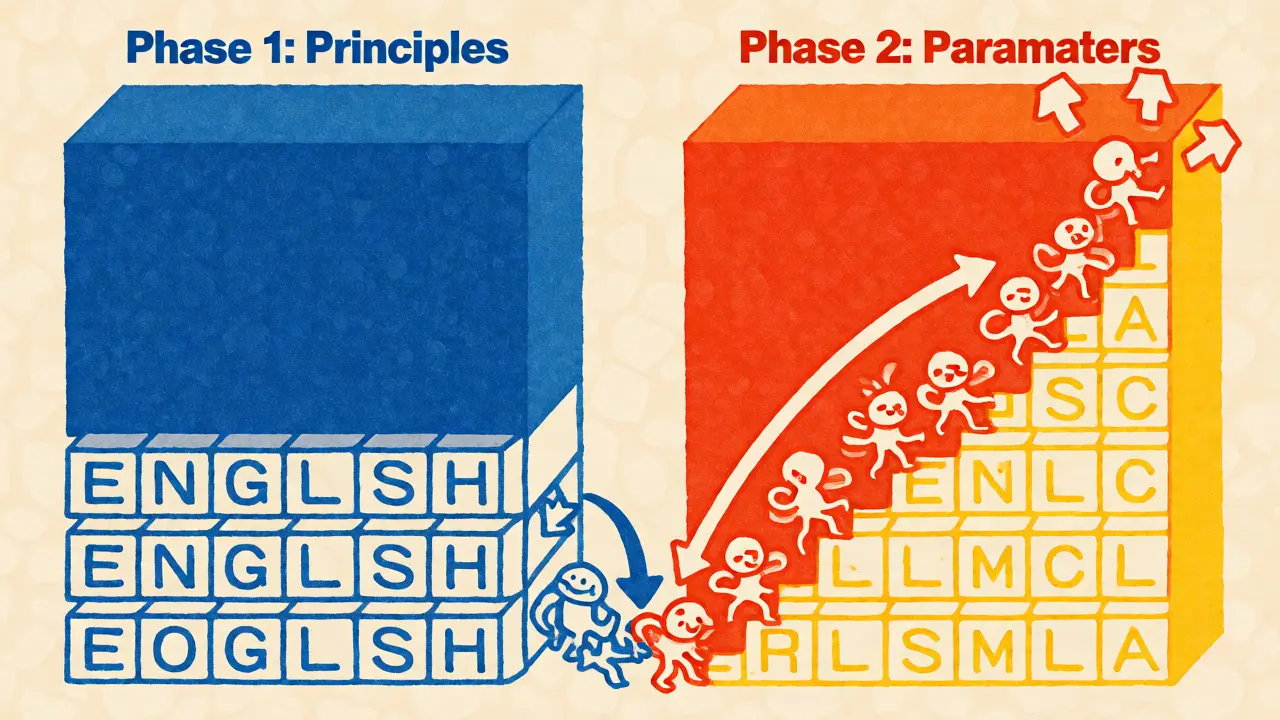
Enter Cross-Lingual Continued Instruction Tuning (X-CIT). Presented at the ACL 2025 conference in Vienna, this method changes the game. Instead of dumping all translated data into the model at once, X-CIT breaks the process down into phases, inspired by Chomsky’s Principles and Parameters Theory.
Here is how it works:
- Phase 1: Establish Principles. First, the model is fine-tuned on high-quality English instruction data. This locks in the general reasoning capabilities and logical structures-the "principles" of language understanding.
- Phase 2: Adjust Parameters. Next, the model undergoes continued training using parallel instruction data in the target language. Crucially, this phase uses customized chat-instruction data. The model is guided to initially "think" in English and then respond in the target language, gradually shifting the cognitive load.
- Self-Paced Learning. X-CIT incorporates Self-Paced Learning (SPL). The model starts with simple tasks and progresses to complex ones, mirroring human learning curves.
The results are concrete. When applied to Llama-2-7B across five languages, X-CIT improved performance by 1.97% on objective benchmarks and a significant 8.2% on LLM-as-a-judge evaluations compared to standard baselines. That 8.2% jump isn’t just noise; it represents a noticeable improvement in how natural and accurate the responses feel to human users.
Modular Approaches and Model Merging
Not every problem requires retraining the whole model. Sometimes, you want to improve math skills without breaking language skills, or vice versa. This is where modular approaches come in.
Research shows that the parameters responsible for mathematical reasoning and those responsible for multilingual capabilities are largely distinct. They don’t overlap much. This discovery allows for a clever trick: Model Merging.
Instead of freezing parameters from the start, which can limit learning, researchers found it more effective to fine-tune separate "experts"-one for language, one for math-and then merge them. A technique called Layer-Swapping helps combine these specialized models. If a specific update during fine-tuning turns out to be less useful, reverting it after training often yields better results than preventing it beforehand.
This approach is particularly valuable for low-resource languages where task-specific data is scarce. By isolating the parts of the model that matter for each skill, you preserve the core intelligence while adding new capabilities.
Handling Code-Switching and Real-World Complexity
Language isn’t clean. In bilingual communities, people switch between languages mid-sentence. This is called code-switching. For example, a speaker might mix Hindi and English in a single utterance. Standard LLMs often fail here because they were trained on monolingual text.
New research presented at RESOURCEFUL-2025 in Tallinn tackles this head-on. Researchers developed a metric called the S-index (Switching-Index) to measure the level of code-switching in a sentence. They fine-tuned cross-lingual LLMs on combinations of Indian languages and English to see if the models could generalize to unseen code-switched pairs.
The takeaway? General-purpose models struggle. Specialized fine-tuning on code-switched data improves accuracy significantly. If your application serves diverse, bilingual populations, ignoring code-switching will lead to poor user experiences. You need models that understand the fluidity of real conversation, not just textbook grammar.
CrossAlpaca and Semantic Alignment
Another notable approach is CrossAlpaca. This instruction-tuned LLM focuses on semantic alignment through Translation-following demonstrations. Unlike simple translation, CrossAlpaca trains the model to follow instructions in multiple languages while maintaining consistent intent.
Validated on benchmarks like XQUAD and MLQA, CrossAlpaca outperformed models tuned only on monolingual data across six different languages. The key insight was that instruction tuning on non-English data alone isn’t enough. You need explicit demonstrations that link the English instruction to the target language response, reinforcing the semantic bridge between them.

Practical Implementation Tips
If you’re looking to implement cross-lingual fine-tuning, keep these heuristics in mind:
- Data Quality Over Quantity: High-quality parallel instruction data beats massive amounts of noisy scraped text. Use professional translations or verified crowdsourced data.
- Start with English: Even if your goal is Chinese or Arabic, start with strong English instruction tuning. It provides a stable foundation for transfer learning.
- Evaluate with LLM-as-a-Judge: Objective metrics like BLEU or ROUGE don’t always capture conversational quality. Use another LLM to evaluate fluency and helpfulness.
- Consider LoRA: Low-Rank Adaptation (LoRA) allows you to fine-tune large models efficiently. Modular merging works well with LoRA adapters, letting you swap in language-specific tweaks without full retraining.
| Method | Key Technique | Best For | Performance Gain |
|---|---|---|---|
| Standard SFT | Translated instruction data | Quick prototyping | Baseline |
| X-CIT | Phased training + Self-Paced Learning | High-fidelity multilingual reasoning | +1.97% (Objective), +8.2% (Judge) |
| CrossAlpaca | Translation-following demos | Semantic alignment & QA | Outperforms monolingual SFT |
| Modular Merging | Layer-Swapping experts | Low-resource languages & multi-task | Preserves base capabilities |
Frequently Asked Questions
Why do LLMs perform worse in non-English languages?
LLMs are primarily trained on datasets dominated by English text. This imbalance means the model has fewer parameters dedicated to understanding the nuances, syntax, and semantics of other languages, leading to reduced performance unless specifically fine-tuned.
What is the X-CIT method?
X-CIT (Cross-Lingual Continued Instruction Tuning) is a two-phase fine-tuning strategy. It first establishes foundational reasoning capabilities using English data, then adapts the model to target languages using parallel instruction data and Self-Paced Learning to mimic human second-language acquisition.
Can I use LoRA for cross-lingual fine-tuning?
Yes, LoRA (Low-Rank Adaptation) is highly effective for cross-lingual tasks. It allows you to add small, trainable adapter layers for specific languages without updating the entire model's weights, making it computationally efficient and easier to manage multiple language variants.
How does code-switching affect LLM performance?
Code-switching confuses models trained on monolingual data because they expect consistent linguistic patterns within a sentence. Fine-tuning on code-switched datasets and using metrics like the S-index helps models recognize and correctly process mixed-language inputs common in bilingual communities.
Is translated data enough for good cross-lingual performance?
No, simple translated data often leads to semantic misalignment. Advanced methods like CrossAlpaca use translation-following demonstrations, and X-CIT uses phased training to ensure the model understands the intent behind the words, not just their literal translation.
Next Steps for Developers
If you are building multilingual applications today, start by evaluating your current model's baseline performance in your target languages. Don't assume fluency. Run a small set of native-speaker tests.
For quick wins, try LoRA-based fine-tuning with high-quality parallel data. If you need deeper integration and have the compute resources, experiment with the X-CIT methodology. It offers a structured path to robust multilingual capability.
Keep an eye on emerging benchmarks. As models become more capable, static metrics will matter less than dynamic, human-centric evaluations. Your goal isn't just to make the model speak a language; it's to make it think in it.




jyotshna Senapati
31 October, 2026 - 13:43 PM
Oh, how delightful to see another article patting itself on the back for solving problems that have existed since the dawn of NLP. The X-CIT method is presented as this revolutionary breakthrough, but let's be honest, it’s just repackaged curriculum learning with a fancy name and a Chomsky citation to make it sound intellectual.
I’ve been working with multilingual models for years, and I can tell you that 'semantic misalignment' isn't some new discovery; it’s the fundamental limitation of token-based architectures when applied to languages with different morphological structures. You don't fix a broken foundation by adding a new coat of paint. The fact that the performance gain on objective benchmarks is less than 2% is laughable. That is within the margin of error for most stochastic training runs. It’s barely noticeable in real-world applications unless you’re cherry-picking specific edge cases.
And please, spare me the talk about 'thinking in English.' Models don't think. They predict probabilities. Anthropomorphizing these matrices doesn't make them smarter; it just makes the marketing team richer. If you want true cross-lingual capability, you need massive, high-quality parallel corpora, not clever fine-tuning tricks that break down as soon as you hit a low-resource language like Swahili or Quechua. This whole approach is just lazy engineering trying to avoid the hard work of data collection.
Sundaraiah Kollipara
31 October, 2026 - 16:08 PM
i find the analogy of learning french via dictionary vs conversation quite apt actually... its interesting to consider if the model truly grasps the semantic structure or if it just becomes very good at pattern matching across languages
the self-paced learning aspect reminds me of how humans learn languages too we start with simple sentences and move to complex ones gradually maybe there is something to be said for mimicking human cognitive development in artificial systems
i wonder though about the implications for languages that are vastly different from english in terms of syntax and morphology does the phased approach hold up when the distance between source and target language is large
Howard Hurd
2 November, 2026 - 03:35 AM
Finally someone admits that English dominance is a problem 🙄 But let's not pretend other countries aren't just as bad. My country's tech sector ignores non-English users because they're not profitable enough. It's not an AI issue it's a capitalism issue. Fix your markets before you try to fix your algorithms 😤
Prayagraj Medicose
3 November, 2026 - 18:45 PM
Wake up sheeple! They tell us it's about 'nuance' and 'cultural context' but really they just want to control what words mean. Who decides what 'correct' Hindi looks like? The same elites who wrote the textbooks. This code-switching metric S-index? Probably invented to exclude people who speak properly. Keep your eyes open. The model isn't learning it's being programmed to ignore our reality.
SHANNON GRUBER
5 November, 2026 - 10:25 AM
LoRA is overhyped garbage for serious multilingual work. Full fine-tuning or nothing else matters. Stop cutting corners.
Kathy Mccoy
6 November, 2026 - 09:45 AM
This is such a helpful breakdown! I've been struggling with my Spanish chatbot lately and the tip about starting with strong English instruction tuning really clicked for me. It feels counterintuitive at first but it makes so much sense when you think about transferring those core reasoning skills first.
The part about LLM-as-a-Judge is crucial too. We spent weeks optimizing for BLEU scores only to realize our users hated the robotic tone. Switching to qualitative evaluation changed everything for our user satisfaction metrics. Definitely going to try the modular merging approach for our math-heavy features next sprint. Thanks for sharing this!
Brad Walker
6 November, 2026 - 21:53 PM
We are all just ghosts in the machine pretending to understand each other. The model thinks in English because that is the language of power. To teach it Swahili is to colonize its soul one more time. We seek efficiency but we lose authenticity. Is it better to be wrong quickly or right slowly? The algorithm does not care. Only we suffer the consequences of misunderstanding. The cliff mentioned in the intro is not a drop in quality it is a moral failure of our collective attention span.
Manoj Kumar
8 November, 2026 - 01:45 AM
The assertion that mathematical reasoning parameters are distinct from multilingual capabilities requires rigorous empirical validation which appears lacking in the provided summary. Furthermore the reliance on 'LLM-as-a-judge' introduces circular logic where the evaluator shares the same biases as the evaluated model. One must question the integrity of benchmarks that do not account for adversarial inputs in low-resource languages. The proposed methodology seems to prioritize computational convenience over linguistic fidelity. A more robust approach would involve explicit syntactic parsing layers rather than relying solely on end-to-end fine-tuning heuristics.
Charles Reah
9 November, 2026 - 15:01 PM
Great overview. For anyone implementing this, remember that 'high-quality parallel data' is often a euphemism for 'expensive professional translation.' Budget accordingly. Also, test your LoRA adapters separately before merging. Merging untested adapters can lead to catastrophic interference that is hard to debug later. Start small, validate often.
william mcstay
10 November, 2026 - 01:33 AM
Typical academic fluff. Real engineers know that if you have enough compute you just pre-train on balanced data. Fine-tuning hacks are for people who can't afford GPUs. Stop making excuses for bad data practices. English is the lingua franca deal with it or build your own model.