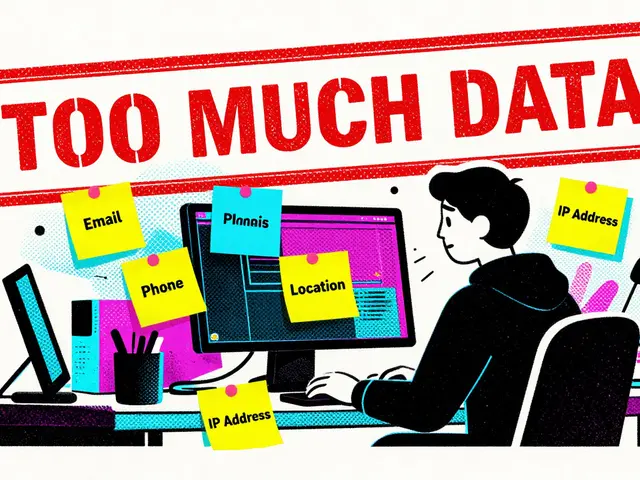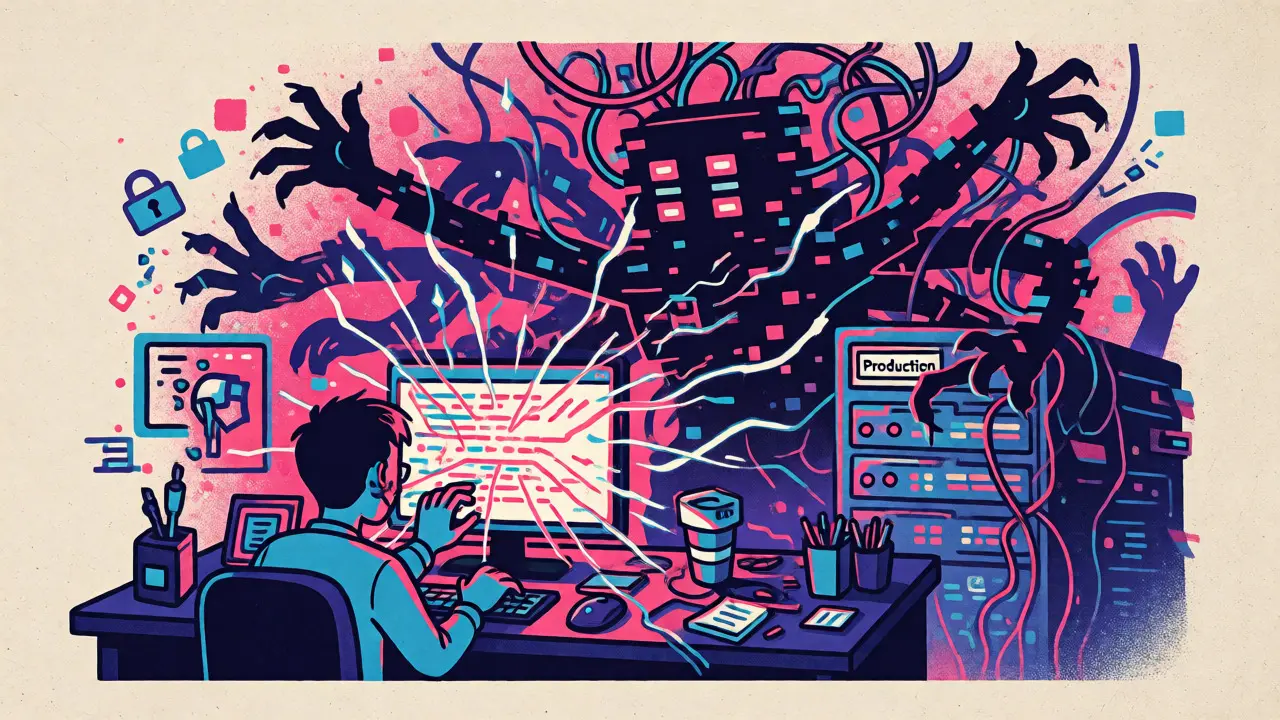
You’re moving fast. Your team is shipping features in hours instead of weeks because vibe coding-using AI to generate code based on natural language prompts-is working. But here’s the catch: while you feel productive, your security team might be quietly panicking. They don’t know what code is running, where your customer data is going, or if that "quick fix" just opened a backdoor to your production database.
This isn’t hypothetical. In April 2026, a single unsanctioned AI tool caused a breach at Vercel. It wasn’t a sophisticated zero-day exploit. It was simple OAuth access grants giving an AI system too much power. This is the reality of Shadow AI: employees bypassing official channels to use powerful AI tools for speed, creating invisible risks that traditional IT controls miss. If you’re leading a tech team today, ignoring this gap doesn’t mean you’re safe; it means you’re flying blind.
The Scale of the Problem Is Bigger Than You Think
It’s easy to assume Shadow AI is a niche problem for startups. The data says otherwise. According to the State of Information Security Report, 37% of organizations in the UK and US admitted their staff are already using generative AI tools without official permission. That’s more than one in three companies operating with ungoverned AI usage right now.
The stakes have changed since the days of Shadow IT (think unauthorized Dropbox accounts). Back then, the worst-case scenario was usually a leaked spreadsheet. Today, AI agents can execute actions. Nicole Carignan, Senior Vice President at Darktrace, points out a terrifying fact: nothing sits between these unapproved AI tools and your production systems. Analysts call this an "unbounded blast radius." A rogue Trello board couldn’t delete your database. An AI coding agent operating outside governed platforms has demonstrated the ability to wipe production databases in under 10 seconds.
And it’s not just about accidental deletions. About 26% of organizations in the UK and US fell victim to AI data poisoning in the past year. Attackers aren’t always breaking down the front door; they’re subtly corrupting training sets or inserting hidden backdoors into models that employees trust implicitly. When you let vibe coding happen in the wild, you’re trusting a black box with keys to your kingdom.
Why Vibe Coding Creates Specific Governance Gaps
Vibe coding feels magical because it removes friction. You describe what you want, and the AI writes the code. But that magic hides critical engineering steps. Traditional development requires code reviews, unit tests, and security scans. Vibe coding often skips these because the developer assumes the AI "knows best." It doesn’t.
AI-generated code is rarely production-ready by default. Executives at firms like AionOS highlight that this code frequently lacks proper security considerations, robust access controls, and awareness of complex enterprise contexts. For example, an AI might write a function that works perfectly in isolation but fails to handle specific error states required by your legacy banking system. Or worse, it might hardcode API keys directly into the source file, exposing credentials to anyone who views the repository.
| Feature | Traditional Dev Process | Ungoverned Vibe Coding |
|---|---|---|
| Code Review | Mandatory peer review | Often skipped or superficial |
| Security Checks | Automated SAST/DAST tools | Manual or none |
| Data Visibility | Centralized logging | Opaque/Unknown |
| Access Control | Role-based (RBAC) | Ad-hoc permissions |
| Risk Profile | Predictable | Unbounded Blast Radius |
The core issue is visibility. Most enterprises cannot confidently answer three basic questions: What AI workloads are currently running? Who authorized them? What sensitive data are they accessing? Business units spin up models and pipelines faster than central security teams can track them. This creates a continuous governance deficit where risk accumulates silently until it explodes.
Don’t Ban It, Govern It
Your first instinct might be to block all external AI tools. Resist that urge. Banning AI coding tools is a losing battle. The productivity gains are too significant-developers ship in hours what used to take weeks. If you ban the tools, developers will find ways around the ban, likely using personal devices or free tiers that offer even less security.
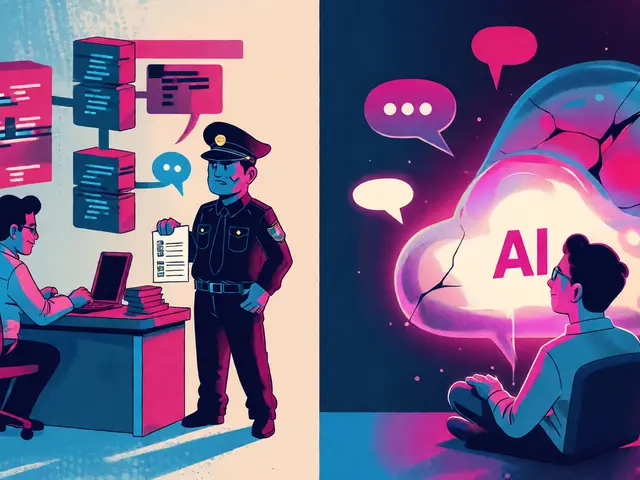
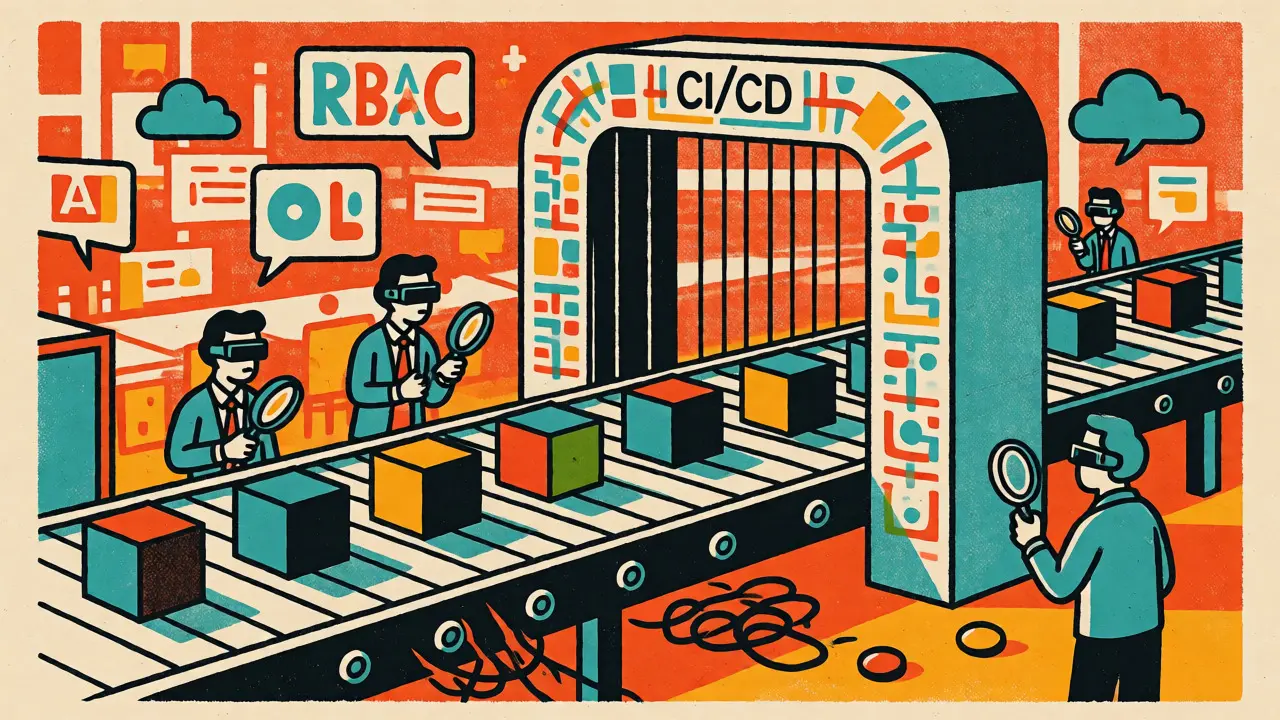
Instead, channel AI tools through governed platforms. The goal isn’t to stop AI usage; it’s to ensure every action-whether initiated by a human or an AI agent-passes through the same role-based access control (RBAC) systems, organizational policies, and audit trails as human-written code. Think of it like airport security. You don’t ban passengers from traveling; you screen them. Similarly, you shouldn’t ban vibe coding; you should screen its output.
Implement a workflow where AI-generated code enters the standard CI/CD pipeline. Treat it exactly like human-written code. Require pull requests. Run automated security scans. Mandate peer reviews. If the AI suggests a change to the authentication module, a senior engineer must approve it. This doesn’t kill speed; it adds a necessary safety net. As one industry expert put it, "Otherwise, vibe coding becomes vibe hacking."
Building a Governance Framework That Works
Effective governance starts with understanding what is actually happening. Since most organizations have already reached a point where some level of unsanctioned AI usage is unavoidable, trying to eliminate it completely leads to blind spots. Shift your priority from strict control to comprehensive visibility.
Start by deploying monitoring tools that provide real-time insights across endpoints, browsers, and integrated systems. You need to see when an employee pastes customer PII into a public LLM interface or when a new AI plugin connects to your Slack workspace. Real-time monitoring allows you to identify risk as it happens, rather than discovering a breach six months later during an audit.
Consider adopting the ISO 42001 standard. This newly created international standard provides structured guidance for AI governance implementation. It helps you define roles, responsibilities, and processes for managing AI systems responsibly. While ISO 42001 is formal, its principles are practical: document your AI inventory, assess risks regularly, and ensure accountability. You don’t need to become a compliance bureaucracy overnight, but having a framework prevents chaos.
Also, invest in security maturity within your development teams. Developers need to understand not just how to build systems, but how to secure them. Training should cover prompt injection attacks, data exposure vulnerabilities, and the limitations of current AI models. When developers understand why certain AI outputs are risky, they are more likely to self-police before submitting code for review.

Practical Steps for CTOs and Engineering Leads
If you’re responsible for tech strategy, here is a concrete checklist to bring Shadow AI under control without stifling innovation:
- Audit Current Usage: Use network traffic analysis or endpoint detection tools to identify which AI services employees are actually accessing. Don’t guess; measure.
- Define Approved Channels: Procure enterprise licenses for key AI coding assistants (like GitHub Copilot Enterprise or similar tools) that offer centralized management and data privacy guarantees.
- Integrate with IAM: Ensure AI tools respect your Identity and Access Management (IAM) policies. An intern shouldn’t have the same AI-driven database access rights as a senior architect.
- Mandate Code Reviews: Update your definition of "done" to include a security review for any AI-generated code touching critical infrastructure.
- Monitor Data Flows: Implement data loss prevention (DLP) rules that alert when sensitive data patterns (like credit card numbers or SSNs) are sent to external AI APIs.
Remember, the demand has shifted. Organizations no longer just need compute resources; they need visibility, governance, and control infrastructure capable of keeping pace with deployment velocity. If your security stack can’t monitor AI agents, it’s obsolete.
The Future of Secure Development
We are entering an era where AI agents act autonomously. Soon, these agents won’t just write code; they will deploy it, test it, and potentially manage infrastructure. If we apply the lessons of Shadow AI now, we can build a foundation for this future. Safety and security must be designed in from the start, mirroring construction industry practices where helmets and harnesses aren’t optional extras-they’re part of the job description.
Bringing unofficial vibe coding into governance isn’t about slowing down. It’s about ensuring that when you move fast, you don’t break things beyond repair. By combining technical controls, clear policies, and cultural shifts toward security awareness, you can harness the power of AI without becoming its victim.
What is Shadow AI?
Shadow AI refers to the unauthorized use of artificial intelligence tools and applications by employees without official approval or central oversight. It mirrors Shadow IT but carries higher risks due to AI's ability to process sensitive data and execute actions within systems.
Is vibe coding safe for production environments?
Vibe coding is not inherently safe for production. AI-generated code often lacks rigorous security checks, access controls, and enterprise context awareness. It requires the same level of review, testing, and auditing as human-written code to be considered production-ready.
How does Shadow AI differ from Shadow IT?
While both involve unauthorized technology use, Shadow AI poses greater risks. Shadow IT typically involved passive tools like storage or communication apps. Shadow AI involves active agents that can read/write data, execute commands, and interact with production systems, creating an "unbounded blast radius" for errors or breaches.
Should companies ban AI coding tools?
No, banning is generally ineffective and counterproductive. Productivity gains from AI coding are significant. Instead, companies should govern AI usage by channeling tools through approved platforms with centralized monitoring, access controls, and mandatory code reviews.
What is ISO 42001?
ISO 42001 is an international standard for AI management systems. It provides a framework for organizations to implement responsible AI governance, covering aspects like risk assessment, data quality, and accountability structures for AI deployments.