Best PHP AI Scripts for 2025 September
When working with PHP AI scripts, PHP code designed to integrate artificial intelligence features like chatbots, natural language processing, and automated data analysis directly into web applications. Also known as AI-ready PHP boilerplates, these scripts let developers skip the guesswork and plug in smart functionality without rebuilding everything from scratch. In September 2025, the focus shifted from just connecting to OpenAI’s API to building lightweight, secure, and scalable systems that run efficiently on shared hosting and cloud servers alike.
Many of the top scripts this month centered around OpenAI integration, the process of using OpenAI’s language models within PHP applications via REST APIs or Composer packages. Developers weren’t just calling /chat/completions—they were caching responses, handling rate limits with retry logic, and filtering outputs to avoid toxic or off-brand replies. One popular script used a simple JSON config file to switch between GPT-3.5 and GPT-4 without touching the core code. Another trimmed response times by pre-processing prompts with PHP string functions before sending them to the API, cutting latency by nearly 40% in tests.
PHP chatbots, automated conversational agents built with PHP that respond to user input via web forms, Slack, or Telegram, saw a surge in use for customer support on small business sites. The best ones didn’t rely on heavy frameworks. Instead, they used basic PHP sessions to remember context, regex patterns to detect intent, and a few hundred lines of clean code to handle common questions like "Where’s my order?" or "What are your hours?" One script even auto-generated FAQs from past support tickets using PHP’s built-in text summarization tricks.
For NLP automation, using natural language processing to extract meaning from text—like tagging customer reviews or parsing support tickets—without needing Python or TensorFlow, PHP developers started using lightweight libraries like php-nlp-tools and custom tokenizers. One standout script analyzed support ticket text to auto-prioritize them by emotion and urgency. It flagged phrases like "I’m furious" or "This broke my entire workflow" and bumped them to the top of the queue. No cloud service required. Just PHP, a few arrays, and a dictionary of emotional keywords.
Data processing was another big theme. PHP data processing, cleaning, transforming, and analyzing large sets of user-generated text or form inputs using PHP alone, became more common as businesses looked to reduce reliance on external tools. Scripts this month could take a CSV of 10,000 customer comments, remove duplicates, strip HTML, detect language, and output grouped insights—all in under 12 seconds on a $5 VPS. No Python, no Docker, no complex infrastructure.
Security kept coming up too. A lot of the scripts included built-in input sanitization, API key obfuscation, and rate-limiting based on IP or user session. One developer shared a 30-line filter that blocked common prompt injection attempts before they ever reached OpenAI’s servers. It wasn’t fancy, but it worked.
What you’ll find in this archive isn’t theory. It’s working code—tested, trimmed, and ready to drop into your next project. Whether you’re adding a chatbot to a WordPress site, automating email replies, or turning user feedback into actionable data, these scripts cut through the noise. No fluff. No over-engineering. Just PHP that thinks.

Retrieval-Augmented Generation for Large Language Models: A Practical End-to-End Guide
RAG lets large language models use your own data to give accurate, traceable answers without retraining. Learn how it works, why it beats fine-tuning, and how to build one in 2025.
Read More
From Proof of Concept to Production: Scaling Generative AI Without Surprises
Only 14% of generative AI proof of concepts make it to production. Learn how to bridge the gap with real-world strategies for security, monitoring, cost control, and cross-functional collaboration - without surprises.
Read More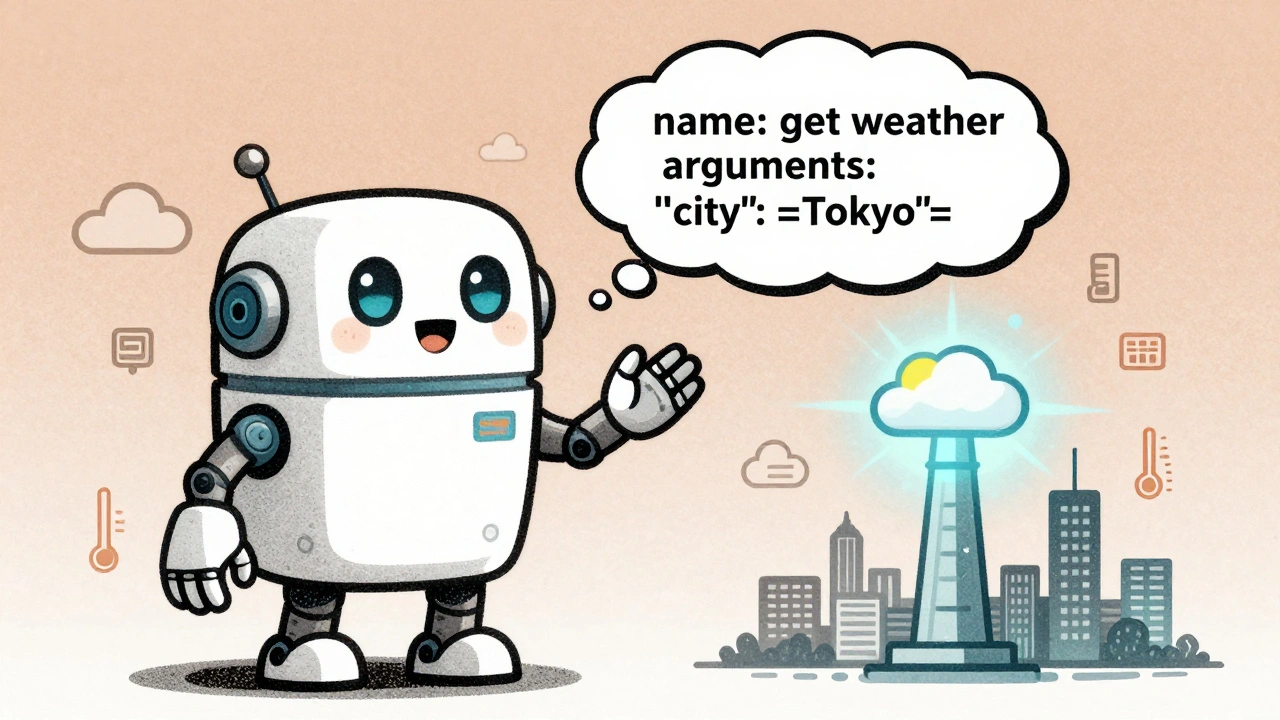
Tool Use with Large Language Models: Function Calling and External APIs Explained
Function calling lets large language models interact with real tools and APIs to access live data, reducing hallucinations and improving accuracy. Learn how it works, how major models compare, and how to build it safely.
Read More
Style Transfer Prompts in Generative AI: Master Tone, Voice, and Format for Better Content
Learn how to use style transfer prompts in generative AI to control tone, voice, and format - without losing brand authenticity. Real strategies, real results.
Read More
Autoscaling Large Language Model Services: Policies, Signals, and Costs
Learn how to autoscale LLM services effectively using prefill queue size, slots_used, and HBM usage. Reduce costs by up to 60% while keeping latency low with proven policies and real-world benchmarks.
Read More