You know that feeling when your team is scattered across twelve time zones, and you’re waiting six hours just to get a code review on a minor UI tweak? It’s frustrating. But what if you could bypass the typing, the context switching, and the endless Slack pings by simply speaking your intent into existence? That’s vibe coding in action. It’s not just another buzzword; it’s a shift where developers use natural language and voice interactions to generate code, allowing global teams to move from idea to prototype in hours rather than weeks.
What Actually Is Vibe Coding?
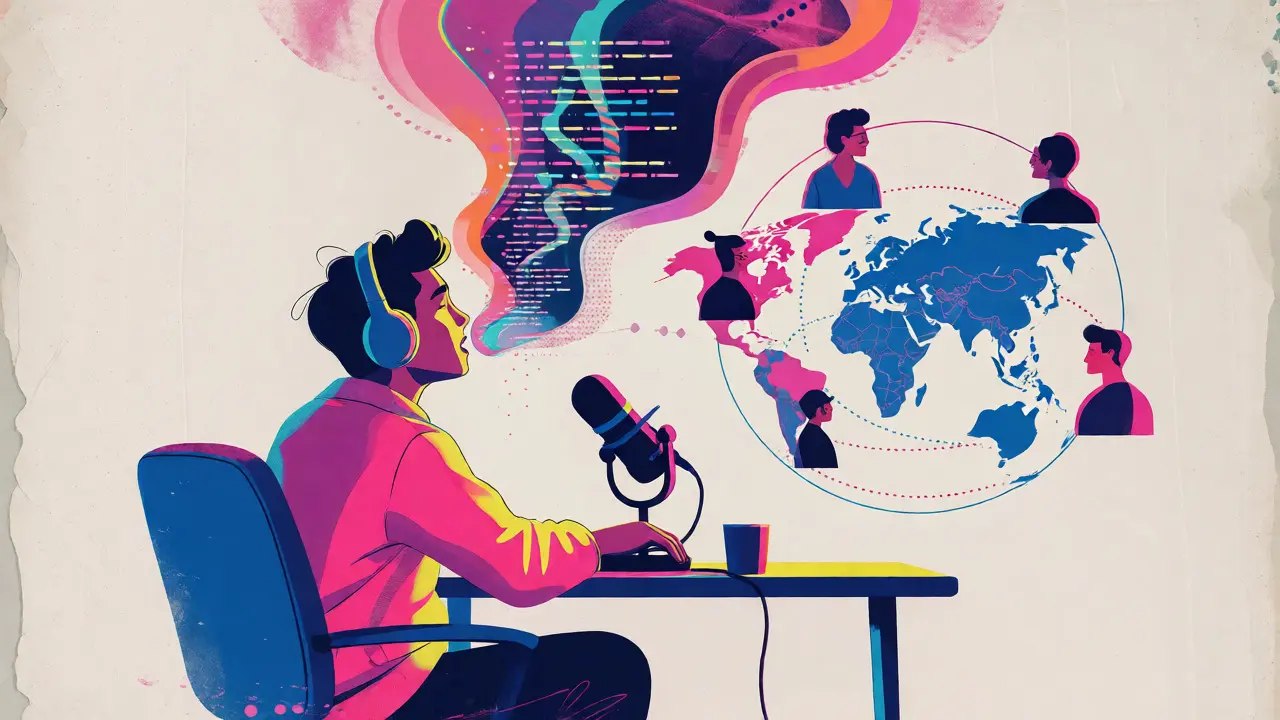
Vibe coding is a development paradigm where programmers create software through natural language instructions and voice commands instead of traditional keyboard-based programming. Powered by generative AI and advanced speech recognition, this approach lets you speak naturally-like you’re explaining a feature to a colleague-and have the AI draft the executable code instantly. Think of tools like Wispr Flow, which interpret your intent while keeping you in a flow state. You aren’t just dictating syntax; you’re describing logic, referencing files, and managing projects with your voice.
This isn’t about replacing engineers. It’s about removing friction. When you can say, "Refactor this component to use React hooks," and watch the code appear, you stop breaking your focus to hunt for brackets or semicolons. The AI handles the repetitive grunt work-formatting, documentation, basic testing-while you stay focused on architecture and user experience. For distributed teams, this fluidity is a game-changer because it decouples productivity from physical presence and typing speed.
Breaking Down Time Zone Barriers
Distributed organizations suffer from asynchronous delays. If a developer in Berlin finishes a task at 5 PM local time, their counterpart in San Francisco might not see it until the next morning. Vibe coding compresses these cycles. Because the interaction is conversational and immediate, the barrier between "thinking" and "coding" vanishes. A developer can dictate a complex algorithm change during their commute or while walking the dog, and the AI integrates it into the repo before they even sit down at their desk.
Consider the People team at Netlify. They used vibe coding to build custom HR tools that replaced expensive SaaS subscriptions, saving over $10,000 annually. More importantly, they built an onboarding tool that helped new hires in 12 countries get up to speed without waiting for timezone-aligned support. This didn’t just save money; it redistributed human effort. Instead of spending hours on manual onboarding logistics, staff focused on strategic integration. For your global team, this means fewer bottlenecks. You don’t need everyone online at once to make progress; you need clear intent, which vibe coding captures effortlessly.
The Productivity Multiplier Effect
Let’s talk numbers, because vague promises don’t help you plan sprints. Garry Tan, CEO of Y Combinator, has described the impact as revolutionary, citing "100x" speedups in development velocity within months. Compare that to the traditional "10x" improvements we’ve seen with past tech shifts. This acceleration changes how you structure teams. Organizations that previously needed 50-100 engineers to hit certain milestones are now achieving similar results with just 10 skilled vibe coders.
Why such a drastic drop in headcount requirements? Because vibe coding democratizes development. Non-technical stakeholders-product managers, designers, even marketers-can participate more actively in the creation process. By using natural language prompts, they bridge the gap between technical implementation and business goals. Managers spend less time translating design specs into engineering tickets and more time aligning on organizational intent. Design conversations become more technical, and technical decisions become more user-centered. The result is tighter product iteration cycles and faster feedback loops.
| Metric | Traditional Development | Vibe Coding Approach |
|---|---|---|
| Idea to Prototype Time | Weeks | Hours or Days |
| Communication Bottlenecks | High (Slack, Jira, Meetings) | Low (Direct Intent Capture) |
| Team Composition | Large specialized teams | Small, cross-functional squads |
| Code Review Focus | Stylistic & Syntax | Architectural & System-Level |
| Accessibility | Technical Experts Only | Technical + Semi-Technical Roles |
Infrastructure Needs for Global Success
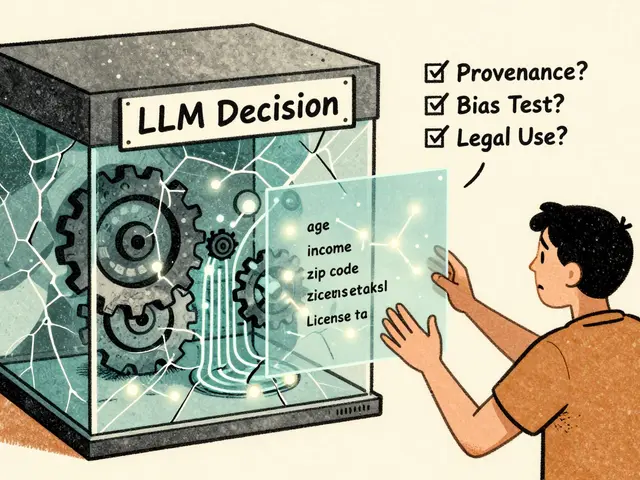
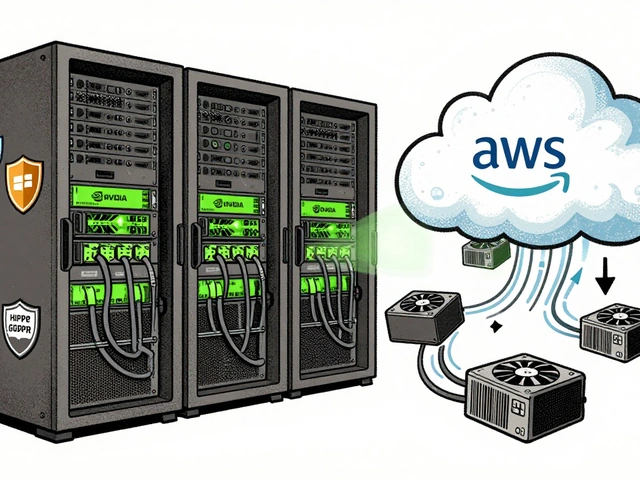
Vibe coding doesn’t work in a vacuum. For it to thrive in a distributed organization, you need seamless access to data. If your developer in Tokyo can’t easily reference the database schema managed by the team in New York, the AI can’t generate accurate code. IBM research indicates that 42% of enterprise-scale organizations already have AI in active use, but many struggle with data silos. To leverage vibe coding effectively, you need a consolidated data access layer-a global namespace that eliminates silos and ensures consistent data availability regardless of location.
Real-time file sharing is also critical. Technical and non-technical stakeholders must be able to view and comment on assets instantly. Furthermore, version control systems need to evolve. Standard Git workflows track human commits well, but vibe coding introduces AI-generated changes. Your version control must preserve the history of both human and AI interactions to provide auditability. Who prompted the change? What was the context? Tracking this metadata helps maintain trust and traceability in the codebase.
Redefining Code Reviews and Quality
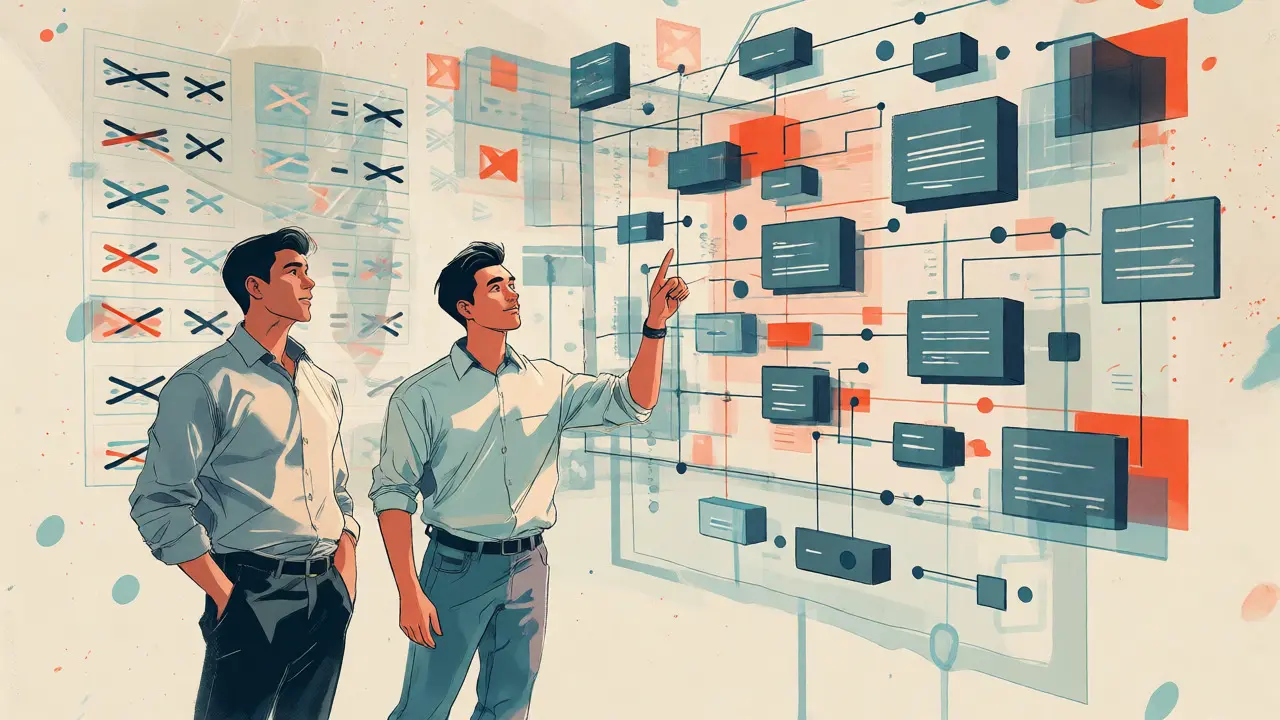
If AI writes the code, who checks it? You do. Responsibility for quality remains with the developers. However, the nature of code reviews shifts dramatically. Since the AI handles formatting, boilerplate, and basic syntax consistency, reviewers no longer need to nitpick indentation or variable naming conventions. Instead, code reviews focus on system-level thinking. Does this architecture scale? Is the security model sound? Does this feature actually solve the user’s problem?
This shift frees senior engineers from low-value tasks. In a distributed team, this is vital. Senior developers often burn out acting as gatekeepers for junior devs’ syntax errors. With vibe coding, juniors can produce clean, functional code quickly, and seniors can mentor them on architectural patterns. This creates a psychologically safe space for experimentation. Team members can try bold ideas without fear of messy implementations slowing them down. Innovation thrives when the cost of failure is low and the speed of iteration is high.
Getting Started: A Checklist for Leaders
If you manage a global team, you might be wondering how to pilot this without disrupting current workflows. Here is a practical approach:
- Audit Data Access: Ensure all team members have secure, real-time access to necessary enterprise data. Remove silos that prevent AI from seeing the full context.
- Train on Prompt Engineering: Teach developers how to articulate intent clearly. Natural language is powerful, but ambiguous prompts yield ambiguous code.
- Update Version Control: Implement tools that log AI interactions alongside human commits for better traceability.
- Shift Review Criteria: Move code review checklists away from style guides toward architectural integrity and business logic validation.
- Foster Psychological Safety: Encourage experimentation. Let teams fail fast and cheaply with AI-assisted prototypes.
The competitive landscape has shifted. The question isn’t whether AI will transform coding-it already has. The question is whether your organization is positioned to leverage this transformation or risk being displaced by competitors who ship features in days instead of months. Vibe coding offers a path to expand your talent pool beyond geographic constraints and achieve development velocity that was previously impossible.
Does vibe coding replace human developers?
No, it augments them. Developers remain responsible for defining intent, reviewing architectural implications, and ensuring code correctness. Vibe coding automates the mechanical aspects of writing code, allowing humans to focus on higher-level problem solving and creativity.
How does vibe coding help with time zone differences?
It reduces dependency on synchronous communication. Developers can capture intent and generate code asynchronously using voice or text prompts. This allows work to progress continuously across time zones without waiting for meetings or immediate responses from colleagues in other regions.
Is vibe coding secure for enterprise applications?
Security depends on the underlying AI infrastructure and data governance. Enterprises must ensure that AI models operate within secure environments and that sensitive data is handled according to compliance standards. Proper version control and audit trails for AI-generated code are essential for maintaining security integrity.
Can non-technical staff use vibe coding?
Yes, to a degree. Product managers and designers can use natural language interfaces to prototype features or adjust UI elements. However, complex backend logic and system architecture still require technical expertise to guide the AI and validate the output.
What tools are commonly used for vibe coding?
Tools like Wispr Flow provide speech recognition and context-aware AI editing. Many modern IDEs are integrating AI assistants that allow for natural language prompting, though dedicated vibe coding platforms are emerging to streamline the voice-to-code workflow specifically.