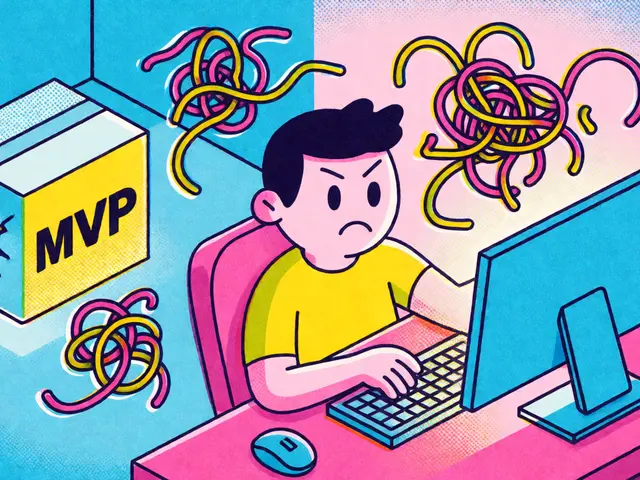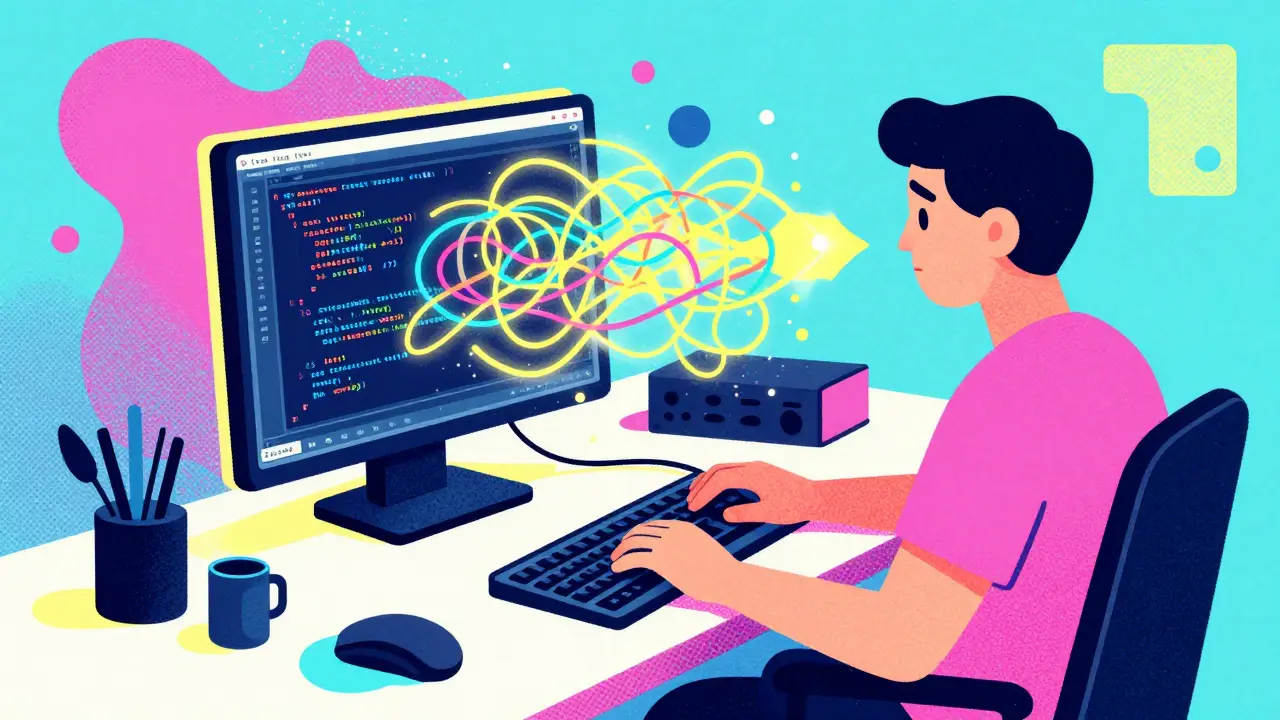
It feels like magic. You type a sentence describing what you want your app to do, hit enter, and suddenly there’s working code on your screen. This is the promise of vibe coding, an AI-assisted development approach where natural language prompts generate executable software. By 2026, this method has shifted from a novelty to a standard practice for millions of developers. But here is the uncomfortable truth nobody wants to talk about at launch parties: magic doesn’t scale. When you build software by asking an AI to "make it work," you often inherit a hidden cost that compounds over time. That cost is technical debt, the gap between the quick-and-dirty solution you shipped today and the robust architecture you should have built.
The speed of vibe coding is undeniable. It lowers barriers to entry and accelerates prototyping. However, prioritizing velocity over deliberate engineering creates unique risks for code maintainability. If you treat AI as a replacement for architectural thinking rather than a tool for implementation, your project will likely become unmanageable within months. Understanding how to manage quality in this new paradigm is no longer optional; it is the difference between a sustainable product and a digital ruin.
The Illusion of Effortless Quality
In traditional development, writing code requires active decision-making. You choose variable names, structure functions, and consider edge cases. In vibe coding, the AI makes these micro-decisions for you. The problem is that large language models optimize for plausibility, not correctness or longevity. They generate code that looks right and runs in simple scenarios, but they lack context about your entire system’s long-term goals.
This creates a specific type of quality risk. Because the developer isn’t typing every line, they may not fully comprehend the logic behind the generated snippet. This is known as the competence illusion. You feel productive because the feature works, but you haven’t internalized the complexity required to maintain it later. When a bug appears six months down the line, you aren’t just debugging code; you are reverse-engineering someone else’s (or something else’s) thought process without documentation.
Research indicates that while 84% of developers now use AI coding tools, the quality of the output depends heavily on human review. Without rigorous oversight, AI-generated code tends to favor common patterns over optimal ones. It might use a deprecated library because that data was prevalent in its training set, or it might ignore security best practices because they weren’t explicitly prompted. The code is functional, but it is rarely polished.
How Vibe Coding Accelerates Technical Debt
Technical debt usually accumulates when teams skip tests, ignore refactoring, or rush features to meet deadlines. Vibe coding introduces a faster engine for this debt. Here is how it happens:
- Fragmented Architecture: AI generates code in isolation. It doesn’t see the big picture unless you provide extensive context. This leads to modules that don’t fit together cleanly, creating integration headaches later.
- Inconsistent Patterns: One prompt might result in a functional programming style, while another yields object-oriented code. Over time, your codebase becomes a patchwork of styles, making it difficult for any single developer to navigate.
- Hidden Complexity: AI can generate dense, clever solutions that solve immediate problems but obscure intent. These "clever" snippets are nightmares to debug because their purpose isn’t immediately obvious to a human reader.
- Lack of Documentation: Traditional developers write comments to explain why they made certain choices. AI rarely generates meaningful explanatory comments, leaving future maintainers guessing about the rationale behind complex logic.
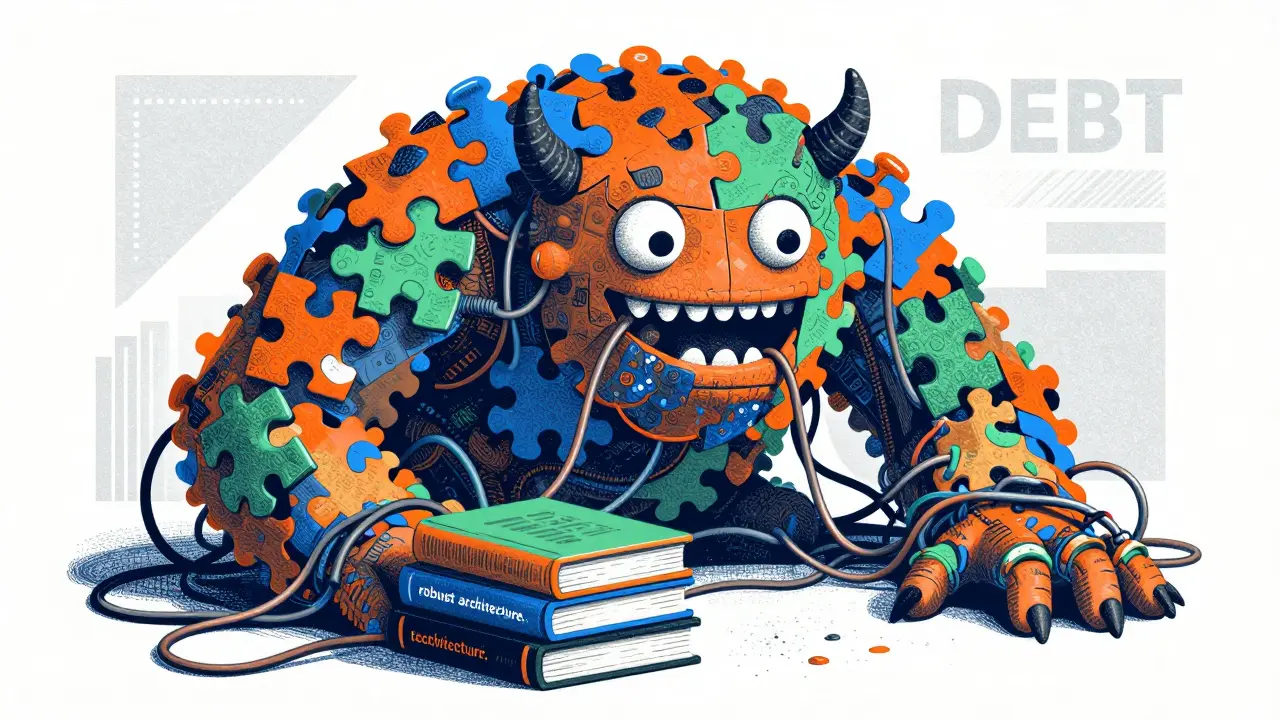
This debt is insidious because it feels cheap initially. You aren’t spending hours writing boilerplate. But the interest payments come due when you need to add a new feature. Suddenly, changing one small thing breaks three unrelated parts of the application because the underlying connections were never properly designed.
Maintainability Challenges in AI-Assisted Workflows
Maintainability is about more than just fixing bugs; it’s about the ease with which code can be understood, modified, and extended. Vibe coding disrupts several key pillars of maintainability.
First, consider readability. Human-written code often follows team conventions. AI-generated code follows statistical probabilities. Unless you enforce strict linting rules and automated formatting, the output can vary wildly. Imagine inheriting a project where half the files use camelCase and the other half use snake_case, not because of historical reasons, but because different prompts triggered different stylistic preferences in the model.
Second, look at test coverage. AI tools can generate unit tests, but they often test happy paths-scenarios where everything goes right. They struggle to anticipate edge cases or malicious inputs unless explicitly guided. This results in a false sense of security. Your test suite passes, but the code is fragile in production environments where users behave unpredictably.
Third, there is the issue of dependency management. AI might suggest using a popular package to solve a problem, but it won’t always check if that package conflicts with others in your stack or if it’s actively maintained. You end up with a dependency tree that is bloated and potentially insecure, requiring significant effort to audit and clean up.
Strategies for Managing Quality in Vibe Coding
You don’t have to abandon vibe coding to avoid these pitfalls. Instead, you need to adapt your workflow to account for the unique risks of AI assistance. Here are practical strategies to keep your codebase healthy:
- Prompt for Architecture First: Before generating code, use AI to design the structure. Ask it to outline the components, data flow, and potential failure points. Review this plan critically before accepting any code generation.
- Enforce Strict Code Reviews: Treat AI-generated code exactly like code written by a junior developer. Require peer reviews that focus not just on functionality, but on style, security, and adherence to project standards.
- Automate Quality Gates: Implement CI/CD pipelines that automatically run linters, formatters, and security scanners on all commits. Reject any PR that doesn’t meet baseline quality metrics, regardless of who (or what) wrote it.
- Document Intent, Not Just Implementation: Use AI to help write documentation, but ensure it captures the business logic and design decisions. Ask the AI to explain why a particular approach was chosen, then verify that explanation yourself.
- Refactor Regularly: Schedule dedicated time for refactoring. Use AI to identify code smells or suggest improvements, but manually implement changes to ensure you understand the modifications.
These steps add friction to the process, yes. But that friction is necessary. It transforms vibe coding from a reckless sprint into a controlled acceleration.
| Factor | Traditional Coding | Vibe Coding (Unmanaged) | Vibe Coding (Managed) |
|---|---|---|---|
| Code Consistency | High (Team Standards) | Low (Model Variance) | Medium-High (Automated Linting) |
| Developer Understanding | Deep (Active Writing) | Shallow (Passive Acceptance) | Medium (Active Review) |
| Documentation Quality | Variable (Human Effort) | Poor (Implicit Logic) | Good (AI-Assisted + Verified) |
| Initial Speed | Slow-Medium | Very Fast | Fast |
| Long-Term Maintenance Cost | Stable | High (Debt Accumulation) | Low-Medium (Controlled) |
Debugging and Refinement in an AI World
Debugging in vibe coding is fundamentally different. Instead of stepping through code line-by-line, you engage in conversational refinement. You tell the AI what’s wrong, and it suggests fixes. This can be incredibly efficient for simple errors, but it carries risks for complex issues.
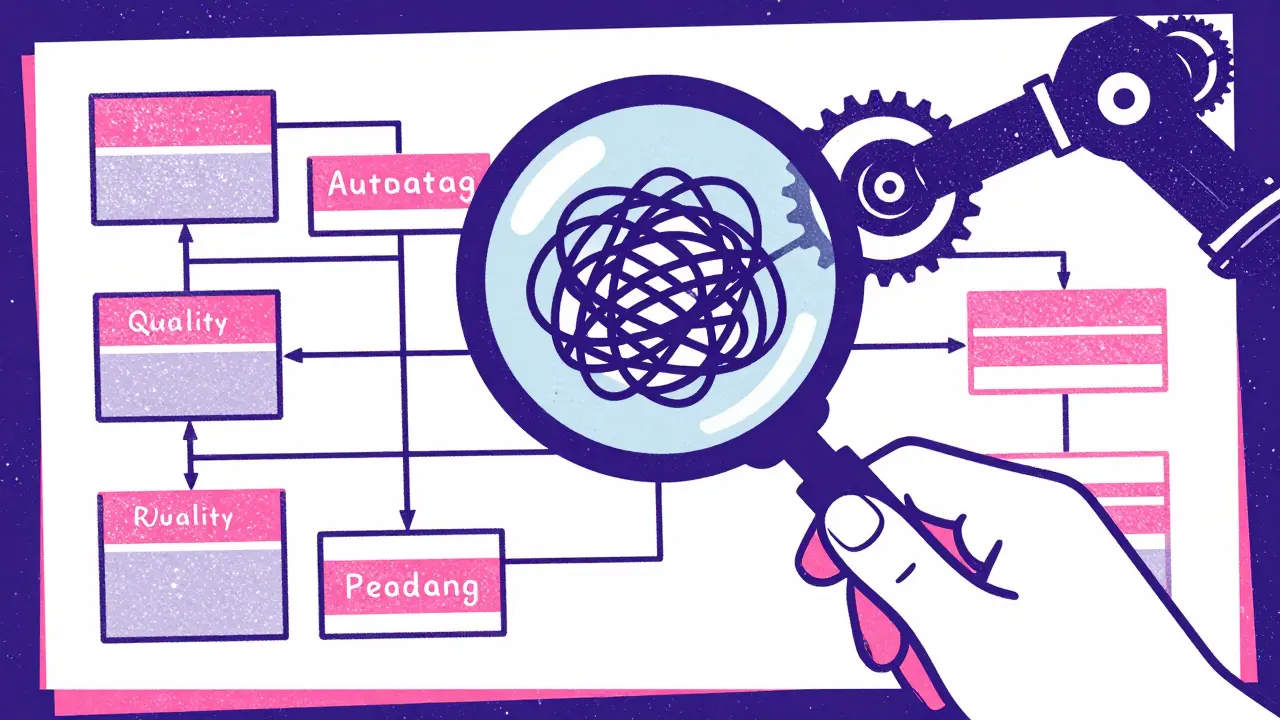
The danger lies in patching. When you ask an AI to fix a bug, it often applies a localized correction without considering systemic implications. This is akin to putting a bandage on a broken bone. The symptom disappears, but the underlying structural weakness remains. Over time, these patches accumulate, creating a brittle system that fails catastrophically under stress.
To mitigate this, adopt a root-cause analysis mindset. Don’t just accept the first fix. Ask the AI to explain why the error occurred. Then, verify that explanation against your understanding of the system. If the explanation doesn’t make sense, dig deeper. Use traditional debugging tools like breakpoints and logs to observe the actual behavior, rather than relying solely on the AI’s interpretation.
Additionally, leverage AI for refactoring proactively. Before adding new features, ask the AI to analyze existing code for opportunities to simplify or modularize. This helps pay down technical debt incrementally, preventing it from spiraling out of control.
The Future of Code Quality in AI-Driven Development
As AI models improve, the quality of generated code will undoubtedly increase. We are already seeing advancements in context awareness and multi-file editing capabilities. However, the fundamental challenge remains: AI lacks intent. It doesn’t care if your code is elegant or secure; it only cares about predicting the next token.
This means that human judgment will become even more critical, not less. Developers will shift from being writers of code to editors and architects. Your value will lie in your ability to evaluate, integrate, and govern the output of AI systems. Those who embrace this role, combining the speed of vibe coding with the discipline of traditional engineering, will thrive. Those who rely on AI blindly will find themselves drowning in technical debt.
The goal isn’t to slow down development. It’s to ensure that the speed you gain today doesn’t bankrupt your project tomorrow. By treating AI as a powerful but imperfect partner, you can harness its benefits while maintaining the quality and maintainability that sustain successful software products.
Is vibe coding suitable for production-ready applications?
Yes, but only with rigorous human oversight. Vibe coding can accelerate development, but the resulting code must undergo thorough testing, security audits, and architectural review before deployment. Never deploy AI-generated code directly to production without validation.
How do I measure technical debt in AI-generated code?
Use standard metrics like code complexity, duplication rates, and test coverage. Additionally, track the time spent on bug fixes versus feature development. An increasing ratio of fix time indicates accumulating technical debt. Regular code reviews also help identify architectural inconsistencies.
Can AI replace senior developers in ensuring code quality?
No. AI lacks contextual understanding and strategic foresight. Senior developers provide critical judgment, architectural planning, and mentorship that AI cannot replicate. AI is a tool to augment human expertise, not replace it.
What are the biggest security risks in vibe coding?
AI may inadvertently introduce vulnerabilities by suggesting insecure libraries, ignoring input validation, or implementing flawed authentication logic. Always run static application security testing (SAST) and manual security reviews on AI-generated code.
How can teams maintain consistency when using vibe coding?
Establish strict coding standards and automate enforcement through linters and formatters. Create detailed prompts that specify style guidelines. Conduct regular code reviews focused on consistency and adherence to team conventions.