You typed a question into ChatGPT, got a confident answer, and hit send. Maybe it was a medical diagnosis for your friend, a legal citation for a client, or a line of code for a critical bug. You trusted the machine because it sounded right. But what if that confidence was an illusion? Since Large Language Models (LLMs) exploded into mainstream use after November 2022, millions have adopted them without understanding their fundamental flaws. We are treating these probabilistic text generators like search engines or experts, but they are neither. They are pattern-matchers that can be confidently wrong.
This gap between expectation and reality creates real risks. When users don’t know how to spot a hallucination or understand data bias, they make bad decisions. Whether you’re a developer deploying a chatbot, a teacher grading essays, or a doctor using AI for notes, you need to know how to set expectations responsibly. It’s not just about technical specs; it’s about human behavior. Here is how we bridge the trust gap.
The Core Problem: Why We Overtrust AI
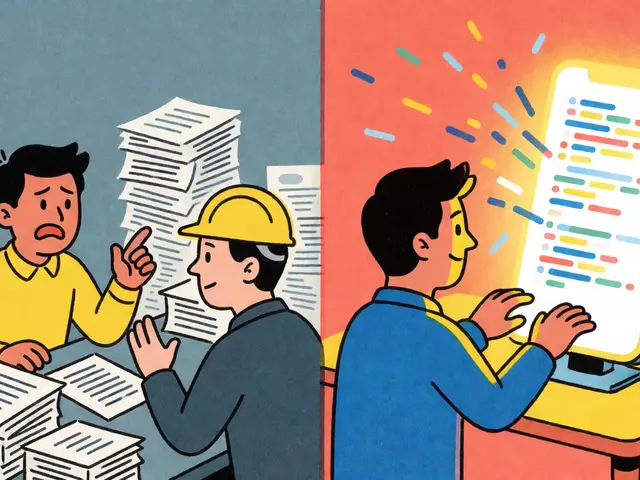
Human brains are wired to trust fluency. If a sentence flows well and uses correct terminology, we assume it’s true. This is called the "fluency heuristic." LLMs exploit this perfectly. They are designed to produce coherent text, not necessarily factual truth. A study from Tufts Medical Center highlights this danger, noting that users often accept AI-generated recommendations without question, leading to errors in task performance. This phenomenon is known as overreliance.
Think of it like asking a very charismatic stranger for directions. They speak with authority and point down a plausible-looking street. Unless you check a map, you’ll follow them, even if they’re guessing. In professional settings, this isn’t just annoying-it’s dangerous. The DNV Technology Insights report points out that detecting these errors is hard precisely because the responses are highly plausible. Non-experts lack the resources to verify every claim, so they let the model’s confidence override their own skepticism.
Hallucinations: The Confident Lie
The most famous limitation of Generative AI is hallucination. This happens when a model generates information that sounds reasonable but is factually incorrect. It’s not a bug in the traditional sense; it’s a feature of how these models work. They predict the next token (word part) based on probability, not logic. If the most probable next word is wrong, the model outputs it anyway.
Why does this happen? LLMs are essentially lossy compressions of the internet. They store patterns, not facts. When asked about a rare event or a specific detail, they might blend two similar concepts together. For example, a model might invent a court case by combining names and dates from different real cases. In 2023, a US lawyer was sanctioned for submitting fabricated case citations generated by AI. He didn’t check them because they looked authentic. That’s the trap. Users need to be taught that LLMs do not "know" things; they predict text. And predictions can be lies.
Bias and Fairness: Whose World Does the AI See?
If hallucinations are about accuracy, bias is about fairness. LLMs learn from historical data, which contains historical prejudices. If the training data underrepresents certain groups, the model’s output will too. This isn’t just a social justice issue; it’s a reliability issue. A model trained mostly on Western medical literature might give poor advice for patients in Asia or Africa because it hasn’t seen enough examples from those contexts.
| Bias Type | Origin | Real-World Example |
|---|---|---|
| Representation Bias | Skewed training datasets | Medical AI missing hepatitis-B cirrhosis symptoms common in non-Western populations |
| Stereotype Bias | Cultural norms in text | Associating nurses with women and engineers with men |
| Temporal Bias | Outdated knowledge cutoff | Not knowing about laws passed last month |
A 2024 article in a medical education journal illustrates this with a concrete example: an LLM trained predominantly on Western cases of alcoholic cirrhosis failed to accurately diagnose hepatitis-B-induced cirrhosis in non-Western patients. The model wasn’t "biased" in a malicious way; it just lacked the context. Users must understand that an LLM’s perspective is limited to its training data. If your domain involves diverse populations or niche topics, the default model might be blind to your reality.

Context Limits and Outdated Knowledge
Another major limitation is memory. LLMs have a context window, which is the maximum amount of text they can process at once. While windows are getting larger (up to 128k tokens or more in some 2026 models), they aren’t infinite. More importantly, models struggle to retrieve information buried in the middle of long documents. They tend to focus on the beginning and end of a prompt.
Then there’s the knowledge cutoff. Each model version has a fixed date up to which it knows things. A base model trained on data only up to 2023 cannot know about a drug approved in 2024 unless it’s connected to a live search tool. Many users forget this. They ask about current events and get answers that sound old but are presented with present-tense verbs. Educating users means teaching them to check the date of the model’s knowledge and to treat older models as historical archives, not news feeds.
Who Is Responsible for Education?
So, who teaches people these limits? It’s a shared responsibility. Developers, organizations, and users all play a role. The OECD AI Principles and UNESCO’s Recommendation on the Ethics of Artificial Intelligence both call for transparency. But high-level principles don’t help a student writing an essay or a coder debugging software.
Developers need to design interfaces that signal uncertainty. Instead of just showing text, show confidence scores or source links. If a model is guessing, say so. Organizations need to create clear policies. Can employees paste confidential data into public models? Should students cite AI use? Ambiguity leads to misuse. Finally, users need digital literacy. They need to learn verification habits, like cross-checking facts with independent sources.
Consider the interface itself as an educational tool. If a chatbot always gives a definitive answer, users assume it’s right. If it says, "Based on available data, X is likely, but Y is possible," users stay alert. Small changes in wording can significantly reduce overreliance.

Practical Strategies for Responsible Use
How do you actually implement this education? It starts with concrete actions, not just warnings. Generic disclaimers like "AI may make mistakes" are ignored due to banner blindness. People skim them. To truly educate, you need active engagement.
- Teach Verification: Don’t just say "check facts." Show users how. Require them to find two independent sources for any factual claim made by an LLM.
- Use Retrieval-Augmented Generation (RAG): Connect LLMs to verified databases. This reduces hallucinations by grounding answers in real documents. Teach users to look for source citations in the output.
- Adjust Parameters: For factual tasks, set the temperature parameter close to 0. This makes the model less creative and more deterministic. Explain this to users: lower creativity equals higher consistency.
- Create Failure Case Studies: Share real stories of AI failures. The lawyer sanctioned for fake citations is a powerful lesson. Stories stick better than rules.
In education, instructors should design assignments that require critical thinking beyond what AI can provide. Ask students to critique an AI-generated response rather than just submit it. Reward them for finding errors. This shifts the value from generation to evaluation.
The Future: Evolving Expectations
As LLMs improve, new challenges emerge. Model collapse-the idea that training future models on AI-generated data degrades quality-is a growing concern. If the web becomes filled with AI slop, future models might learn from noise. Users will need to understand that the ecosystem itself is changing.
Regulations like the EU AI Act are starting to mandate disclosures. Companies will have to label AI content clearly. This external pressure helps drive internal education. But technology moves faster than law. By 2026, multimodal models that process images and audio are becoming standard. New limitations arise here, such as privacy risks when uploading sensitive photos. Education must keep pace with capability.
Ultimately, setting expectations responsibly isn’t about limiting AI. It’s about unlocking its potential by removing friction. When users know the boundaries, they use the tools better. They stop expecting magic and start collaborating with a powerful, flawed partner. That’s the mature relationship we need with artificial intelligence.
What is an LLM hallucination?
An LLM hallucination is when a large language model generates information that appears plausible and fluent but is factually incorrect or nonsensical. This occurs because the model predicts the next word based on statistical probabilities rather than accessing a database of verified facts.
Why do LLMs exhibit bias?
LLMs learn from vast amounts of text data scraped from the internet and books. If this training data contains societal biases, stereotypes, or underrepresentation of certain groups, the model reflects these patterns in its outputs, potentially leading to unfair or inaccurate results for marginalized populations.
Can I trust LLMs for medical advice?
You should not rely solely on LLMs for medical advice. While they can summarize information, they lack real-time clinical judgment and may hallucinate treatments or miss rare conditions. Always consult a qualified healthcare professional and verify AI suggestions against established medical guidelines.
What is the context window in an LLM?
The context window is the maximum number of tokens (words or parts of words) an LLM can process in a single interaction. Information outside this window is forgotten. Larger context windows allow for more complex reasoning over long documents, but models still struggle to retrieve specific details from the middle of very long texts.
How can developers reduce user overreliance on AI?
Developers can reduce overreliance by designing transparent interfaces that display confidence levels, providing direct links to source materials, and using clear disclaimers. Implementing features that force users to review and edit AI outputs before finalizing them also encourages critical engagement.