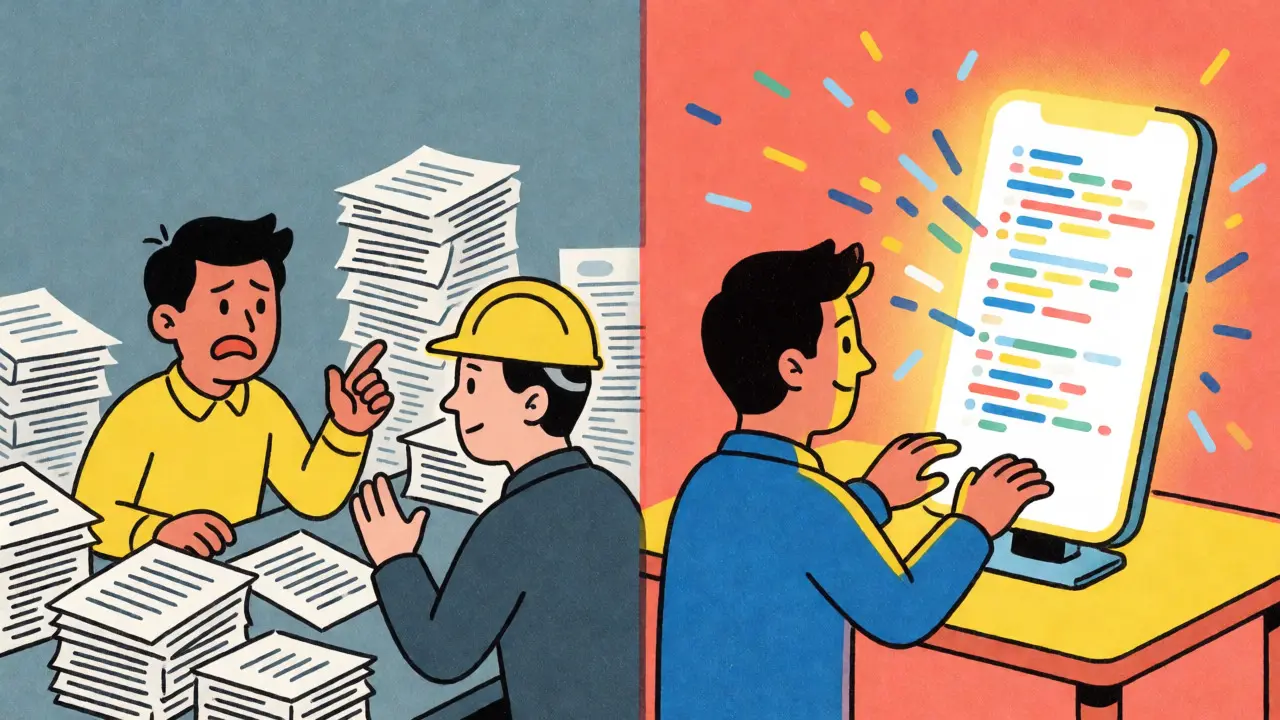
Imagine you have a brilliant feature idea on Tuesday morning. By Wednesday afternoon, you have a clickable prototype in front of five real users, and by Thursday, you know whether to build it or kill it. This isn't science fiction; it's the new reality for Product Managers using vibe coding. The traditional bottleneck of waiting weeks for engineering resources is dissolving, replaced by a workflow where natural language becomes your primary programming interface.
You might be thinking, "Isn't that just no-code?" Not quite. While no-code platforms often lock you into rigid templates, vibe coding leverages large language models to generate actual code based on your conversational intent. It’s about describing what you want, seeing it appear, tweaking it through dialogue, and shipping it. This shift fundamentally changes how we approach discovery, moving us from writing lengthy specification documents to building tangible artifacts that speak for themselves.
What Is Vibe Coding and Why Does It Matter Now?
Vibe coding is defined as prompt-driven product development where you use generative AI and no-code AI-first platforms to produce apps and tools. The term, popularized by Andrej Karpathy, captures the essence of this new methodology: "just see stuff, say stuff, run stuff, and copy-paste stuff, and it mostly works." It represents a departure from syntax-heavy programming to intent-based creation.
For product managers, this matters because it removes the translation loss between idea and execution. In the past, you’d write a PRD (Product Requirements Document), hand it to an engineer, wait for them to interpret it, and then wait further for implementation. Each step introduced friction and potential misunderstanding. With vibe coding, you close that loop yourself. You describe the user flow, the AI generates the React or Vue components, and you iterate in real-time.
This isn't just about speed; it's about autonomy. Product managers at companies like Meta are already using internal tools like Metamate to prototype features without pulling engineers off their sprint commitments. This democratization of creation means PMs can test hypotheses independently, freeing up engineering capacity for complex backend logic while handling the front-end experimentation themselves.
The Workflow: From Idea to Prototype in Hours
How do you actually do this? It’s not magic, but it does require a structured approach to avoid getting lost in endless prompt iterations. Here is a practical workflow that takes you from a vague concept to a testable MVP:
- Define the Core Problem: Before opening any tool, write down the problem statement and two leading success metrics. Clarity here prevents scope creep later.
- Gather Visual Inspiration: Collect screenshots from Dribbble or Behance that match the aesthetic and flow you envision. These serve as visual anchors for the AI.
- Draft Lightweight Specs: Ask your AI assistant to draft a mini-PRD with Given-When-Then acceptance criteria. Keep it brief-constraints and assumptions only.
- Select Your Platform: Choose a tool that fits your needs. Platforms like Lovable, Bolt, or Cursor combine AI generation with deployment capabilities.
- Prompt Iteratively: Start with the main screen structure. Then, add functionality one component at a time. Use specific prompts: "Create a dashboard card showing weekly active users with a sparkline chart."
- Debug via Dialogue: When something breaks, paste the error back into the chat. Ask the AI to fix it and explain why it happened. This builds your technical intuition.
- Deploy Instantly: Push the prototype to Netlify or Vercel. Share the live URL with stakeholders immediately.
- Test with Users: Conduct quick usability tests with 5-10 participants. Capture both qualitative feedback and quantitative task completion rates.
The key here is iteration. Don’t try to prompt the entire app in one go. Break it down. Treat the AI as a junior developer who needs clear, concise instructions but learns quickly from corrections.
Accelerating Time-to-Feedback Metrics
The primary benefit of vibe coding is the drastic reduction in time-to-feedback. Traditional prototyping cycles could take weeks. With AI-assisted workflows, you can compress this into days or even hours. McKinsey research suggests that generative AI can increase productivity by up to 40% and reduce time-to-market by 5%. For a product manager, this translates directly to faster learning loops.
| Metric | Traditional Workflow | Vibe Coding Workflow |
|---|---|---|
| Idea to Prototype | 2-4 Weeks | 2-4 Days |
| Engineering Dependency | High (Handoff required) | Low (Self-service) |
| Iteration Speed | Slow (Sprint planning) | Fast (Real-time prompting) |
| Cost per Experiment | High (Engineer hours) | Low (PM time + API costs) |
| Fidelity | Static Mockups or High-Fidelity Code | Functional Interactive Prototypes |
Notice the shift in fidelity. Traditional methods often force a choice between fast-but-static mockups (Figma) and slow-but-functional code. Vibe coding bridges this gap. You get functional interactivity without the heavy engineering lift. This allows you to validate not just the look, but the behavior of your product decisions.
Where Vibe Coding Shines (And Where It Doesn’t)
It’s crucial to understand the boundaries of this technology. Vibe coding is not a replacement for professional software engineering in all contexts. It excels in specific scenarios but struggles in others.
Use Vibe Coding For:
- User Experience Validation: Testing flows, navigation structures, and micro-interactions.
- Internal Tooling: Building dashboards, admin panels, or data visualization tools that don’t require massive scale.
- Hackathon-Style MVPs: Proving market fit quickly before committing significant engineering resources.
- Stakeholder Demos: Showing executives exactly how a feature will work, reducing ambiguity in approval processes.
Avoid Vibe Coding For:
- Regulated Industries: Finance and healthcare systems require strict audit trails and security compliance that AI-generated code may not inherently provide.
- Complex Backend Logic: Heavy data processing, concurrency handling, or long-running background jobs need optimized, human-reviewed architecture.
- Long-Term Maintenance: If the prototype turns into a core product, you’ll need an engineering handover. Unreviewed AI code can accumulate technical debt rapidly.
Treat vibe coding prototypes as disposable experiments. Their value lies in the insights they generate, not necessarily in the codebase itself. Once you’ve validated the hypothesis, hand off the requirements-not necessarily the raw code-to your engineering team for production-grade implementation.
Critical Skills for the Modern Product Manager
To succeed with vibe coding, you need to develop new competencies. It’s not enough to just type random sentences into a chat window. Effective vibe coding requires:
- Prompt Engineering: Learning how to structure requests clearly. Ambiguity leads to bad code. Be specific about constraints, design systems, and expected behaviors.
- Data Fluency: Understanding what data your prototype needs. Can you define the schema? Do you know which APIs to connect? AI can help, but you must guide the data strategy.
- Design System Awareness: Knowing your organization’s design tokens and components. Integrating these into your prompts ensures consistency and reduces rework during handoff.
- Critique Ability: The ability to spot when the AI has hallucinated a solution or created inefficient logic. You don’t need to write the code, but you need to read it well enough to judge its quality.
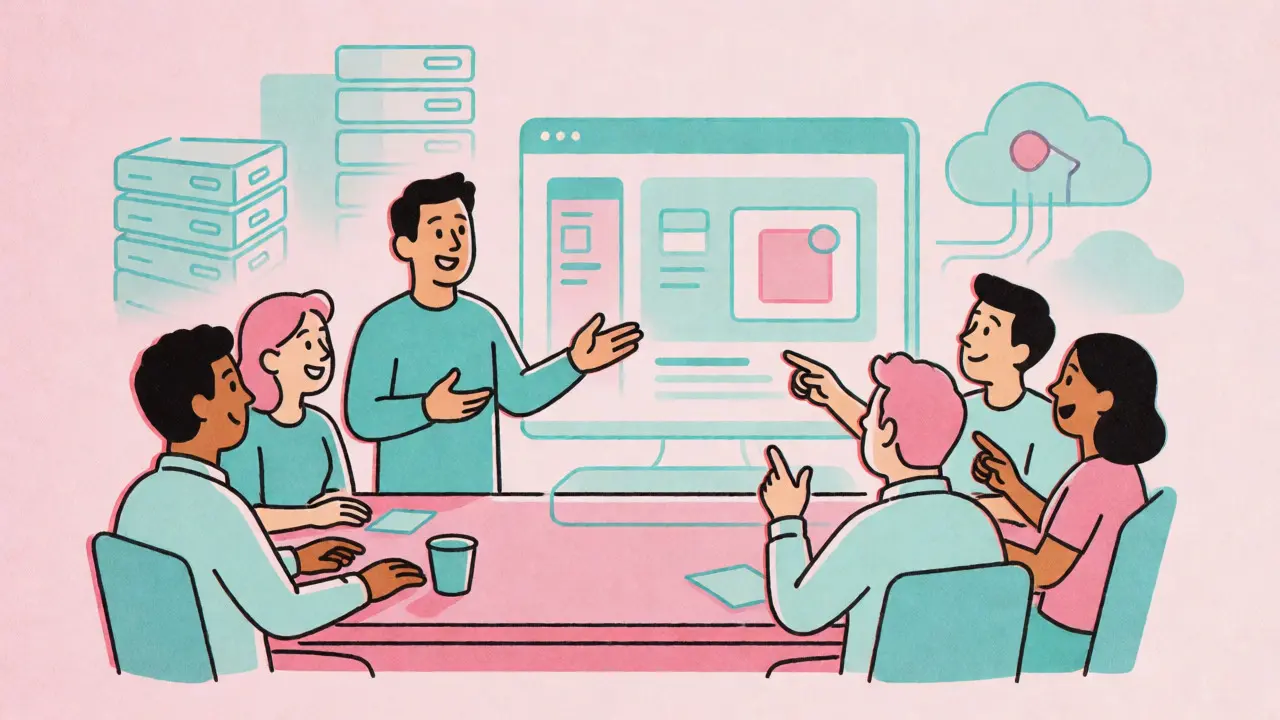
This evolution positions product managers closer to the technical side of the house. You’re no longer just writing tickets; you’re orchestrating AI agents to build solutions. This hybrid skill set is becoming increasingly valuable in tech companies looking for PMs who can drive velocity without bloating headcount.
Risks and Guardrails
Speed introduces risk. If everyone starts building their own apps, you end up with fragmented experiences and unmaintained codebases. To mitigate this, establish clear guardrails.
First, enforce a definition of "done." A prototype isn’t done until it passes basic usability testing against your success metrics. Second, maintain ownership clarity. Who owns the prototype? Who cleans it up? Third, integrate design system checks. Some advanced workflows allow you to inject your company’s CSS or component library directly into the AI context, ensuring generated UI matches brand standards.
Also, watch out for hidden costs. Spending three days tweaking pixel-perfect animations in a prototype might be less efficient than spending thirty minutes whiteboarding the concept with a designer. Know when to stop polishing and start testing.
Do I need to know how to code to use vibe coding?
No, you do not need to know how to write code line-by-line. However, you need strong logical reasoning skills and the ability to articulate technical requirements clearly. Reading code to debug errors is helpful but not strictly mandatory if you rely on the AI to fix issues iteratively.
Will vibe coding replace my engineering team?
No. Vibe coding handles rapid prototyping and simple applications. Complex, scalable, secure, and high-performance systems still require professional software engineers. Think of it as a tool for discovery and validation, not production infrastructure.
Which tools are best for vibe coding in 2026?
Popular platforms include Lovable, Bolt.new, and Cursor. These tools combine AI code generation with instant deployment features. Choose based on your stack preference (e.g., React vs. Next.js) and integration needs.
How do I handle security concerns with AI-generated code?
For prototypes, keep sensitive data out of the codebase. Use mock data or non-production API keys. For anything going to production, ensure your engineering team reviews the generated code for security vulnerabilities and compliance adherence.
Can I share vibe-coded prototypes with external users?
Yes, most vibe coding platforms offer easy deployment to URLs (like Netlify or Vercel). You can share these links with users for feedback sessions. Just ensure you aren't exposing proprietary algorithms or private data in the public prototype.