Retrieval-Augmented Generation: How AI Combines Knowledge and Creativity
Retrieval-augmented generation, a technique where large language models pull in external information before generating responses. Also known as RAG, it fixes the biggest problem with AI chatbots: making things up. Instead of guessing based on old training data, RAG asks the model to check live sources first—like your company’s docs, databases, or recent articles—then writes a smart answer using what it finds. This isn’t just theory. Companies using RAG report up to 70% fewer hallucinations and way better accuracy on questions about their own products, policies, or internal systems.
What makes RAG work is the combo of two things: knowledge retrieval, the process of finding relevant facts from external sources and large language models, AI systems trained to generate human-like text. Think of it like a researcher with a great memory who also knows how to use a library. The LLM handles the writing, the retrieval system handles the fact-checking. You don’t need to retrain the model every time your data changes. Just update the source files, and the answers get better. This is why teams building customer support bots, internal wikis, or legal assistants all jump on RAG—it’s the cheapest, fastest way to make AI trustworthy.
And it’s not just about pulling text. Modern RAG systems can search PDFs, spreadsheets, videos, even code repos. Tools like LangChain and LiteLLM make it easy to plug in your own data sources. You can tie it to your CRM, your helpdesk, or your product database. The result? AI that doesn’t just sound smart—it actually knows what it’s talking about. You’ll see this in the posts below: how developers use RAG to cut costs, reduce legal risk, and build systems that don’t lie. Some posts show you how to structure prompts for better retrieval. Others break down how to handle large datasets without slowing things down. There’s even a guide on measuring truthfulness, because if your AI still gives wrong answers, you need to know why. What you won’t find are vague explanations. Every article here is built for people who need RAG to work—not just understand it.
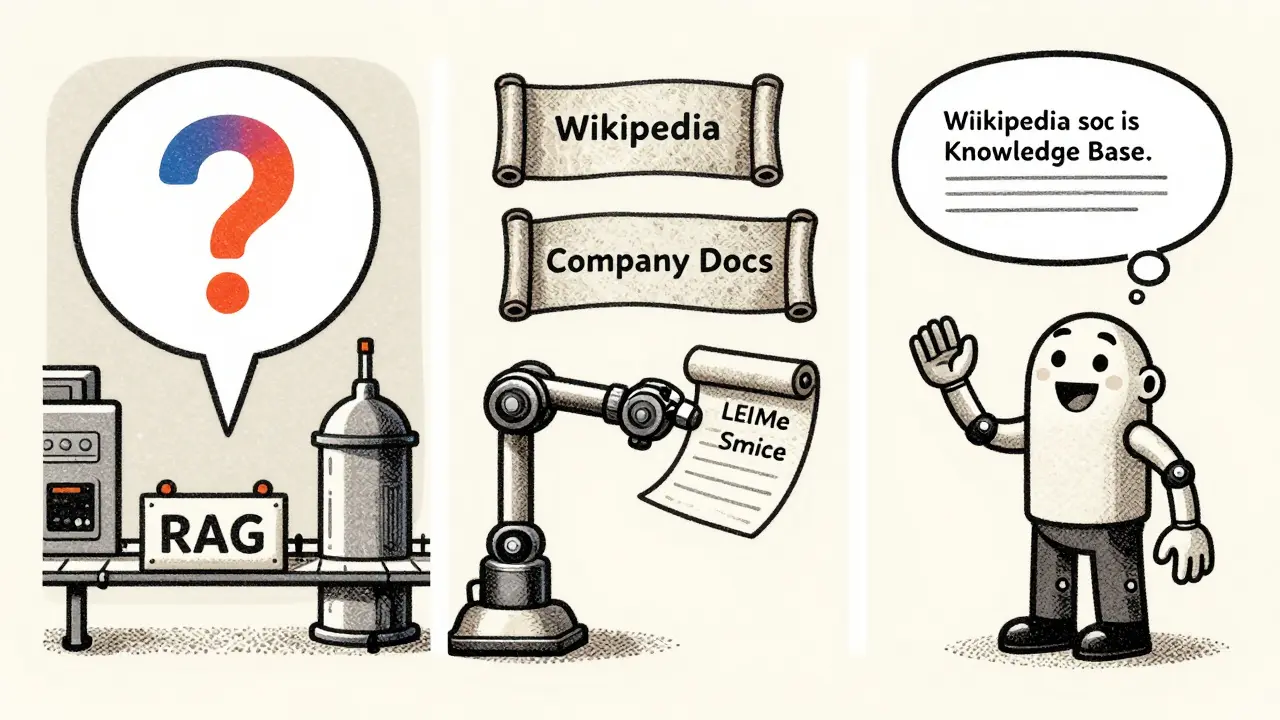
How Combining RAG with Decoding Strategies Improves LLM Accuracy
Combining RAG with advanced decoding strategies like Layer Fused Decoding and entropy-based weighting drastically reduces LLM hallucinations. This approach grounds responses in live data while guiding word-by-word generation for higher accuracy.
Read More
RAG Failure Modes: Diagnosing Retrieval Gaps That Mislead Large Language Models
RAG systems often appear to work but quietly fail due to retrieval gaps that mislead large language models. Learn the 10 hidden failure modes-from embedding drift to citation hallucination-and how to detect them before they cause real damage.
Read More
Retrieval-Augmented Generation for Large Language Models: A Practical End-to-End Guide
RAG lets large language models use your own data to give accurate, traceable answers without retraining. Learn how it works, why it beats fine-tuning, and how to build one in 2025.
Read More