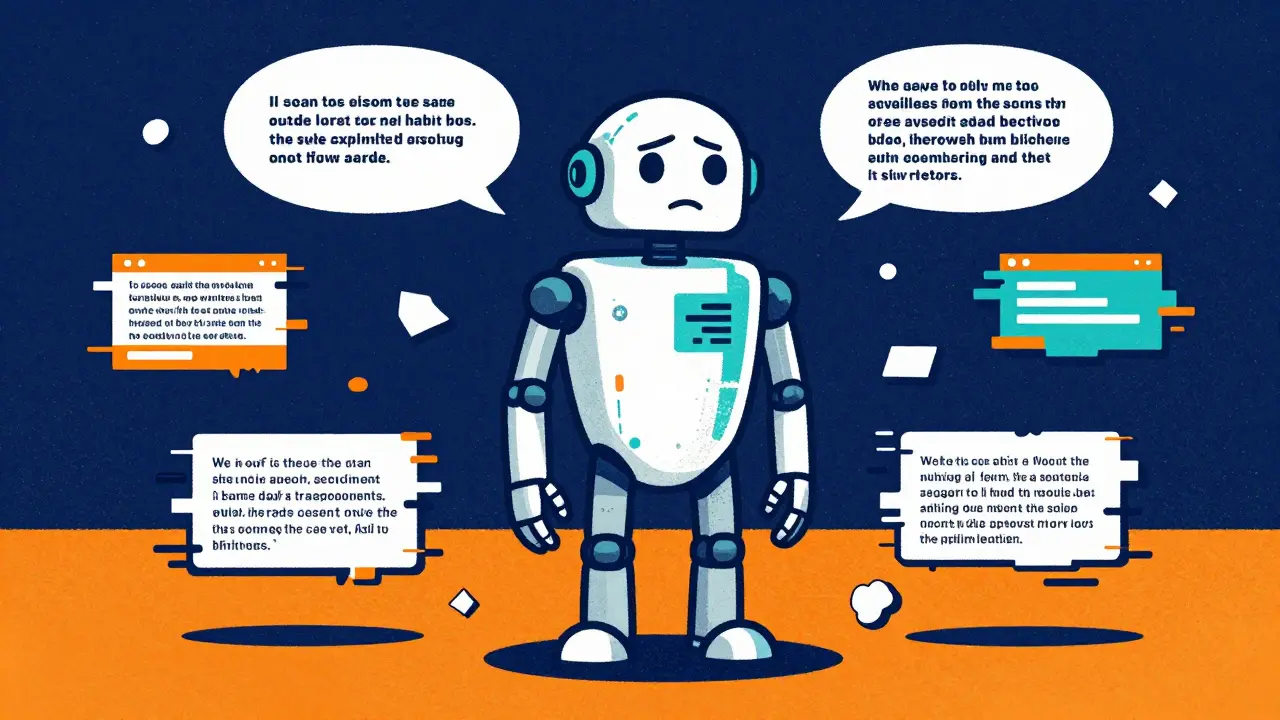
Imagine asking an AI about a product your company launched yesterday, only to have it confidently tell you the product doesn't exist-or worse, make up a set of fake features that sound completely believable. This is the classic problem of AI hallucinations. Large Language Models (LLMs) are essentially giant pattern-recognition machines; they don't "know" facts in the way humans do, they just know which words usually follow other words based on data they saw months or years ago. This creates a dangerous gap between the model's confidence and its actual accuracy.
To fix this, developers are moving away from relying solely on a model's internal memory. Instead, they use Retrieval-Augmented Generation is a hybrid AI framework that lets an LLM look up real-time, authoritative information from an external source before it answers a question. Also known as RAG, this approach transforms the AI from a student reciting a memorized textbook into a researcher with access to a live library.
The Core Mechanics: How RAG Actually Works
RAG doesn't change how the LLM is trained; it changes how the LLM is used. Instead of just sending a user's question straight to the AI, the system executes a four-step pipeline to ensure the answer is grounded in reality.
- Ingestion: Your private data-like PDFs, emails, or database entries-is broken down into small, manageable pieces called chunks.
- Retrieval: When a user asks a question, the system searches through these chunks to find the most relevant ones. It doesn't just look for keywords; it looks for meaning using Embedding Models, which are specialized AI tools that turn text into numerical vectors to identify semantic similarity.
- Augmentation: The system takes the original user question and "stuffs" the retrieved factual chunks into the prompt. The prompt essentially says: "Using only these specific pieces of evidence, answer the following question."
- Generation: The LLM reads the provided context and synthesizes a response. Because it has the facts right in front of it, it doesn't need to guess.
Why RAG Beats Traditional Fine-Tuning
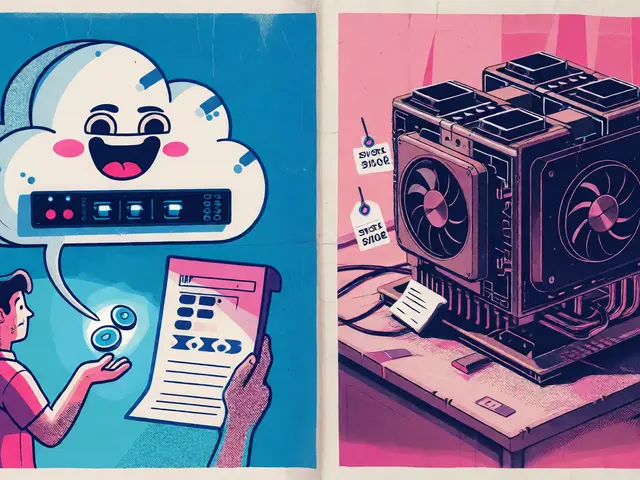
Many people assume that to make an AI smarter, you have to "train" it more on specific data. This is called fine-tuning. While fine-tuning is great for teaching an AI a specific tone or a complex coding style, it's a terrible way to manage facts. Fine-tuning is expensive, takes a long time, and the moment your data changes, the model is outdated again.
RAG provides a more scalable alternative. If your company changes its pricing plan, you don't need to spend thousands of dollars retraining a model. You simply update the document in your Vector Database, which is a specialized storage system like Pinecone that allows for high-speed retrieval of vector embeddings. The AI will find the new pricing in the next search, and the output is instantly updated.
| Feature | RAG | Fine-Tuning |
|---|---|---|
| Update Speed | Instant (update the doc) | Slow (requires retraining) |
| Cost | Low (storage/API costs) | High (GPU/Compute costs) |
| Transparency | High (provides citations) | Low (black box) |
| Knowledge Cutoff | None (real-time access) | Fixed (static training date) |
Solving the Hallucination Problem
Hallucinations happen when an LLM encounters a "knowledge gap." It tries to fill that gap using the most likely linguistic pattern, even if that pattern is factually wrong. RAG effectively closes this gap by providing a "cheat sheet."
One of the biggest wins here is verifiability. Because the AI is pulling from specific chunks of data, it can provide footnotes. Instead of saying "Our policy allows 30-day returns," it can say "Our policy allows 30-day returns (Source: Returns_Policy_2026.pdf)." This transparency is non-negotiable for industries like legal, healthcare, or high-end customer support where a mistake can be costly.
Advanced Strategies for Better Accuracy
Not all RAG systems are created equal. If your retrieval step is sloppy, your generation will be too. This is often called "garbage in, garbage out." To combat this, experts use a few key techniques:
- Hybrid Search: Some queries are semantic (meaning-based), but some are exact. If a user searches for "Product SKU-9921," a vector search might find "similar" products, but a keyword search will find the exact one. Hybrid search combines both.
- Reranking: The system might pull the top 20 potential documents, but then use a second, more precise model to rank the top 5 that are truly relevant before passing them to the LLM.
- Query Expansion: The system rewrites a vague user question into a more detailed search query to ensure the embedding model finds the best possible match.
We are also seeing the rise of Agentic RAG, which is an advanced architecture where the LLM can decide on the fly whether it needs to retrieve more information, which tool to use, and how to refine its search. Unlike standard RAG, which searches once at the start, an Agentic system can stop mid-sentence, realize it's missing a detail, go back to the database, and then finish the answer.
Common Pitfalls to Avoid
If you're implementing this, watch out for a few common traps. First, avoid "chunking" your data poorly. If you cut a sentence in half during the ingestion phase, the embedding model might lose the context, leading to irrelevant retrievals. Use overlapping chunks or semantic chunking to keep the meaning intact.
Second, don't trust the AI to tell you when it didn't find anything. By default, some models will still try to answer even if the retrieval step returned zero results. You must explicitly instruct the model in the prompt: "If the provided context does not contain the answer, state that you do not know. Do not attempt to make up an answer."
Does RAG replace the need for a large model?
No, it doesn't. You still need a capable LLM to read the retrieved data and summarize it. However, RAG allows you to use a smaller, faster model (like a 7B or 8B parameter model) and still get factual results that would normally require a massive model like GPT-4, because the model isn't relying on its own memory for the facts.
Is RAG secure for proprietary company data?
Yes, as long as you control the infrastructure. By using a private vector database and a secure LLM deployment (like an on-prem instance or a VPC), your data never leaves your secure environment to train a public model. You are only sending the relevant snippet of data as a temporary prompt.
How do I handle documents that change frequently?
This is where RAG shines. You simply delete the old embeddings for that specific document in your vector database and upload the new version. The next time a user asks a question, the retriever will pull the most current version of the text.
What is the difference between dense and sparse retrieval?
Dense retrieval uses embeddings (vectors) to find meaning, allowing the system to find "dog" when the user searches for "canine." Sparse retrieval is essentially keyword matching-finding the exact word. Most high-end systems use a hybrid of both to get the best of both worlds.
Can RAG be used for real-time data like stock prices?
Absolutely. While traditional RAG uses static documents, you can connect the retrieval step to an API. Instead of searching a database, the system retrieves the current price from a financial API and feeds that value into the LLM as context.
Next Steps for Implementation
If you're starting from scratch, begin by auditing your data. Clean up your documents and remove duplicates; the cleaner your data, the better your embeddings will be. Try a simple implementation using a framework like LangChain or LlamaIndex, which provide the plumbing needed to connect your documents to your LLM.
For those already using a basic RAG setup, the next move is adding a reranking step. It's one of the fastest ways to boost accuracy without changing your underlying model. Once that's stable, look into agentic workflows to handle complex queries that require multiple steps of reasoning and retrieval.


Mike Zhong
11 April, 2026 - 22:25 PM
This whole "solution" is just a band-aid on a broken leg. We're basically admitting that these models are just fancy autocomplete machines that can't actually reason, so we're just giving them a cheat sheet and pretending they're suddenly intelligent. It's an architectural admission of failure wrapped in a fancy acronym.
Taylor Hayes
13 April, 2026 - 05:20 AM
I think it's actually a really hopeful step forward for people who are scared of the AI taking over or lying to them. Just having those citations makes the whole experience feel much more honest and collaborative between the human and the machine.
Johnathan Rhyne
14 April, 2026 - 15:36 PM
While the logic is sound, the phrasing "stuffs the retrieved factual chunks" is a delightfully crude way to describe data augmentation, though I suppose it captures the brute-force nature of the process quite vividly. I'll play devil's advocate here: the reliance on vector databases creates a new kind of "black box" where you're just trusting a mathematical distance metric to determine truth, which is just as precarious as trusting the weights of a transformer.
Jamie Roman
16 April, 2026 - 08:23 AM
I've been spending a lot of time lately looking into the actual implementation of semantic chunking because, as the post mentioned, if you just split by character count you end up with these weirdly severed thoughts that completely confuse the embedding model, and I've found that using a recursive character splitter combined with a small overlap of about 10-15% usually helps maintain the narrative flow of the document so the retriever actually has a chance of finding the context it needs to generate a coherent response without skipping over the crucial nuances that often live at the end of one paragraph and the start of the next.
Salomi Cummingham
16 April, 2026 - 21:10 PM
Oh my goodness, the sheer magnitude of the difference between a hallucinating bot and a RAG-enabled system is just staggering to behold when you're actually in the trenches of customer support! It's like the difference between a chaotic fever dream where the AI just makes up laws of physics and a polished, professional librarian who actually knows where the books are kept, and I honestly cannot stress enough how much of a lifesaver the verifiability aspect is because there is absolutely nothing more horrifying than a bot confidently promising a client a 90% discount that doesn't exist while citing a fake policy, and seeing those actual PDF filenames in the footnotes is just a total game-changer for my sanity!