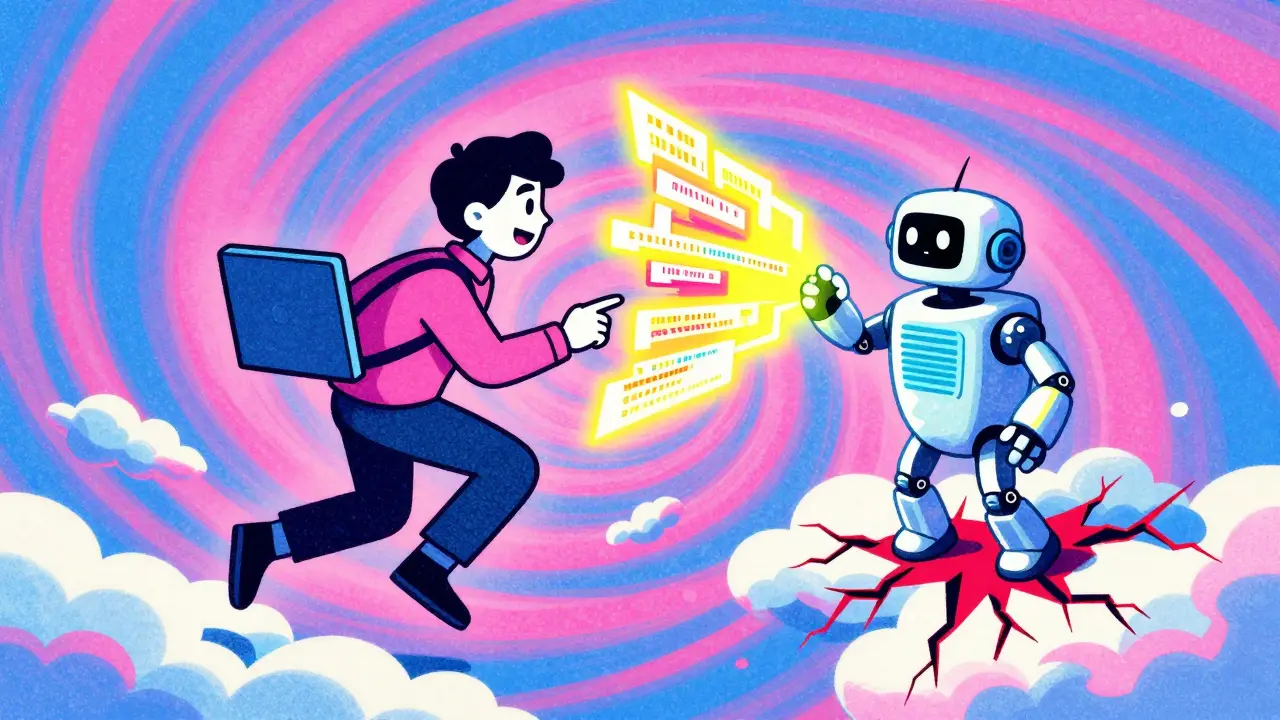
You're in the flow. You've got a chat window open, you're describing a feature in plain English, and the AI is spitting out blocks of working code. It feels like magic-this is vibe coding. But here is the cold truth: about 45% of AI-generated code samples fail basic security tests. When you're coding by "vibe," you aren't just delegating the typing; you're delegating the security architecture to a model that prioritizes "looking right" over "being secure."
The problem isn't that the AI is malicious; it's that it's a mirror. AI coding assistants learn from billions of lines of open-source code, much of which is outdated or insecure. When you ask for a quick authentication function, the AI might give you a snippet that works perfectly in your browser but leaves the front door wide open for a hacker. We need to map the classic OWASP Top 10 a standard awareness document for developers and web application security and the most critical security risks to web applications to the reality of AI-driven development.
The AI Blind Spot: Why Your "Vibe" is Vulnerable
Vibe coding shifts the developer's role from a writer to an editor. However, most developers are editing for functionality (Does the button work?) rather than security (Does this button allow a user to bypass authorization?). Research from Kaspersky shows that 45% of AI-generated code still contains classic vulnerabilities, meaning the speed boost from AI is often just a faster way to introduce technical debt and security holes.
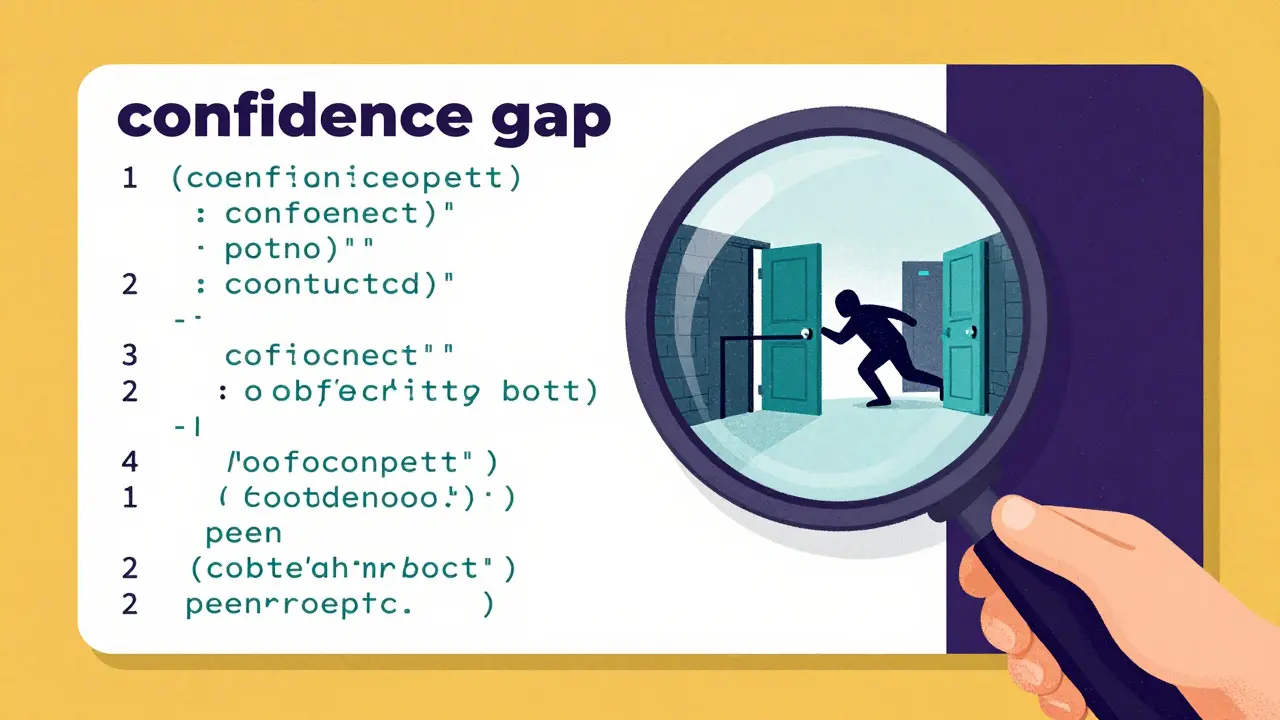
The danger is amplified by the "confidence gap." Because GitHub Copilot or Claude produces syntactically perfect, beautifully indented code, our brains trick us into thinking the logic is sound. In reality, an AI might implement a password check using a direct string comparison-if (user.password === password)-instead of a secure hash, simply because it saw that pattern in an old tutorial from 2012.
Broken Access Control and Authentication
In the world of vibe coding, authentication is often the first thing to break. AI assistants frequently generate "placeholder" security logic that developers forget to replace. A common pattern is the omission of authentication entirely, known as CWE-306 a vulnerability where a system allows access to a resource without requiring the user to be authenticated. Statistics show that 38% of tested AI code samples exhibit this specific flaw.
Consider a scenario where you ask an AI to "create a quick admin dashboard endpoint." The AI might generate a route that checks for a specific cookie or a hardcoded admin flag but fails to implement a robust session validation check. If you just "vibe" with that code, you've essentially given anyone with a browser access to your administrative controls.
Injection and Insecure Output Handling
Injection attacks remain the king of vulnerabilities. AI assistants are notorious for generating unsanitized concatenated queries. If you prompt an AI to "write a search function for my database," it might give you a SQL query that directly embeds the user's input. This is a textbook SQL Injection vector.
It isn't just the database. Cross-Site Scripting (XSS) is rampant in AI-generated frontend code. AI often suggests inserting user-provided data directly into the HTML DOM without escaping it. For example, if an AI generates a profile page that displays a user's bio using innerHTML instead of textContent, any user can inject a malicious script that steals session cookies from other visitors.
| AI Model | Secure Code Rate | Common Failures | Best Use Case |
|---|---|---|---|
| Claude 3.7-Sonnet | 60% | XSS, SSRF, Command Injection | Complex logic & reasoning |
| GitHub Copilot | 52% | Hardcoded Keys, SQLi | Rapid boilerplate generation |
| CodeLlama | 47% | Auth flaws, Cryptography | Local, private deployments |
Cryptographic Failures and Sensitive Data Exposure
Ironically, when developers specifically ask AI to "make this secure," the error rate often increases. In cryptography-related functions, failure rates spike to 31%. AI models struggle with the nuance of modern encryption standards, often suggesting deprecated algorithms like SHA-1 or MD5 because they are prevalent in older training datasets.
Then there is the "secret leakage" problem. Despite explicit instructions to avoid hardcoding keys, AI assistants frequently embed API keys, database connection strings, or JWT secrets directly into the code. This often happens when the AI is trying to be "helpful" by providing a complete, runnable example. If you copy-paste that example into production, you've just published your AWS credentials to the world.
Another subtle risk is the use of localStorage for storing sensitive tokens. AI frequently suggests this because it's easy to implement, ignoring the fact that it makes the tokens accessible to any malicious JavaScript running on the page.
The New AI Attack Surface: Beyond the Code
Vibe coding introduces risks that aren't in the traditional OWASP Top 10. We now have to worry about the pipeline. For instance, Prompt Injection can occur if an AI-generated agent is designed to take external input and use it to modify its own internal instructions. If a user can trick your AI agent into ignoring its security constraints, they can force it to generate and execute malicious code on your server.
We also see risks like "Agent Instruction File Poisoning." This happens when a developer uses a configuration file (like a .cursorrules or a system prompt) to guide the AI's behavior. If an attacker can compromise that file, they can subtly change the AI's "vibe" to always suggest vulnerable patterns or include a hidden backdoor in every new function the AI writes.
How to Vibe Code Safely: A Practical Framework
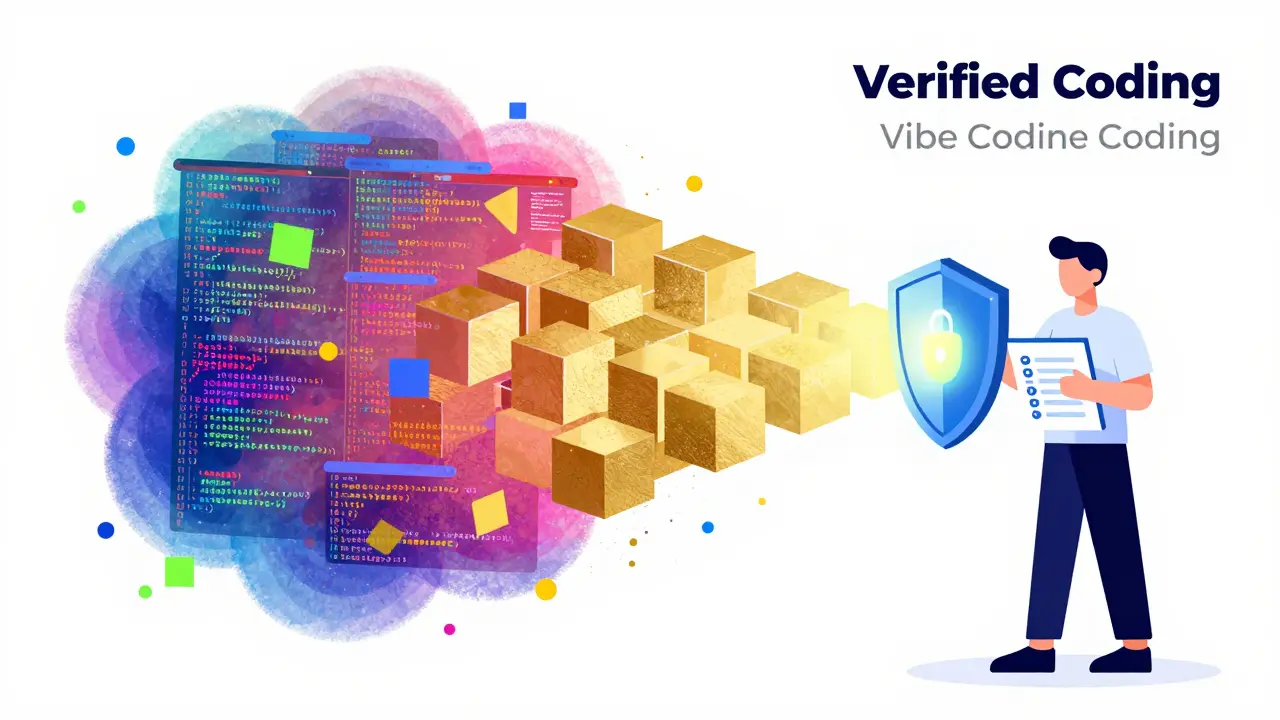
You don't have to stop using AI assistants, but you do have to stop trusting them blindly. To keep your application secure, move from "Vibe Coding" to "Verified Coding."
- Implement a "Security First" Prompt: Instead of "Write a login function," use "Write a login function using Argon2 for password hashing, implement rate limiting to prevent brute force, and ensure all inputs are validated against a strict schema."
- Use Specialized Guardrails: Traditional Static Analysis (SAST) tools miss about 38% of AI-specific vulnerabilities. You need tools specifically designed for LLM output validation that look for semantic security flaws, not just syntax errors.
- The Human-in-the-Loop Rule: Never merge AI code without a manual security review. Treat AI code as if it were written by a junior intern who is incredibly confident but occasionally hallucinates.
- Enforce Secret Management: Use environment variables and secret managers. If an AI suggests a hardcoded string for a key, treat it as a red flag that the model is ignoring your constraints.
Vibe Coding Security Checklist
Before you push your latest AI-generated feature to production, run through this quick check:
- Did the AI use a library for password hashing (e.g., bcrypt) instead of a manual comparison?
- Are all database queries using parameterized statements instead of string concatenation?
- Is user input being escaped before being rendered in the browser to prevent XSS?
- Are there any hardcoded API keys or credentials in the snippets?
- Does the code check for user authorization on every single request, not just at the login page?
- If an AI agent is involved, are there boundaries to prevent prompt injection from external users?
What exactly is vibe coding?
Vibe coding is a development style where developers rely heavily on AI coding assistants (like Claude or GitHub Copilot) to generate entire features through conversational prompting. Instead of writing explicit logic and syntax, the developer describes the "vibe" or the desired outcome and lets the AI handle the implementation.
Why does AI generate so much insecure code?
AI models are trained on massive datasets of public code, which include millions of legacy projects containing outdated security practices. Because the models prioritize patterns and probability over actual security logic, they often replicate these common but insecure patterns.
Can't I just use a security scanner to find these bugs?
Standard SAST tools are helpful but insufficient. Research shows they miss nearly 38% of AI-specific vulnerabilities because AI-generated code often looks structurally correct but contains subtle semantic logic flaws that traditional scanners aren't tuned to detect.
Which AI model is the most secure for coding?
According to May 2025 benchmarks, Claude 3.7-Sonnet currently leads with a 60% secure code generation rate, followed by GitHub Copilot at 52%. However, none of the major models are 100% secure, and all still struggle significantly with complex cryptographic implementations.
How do I prevent Prompt Injection in AI agents?
The best defense is to treat all user input as untrusted and use a strict separation between "system instructions" and "user data." Use delimiters to clearly mark user input and implement a secondary "guardrail" model that checks the final output for malicious intent before it is executed.
Next Steps for Developers
If you've been vibe coding for the last few months, your first step should be a retrospective security audit. Start by searching your codebase for common AI-generated patterns: look for innerHTML in your frontend, look for + signs in your SQL queries, and search for any strings that look like API keys.
For those managing teams, establish a "Secure AI Policy." This should dictate which models are allowed, require a manual security sign-off for any AI-generated PRs, and encourage the use of specialized AI security tools. Remember, the goal isn't to stop using AI-it's to stop letting the AI be the only one checking the security.



Vishal Bharadwaj
15 April, 2026 - 19:57 PM
imagine actually believing a 60% secure rate is "leading" lol. its practically a coin flip. most of these stats are probly just noise anyway and the author is just rideing the vibe coding hype train while pretending to be a security expert. typical.
Sandeepan Gupta
17 April, 2026 - 18:39 PM
That point about the confidence gap is spot on. Many developers mistake syntactic correctness for logical soundness. If you are using AI, I highly recommend integrating a strong linting process and perhaps a peer review that focuses specifically on the data flow. It's all about building a safety net around the tool.
Madhuri Pujari
18 April, 2026 - 22:54 PM
Oh wow!!! Another "groundbreaking" list of things we already knew since 2005!!! 🙄 Who knew that concatenating strings in SQL was bad??? Truly a revelation!!! Maybe if you spend less time "vibing" and more time actually reading the documentation, you wouldn't need a checklist to tell you not to hardcode your API keys!!! Absolutely pathetic!!!
Parth Haz
20 April, 2026 - 02:47 AM
This is a very timely reminder for all of us. While the efficiency gains from AI are undeniable, maintaining a disciplined approach to security will ensure our long-term success. I believe we can find a healthy balance between speed and safety if we just stay vigilant.
Rajashree Iyer
21 April, 2026 - 12:27 PM
We are merely ghosts in the machine, dancing to the rhythm of an algorithm that doesn't know the meaning of a soul or a secret. The "vibe" is a siren song leading us toward a digital abyss where our security is but a fragile veil of illusions. How tragic that we trade our critical thinking for the seductive speed of a silicon oracle!
anoushka singh
22 April, 2026 - 07:42 AM
this is a bit too long to read but i get the gist. just don't trust the robot lol. btw do you think the author actually uses these tools or just writes about them for clicks
Jitendra Singh
23 April, 2026 - 08:03 AM
I appreciate the perspective shared here. It seems we all have different ways of integrating these tools into our workflow, and the most important thing is that we keep talking about these risks to help each other improve.
Shivani Vaidya
23 April, 2026 - 15:53 PM
it is most beneficial to view these tools as assistants rather than replacements for human judgment. a collaborative effort between AI efficiency and human oversight is the most sustainable path forward for the industry