Most companies are still treating Generative AI is a class of artificial intelligence capable of creating new content, code, and decisions based on patterns learned from vast datasets. like a fancy calculator or a very fast intern. You ask it to write an email, summarize a report, or draft some code, and you copy-paste the result. That was fine in 2023. By August 2026, that approach is leaving money on the table. The real shift isn't about generating text; it's about rewiring how your organization functions. It’s about moving from reactive task completion to proactive, autonomous operations.
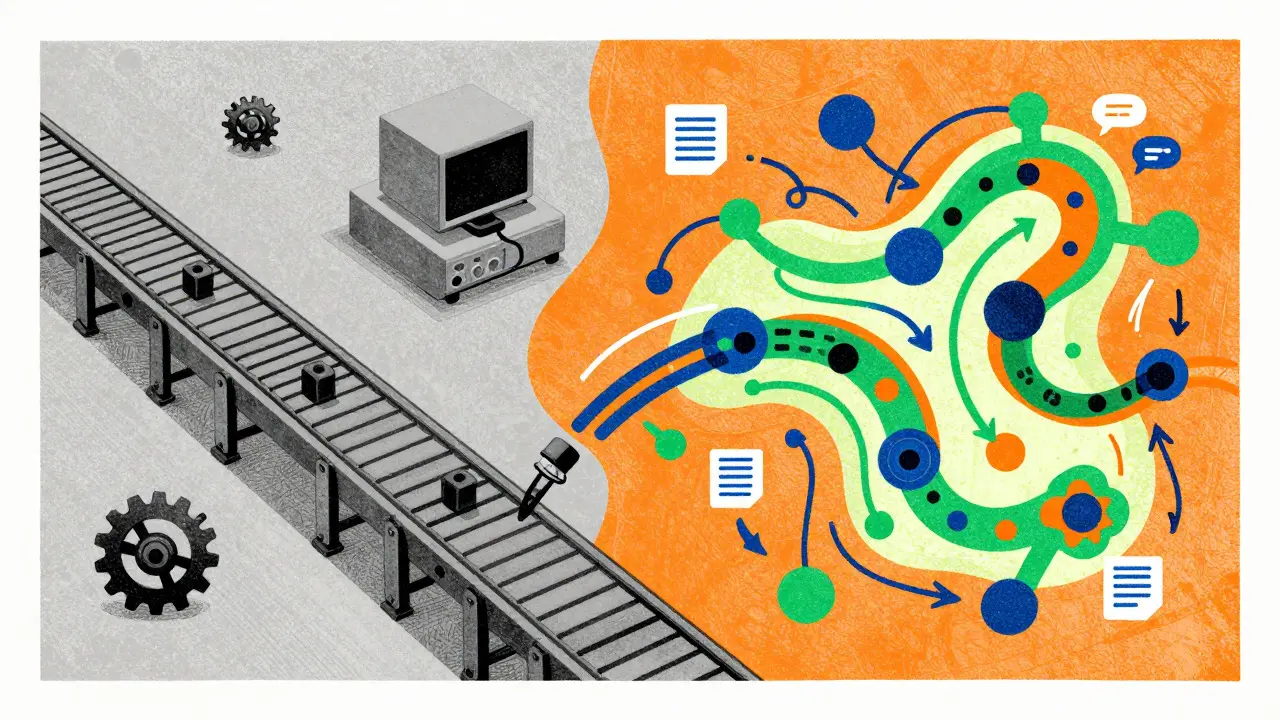
The core problem with legacy operating models is rigidity. Traditional automation relies on rigid, rule-based programming. If the input doesn’t match the rule exactly, the system breaks. Generative AI changes this by introducing context awareness. It can understand nuance, handle unstructured data, and make probabilistic decisions. But simply plugging an API into your existing workflow isn't enough. You have to redesign the workflow itself. This article breaks down how to transform your operating model to leverage these capabilities effectively, focusing on workflows, processes, and decision-making frameworks.
From Tool to Team Member: Redefining the Operating Model
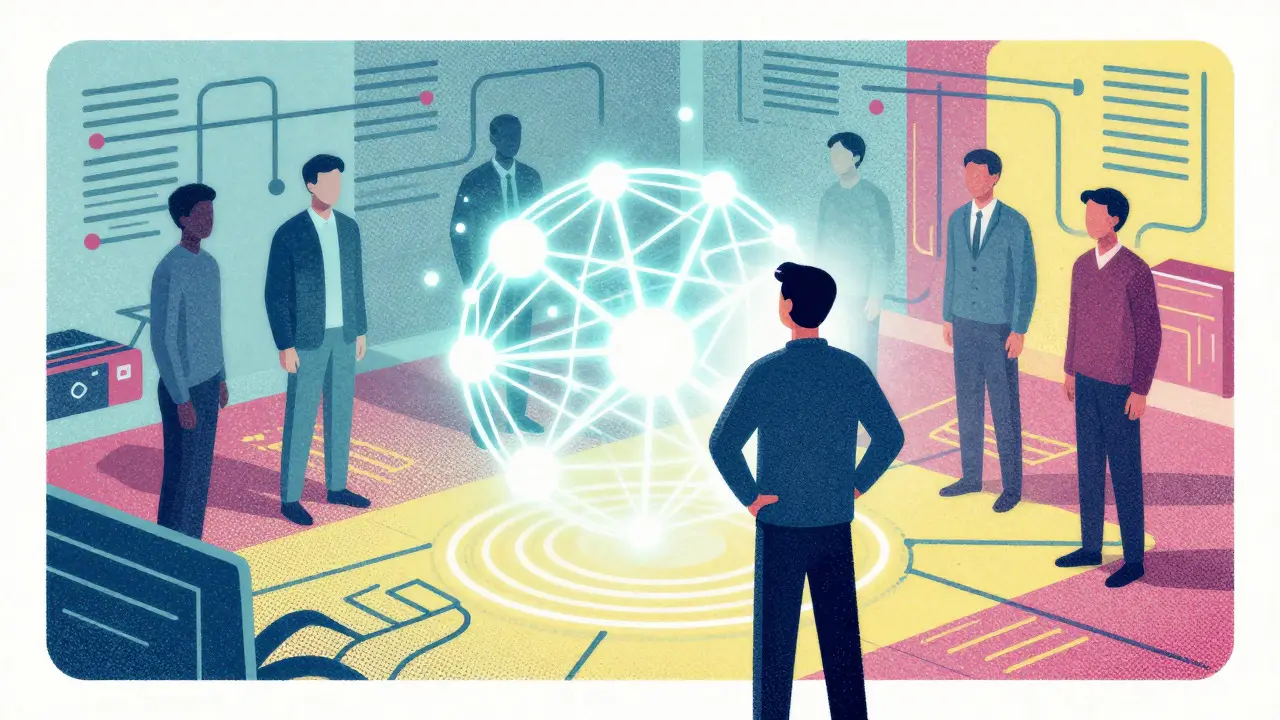
The first step in changing your operating model is shifting the mindset around what AI is. For years, software was a tool you operated. Now, with generative AI, it acts more like a team member. A 2025 study by the Wharton-GBK Collective found that 82% of enterprise leaders now incorporate generative AI into their workflows weekly, with nearly half using it daily. This signals a decisive move beyond pilot projects into core business functions.
However, adoption rates don't always equal effective integration. Many organizations fall into the "partial win" trap. They use AI to generate a draft but keep humans in the loop for every subsequent step. This creates a bottleneck where the speed of AI is throttled by human verification loops. To truly change the operating model, you need to delegate measurable, auditable business actions to the AI. This means the AI doesn't just suggest; it executes. It updates the CRM, triggers the payment, or adjusts the inventory order. The human role shifts from operator to overseer, focusing on exception handling and strategic direction.
This transition requires a fundamental change in trust and governance. You aren't just trusting a script; you're trusting a probabilistic engine. Your operating model must include mechanisms for validating AI outputs without slowing down the entire process. This leads us to the technical capabilities that make this possible.
Core Capabilities of Gen AI Operating Models
To understand why your current processes might be failing, you need to look at the specific capabilities that distinguish generative AI from traditional automation. There are four critical pillars that define a modern Gen AI operating model:
- Adaptive Process Intelligence: Unlike static bots, these systems continuously observe process flows and error patterns. They automatically adjust branch logic without manual reprogramming. If a customer service ticket contains a specific keyword pattern associated with a refund, the system learns to route it differently over time.
- Workflow Creation from Prompts: Frameworks like 'Text2Workflow' allow natural language descriptions to generate executable processes. Instead of hiring developers to build a new approval chain, a manager can describe the desired outcome, and the system constructs the workflow.
- Knowledge-Infused Automation: This integrates enterprise knowledge bases, policies, and decision logs. The AI doesn't operate in a vacuum; it pulls from your company’s historical data to ensure contextual accuracy. This reduces hallucinations and ensures compliance with internal standards.
- Continuous Optimization: Systems apply hierarchical autotuning to improve throughput. Documented cases show up to a 10× reduction in execution cost and 2.7× faster end-to-end latency. The system gets better the more it runs.
These capabilities enable a shift from reactive to proactive operations. Traditional systems wait for an event to trigger a response. Gen AI operating models can predict events, model scenarios, and prepare responses before the issue even surfaces. For example, in supply chain management, instead of reacting to a delay, the AI predicts the delay based on weather and traffic data and reroutes shipments automatically.
Redesigning Workflows for Autonomy
Workflows are the veins of your business. In a traditional model, they are linear and predictable. In a Gen AI model, they are dynamic and adaptive. The goal is to reduce human touchpoints to only those areas requiring genuine judgment or empathy.
Consider expense processing. In a legacy system, an employee submits a receipt, a manager reviews it against policy, and finance approves it. With Gen AI combined with Intelligent Document Processing (IDP), the AI extracts data from the receipt, checks it against policy rules, flags anomalies, and approves standard expenses instantly. A 2024 case study showed this reduced process time by over 80%. The human manager only sees the exceptions-the unusual amounts or missing receipts.
But here’s the catch: you can't just overlay AI on old workflows. You have to redesign them. If your workflow has too many handoffs, the AI will struggle to maintain context. You need to consolidate steps. Instead of five people reviewing a contract, one person reviews the AI's risk assessment. This requires a high degree of confidence in the AI's output, which brings us back to governance.
| Feature | Traditional Automation | Gen AI Workflow |
|---|---|---|
| Learning Capability | Limited to training data | Continuous and adaptive |
| Workflow Flexibility | Rule-based, rigid | Context-driven, flexible |
| Content Creation | Minimal | Native capability |
| Decision-Making | Reactive | Predictive and proactive |
| Scalability | Moderate | High across enterprise systems |
Governance and Decision-Making Frameworks
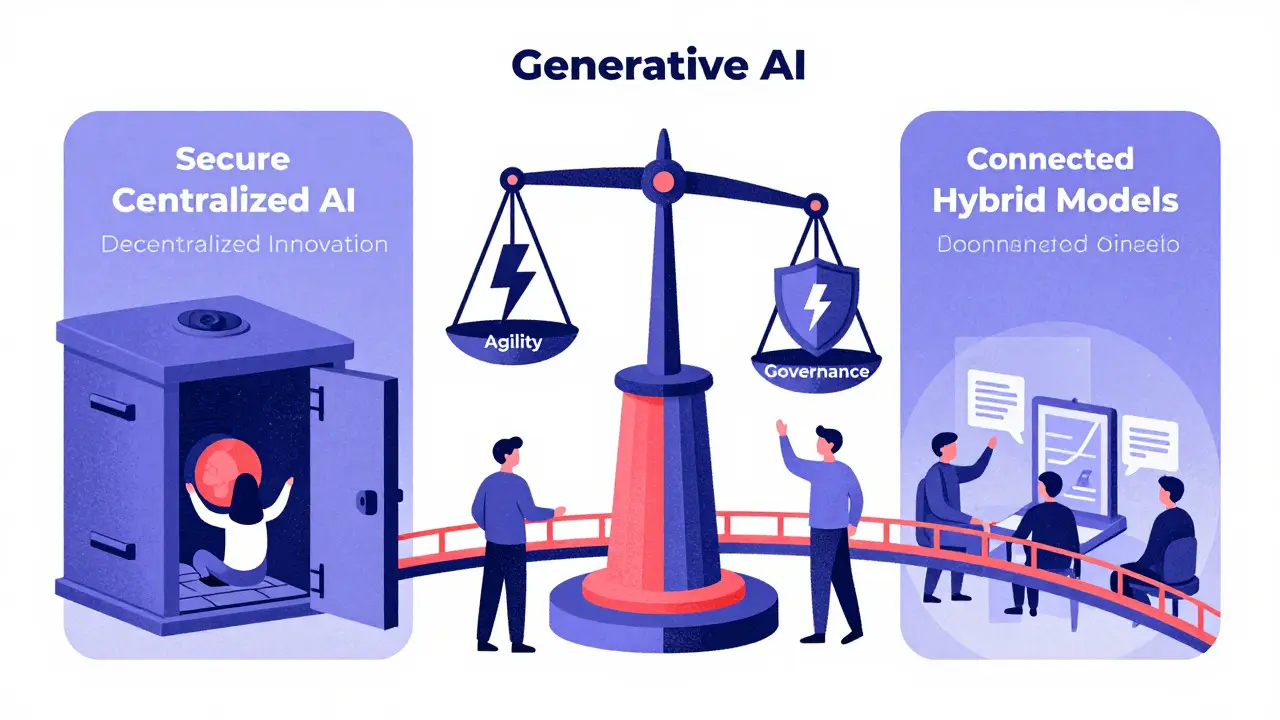
With great power comes great responsibility-and in the corporate world, that means governance. AWS research from January 2025 identifies that enterprises adopting Gen AI must choose between operating models prioritizing agility versus governance. You can't have both extremes simultaneously. You need a balanced framework.
There are three emerging archetypes for Gen AI operating models:
- Centralized AI Factories: Best for organizations prioritizing strict governance, such as banks or healthcare providers. All AI development and deployment go through a central team. This ensures consistency and security but slows down innovation.
- Decentralized Innovation Networks: Ideal for tech startups or marketing agencies valuing speed. Teams build and deploy their own AI tools. This fosters creativity but risks shadow IT and inconsistent data quality.
- Hybrid Models: The most common choice for large enterprises. Core infrastructure and governance are centralized, but application development is decentralized. This balances control with agility.
Regardless of the model, you need clear decision rights. Who is accountable when the AI makes a mistake? Is it the developer who built the prompt? The data scientist who trained the model? Or the business leader who deployed it? Establishing this accountability early prevents finger-pointing later. Also, consider regulatory compliance. The EU AI Act imposes strict requirements on high-risk AI applications. Your operating model must include compliance checks at every stage of the workflow.
Implementation Challenges and Change Management
Technology is the easy part. People are the hard part. L.E.K. Consulting's 2025 analysis states bluntly that 'AI Is Making Your Operating Model Obsolete.' They recommend building a 'coalition of the willing'-identifying teams with existing data and AI fluency to drive adoption. These champions help bridge the gap between technical possibilities and business realities.
Employee resistance is real. Workers fear being replaced. Successful adopters treat Gen AI integration as a change management initiative, not just a technology rollout. Communicate clearly: AI is augmenting, not replacing. Show employees how AI removes tedious tasks, allowing them to focus on higher-value work. Provide training in prompt engineering and data literacy. These skills are becoming as important as Excel proficiency.
Data readiness is another major hurdle. Gen AI is only as good as the data it feeds on. If your data is siloed, dirty, or incomplete, the AI's outputs will be inconsistent. Invest in data cleaning and integration before scaling AI initiatives. Start with high-impact, well-defined processes where data quality is already high. This builds confidence and demonstrates quick wins.
Future Trajectory: Autonomous Business Processes
Where is this heading? Gartner predicts that by 2026, 75% of enterprises will have shifted from piloting to operationalizing Gen AI. Those failing to adapt face productivity gaps of 15-20% compared to competitors. The future is autonomous business processes. Imagine a scenario where your sales, marketing, and finance systems communicate autonomously. A lead is qualified by AI, a contract is generated and negotiated by AI, and the invoice is sent and tracked by AI. Humans intervene only for complex negotiations or strategic pivots.
This level of autonomy requires robust monitoring and feedback loops. You need to track not just efficiency metrics but also quality and bias. Regular audits of AI decisions are essential. As models evolve, so should your governance frameworks. Stay agile, stay compliant, and keep the human element in the loop for oversight.
The window for competitive advantage is narrowing. Early movers are already seeing significant gains. McKinsey reports that organizations successfully integrating Gen AI into their operating DNA could achieve 20-30% productivity gains within five years. Don't wait for perfection. Start small, learn fast, and scale wisely. Your operating model is no longer static; it's a living system that evolves with your AI capabilities.
What is a Gen AI operating model?
A Gen AI operating model is a framework for organizing business workflows, processes, and decision-making around the capabilities of generative AI. It moves beyond simple task automation to enable autonomous, context-aware operations where AI handles complex, unstructured tasks and humans focus on oversight and strategy.
How does Gen AI differ from traditional automation?
Traditional automation follows rigid, rule-based instructions and fails when inputs vary. Gen AI uses foundation models to understand context, handle ambiguity, and learn from data. It can create content, predict outcomes, and adapt workflows dynamically, making it suitable for complex, unstructured environments.
What are the key challenges in implementing Gen AI workflows?
Key challenges include data readiness (ensuring clean, integrated data), governance complexities (balancing agility with control), and change management (overcoming employee resistance). Integration with legacy systems and establishing clear accountability for AI decisions are also significant hurdles.
Which industries are leading in Gen AI adoption?
Financial services, healthcare, and manufacturing are currently leading adoption. These sectors benefit significantly from predictive maintenance, supply chain optimization, and personalized customer service. However, benefits are extending to marketing, legal, and HR departments across all industries.
How long does it take to transform an operating model for Gen AI?
Meaningful transformation typically takes 6-12 months. Initial phases focus on high-impact pilots with well-defined processes. Scaling enterprise-wide requires addressing data infrastructure, governance frameworks, and cultural change. Quick wins can be achieved in weeks, but full integration is a multi-month effort.
What is the role of humans in a Gen AI-driven operating model?
Humans shift from operators to overseers. Their primary roles involve exception handling, strategic direction, ethical oversight, and creative problem-solving. AI handles routine, repetitive, and data-intensive tasks, freeing humans to focus on high-value activities that require empathy, judgment, and innovation.