Imagine spending three days reviewing a single vendor agreement only to realize you missed a subtle risk in the indemnity clause. Now imagine that same review taking forty-five minutes, with every deviation from your company’s standard terms flagged automatically. This isn’t a futuristic fantasy; it is the current reality for legal departments leveraging Generative AI in their operations. By May 2026, the integration of artificial intelligence into contract lifecycle management has shifted from an experimental novelty to a critical operational necessity.
The pressure on corporate legal teams is mounting. According to data from the Corporate Legal Operations Council (CLOC), over 80 percent of legal departments expect rising demand for services, while 85 percent of general counsels anticipate increased corporate risk. You cannot simply hire more lawyers to solve this problem. The solution lies in automating the repetitive, high-volume tasks-specifically contract review and redlining-so human experts can focus on strategy and complex negotiation.
The Core Problem: Bottlenecks in Traditional Contract Review
Traditional contract review is slow, expensive, and prone to human error. Attorneys spend hours reading dense legalese, comparing clauses against internal standards, and drafting revisions. This process creates a bottleneck that delays deals and increases outside counsel costs. In many organizations, contract drafting and analysis remains the number one AI use case, utilized by 64 percent of AI-adopting legal teams as of 2026.
The core issue is not just speed; it is consistency. Different attorneys may interpret risk differently, leading to inconsistent outcomes across similar deals. Without a standardized approach, legal departments struggle to scale their operations efficiently. This is where Legal Operations, defined as the discipline of managing legal work like any other business function, focusing on efficiency, cost control, and strategic alignment, intersects with technology.
How Generative AI Transforms Contract Redlining
Contract Redlining is the process of editing a document to highlight changes, typically used in negotiations to track proposed modifications to terms. Traditionally, this involved manual highlighting and commenting. Today, generative AI systems powered by large language models (LLMs) handle this task with remarkable speed and accuracy.
These systems do not just read text; they understand context. Using transformer architecture, LLMs analyze contractual language to identify key concepts, risks, and deviations from market standards. Leading platforms report accuracy rates of 90 percent or higher, reducing review cycles by 50 to 90 percent. For example, AI-powered tools can cut negotiation cycles significantly, saving up to 90 percent on legal bills by automating repetitive tasks and identifying risks that human reviewers might miss.
However, raw LLMs have limitations. They can hallucinate-generating plausible-sounding but inaccurate information-and they lack specific organizational knowledge. To address this, modern platforms employ Retrieval-Augmented Generation (RAG). RAG combines the power of LLMs with real-time data retrieval from your organization’s documents. This allows the AI to pull relevant playbooks, prior deal terms, and compliance rules live, ensuring suggestions are grounded in your actual business context rather than generic training data.
The Critical Role of Legal Playbooks
A Legal Playbook is a structured set of rules and guidelines that encode an organization's legal expertise, compliance requirements, and negotiation standards. Playbooks are the secret sauce behind effective AI implementation. Without them, AI provides generic advice. With them, AI becomes a specialized extension of your legal team.
Playbooks encode your organization’s risk appetite, preferred deal terms, and compliance positions into the AI system’s decision-making framework. When an AI reviews a contract, it checks each clause against these playbook rules. If a clause deviates from the standard, the AI flags it and suggests a revision based on your historical precedents. This ensures consistency and reduces the need for constant attorney oversight on routine matters.
Leading platforms like Sirion use playbook-based intelligence to identify atomic risk elements in contract clauses. These systems highlight deviations in real time, allowing attorneys to approve or modify suggestions quickly. As your business evolves, your playbooks should update automatically. New deals close, and the AI learns from these outcomes, creating a virtuous cycle where the system becomes progressively more aligned with your actual negotiation patterns.
Five-Stage Workflow for AI-Assisted Contract Management
Implementing AI in legal operations requires a structured workflow. Here is how top-performing legal departments organize their processes:
- Drafting and Intake: Legal teams start drafting from standards and templates. They capture matter metadata and define the risk posture, such as payment terms or liability caps. This initial setup ensures the AI has the right context from the start.
- AI First Pass: The AI assistant scans the document for deviations. It identifies issues and suggests predictive, context-aware fixes. This step eliminates the initial heavy lifting of reading every word manually.
- Attorney Review: Human attorneys assess, modify, or approve the proposed changes. They compare against prior drafts, track exceptions, and confirm compliance positions. This stage preserves human judgment for complex decisions.
- Negotiation: Legal teams use AI-surfaced leverage points to negotiate efficiently. They collaborate with counterparties through tracked redlines, structured comments, and issues lists. The AI helps prioritize which points are worth fighting over.
- Finalizing and Archiving: Approved revisions are locked in. Summaries are exported for business teams, and contracts are pushed into contract management repositories for analytics and obligations management.
Choosing the Right AI Platform
Not all AI tools are created equal. Some are general-purpose chatbots adapted for legal work, while others are purpose-built for contract review. Understanding the difference is crucial for successful implementation.
| Platform | Core Technology | Integration | Best For |
|---|---|---|---|
| Spellbook | LLM with RAG | Native Microsoft Word | Teams wanting seamless workflow integration without changing habits |
| ReviewPro | Proprietary Sifters + LLM | Standalone Platform | High-volume review requiring specialized contract algorithms |
| Sirion | Specialized AI Agents | API/Integration | Organizations needing deep playbook-driven intelligence |
Spellbook, for instance, runs natively in Microsoft Word. It flags non-market terms and suggests redlines under the lawyer’s name, preserving authorship and track changes. This approach minimizes disruption to existing workflows. ReviewPro, on the other hand, uses proprietary contract-specific algorithms called Sifters. These algorithms are trained on thousands of real-world agreements, achieving 95 percent accuracy in identifying key legal concepts. Sirion employs specialized agents like the Redline Agent and IssueDetection Agent to deliver precise, explainable outcomes.

Mitigating Risks and Building Trust
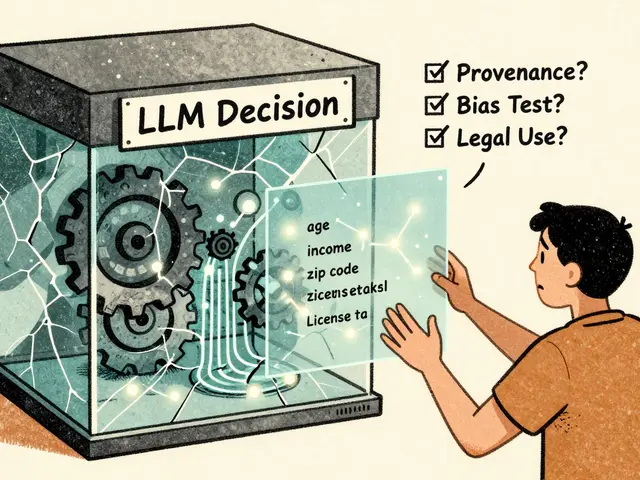
Trust is the biggest barrier to AI adoption in legal operations. Attorneys must validate AI outputs to ensure they align with firm playbooks and client instructions. To build this trust, systems must provide traceability. Lawyers need to see exactly which past contract a clause came from. Generic AI suggestions without connection to organizational precedent are less reliable.
Token limits also pose a challenge. Large language models have constraints on the volume of text they can process at once. Effective platforms manage this by segmenting documents or summarizing sections before analysis. Additionally, verification procedures are essential. Human reviewers must assess and approve all changes before implementation, especially for highly complex or novel contract terms that fall outside standard playbook parameters.
Implementation Strategy for Legal Teams
Adopting AI in legal operations requires more than just buying software. It demands foundational knowledge of AI concepts. Legal professionals should understand large language models and transformer architecture to deploy these systems effectively. Training programs often cover designing custom GPTs in OpenAI or building agent-based automations in Microsoft Copilot.
Start small. Pilot AI redlining on a specific type of contract, such as NDAs or vendor agreements. Build or acquire custom playbooks that encode your specific deal standards. This upfront investment pays off by enabling scalable efficiencies across the legal function. Remember, the goal is not to replace human judgment but to amplify it. AI handles the repetitive tasks, freeing attorneys to focus on strategic negotiations and risk management.
What is the role of Retrieval-Augmented Generation (RAG) in contract review?
RAG enhances LLMs by combining their generative capabilities with real-time data retrieval from organizational documents. This allows the AI to pull relevant playbooks, prior deal terms, and compliance rules live, ensuring suggestions are grounded in specific business context rather than generic training data. It reduces hallucinations and improves accuracy.
How much time can AI save in contract redlining?
Leading AI redlining systems achieve 50-90 percent reduction in contract review cycles. They reduce review time from hours to minutes and can surface material risks that human reviewers miss. This translates to significant cost savings, potentially cutting up to 90 percent on legal bills by automating repetitive tasks.
Are AI-generated redlines legally binding?
No, AI-generated redlines are suggestions. Human attorneys must always validate AI outputs and ensure automation aligns with firm playbooks and client instructions. Human authority over all legal decision-making remains essential, particularly for complex or novel terms.
What is a legal playbook in the context of AI?
A legal playbook is a structured rule set that encodes organizational legal expertise, compliance requirements, and negotiation standards into the AI system. It guides the AI’s decision-making, ensuring suggestions align with specific organizational policies rather than generic legal standards.
Which AI platforms are best for Microsoft Word users?
Spellbook is a leading option for Microsoft Word users. It runs natively in Word, flagging non-market terms and suggesting redlines under the lawyer’s name. This preserves authorship and integrates seamlessly into existing workflows without requiring new software installations.