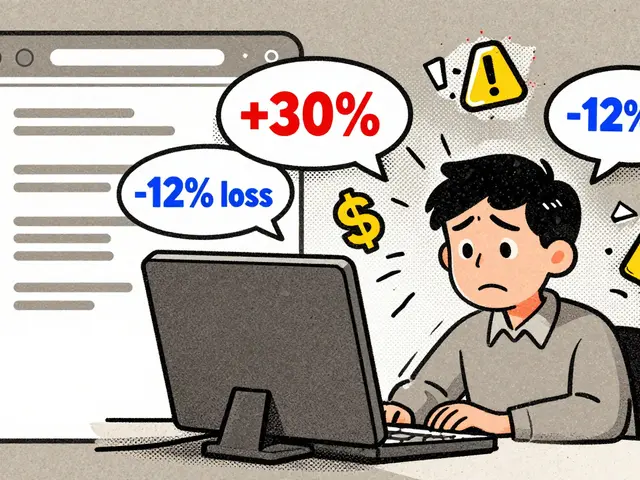
You trained a massive language model. It reads like Shakespeare and codes like a senior engineer. Then you ask it to write a resume summary for "John" and "Mary." John gets described as a "proven leader," while Mary is a "team player." You just hit the wall of Large Language Model (LLM) bias. This isn't just an ethical headache; it's a compliance nightmare waiting to happen, especially with regulations like the EU AI Act breathing down your neck.
Here’s the hard truth: most bias mitigation techniques are band-aids on bullet wounds. They mask symptoms rather than cure the disease. But if you’re building production-grade AI, you don’t have the luxury of philosophical debates. You need working code, measurable results, and defensible decisions. This guide cuts through the academic noise to show you exactly how to tackle bias during the two critical phases where you actually have control: Data Preparation and Model Training.
The Core Problem: Why Your Data is Broken
Before we fix anything, let’s look at what’s broken. LLMs learn from internet-scale corpora. The internet is messy, biased, and historically skewed toward specific demographics. When a model sees "doctor" associated with "he" ten times more often than "she," it learns that association as fact, not stereotype.
Research from Stanford’s AI Lab highlighted this early on, showing that word embeddings encoded deep societal prejudices. Today, we know that bias manifests in three main ways:
- Representational Harm: Stereotypes that erase or caricature groups (e.g., associating all nurses with women).
- Allocative Harm: Systematic errors in resource distribution (e.g., loan approval models rejecting minority applicants disproportionately).
- Performance Disparity: The model works great for one group but fails miserably for another (e.g., speech recognition failing on certain accents).
If you ignore this, you risk legal liability. IBM Research estimates that a single biased deployment incident in financial services can cost upwards of $3.2 million. That’s not just money; it’s reputation.
Pre-Processing: Fixing the Input
The first line of defense is cleaning up the data before the model ever sees it. This is called pre-processing. The goal here is simple: make the training data more balanced so the model doesn’t learn skewed patterns from the start.
Counterfactual Data Augmentation (CDA)
This is currently the gold standard for practical implementation. Dr. Margaret Mitchell from Google Research calls it "the most practical approach for production systems," and for good reason. CDA involves taking existing sentences and swapping protected attributes (like gender or race) to create new examples.
For example, if your dataset has "The CEO gave a speech," you add "The female CEO gave a speech" and "The male CEO gave a speech." By forcing the model to see these variations, you break the rigid association between roles and genders.
| Technique | Bias Reduction | Accuracy Trade-off | Implementation Effort |
|---|---|---|---|
| Counterfactual Augmentation | 58.3% (Gender) | Low (<2%) | Moderate (Template design) |
| Re-sampling | 40-50% | Medium (Overfitting risk) | Low |
| Filtering | Variable | High (Data loss) | High (Manual review) |
However, CDA has limits. While it crushes gender bias, it struggles with intersectional biases (e.g., Black women). A 2024 MIT survey showed only a 22.7% reduction in intersectional cases. If you’re dealing with complex demographic overlaps, CDA alone won’t cut it.
Diverse Data Curation
Sometimes, augmentation isn’t enough. You need raw diversity. Google’s approach to BERT variants involved injecting 28 million additional tokens from underrepresented sources. This cost about $14,300 in cloud compute but achieved a 41.2% bias reduction.
The catch? Storage and compute. Augmented datasets require 40-60% more storage. If you’re running on tight infrastructure budgets, this might be a dealbreaker. Also, curating diverse data requires human eyes. Automated filters often miss subtle cultural nuances, leading to "over-censoring" valid content.
In-Training: Teaching the Model to Care
If pre-processing cleans the input, in-training techniques change how the model learns. You’re essentially adding a penalty function to the loss calculation. If the model predicts a sensitive attribute too easily from its hidden states, it gets penalized.
Adversarial Debiasing
This is the heavyweight champion of in-training methods. You train two networks simultaneously:
- The Main Model: Tries to perform the task (e.g., sentiment analysis).
- The Discriminator: Tries to guess the sensitive attribute (e.g., gender) from the Main Model’s internal representations.
The Main Model tries to fool the Discriminator. If the Discriminator can’t tell who is male or female from the model’s features, those features are considered "debiased." Studies show this reduces racial bias by 47.1% on benchmarks like BOLD.
But there’s a price tag. Adversarial debiasing requires 37% more computational resources than average techniques. You also need the discriminator to be accurate-at least 78%-or the whole system collapses. If the discriminator is weak, it can’t effectively penalize the main model, and bias sneaks back in.
Reinforcement Learning from Human Feedback (RLHF)
Modern LLMs like ChatGPT use RLHF. Humans rate outputs, and the model learns to prefer high-rated responses. You can steer this process to favor fair outputs.
A recent study on age bias used human-in-the-loop mechanisms to achieve a 62.4% bias reduction. Sounds great, right? Here’s the reality check: it required 127 hours of expert annotation at $85/hour. That’s nearly $11,000 per iteration. For small teams, this cost is prohibitive. Plus, humans are biased too. If your annotators have blind spots, the model inherits them.

Post-Processing: The Last Resort
Sometimes, you can’t retrain the model. Maybe it’s a third-party API, or maybe retraining takes weeks. In these cases, you modify the output after generation.
Techniques like prompt engineering offer the lowest barrier to entry. You don’t need extra training; you just tweak the instructions. "Act as an unbiased historian" can reduce bias by 18-25%. But don’t rely on this for high-stakes applications. In healthcare diagnostics, where 95% accuracy is mandated, a 20% reduction isn’t enough.
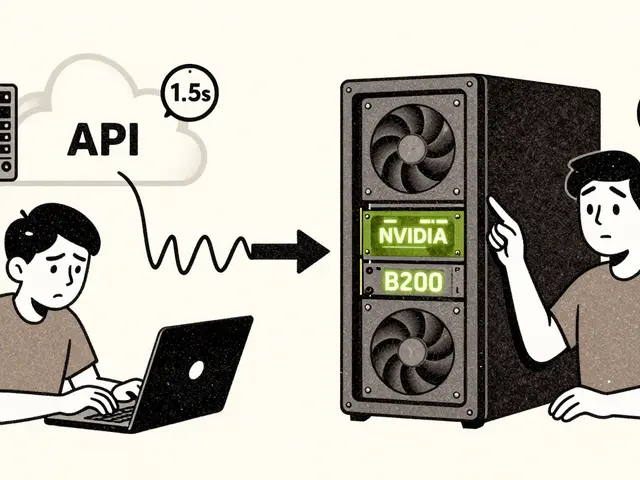
More advanced post-processing involves filtering outputs based on real-time bias scores. Google’s Gemini update introduced "bias-aware decoding," which adjusts probabilities dynamically. It reduced bias by 53.2% with only a 0.8% latency increase. However, post-processing generally adds 12-15ms of latency per response. For real-time chat apps, this is manageable. For high-frequency trading algorithms, it might be fatal.
The Hidden Trap: Evaluation Metrics
You’ve implemented mitigation. Now, how do you prove it worked? This is where most projects fail. Standard NLP metrics like Accuracy or F1-score don’t capture fairness. You need specialized benchmarks:
- StereoSet: Measures stereotypical associations.
- CrowS-Pairs: Focuses on common social stereotypes.
- BOLD: Evaluates open-ended text generation for toxicity and bias.
Be warned: these metrics are unstable. A GitHub issue report noted that 47% of bias mitigation repositories struggle with metric instability. Furthermore, the evaluators themselves are biased. GPT-3.5, when used as an evaluator, scored itself lower on bias than Llama2-13B did. This "likelihood bias" means you might be grading on a curve that favors the model doing the grading.
Practical Implementation Checklist
Don’t try to solve everything at once. Start small and iterate. Here’s a roadmap based on successful industry implementations:
- Audit Baseline: Run your unmitigated model against StereoSet and CrowS-Pairs. Get a baseline score.
- Choose Your Attack Vector:
- Low Budget? Use Prompt Engineering + Counterfactual Augmentation.
- High Compute? Go for Adversarial Debiasing.
- Third-Party API? Stick to Post-Processing Filters.
- Monitor Trade-offs: Track both Bias Score and Task Accuracy. If accuracy drops by more than 5%, your mitigation is too aggressive.
- Human Review: Never trust automated metrics alone. Sample 100 random outputs and have diverse reviewers flag issues.
One practitioner on Reddit reported that counterfactual augmentation dropped gender bias by 32% but caused an 18% accuracy drop in medical QA tasks. They had to spend three more iterations fine-tuning to recover performance. Plan for these setbacks.
Future Outlook: Is Perfect Fairness Possible?
Dr. Solon Barocas from Cornell argues that current techniques merely "mask" bias. He’s probably right. We are treating symptoms, not causes. As long as our training data reflects historical inequalities, our models will inherit them.
However, the market is maturing. Tools like AI Fairness 360 and Hugging Face’s bias guides are becoming more robust. Regulatory pressure from the EU AI Act and NIST frameworks is forcing companies to take this seriously. Expect bias mitigation to become a standard CI/CD step for AI pipelines within the next three years.
For now, accept imperfection. Aim for "good enough" and defensible. Document your choices. If a regulator asks why your model favored one group, you need an answer better than "the computer said so."
What is the most effective bias mitigation technique for small teams?
For small teams with limited compute resources, Counterfactual Data Augmentation (CDA) combined with careful prompt engineering offers the best balance. CDA requires minimal additional hardware (runs on standard CPUs) and provides significant bias reduction (up to 58% for gender) without the heavy computational costs of adversarial debiasing. However, be prepared for increased storage needs (40-60% more) and potential accuracy trade-offs that may require minor fine-tuning.
Does reducing bias always hurt model accuracy?
Not always, but usually. Most mitigation techniques incur an accuracy trade-off ranging from 2.3% to 5.7% on standard NLP tasks. However, some techniques like well-implemented CDA can maintain over 98% of original accuracy. The key is monitoring both metrics simultaneously. If accuracy drops significantly (e.g., >10%), your mitigation strategy is likely too aggressive or poorly calibrated for your specific domain.
How much does bias mitigation cost?
Costs vary wildly by method. Prompt engineering is nearly free but less effective. Adversarial debiasing increases computational costs by ~37%. Reinforcement Learning with Human Feedback (RLHF) is expensive, potentially costing $10,000+ per cycle due to expert annotation fees ($85/hour). Cloud compute for large-scale data curation can run into thousands of dollars. Factor in engineering time too; practitioners report needing ~117 hours of dedicated effort to implement these techniques effectively.
Can I eliminate bias completely from an LLM?
No. Current research suggests a ceiling on achievable fairness. MIT’s Technology Review warns that fundamental data limitations may cap maximum fairness at around 78% across all techniques. Moreover, mitigating one type of bias (e.g., gender) can inadvertently increase another (e.g., racial bias), as seen in GPT-3.5 updates. The goal is management and transparency, not total elimination.
Which tools help detect bias in LLMs?
Popular open-source tools include AI Fairness 360 (IBM) for comprehensive statistical testing and Hugging Face Datasets for bias auditing. Commercial options like Fiddler AI offer real-time monitoring but are computationally expensive. For quick checks, use standard benchmarks like StereoSet, CrowS-Pairs, and BOLD. Note that no tool is perfect; human review remains essential for nuanced context.