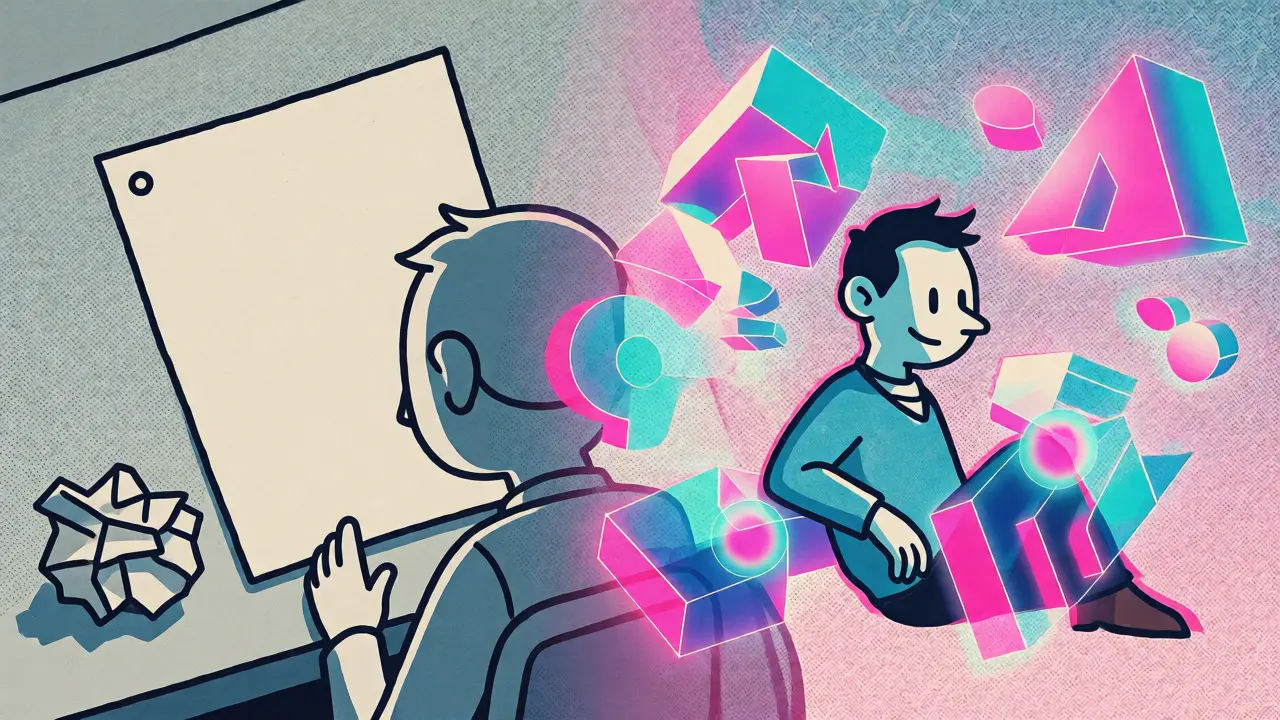
You have a brilliant idea for a short film or a commercial spot. You need a script, visual references to pitch to investors, and a rough cut before the weekend. In the old days, this meant weeks of writing, hiring illustrators, and booking editing suites. Today, you can generate a first draft, create cinematic visuals, and even assemble a preliminary edit in hours using Generative AI. This technology isn't just a buzzword; it's actively reshaping how content gets made from concept to final render.
But here is the catch: while AI accelerates the process, it doesn't replace the creative eye. The best results come from a hybrid workflow where humans guide the machine. Let's break down exactly how Generative AI fits into the three critical stages of modern media production: scripting, visualization, and post-production.
Script Drafting: From Blank Page to First Draft
The blank page is the enemy of every writer. Generative AI models like GPT-4 Turbo excel at breaking that paralysis. With context windows now reaching 128,000 tokens, these tools can ingest entire novels, previous scripts, or detailed character bibles to maintain consistency. You aren't just asking for "a funny scene"; you're providing structural constraints and tone guidelines.
However, don't expect perfection on the first pass. A study by UCLA in 2025 showed that human-written scripts still outperform AI-generated ones by 27% in emotional engagement metrics. Why? AI struggles with subtext. It can write dialogue that sounds correct, but it often misses the subtle tension between what a character says and what they mean. Use AI for structure, beat sheets, and generating variations of a scene. Keep the final polish for human hands.
- Ideation: Generate ten different loglines based on your core premise.
- Structure: Ask the AI to map your story onto the Save the Cat beat sheet.
- Dialogue Refinement: Paste a scene and ask for three versions: one more formal, one more casual, and one with higher stakes.
Visualizing the Vision: AI Storyboards and Pre-Viz
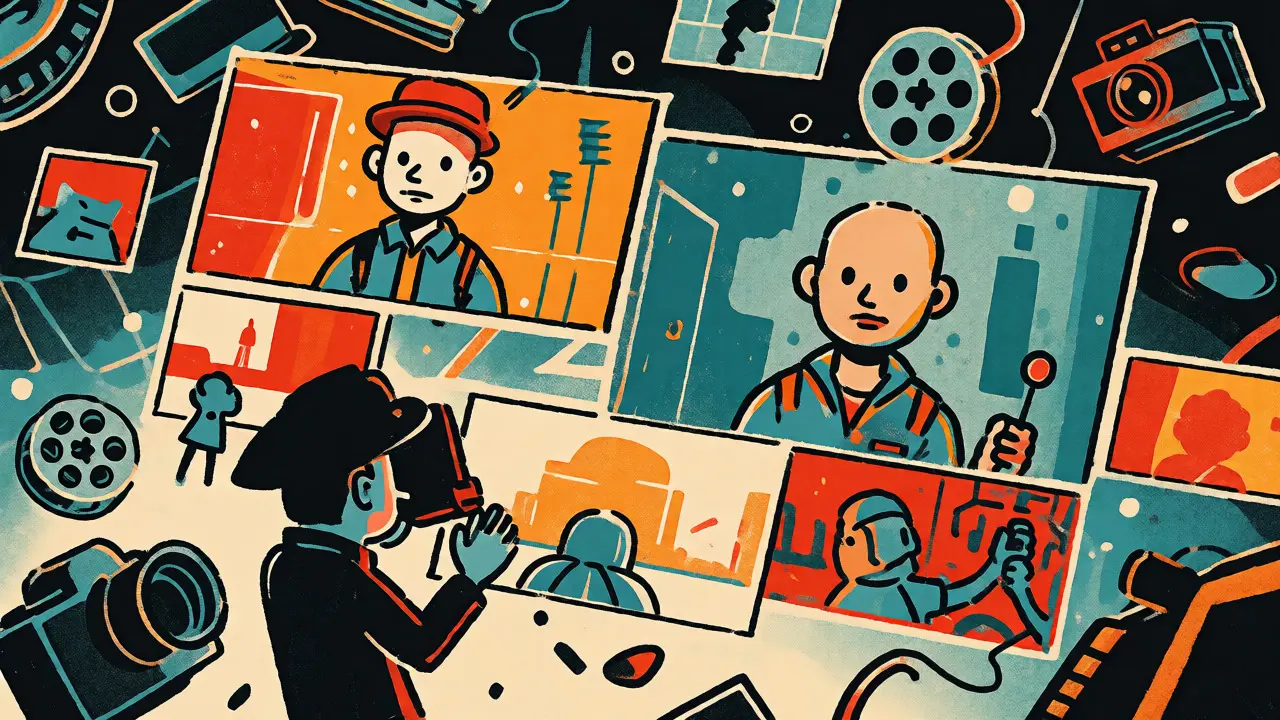
Once the script is locked, the next hurdle is showing people what it looks like. Traditional storyboarding requires skilled artists and time. Enter text-to-image and text-to-video models. Tools like Midjourney or DALL-E 3 allow directors to generate high-fidelity mood boards in seconds. For motion, platforms like RunwayML Gen-3 and OpenAI's Sora have changed the game. Sora, which debuted publicly in early 2025, generates 1080p video clips up to 20 seconds long, simulating complex physics and camera movements.
This shift has democratized pre-visualization. Independent creators can now produce animatics that look nearly professional without a large budget. But there are pitfalls. Continuity remains a major weakness. Calibraint’s March 2025 analysis found that current AI tools fail continuity tests 63% of the time. If you ask for a character wearing a red hat in shot A, the AI might forget the hat in shot B. To mitigate this, use consistent seed values and reference images when possible.
| Tool Name | Primary Function | Max Output Length/Quality | Best For |
|---|---|---|---|
| Sora | Text-to-Video | 20s @ 1080p | Cinematic realism and physics simulation |
| RunwayML Gen-3 | Video Editing & Generation | 10s @ High Res | Rapid prototyping and style transfer |
| Kling AI | Text-to-Video | 3 mins @ HD | Longer narrative sequences |
| Eleven Labs | Voice Synthesis | N/A (Audio) | Dubbing and voiceovers (98.5% human-likeness) |
Post-Production: Speed and Scale
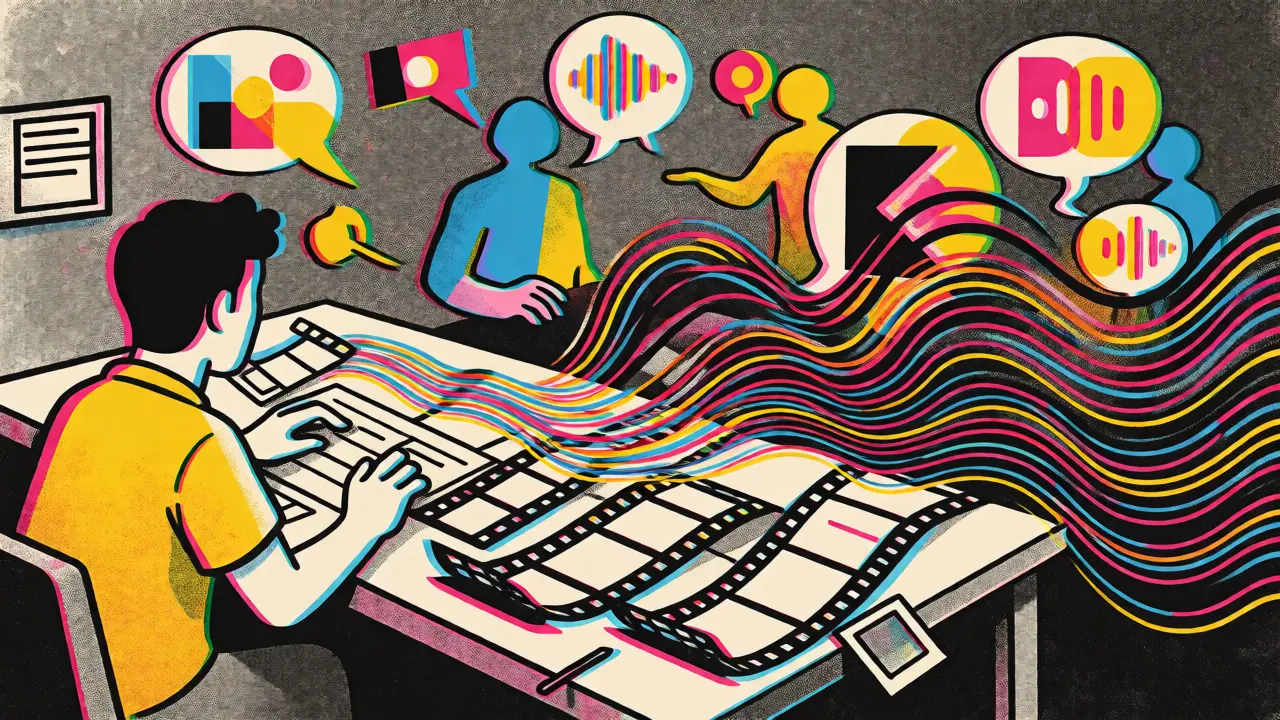
Editing used to be the bottleneck. Finding the right clip in hours of footage was tedious manual labor. Now, multimodal search engines like TwelveLabs allow editors to query video libraries using natural language. Instead of scrubbing through timelines, you type "show me all shots where the protagonist looks sad in rain," and the AI retrieves them instantly. This eliminates the 30-40% of post-production time previously spent on metadata tagging.
Localization has also seen massive gains. Warner Bros. Discovery reported an 80% increase in speed for captioning and dubbing their streaming content using Google Cloud AI. For global campaigns, this means you can localize a video into twenty languages almost simultaneously. However, quality control is essential. The "uncanny valley" effect in AI voice synthesis can still feel off for premium brand content, so human review is non-negotiable.
The Human-AI Co-Creation Model
Industry leaders agree that AI is a collaborator, not a replacement. John Carmack, Netflix's Director of AI Research, noted that AI can "rip things apart and glue them back together with more insight." This co-creation model works best when humans handle the high-level creative direction-theme, emotion, brand voice-while AI handles the heavy lifting of iteration and variation.
Consider the case of The Frost, released in late 2024. It was one of the first films where AI generated initial scripts, voiceovers, and imagery, but human professionals refined every frame. The result wasn't just faster; it allowed the team to explore creative directions they wouldn't have had the budget to test otherwise. Deloitte’s 2025 analysis suggests this approach reduces costs by 25-60% while accelerating timelines by up to 70%.
Challenges and Ethical Considerations
It's not all smooth sailing. Copyright remains a legal gray area. The U.S. Copyright Office stated in January 2025 that AI-generated content lacking meaningful human modification cannot be copyrighted. This means if you generate a logo entirely via AI, you might not own it exclusively. Always keep records of your prompts and human edits.
There's also the issue of homogenization. If everyone uses the same default models, content starts to look alike. Dr. Lars Konzack from the University of Copenhagen warns that AI-driven content risks becoming "autonomous simulations detached from any real referent." To combat this, fine-tune models on your proprietary assets. It costs 30-50% more but improves output alignment by 65%, ensuring your brand stands out.
Getting Started: Practical Steps
If you're ready to integrate these tools, start small. Don't try to automate your entire pipeline overnight. Begin with one stage, such as script ideation or storyboard creation.
- Select Your Tool: Use Leonardo.Ai for concept art (free tier available), RunwayML for video ($15/user/month), or Eleven Labs for voice ($5/month).
- Learn Prompt Engineering: Basic proficiency takes 15-20 hours. Mastering consistent styles takes 80+ hours.
- Integrate Gradually: Ensure new tools work with your existing Adobe Creative Cloud ecosystem. 89% of media companies prioritize this compatibility.
- Establish Review Protocols: Set clear checkpoints for human review to catch continuity errors or hallucinations.
The market for generative AI in media is exploding, reaching $4.2 billion in 2024. Adoption is no longer about whether to use it, but how to use it effectively. By treating AI as a powerful assistant rather than an autonomous creator, you preserve the human touch that audiences crave while enjoying unprecedented efficiency.
Can I copyright content created solely by AI?
Generally, no. As of January 2025, the U.S. Copyright Office states that AI-generated content without significant human modification lacks copyright protection. You must add substantial human creativity, such as editing, arranging, or refining the output, to claim ownership.
Which AI tool is best for video generation in 2026?
OpenAI's Sora is currently leading for realistic physics and longer clips (up to 20 seconds). Kling AI offers longer durations (up to 3 minutes), while RunwayML Gen-3 is preferred for rapid prototyping and style control within existing editing workflows.
Does AI replace human editors?
No. AI accelerates tasks like searching footage, auto-captioning, and generating rough cuts. However, human editors are still required for pacing, emotional timing, and making creative decisions that align with brand strategy and audience expectations.
How much does it cost to implement AI in media production?
Costs vary. Individual tools range from free tiers to $15-$50 per month. Enterprise solutions with custom fine-tuning can increase costs by 30-50% but offer better brand consistency. Overall, businesses report a 25-60% reduction in total production costs due to time savings.
What is the biggest limitation of current AI video tools?
Continuity. Current models struggle to maintain consistent character details, lighting, and object placement across sequential shots. Studies show a 63% failure rate in continuity tests, requiring frequent manual correction or re-generation.