Most companies still treat software development like a black box-only engineers can touch it, and even then, it takes weeks to get a simple tool built. What if your marketing team could create a landing page in minutes? Or your customer support team could build a custom ticket triage bot without writing a single line of code? That’s not science fiction. It’s happening through vibe coding-and the next step is internal marketplaces for vibe-coded components and services.
What Is Vibe Coding, Really?
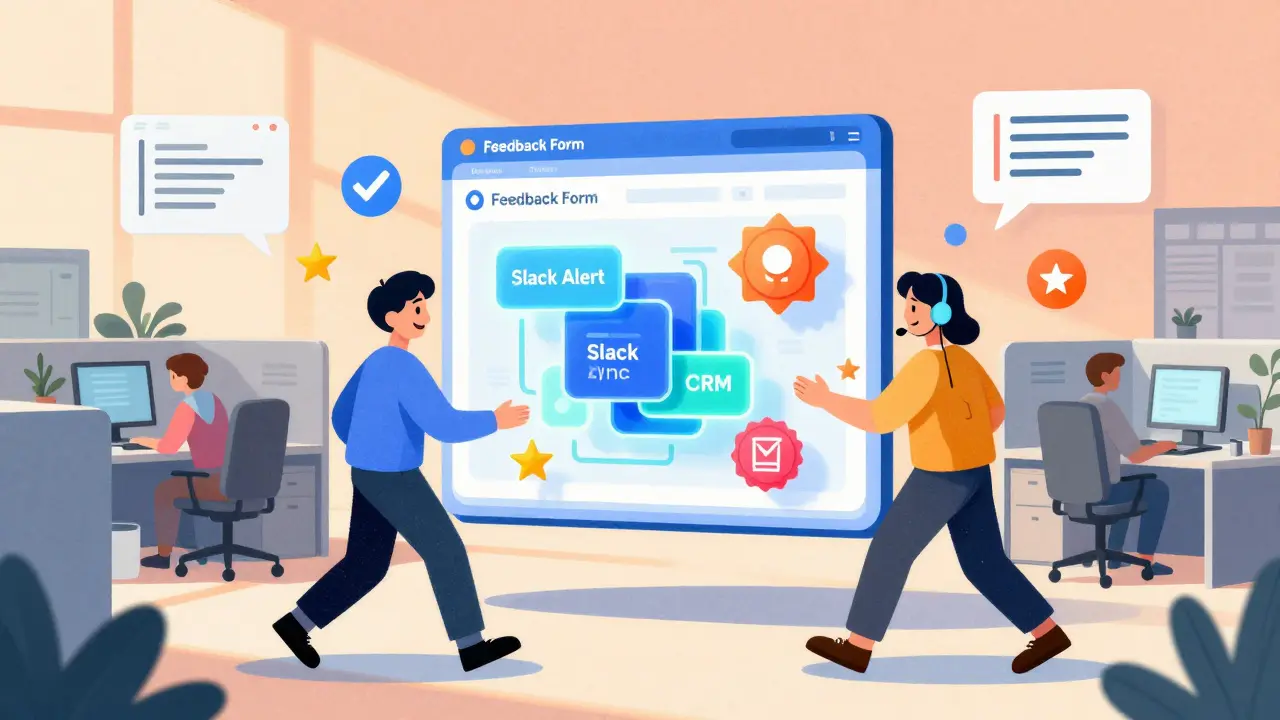
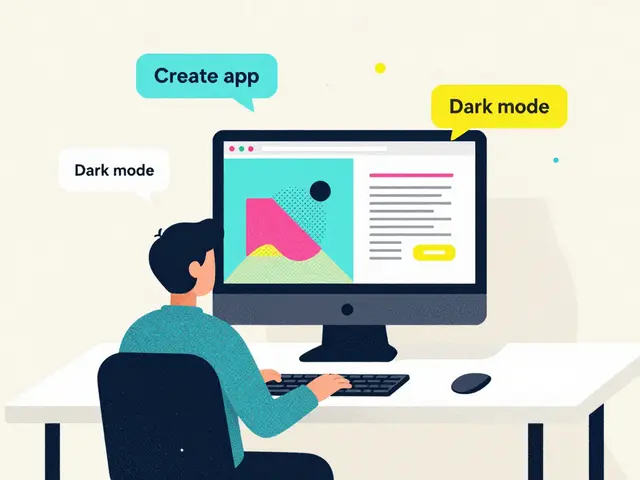
Vibe coding isn’t just another AI code generator. It’s a shift in how teams build things. Instead of typing out syntax, developers describe what they want in plain language: "I need a form that collects user feedback, stores it in PostgreSQL, and sends a Slack alert when a rating drops below 3." The AI takes that, writes the code, tests it, and deploys it-all in under a minute. Companies like Salesforce and Cloudflare have already built platforms around this. Cloudflare’s VibeSDK lets teams spin up isolated, secure environments where these AI-generated apps run without touching production systems.
But here’s the catch: once you start generating dozens of these components, you end up with chaos. Someone in sales builds a lead tracker. Someone in HR builds a time-off calculator. Someone in legal builds a contract review helper. All of them work. All of them are different. And none of them talk to each other. That’s where internal marketplaces come in.
Why Internal Marketplaces Are Necessary
Think of an internal marketplace like an app store-but only for your company. Instead of downloading apps from Apple or Google, teams discover, reuse, and even improve components built by others. A reusable form component? A data connector to your CRM? A workflow that auto-updates your project tracker? These become cataloged, versioned, and rated-just like products on Amazon.
Without this structure, you get duplication. You get security risks. You get teams reinventing the wheel because they don’t know what already exists. A 2025 internal survey at a mid-sized SaaS company found that 68% of vibe-coded tools were built from scratch, even though 42% of them duplicated functionality already available elsewhere in the company. That’s wasted time, wasted compute, and wasted trust in the system.
How an Internal Marketplace Works
Here’s how it actually functions in practice:
- Component Submission: Any employee can submit a vibe-coded tool. They describe it, tag it (e.g., "CRM", "HR", "Data Sync"), and link to its source code or prompt history.
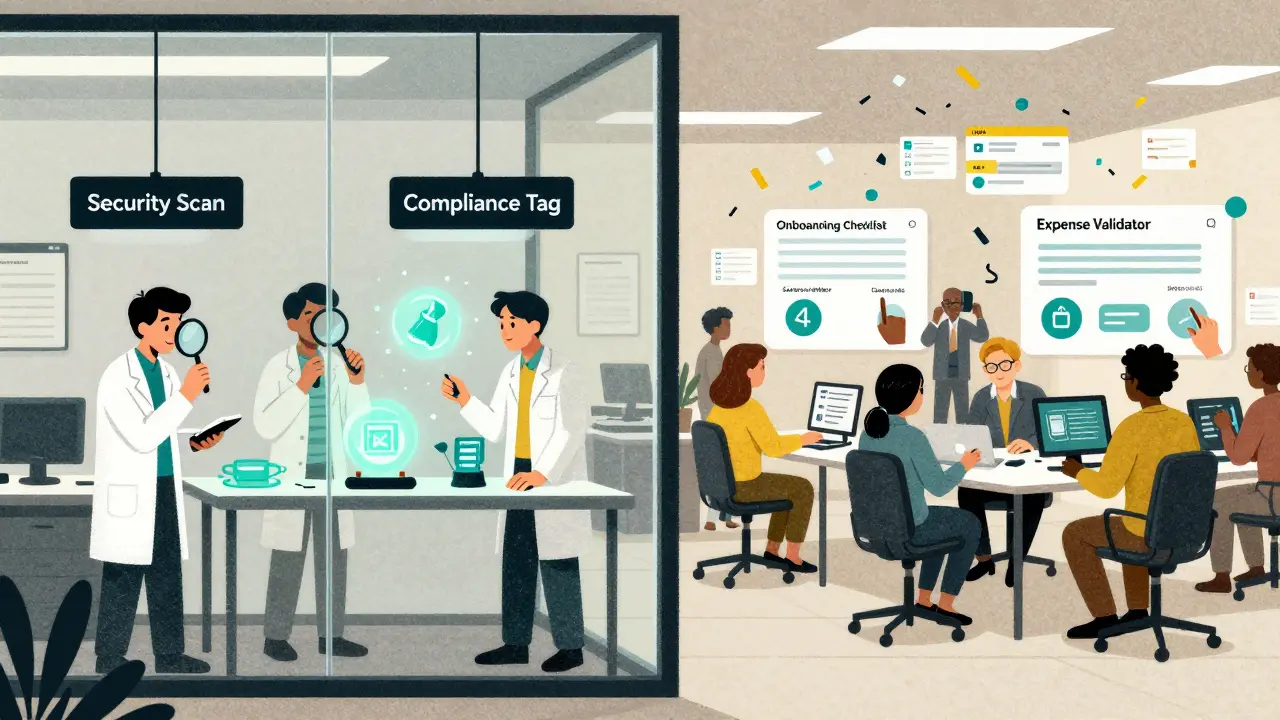
- Automated Review: The system checks for security gaps, compliance with company data policies, and performance benchmarks. If it passes, it goes live.
- Discovery & Rating: Teams browse by category, search by function, or see what’s trending. They can leave ratings, report bugs, or suggest improvements.
- Version Control & Updates: Every component has a version number. When someone updates it, the marketplace auto-notifies users who rely on it. No more broken tools because someone "fixed" something without telling anyone.
- Usage Analytics: Managers can see which components are used most, which are abandoned, and which teams are contributing the most. This isn’t about surveillance-it’s about spotting bottlenecks and rewarding good contributors.
At one tech firm in Portland, the internal marketplace launched in January 2025. Within three months, 83% of non-engineering teams built at least one tool using existing components. Engineering time saved? Over 1,200 hours per quarter.
Governance: The Backbone of Trust
You can’t just let anyone deploy code inside your company. That’s how breaches happen. That’s why governance isn’t optional-it’s the core of the marketplace.
Here’s what good governance looks like:
- Access Tiers: Basic components are open to all. Components that access customer data or financial systems require approval from a data steward.
- Compliance Tags: Every component is labeled: "GDPR Compliant", "HIPAA Ready", "Internal Only". The system blocks usage if a user tries to deploy a component outside their clearance level.
- Change Audits: Every edit to a component is logged. Who changed it? Why? What tests ran? This isn’t about blame-it’s about traceability.
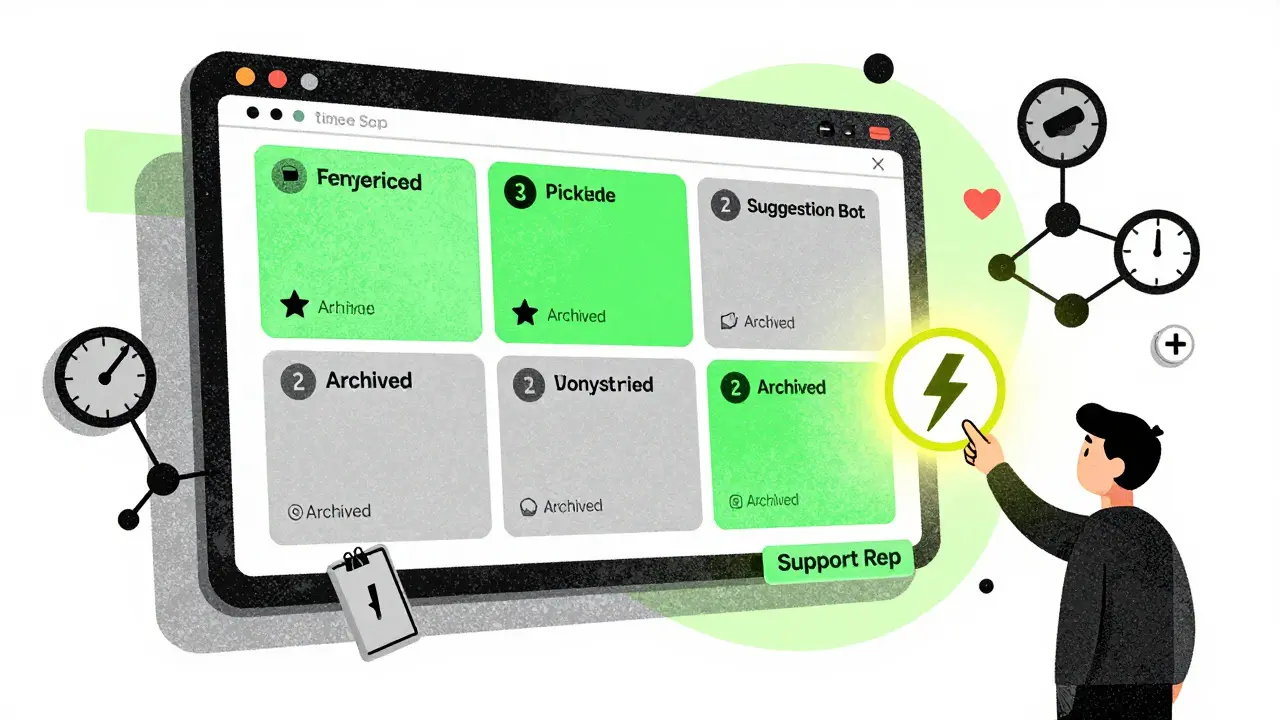
- Retention Policies: Components that haven’t been used in 90 days are flagged. If no one claims them, they’re archived. No digital clutter.
Companies that skip governance end up with a graveyard of half-baked tools. Those that build it in from day one turn their internal marketplace into a living system-constantly improving, always safe.
Who Benefits?
It’s not just engineers. Everyone wins:
- Marketing: Builds landing pages in hours, not days. No more waiting for devs to get to their ticket.
- HR: Creates onboarding checklists that auto-update when policies change.
- Customer Support: Makes tools that pull in ticket history and suggest responses based on past solutions.
- Finance: Automates expense report validation against policy rules.
- Engineering: Stops being the bottleneck. Instead, they become curators-reviewing components, improving core libraries, and mentoring others.
The biggest shift? Culture. Teams stop seeing each other as silos. They start seeing each other as contributors. A support rep who built a tool that saved 20 hours a week? That person gets recognized. Not with a bonus, but with a badge in the marketplace-and maybe a shoutout in the next all-hands.
What You Need to Get Started
You don’t need to build this from scratch. Platforms like Cloudflare’s VibeSDK, Salesforce’s internal vibe ecosystem, and open-source tools like VibeHub let you plug in a marketplace layer in days. Here’s what to focus on:
- Start small. Pick one department-say, marketing-and build a library of 5 reusable components.
- Define your governance rules early. What data can be accessed? Who approves changes?
- Make submission easy. One-click upload. Auto-tagging. No forms.
- Track usage. If no one’s using it, it’s not a marketplace-it’s a shelf.
- Celebrate contributors. Recognition drives adoption more than policy.
By the end of six months, you won’t just have a marketplace. You’ll have a new way of working-one where innovation isn’t locked behind a ticket system, but is part of everyday culture.
What Happens If You Don’t Build One?
Companies that ignore this trend end up with two problems:
- Shadow IT 2.0: Teams build tools in Excel, Airtable, or Notion because the official channels are too slow. These tools are insecure, untracked, and unmanageable.
- Lost Talent: Your most creative people leave because they’re frustrated. Why build something amazing if no one else can use it? Why solve a problem if the solution dies in a folder no one else knows about?
The future of work isn’t just about AI writing code. It’s about giving everyone the power to create-and the structure to share it safely.
Can non-engineers really build useful tools with vibe coding?
Yes. At companies using vibe coding marketplaces, teams like marketing, HR, and customer support have built tools that handle everything from automated onboarding checklists to real-time feedback dashboards. These aren’t prototypes-they’re daily-used systems that cut manual work by 60-80%. The key is starting with simple, well-defined prompts and using pre-approved components from the marketplace.
How do you prevent security risks in an open internal marketplace?
Security isn’t about locking things down-it’s about smart defaults. Every component is scanned for data access patterns, hardcoded secrets, and compliance flags before going live. Access tiers restrict who can use sensitive components. Audit logs track every change. And components that handle customer data require approval from a data governance team. Cloudflare’s VibeSDK, for example, runs all generated code in isolated sandboxes, so even a flawed component can’t touch your core systems.
What’s the difference between vibe coding and low-code platforms like OutSystems?
Low-code platforms force you into pre-built blocks and drag-and-drop interfaces. Vibe coding lets you describe what you want in natural language, and the AI builds the actual code-using real programming languages like Python, JavaScript, or SQL. That means vibe-coded tools are more flexible, easier to debug, and can integrate with existing systems. Low-code is like building with LEGO. Vibe coding is like hiring a skilled builder who knows how to use your tools.
Do internal marketplaces slow down innovation?
No-they accelerate it. Without a marketplace, innovation happens in isolation. One person builds a great tool, but no one else knows about it. With a marketplace, good ideas spread fast. Teams reuse and improve each other’s work. One company saw a 300% increase in the number of new tools deployed each quarter after launching their internal marketplace. The real slowdown? When teams are stuck waiting for engineering teams buried under tickets.
How do you get people to actually use the marketplace?
Make it easy, make it visible, and make it rewarding. Start with a few high-impact components that solve real pain points-like auto-filling expense reports or syncing calendar invites across teams. Show the time saved. Highlight the creators. Add a leaderboard for top contributors. And never force adoption-let people discover the value themselves. Within weeks, word spreads. People start asking, "What else can I build?"
What Comes Next?
Internal marketplaces for vibe-coded components won’t stay internal for long. We’re already seeing companies open select components to partners or customers. Imagine a logistics firm sharing a shipment-tracking component with its top 10 vendors. Or a healthcare provider offering a patient consent form generator to affiliated clinics.
But that’s later. For now, the real win is inside your company. The next time someone says, "We need a tool for that," don’t say, "We’ll get to it." Say, "Check the marketplace. Someone probably built it already."

Albert Navat
18 March, 2026 - 04:23 AM
Let’s be real-vibe coding is just AI with a marketing makeover. But the internal marketplace angle? That’s the real game-changer. You’re not just democratizing dev, you’re creating a decentralized innovation engine where every employee becomes a node in the network. And yeah, governance is non-negotiable. If you don’t enforce access tiers and compliance tags from day one, you’re just building a honeypot for shadow IT 2.0. Cloudflare’s sandboxing? Genius. No more ‘oops I deployed a script that talks to Stripe’ moments. This isn’t about tools-it’s about cultural architecture.
King Medoo
18 March, 2026 - 08:41 AM
I’ve seen this movie before. Remember when everyone thought low-code platforms would replace devs? Then came the spaghetti messes, the unmaintainable workflows, the ‘but it worked on my machine’ disasters. Vibe coding is just the next flavor of the same poison. Sure, marketing built a ‘tool’ that auto-fills expense reports-but did they account for tax jurisdiction edge cases? Did they validate against audit logs? No. They just slapped together a prompt and called it a day. And now? HR’s using it. Finance’s using it. Legal’s blind to it. Governance isn’t ‘optional’-it’s the only thing standing between productivity and total chaos. We need mandatory code reviews, even for AI-generated stuff. No exceptions. Not even for ‘high-performers.’
Rae Blackburn
20 March, 2026 - 05:59 AM
This is a trap and you know it 🤡 Someone’s gonna build a vibe-coded tool that scrapes Slack for DMs and sells it to the C-suite. Or worse-someone in legal builds a contract analyzer that auto-signs NDAs because the AI thought ‘approve’ meant ‘sign’. And when it blows up? They’ll blame the ‘culture’ not the architecture. You think a badge and a shoutout fixes a data breach? Wake up. This isn’t innovation-it’s a liability factory with a nice UI. The fact that you’re calling it ‘living system’ is the red flag. Nothing ‘living’ should be allowed near payroll data. I’m not paranoid. I’ve seen what happens when you give non-devs access to production-like systems. It’s not a marketplace. It’s a countdown timer.
LeVar Trotter
20 March, 2026 - 10:43 AM
Let me tell you something-I’ve been on both sides of this. I was the engineer stuck fixing 37 different ‘homemade’ ticket systems because no one knew what anyone else built. Then we launched our internal marketplace. And guess what? It didn’t just save time. It changed how we talked to each other. A support rep built a tool that auto-suggests responses based on past tickets. I reviewed it. We added a regex filter for PII. She got a ‘Top Contributor’ badge. We had pizza. No bonus. Just recognition. That’s the magic. Governance isn’t bureaucracy-it’s enablement. You don’t lock things down to control. You structure them to scale. And yes, non-engineers can build useful tools. Not because they’re coders. But because they’re the ones who live the problem every day. Our job isn’t to gatekeep. It’s to lift them up. With guardrails. With clarity. With respect.
Tyler Durden
22 March, 2026 - 00:59 AM
I just want to say-this is the future. Seriously. I work in HR. Three months ago I built a tool that auto-updates onboarding checklists when policy docs change. No code. Just a vibe prompt. And now? It’s used by 12 departments. I didn’t ask for permission. I didn’t wait for a ticket. I just… made it. And someone else improved it. And someone else added a Slack integration. And now it’s version 3.2. And it’s beautiful. This isn’t about tech. It’s about trust. When you stop treating people like they need permission to create? Magic happens. You think this is risky? Try telling someone who’s been stuck waiting for dev cycles for six months that they can’t build something because ‘it’s not in the roadmap’. That’s the real risk. The marketplace isn’t a tool. It’s a revolution. And it’s already here. You just have to let it breathe. 🌱✨