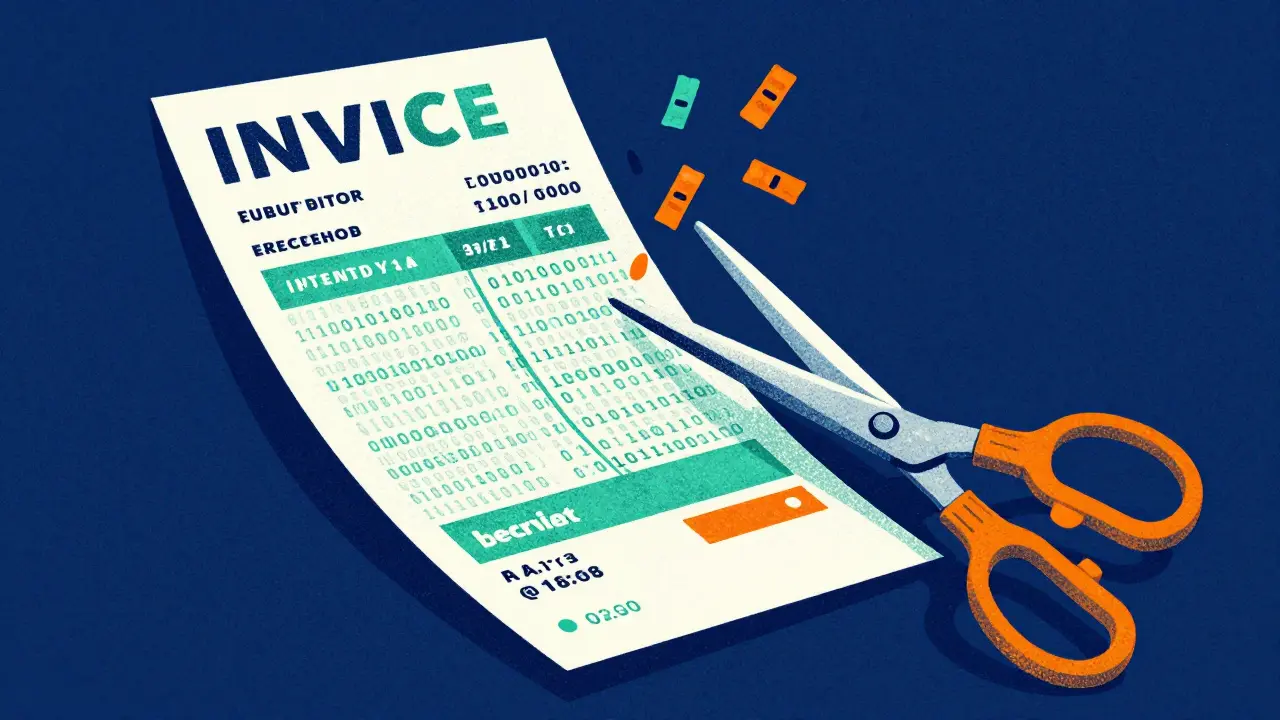
Running a large language model in production often feels like watching a speedometer of spending climb faster than you can track. Between the per-token pricing and the unpredictability of user inputs, your AI budget can vanish in days. The reality is that most companies are overpaying for their AI infrastructure because they treat LLMs like simple APIs rather than complex systems that need tuning. By pulling a few specific LLM cost optimization levers, you can slash your bills by up to 80% without making your AI noticeably stupider.
| Lever | Implementation Effort | Typical Cost Saving | Primary Trade-off |
|---|---|---|---|
| Prompt Length | Low | 20-35% | Potential quality drop |
| Batching | Medium | 50% | Higher latency |
| Semantic Caching | High | 50-75% | Stale data risk |
| Model Cascading | Medium | Up to 87% | Complex routing logic |
Trimming the Fat: Prompt Length and Token Efficiency
Since almost every major provider charges by the token, your prompt is essentially your invoice. If you're sending 1,200 tokens per query when 450 would do the trick, you're throwing money away. The goal here is to be concise without stripping away the nuance the model needs to be accurate.
One of the most effective ways to handle this is through Retrieval-Augmented Generation is a technique that optimizes LLM output by retrieving specific, relevant documents from an external knowledge base and providing them as context . Instead of stuffing your entire company handbook into every prompt, RAG ensures the model only sees the few paragraphs it actually needs. This can reduce context-related token usage by 70% or more.
To get this right, avoid the "more is better" trap. Some teams find that removing redundant phrases and using structured formats (like Markdown) helps the model process information more efficiently. However, be careful. If you truncate too aggressively, you'll see a dip in quality-some benchmarks show a 15-20% drop in output accuracy when critical context is cut. The sweet spot is found by iteratively testing your prompts and measuring the output against a gold-standard dataset.
Batching: Trading Speed for Savings
If your application doesn't need to respond in milliseconds, you shouldn't be paying real-time prices. Batch processing allows you to group multiple requests together and process them asynchronously, often at a 50% discount compared to instant API calls.
To implement this, you'll need a queuing system that collects requests over a short window and then sends them as a single block. Tools like vLLM is a high-throughput serving engine for LLMs that optimizes memory usage through PagedAttention make this much easier by handling pipeline parallelism. This transforms your model into a distributed processing unit rather than a bottleneck.
The tricky part is finding the right batch size. It's a balancing act between throughput and latency. For example, if you're using a model like Mistral 7B, you might hit peak efficiency at 32 requests per batch. If you're using something heavier like GPT-4-turbo, you might need to stick to 16 requests to avoid massive delays. For non-critical background tasks-like summarizing daily logs or analyzing sentiment on a thousand reviews-batching is the single fastest way to cut your infrastructure spend in half.

Semantic Caching: Stopping the Repeat Bill
Why pay for the same answer twice? Traditional caching looks for an exact match of a string, but in the world of AI, two different sentences can mean the exact same thing. "How do I reset my password?" and "I forgot my password, what do I do?" are effectively the same query.
Semantic Caching is a method of storing LLM responses based on the meaning (vector embedding) of a query rather than the exact text . By using a vector database to store previous answers, the system can check if a new query is "close enough" to a cached one. Most enterprises set a cosine similarity threshold between 0.82 and 0.87. If the new query hits that threshold, the system serves the cached answer instantly, bypassing the LLM entirely.
While this requires more engineering effort-usually a few weeks of setup involving Redis as a fast data store -the ROI is massive. You're not just saving money; you're improving the user experience by delivering responses in milliseconds instead of seconds.
Model Cascading and Intelligent Routing
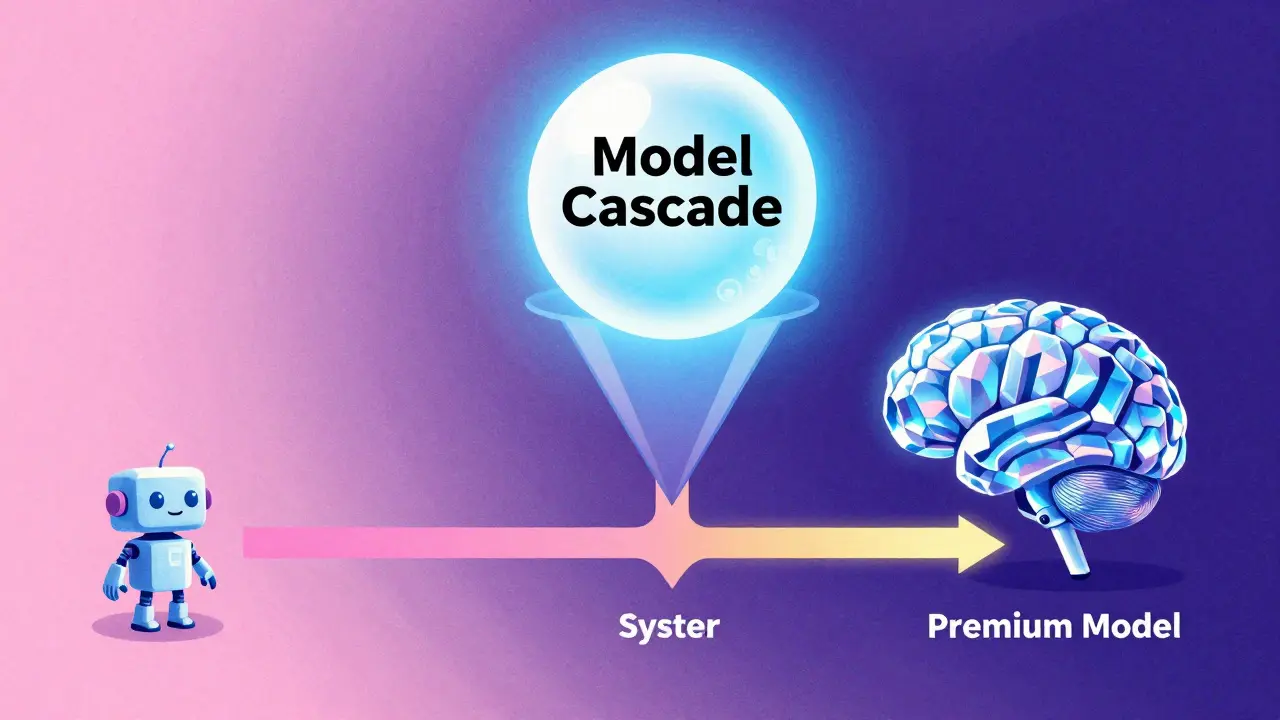
Not every question requires a genius. Asking a top-tier model to fix a typo or categorize a lead is like hiring a rocket scientist to mow your lawn. Model cascading is the process of routing queries to the cheapest possible model that can actually do the job.
A typical setup looks like this: route 90% of your traffic to a small, efficient model like Mistral 7B. Then, implement a "complexity check." If the small model's confidence score is low, or if the query contains specific keywords indicating a complex task, the system escalates the request to a premium model like GPT-4. This strategy can lead to an 87% cost reduction because you're only paying the "premium tax" for the hardest 10% of your work.
Automated routing platforms are now making this easier by dynamically selecting the model based on the query type. This removes the guesswork and ensures you're always using the most cost-effective tool for the task at hand.
The Hardware Perspective: Quantization and GPU Management
If you're hosting your own models, the cost isn't just about tokens-it's about GPU memory and power. This is where Quantization is the process of reducing the precision of a model's weights to decrease its memory footprint and increase inference speed comes in. By moving from 16-bit to 8-bit or even 4-bit precision, you can significantly reduce the amount of VRAM required.
There is some debate in the community about the trade-offs here. Some engineers argue that the processing overhead of certain quantization methods eats into the savings. However, data from NVIDIA shows that you can often reduce memory requirements by 50-75% with almost no noticeable loss in accuracy. If you're struggling with expensive GPU clusters, quantization is your best bet for fitting larger models on cheaper hardware.
How much can I actually save with prompt optimization?
Depending on your current prompts, you can expect a 20-35% reduction in costs. In some extreme cases, like a financial services firm that cut tokens from 1,200 to 450 per query, savings reached over 60% while keeping quality within 5% of the original baseline.
Does batching affect the quality of the AI's response?
No, batching typically does not affect the quality of the output. It only affects when that output is delivered. The model processes the requests the same way; it just does so in a group to maximize hardware efficiency and lower the cost per request.
What is the best similarity threshold for semantic caching?
Most enterprise deployments find a cosine similarity threshold between 0.82 and 0.87 to be the sweet spot. This ensures that the cached answer is relevant enough to be helpful without providing incorrect or slightly off-topic information.
Is model cascading hard to implement?
It requires a medium amount of engineering effort. You need to build a routing layer that can evaluate a query's complexity or use a smaller model as a "classifier" to decide whether to escalate the prompt to a more expensive model.
What is the fastest way to see an ROI on these optimizations?
Prompt engineering and length reduction provide the most immediate savings because they require the least technical setup. However, comprehensive strategies-combining RAG, caching, and cascading-often see a full ROI within about 8 to 9 weeks.
Next Steps for Your Implementation
If you're just starting, don't try to do everything at once. Start with a prompt audit. Look at your most frequent queries and see where you can cut words without losing meaning. Once you've stabilized your prompt costs, look into your workloads. If you have tasks that can happen overnight or once an hour, move them to batch processing immediately.
For those with high-volume, repetitive traffic, prioritize semantic caching. It's a bigger lift technically, but it's the only way to truly decouple your growth in users from your growth in API costs. Finally, set up a monitoring system to track token usage in real-time. Without a dashboard, you're just guessing where the money is going.




Jeremy Chick
26 April, 2026 - 21:56 PM
About time someone pointed out that most companies are just throwing money into a void because they're too lazy to optimize. Seriously, just use vLLM and stop whining about your cloud bill. It's not rocket science, just basic infra management.
Stephanie Serblowski
27 April, 2026 - 20:07 PM
Oh wow, truly ground-breaking stuff here! 🙄 I'm sure the C-suite is just thrilled to hear we can shave a few tokens off the prompt to save some pennies. I love how we're basically treating LLMs like a game of Tetris, just trying to fit the most 'context' into the smallest possible window without the model completely hallucinating its own reality. 🙃 Pure synergy, people! ✨
Renea Maxima
29 April, 2026 - 15:01 PM
Is the cost actually the problem, or is it our obsession with efficiency? We're optimizing the 'how' of the machine while ignoring the 'why' of the output. If you're just cutting prompts to save money, you're essentially valuing the coin over the cognition. 🌀
Sagar Malik
30 April, 2026 - 19:26 PM
Actually, the whole premise of 'cost' is a facade created by the compute cartels to keep us in a loop of subscription dependencies. The real alpha is in local quantization using 4-bit weights on consumer hardware, but these 'enterprise' guides always push you toward proprietary routing layers and high-latency batching. Its basically a way to make you think you're saving while they still own the weights. The sementic caching you mention is just a fancy way of saying 'memoization' which we've had since the dawn of computing, yet here we are pretending its a new paradigm in the era of stochastic parrots. Total farce. 🙄
Seraphina Nero
30 April, 2026 - 22:18 PM
This is really helpful for people who are just starting out with AI tools. It makes the technical stuff feel a bit easier to handle.
Michael Thomas
30 April, 2026 - 22:59 PM
Stop overthinking it. Use the cheapest model that works. Period.
Abert Canada
2 May, 2026 - 01:21 AM
Fair point, but honestly, the latency hit from batching is a killer for some UX. I've tried this and the users just hate the lag, even if the bill is lower. You gotta be careful not to kill the product just to save a buck.
Xavier Lévesque
3 May, 2026 - 22:09 PM
Right, because nothing says 'high performance' like waiting for a batch window to close. Absolute genius strategy if you want your users to go back to using Google. 🙄
Thabo mangena
5 May, 2026 - 03:07 AM
It is truly commendable to see such a comprehensive breakdown of cost-saving measures. Such strategies will undoubtedly empower many emerging startups to scale their operations more sustainably while maintaining a high standard of excellence.
Karl Fisher
7 May, 2026 - 00:49 AM
I've actually implemented a similar cascading logic in my own project, and let me tell you, the elegance of routing a simple query to a tiny model while reserving the 'big guns' for the complex stuff is just... chef's kiss. It's practically art. I'm just so thrilled that others are finally catching up to this level of sophistication! 😊