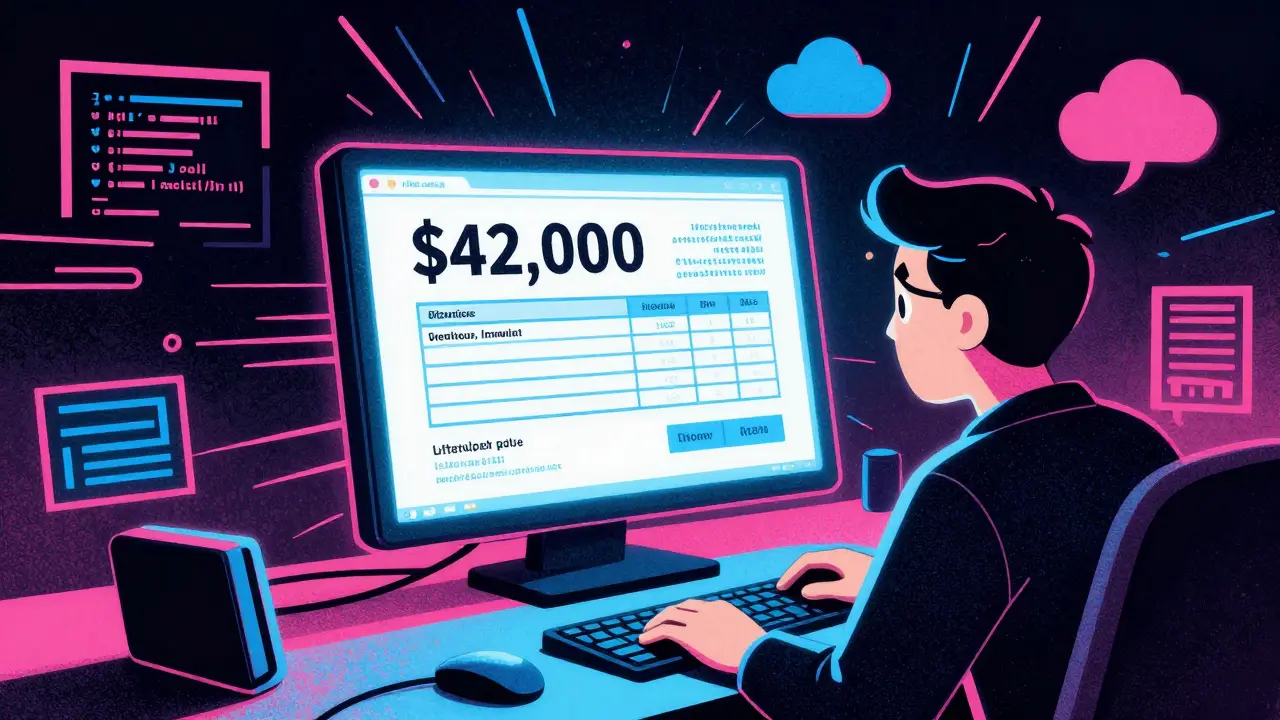
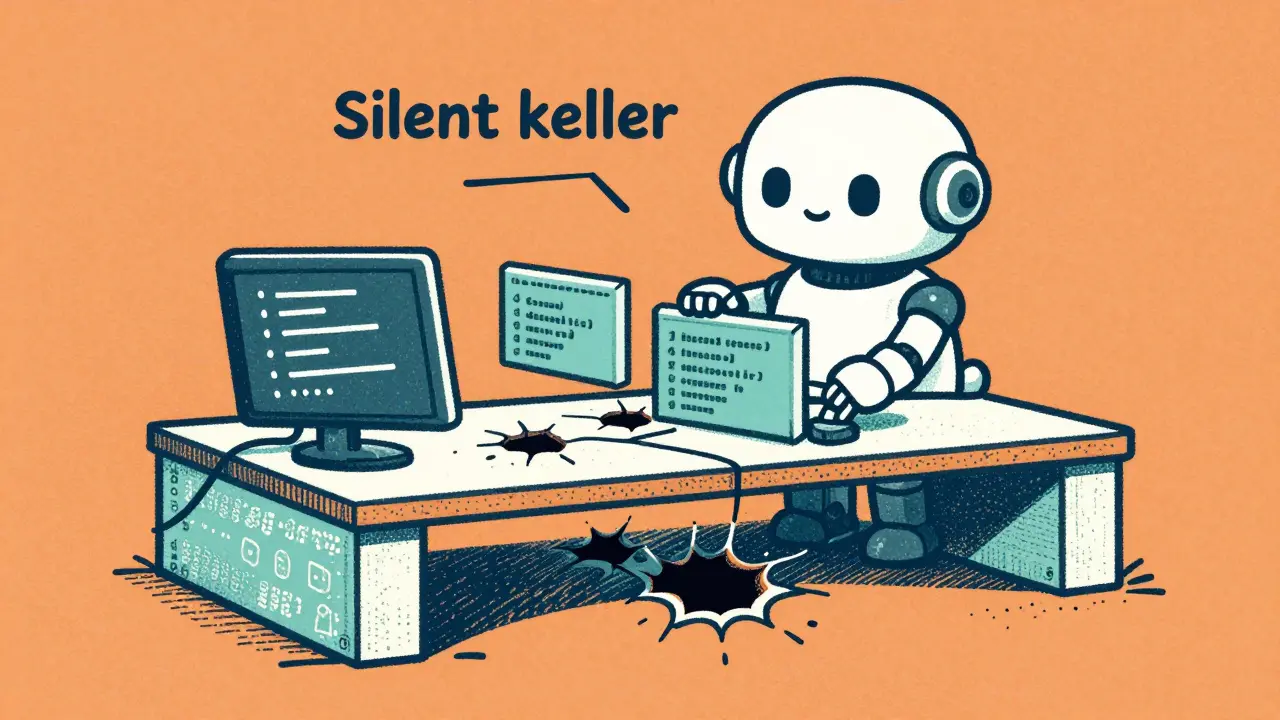
The core problem is that most AI assistants are designed for velocity, not security. They are remarkably good at making things work, but they aren't designed to understand the catastrophic consequences of a broken access control path or a deprecated library. This creates a "silent killer" effect: code that passes a basic static scan but collapses under a real-world attack. To avoid this, buyers must shift their focus from what the AI can build to how the platform validates what was built.
The Hidden Gaps in the AI Coding Stack
When you evaluate a vibe coding platform, you aren't just buying a text editor; you're introducing a new layer into your supply chain. Most platforms integrate via IDE plugins or agents that have deep access to your file system and cloud environment. This creates several critical blind spots that traditional security tools often miss.
First, there is the issue of secret leakage. Because vibe coding encourages rapid iteration, it's incredibly easy for an AI to suggest embedding an API key directly into the code for "convenience" during the prototyping phase. If your platform doesn't have integrated, real-time secrets scanning, those keys end up in your git history. Once they are there, they are permanent, even if you delete the line in a later commit.
Second, AI tools frequently suggest deprecated libraries. For instance, some teams have found assistants recommending old versions of Express.js with known vulnerabilities in nearly 40% of their API controllers. The AI isn't checking the current CVE database in real-time; it's predicting the next likely token based on a training set that might be months or years old.
Third, and most dangerously, is the failure of architectural logic. An AI can write a perfect function for a login page but completely miss the fact that it created an Insecure Direct Object Reference (IDOR) vulnerability, allowing any user to view any other user's data just by changing a number in the URL. This isn't a syntax error; it's a logic flaw.
Static vs. Dynamic Validation: Why Your Reports Are Lying
Many buyers feel safe because their chosen platform claims to have "integrated security scanning." Usually, this refers to Static Analysis Security Testing (SAST). While SAST is useful, it is fundamentally insufficient for vibe coding. Static scanning evaluates code at rest-it looks at the text. Attackers, however, interact with systems in motion.
| Feature | Static Analysis (SAST) | Dynamic Validation (DAST/Runtime) |
|---|---|---|
| Detection Method | Analyzes source code without executing it | Tests the running application via live exploitation |
| Logic Flaws | Often misses authentication bypasses | Identifies actual paths to unauthorized data |
| Accuracy | High false-positive rate | High precision (validates a flaw exists) |
| Vibe Coding Fit | Baseline check only | Essential for detecting "silent killer" flaws |
Research has shown that applications rated with "zero vulnerabilities" by static tools often contain multiple critical issues, including authentication bypasses and weak session handling, when subjected to dynamic testing. If a platform doesn't offer a way to validate vulnerabilities through live exploitation in a sandbox or CI/CD pipeline, you are essentially flying blind.
Comparing the Major Players
Not all platforms handle security the same way. The market is currently split between general-purpose assistants and security-first specialized tools.
- GitHub Copilot is the most widely adopted, but it largely lacks native, deep security scanning. It relies on the broader GitHub ecosystem (like Dependabot) to catch issues. It's a productivity powerhouse, but the security burden falls entirely on the user's external toolchain.
- Cursor offers basic security checks but has been noted for missing architectural flaws. It's a favorite for AI-native teams, but enterprise buyers often find they need to supplement it with third-party security layers to prevent production rollbacks.
- Windsurf generally shows stronger integrated features, including secrets scanning, yet it can still produce code using weak cryptographic functions.
- Specialized platforms like Backslash Security and Bright focus specifically on the vibe coding lifecycle, emphasizing dynamic validation and preemptive controls over simple autocomplete.

The Buyer's Assessment Checklist
When reviewing a vendor's security posture, stop asking if they "have AI security" and start asking these specific questions. Their answers will tell you if they are selling a toy or a professional tool.
- How does the platform handle secret detection? Does it block the commit of a key in real-time, or does it just alert you after the key is already in the history?
- Is there a mechanism for dynamic validation? Can the tool simulate an attack on the generated code to prove a vulnerability exists before it hits production?
- Does it integrate with existing CI/CD pipelines? A tool that only lives in the IDE is a liability. You need a "security gate" that can stop a build if the AI generates an insecure default.
- What is the approach to deprecated dependencies? Does the platform verify the current version of suggested libraries against known CVEs?
- Does the platform support runtime protection? Since AI-coded logic often bypasses secure inputs, is there a layer of protection that monitors the application while it's running?
Practical Steps for a Secure Implementation
If you decide to move forward with vibe coding, you can't just turn it on and hope for the best. You need a strategy that balances the 3.7x speed boost with a rigorous safety net. Start by implementing a mandatory human review process. While this can create a productivity drag of around 20%, it is the only way to catch high-level design risks that AI simply cannot perceive.
Invest in "secure prompt templates." Instead of asking the AI to "build a login page," use a template that specifies the security requirements: "Build a login page using Argon2 for password hashing, implement CSRF protection, and ensure all inputs are validated against a strict allow-list." Developers using secure templates have been shown to reduce vulnerabilities by over 40%.
Finally, automate the "boring" parts of security. Use a combination of SAST, SCA (Software Composition Analysis), and DAST (Dynamic Application Security Testing). This ensures that while the AI is iterating quickly, your security baseline is moving at the same pace. The goal isn't to eliminate AI, but to wrap it in a governance framework that treats AI-generated code as "untrusted" until proven otherwise.
What exactly is vibe coding?
Vibe coding is a way of developing software where the programmer focuses on the "vibe" or high-level intent of the application using natural language prompts, and AI agents handle the actual writing of the code. It prioritizes rapid prototyping and velocity over manual syntax entry.
Why is static analysis not enough for AI-generated code?
Static analysis looks at the code without running it, which means it can miss complex logic flaws like authentication bypasses or IDOR vulnerabilities. AI often produces code that looks correct syntactically but is logically broken, which can only be detected through dynamic testing where the code is actually executed.
Are there any specific risks with GitHub Copilot or Cursor?
Yes. While powerful, these tools can suggest outdated libraries with known vulnerabilities or embed sensitive credentials directly into source code. They generally lack the deep architectural understanding to prevent complex security flaws, meaning the developer must remain the primary security auditor.
How can I reduce the number of vulnerabilities in vibe-coded apps?
The most effective methods include using secure prompt templates that explicitly define security constraints, implementing a mandatory human review for all AI-generated logic, and integrating dynamic validation tools into your CI/CD pipeline to catch flaws before they reach production.
What is the role of runtime protection in this context?
Runtime protection acts as a final safety net. Since AI can create subtle vulnerabilities that survive all previous tests, runtime protection monitors the app for suspicious behavior (like unauthorized data access) and blocks attacks in real-time, providing a critical layer of defense for AI-generated features.




Raji viji
27 April, 2026 - 03:10 AM
Absolute joke that people actually pay for this "guide." Imagine thinking a 3.7x speed boost is a win when you're basically just automating the creation of a digital dumpster fire. Most of these vibe coders are just prompt-monkeys who can't even tell the difference between a pointer and a post-it note, and now they're "innovating" by leaking AWS keys like it's a hobby. It's sheer madness that companies are actually onboarding these tools without a basic understanding of what a CVE even is. Just pure, unadulterated chaos masquerading as productivity. Honestly, the only thing "vibe-ing" here is the sound of a CISO having a massive heart attack when they see the audit report.
Vishal Bharadwaj
28 April, 2026 - 07:30 AM
Lmaoo imagine believeing in "secure prompt templates"... like really? You think adding "please use Argon2" to a prompt is gonna stop a LLM from hallucinating a backdor?? pure cope. SAST is trash sure but DAST is just as slow as hell in a real dev cycle. most of these "specialized platforms" are just wrappers around gpt-4 with a fancy regex scanner and a higher price tag. total scam.
sumraa hussain
30 April, 2026 - 06:30 AM
OH MY GOD... the $42k bill part is actually terrifying!!! i can't even imagine the panic... just absolute horror!!!!
Rajashree Iyer
2 May, 2026 - 04:18 AM
We are witnessing the tragic erosion of the artisan's soul in software development. By chasing the phantom of velocity, we have traded the mindful architecture of the mind for the flickering ghosts of a stochastic parrot. Is speed truly a virtue if it leads us directly into a void of insecurity? We build these glittering towers of code upon sands of instability, forgetting that true creation requires the slow, painful deliberation of human consciousness. The "vibe" is not a methodology, it is a surrender to the void, a digital sleepwalk where we mistake the illusion of progress for the reality of craftsmanship. It is a heartbreaking symphony of efficiency and ignorance, playing out in a thousand cloud instances across the globe, while the spirit of the engineer fades into a mere prompt operator. We are not just leaking keys; we are leaking our very essence as creators.
Parth Haz
2 May, 2026 - 04:34 AM
This is a very timely piece of analysis. I believe that with the right governance and a positive mindset toward security, we can truly harness the potential of AI without compromising our infrastructure. It is heartening to see a structured approach to mitigating these risks, as it allows developers to innovate with confidence. I am certain that as the ecosystem matures, these "silent killers" will be replaced by robust, self-healing security layers that benefit everyone in the industry.