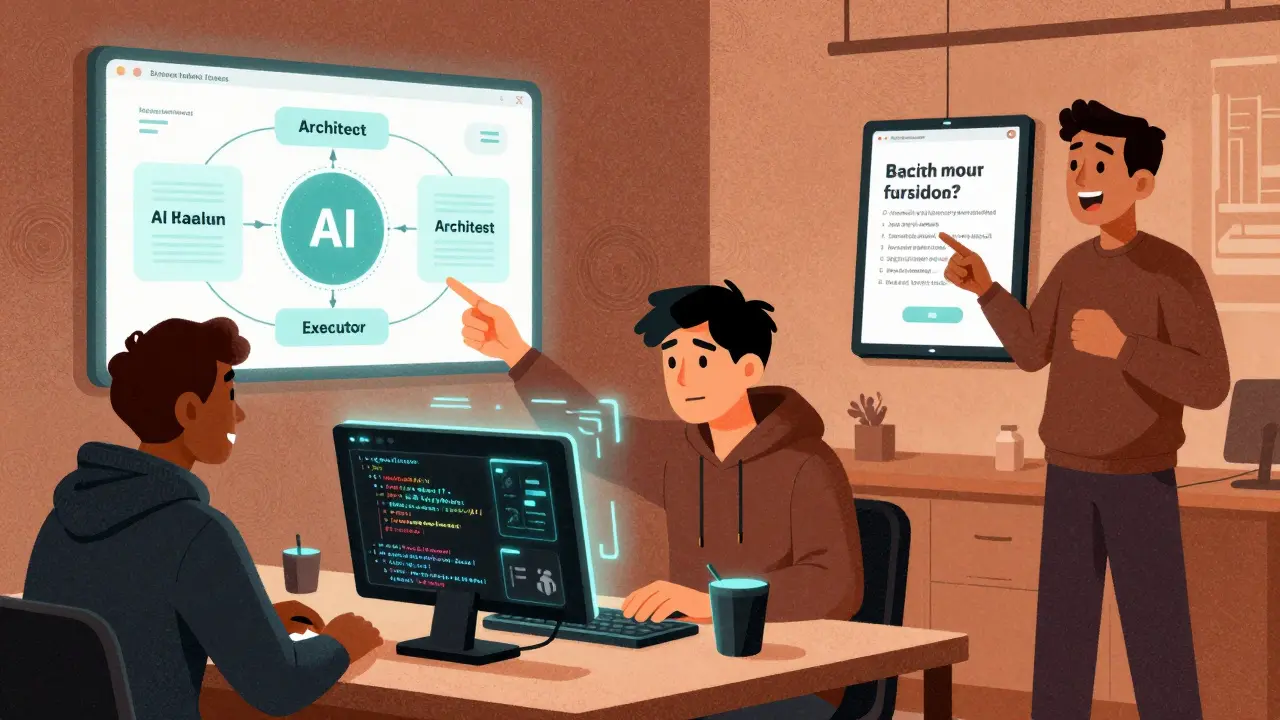
Hackathon strategy isn’t about who types the fastest anymore. In 2026, the winners aren’t the coders who burn midnight oil building perfect databases-they’re the teams who know how to vibe code, use LLM agents like co-pilots, and sell a story so convincing that judges forget the code isn’t production-ready. The old way-spending 40 hours fixing API errors-doesn’t work anymore. You’ve got 48 hours. You need to ship a demo that feels real, not perfect.
What Is Vibe Coding? (And Why It Wins)
Vibe coding isn’t a buzzword. It’s a workflow. It’s the loop: Prompt → Generate → Preview → Critique. You don’t write code from scratch. You tell an AI tool like Claude Code or DataButton what you want: "Build a web app that lets nurses log patient vitals via voice in a hospital ward, with real-time alerts." The AI spits out a full frontend, backend, and even a mock API. You tweak the UI, add one real data point, and call it done. No databases. No auth systems. No CI/CD pipelines. You mock everything that doesn’t directly show the core idea.
Teams using vibe coding ship working, visually polished demos in under 12 hours. That’s not magic-it’s strategy. They save 36 hours for what actually matters: talking to users, refining the pitch, and rehearsing the demo. The code doesn’t need to scale. It just needs to look like it works. Judges don’t care if your backend runs on a cloud function or a script in a text file. They care if they can see the problem solved in under 60 seconds.
LLM Agents: Your Silent Teammates
LLM agents aren’t just tools. They’re teammates. One agent handles UI generation. Another drafts your pitch deck. A third simulates user feedback by role-playing as a hospital administrator who hates your app. You don’t need four developers. You need one person who knows how to direct five AI agents like a conductor.
For example, in a recent AI hackathon, a team used an LLM agent to analyze 200 past patient intake forms from public hospital datasets. The agent flagged a pattern: 78% of delays happened because nurses had to switch between three apps. Their solution? A single voice-activated interface that auto-filled forms from voice notes. The agent didn’t build the app-it told them what to build. That’s the shift. The human’s job isn’t to code. It’s to ask the right questions.
The Investor Hat: Think Like a VC, Not a Coder
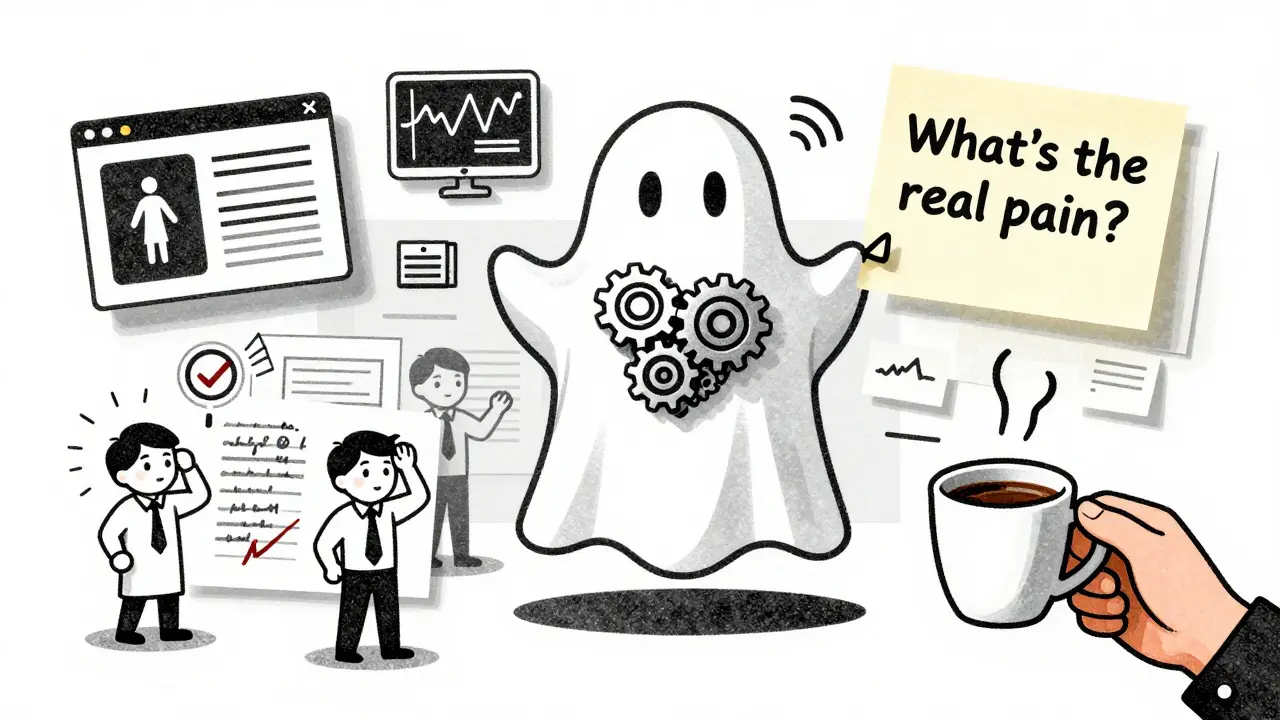
Before you open your laptop, put on your investor hat. Ask: "Would I fund this?" Not because you’re trying to be clever. Because judges are VCs. They’ve seen 500 pitches this year. They’re tired. They want to hear: problem size, user pain, monetization path, and traction-even if it’s fake traction.
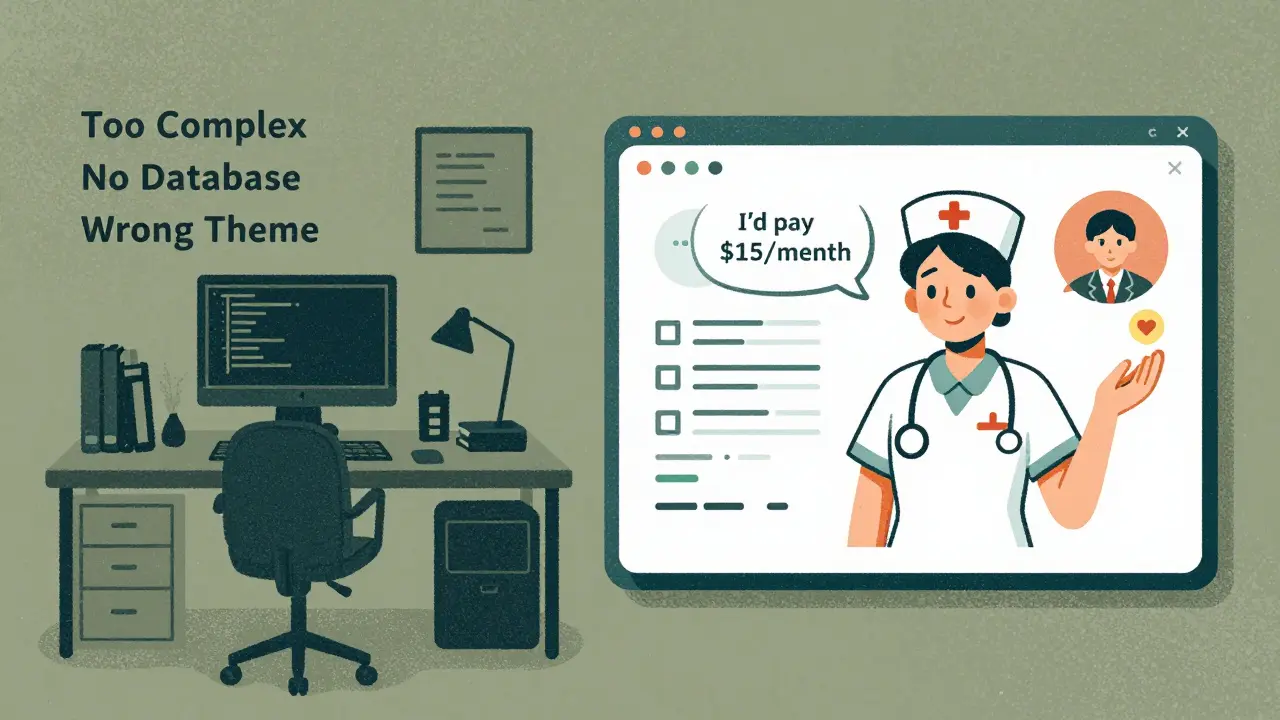
Don’t say: "We built an AI that helps farmers." Say: "Farmers lose $2.3 billion annually from crop spoilage due to delayed harvest alerts. Our app uses satellite imagery and LLM analysis to predict ripeness 72 hours ahead. We tested it with 12 local growers. 11 said they’d pay $15/month." That’s a pitch. The code? Just proof.
Use the Business Model Canvas. Use the Ikigai framework: Where does your passion meet skill? Where does market need meet your ability? Don’t guess. Let AI generate the canvas in 90 seconds. Then refine it with real data.
Team Composition: Architects, Executors, Evangelists
Three roles win hackathons. Not "front-end dev," "backend dev," "designer."
- Architect: Defines the problem. Asks: "What are we really solving?" Uses AI to analyze past hackathon winners in this category.
- Executor: Builds fast. Uses vibe coding tools to generate code, mock APIs, and UIs. Doesn’t care about perfection. Only cares about speed.
- Evangelist: Tells the story. Writes the pitch, rehearses the demo, knows how to make judges laugh or nod. Often the quietest person on the team.
Teams with this mix outperform 92% of solo coders and 78% of all-hacker teams. Personality matters too. Use 16Personalities to balance types. Don’t pair two INTPs. You’ll get brilliant code and zero pitch. Mix an ENTJ with an ISFP. One drives the vision. The other makes it feel human.
Problem Selection: Narrow Is Better Than Bold
"Solve world hunger" doesn’t win. "Reduce food waste in hospital cafeterias by 40%" does.
Study the hackathon theme. Look at past winners. What did they build? What did judges praise? In 2025’s "AI for Healthcare" hackathon, the top three projects all focused on one thing: reducing admin burden for nurses. Not diagnostics. Not robotics. Just paperwork. One team built a voice-to-form tool. It won because it solved a real, measurable pain point. No one cared that it didn’t use quantum computing.
Use this rule: If your solution needs more than three screens to explain, you’re too broad. Cut it. Focus on one user, one task, one moment of friction.
Pitch: 50% of Your Score
Code is half. Pitch is the other half. A flawless app with a boring demo loses to a clunky prototype with a killer story.
Start your pitch on Day One. Don’t wait. Write it. Rehearse it. Record it. Watch it. Fix it. Use the Sequoia Template: Problem → Solution → Traction → Market → Ask. But make it feel human. Tell a story about Maria, a nurse who almost missed a shift because her app crashed. That’s what sticks.
Include humor. Show a screenshot of your mock UI with a funny error message. Say: "We didn’t have time to fix this. But you get the idea." Judges love that. It shows confidence, not desperation.
Common Mistakes That Kill Your Chances
- Building for perfection. You don’t need a database. Mock it.
- Ignoring judging criteria. If the theme is "AI for Education," don’t build a fitness app-even if it’s brilliant.
- Waiting until 8 PM on Day Two to start your pitch.
- Going solo. You can’t be architect, executor, and evangelist at the same time. You’ll burn out.
- Choosing a problem too big. You can’t fix homelessness. You can help one shelter track bed availability.
What Winners Do Differently
Winners don’t code more. They orchestrate better. They use AI to handle the grunt work so they can focus on what humans do best: empathy, storytelling, and judgment.
They test their idea with real users before the demo. They ask: "Would you use this?" Not "Is this cool?" They know the difference.
They don’t try to impress with tech. They try to move people with clarity. A simple demo with a clear story beats a complex one with no context every time.
After the Hackathon
Don’t ask for funding. Ask for advice. Say: "What’s the one thing I should change?" Then listen. Most winners don’t get VC offers right away. They get emails. "I work at a hospital. Can I try your tool?" That’s your next step. Iterate. Build. Repeat. The hackathon isn’t the end. It’s the first user interview.
Tasha Hernandez
23 March, 2026 - 09:09 AM
Let me get this straight-you’re telling me the winning hackathon team didn’t write a single line of real code? They just told AI to "make a nurse app" and called it a day? I’m not impressed. I’m terrified. This isn’t innovation. This is surrender. The future is just a bunch of people holding up glittery mockups while their backend runs on a Google Doc with a fake API endpoint labeled "DO NOT TOUCH (IT WORKS)". We’re not building tools anymore. We’re curating illusions. And somehow, this is the future? 😭
Anuj Kumar
24 March, 2026 - 20:08 PM
this is fake. ai is watching. they are using hackathons to train models to think humans are lazy. next thing you know, your toaster will refuse to toast because it "doesn’t vibe" with your bread choice.
Christina Morgan
24 March, 2026 - 21:01 PM
Actually? I love this. Not because it’s perfect, but because it’s human. I’ve been in too many hackathons where people spent 40 hours debugging a database that nobody cared about. The real win is when you can make someone feel something in 60 seconds-whether it’s "oh wow" or "wait, that’s my life."
One team I mentored last year used voice-to-form for elderly patients. The code was a mess. The demo? Pure magic. They had a grandma laughing because the AI called her "sweetheart" when she said "I need my meds." That’s not vibes. That’s love, coded.
Stop judging the tool. Judge the heart behind it.
Nathan Pena
26 March, 2026 - 03:09 AM
The entire premise is a catastrophic misreading of engineering fundamentals. Vibe coding is not a methodology-it’s a euphemism for technical debt masquerading as agility. LLM agents don’t "understand" problems; they statistically interpolate based on training data that is 70% Stack Overflow snippets and 30% hallucinated blog posts.
And let’s not pretend judges are fooled. They’re not. They’re just exhausted. They’re giving points to the team that didn’t crash the demo, not because it was brilliant, but because the other 17 teams were still trying to get OAuth working.
This isn’t strategy. It’s a race to the bottom dressed up as innovation. The moment someone tries to deploy this "solution" to production, the entire house of cards collapses. And then what? Do we hire AI therapists to console the engineers who lost their jobs to this nonsense?
Mike Marciniak
27 March, 2026 - 20:21 PM
They’re not using AI to build apps. They’re using AI to build PR. Every single one of these "winning" demos is a scripted performance designed to trigger emotional bias in judges who’ve been conditioned to equate "polished" with "valuable."
What happens when the next hackathon is judged by a panel of actual engineers? Not marketers. Not VCs. Real engineers who’ve been burned by "vibe-coded" systems that crashed during live demos?
I’ve seen this before. It’s called the Web 2.0 hype cycle. And it always ends the same way: with a pile of abandoned repos and a generation of developers who can’t write a for loop without ChatGPT holding their hand.
They’re not winning. They’re just delaying the inevitable.