You type a prompt, and in seconds, an image appears or a paragraph is written. It feels like magic, but it’s actually the result of nearly a century of mathematical struggle. Generative AI isn't a new invention; it's the latest iteration of humanity's attempt to teach machines to create rather than just calculate. From the probabilistic chains of 1913 to the attention mechanisms of 2017, the path here has been anything but straight.
If you’re trying to understand why current models hallucinate, why they consume so much power, or why they suddenly got so good around 2020, you have to look at the technical lineage. This isn’t just about cool demos. It’s about how we moved from predicting the next word based on simple statistics to understanding context across thousands of words simultaneously.
The Statistical Roots: Markov Chains and Early Probabilities
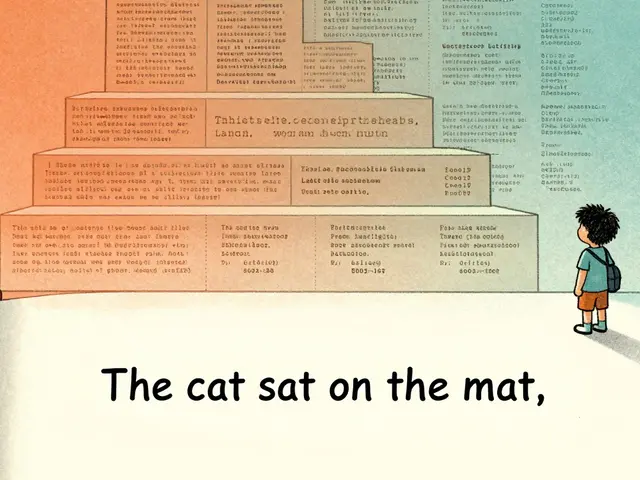
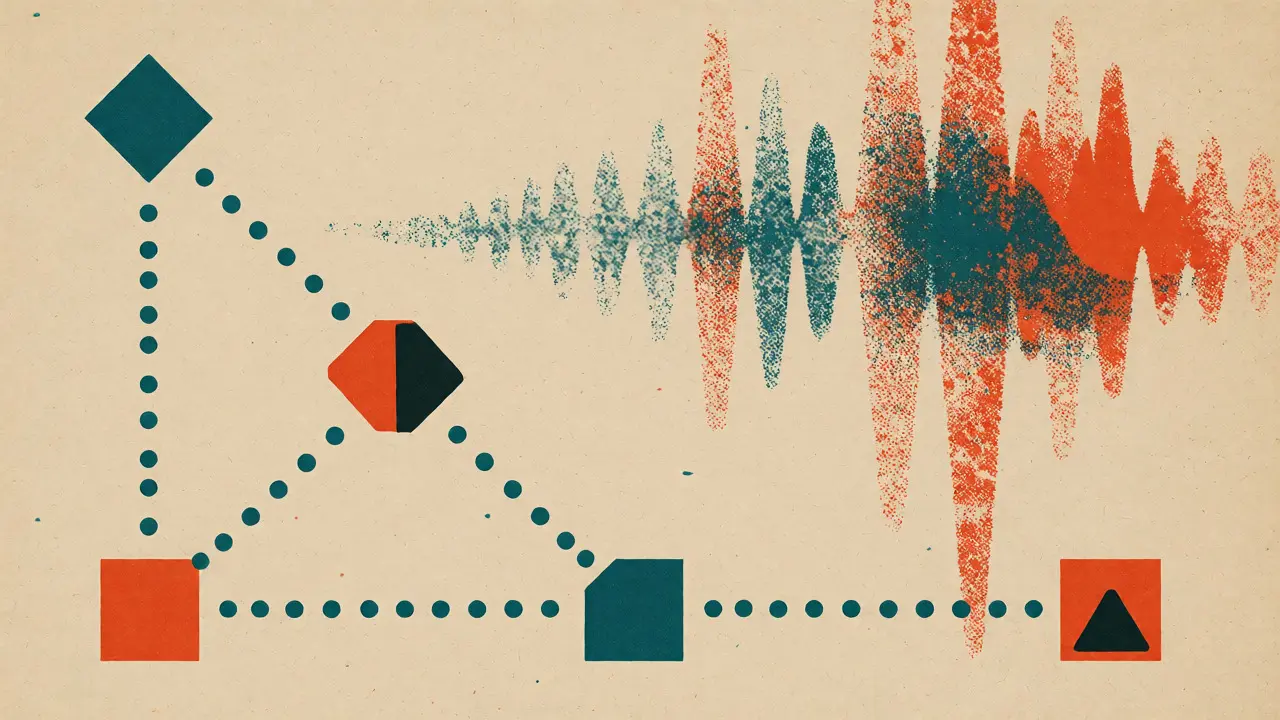
Before there were neural networks, there was math. Specifically, the work of Russian mathematician Andrey Markov around 1913. He developed Markov Chains, which are statistical models that predict the next element in a sequence based solely on the current state. Think of it like a very basic autocomplete. If you type "The," the model knows "cat" or "dog" might follow, but it doesn't know if the cat is happy or sad because it doesn't remember what happened before "The."
This approach dominated early sequence generation for decades. In the 1950s, researchers refined this into Hidden Markov Models (HMMs). These were crucial for speech recognition systems because they could handle sequences where the actual data (like sound waves) was noisy, and the true state (the word being spoken) was hidden. HMMs were powerful, but they had a fatal flaw: they couldn't handle long-term dependencies. They forgot things quickly. If a sentence started with "Although," the model needed to remember that constraint until the end of the sentence, often hundreds of words later. HMMs simply couldn't hold onto that thread.
The Neural Awakening: Perceptrons and RNNs
The first real shift toward modern AI happened in 1958 when Frank Rosenblatt proposed the Perceptron at Cornell University. This was the first operational neural network capable of learning from data. It wasn't perfect-it could only solve linear problems-but it proved that machines could adjust their internal weights based on errors. That concept remains the backbone of every AI model today.
By the 1980s, the focus shifted to handling sequences. Enter Recurrent Neural Networks (RNNs). Unlike standard neural networks that process inputs independently, RNNs have a loop. They pass information from one step to the next, giving them a form of memory. This allowed AI to start processing language more naturally. However, RNNs suffered from the "vanishing gradient problem." As sequences got longer, the signal from earlier words faded away, making it hard for the network to learn relationships between distant parts of a text.
| Architecture | Key Innovation | Major Limitation | Peak Era |
|---|---|---|---|
| Markov Chains | Predicts next state based on current state | No memory of past states beyond immediate predecessor | 1910s-1950s |
| HMMs | Models hidden states in sequential data | Struggles with long-range dependencies | 1960s-1990s |
| RNNs | Maintains internal state over time | Vanishing gradients limit long-term memory | 1980s-2000s |
| LSTMs | Gated memory cells retain info longer | Sequential processing slows training | 1997-2017 |
| Transformers | Self-attention mechanism handles all tokens at once | High computational cost ($O(n^2)$) | 2017-Present |
The Bridge: LSTMs and GANs
In 1997, Jürgen Schmidhuber’s team introduced Long Short-Term Memory (LSTM) networks. LSTMs solved the vanishing gradient issue by adding "gates"-mechanisms that decide what information to keep, forget, or output. This allowed models to remember important details across hundreds of steps. For two decades, LSTMs were the gold standard for natural language processing and speech recognition.
Meanwhile, another branch of generative tech emerged in 2014. Ian Goodfellow introduced Generative Adversarial Networks (GANs). Instead of just predicting the next token, GANs pit two networks against each other: a generator creates fake data, and a discriminator tries to spot the fakes. This adversarial training pushed generators to create increasingly realistic images and audio. While GANs revolutionized computer vision, they struggled with text stability, leading researchers to look back at sequence models for better results.
The Revolution: Attention Is All You Need
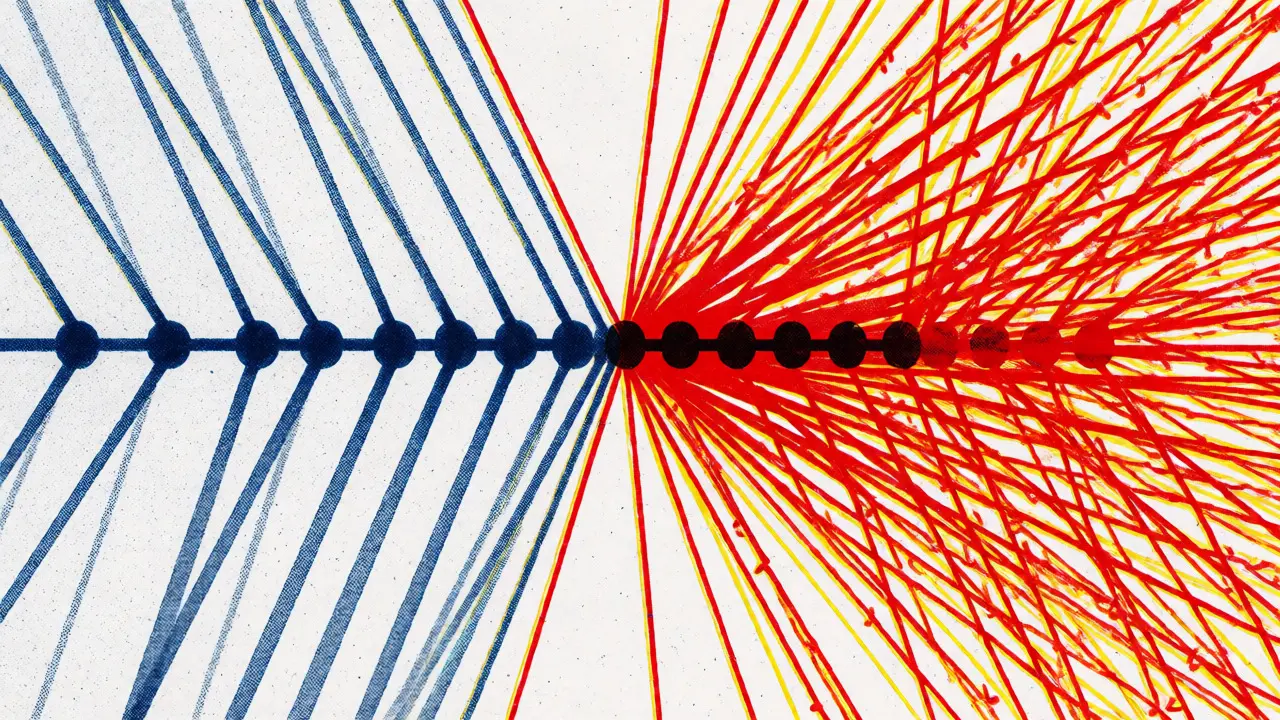
The turning point came in 2017. A team at Google published a paper titled "Attention Is All You Need," introducing the Transformer architecture. The key insight was removing recurrence entirely. Instead of processing words one by one, transformers use self-attention to weigh the importance of every word in a sequence relative to every other word simultaneously.
Why does this matter? Speed and scale. LSTMs had to process sequences sequentially, meaning you couldn't train them easily on parallel hardware like GPUs. Transformers allow massive parallelization. If you have a sentence of 100 words, an LSTM processes word 1, then 2, then 3. A transformer looks at all 100 words at once, calculating how much "word 50" relates to "word 1." This architectural shift enabled the explosion of parameter counts.
Scaling Up: GPT and the Era of Large Language Models
With the transformer foundation laid, OpenAI released GPT-1 in 2018. It was modest by today's standards, with 117 million parameters. But it demonstrated that pre-training a transformer on massive amounts of internet text, followed by fine-tuning, worked surprisingly well. By 2020, GPT-3 arrived with 175 billion parameters. This jump wasn't just incremental; it led to emergent capabilities. Smaller models couldn't do few-shot learning-performing tasks with just a few examples-but GPT-3 could.
This scaling law became the industry mantra: bigger models trained on more data perform better. However, this came at a cost. Training GPT-3 required approximately 1,300 megawatt-hours of electricity. The quadratic complexity of self-attention ($O(n^2)$) means that doubling the sequence length quadruples the compute required. This is why context windows (the amount of text a model can process at once) remained limited for years, until recent optimizations helped push these boundaries.
Beyond Text: Diffusion and Multimodal AI
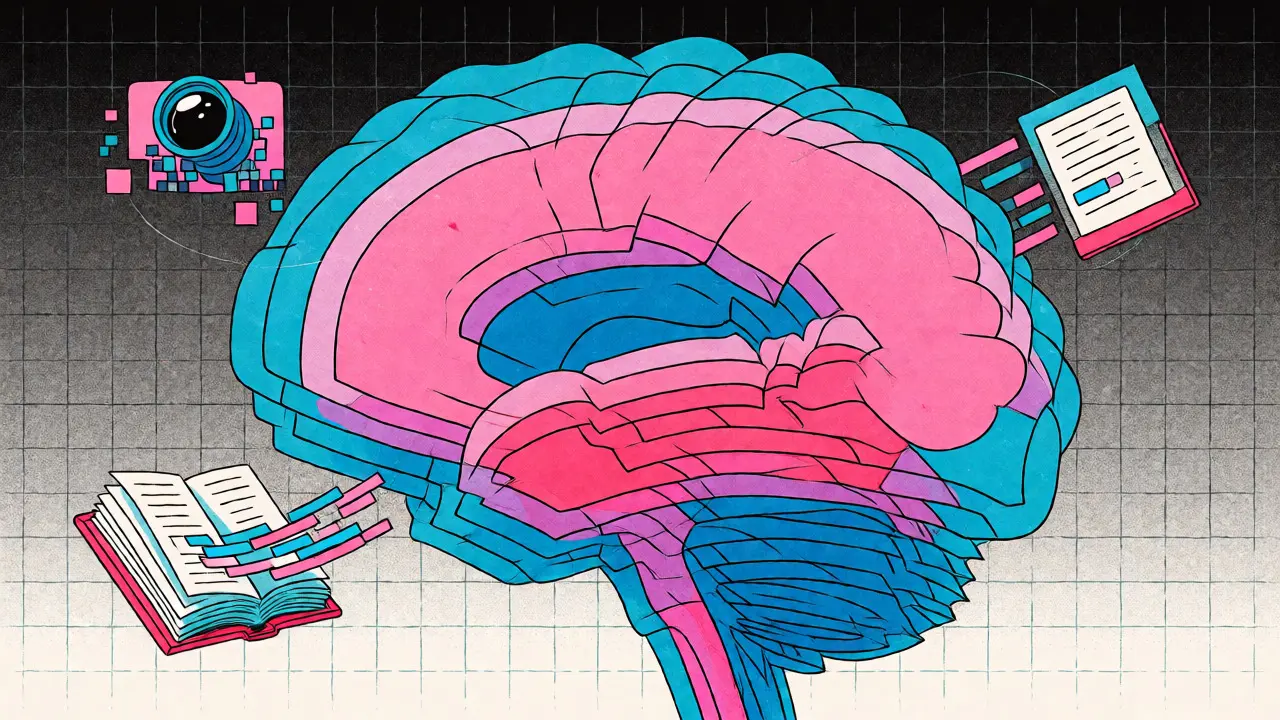
While transformers dominated text, image generation took a different path. Diffusion Models, introduced around 2015, gained traction later. Instead of generating an image from scratch, diffusion models start with random noise and iteratively remove it to reveal a coherent image. This process is stable and produces high-quality results, unlike the mode collapse issues common in early GANs.
Systems like DALL-E 2 and Stable Diffusion combined transformer encoders (to understand text prompts) with diffusion decoders (to generate pixels). This hybrid approach unlocked multimodal AI-the ability to translate between text, images, and eventually video. Today, models like Gemini and GPT-4o process all these modalities natively, blurring the lines between different types of media generation.
Current Challenges and Future Trajectories
We aren't done evolving. Current transformers face significant hurdles. They lack explicit world models, meaning they don't truly "understand" physics or causality; they predict statistical likelihoods. Geoffrey Hinton, a pioneer in neural networks, has warned that this limitation may prevent current architectures from achieving artificial general intelligence (AGI).
Researchers are now exploring alternatives. The Mamba architecture, released in late 2023, uses state-space models to achieve linear complexity instead of quadratic, potentially allowing for much longer context windows without exploding costs. Additionally, Retrieval-Augmented Generation (RAG) has become a standard enterprise pattern, connecting static LLMs to live databases to reduce hallucinations.
The journey from Markov’s simple probabilities to today’s trillion-parameter models shows a clear trend: we are moving from rigid rules to flexible, data-driven patterns. The technology is no longer about teaching computers logic; it’s about showing them enough examples that they learn the shape of human thought. Whether the next leap comes from better transformers or entirely new architectures, the goal remains the same: creating machines that can not just analyze the world, but imagine it.
What is the main difference between Markov Models and Transformers?
Markov Models predict the next item in a sequence based only on the current state, lacking long-term memory. Transformers use self-attention mechanisms to consider all previous items in the sequence simultaneously, allowing them to understand complex, long-range dependencies and context.
Why did LSTMs lose popularity to Transformers?
LSTMs process data sequentially, which prevents efficient parallelization on GPUs. Transformers allow for massive parallel processing during training, enabling the creation of much larger models (billions of parameters) that would be computationally impossible to train efficiently with LSTMs.
Are Generative Adversarial Networks (GANs) still used in AI?
Yes, though less dominant in text generation. GANs are still widely used in computer vision for tasks like image super-resolution, style transfer, and synthetic data generation. However, diffusion models have largely replaced GANs for high-fidelity text-to-image generation due to greater stability.
What is the 'vanishing gradient' problem in RNNs?
It is a technical issue where the error signal used to update the network becomes too small to effectively adjust weights in earlier layers as the sequence length increases. This makes it difficult for standard RNNs to learn relationships between events far apart in a sequence.
How do Diffusion Models differ from Transformers?
Transformers are primarily architectures for processing sequences (like text), while Diffusion Models are a method for generating data (like images) by reversing a noise-addition process. Modern systems often combine both, using Transformers to encode text prompts and Diffusion to generate visual outputs.