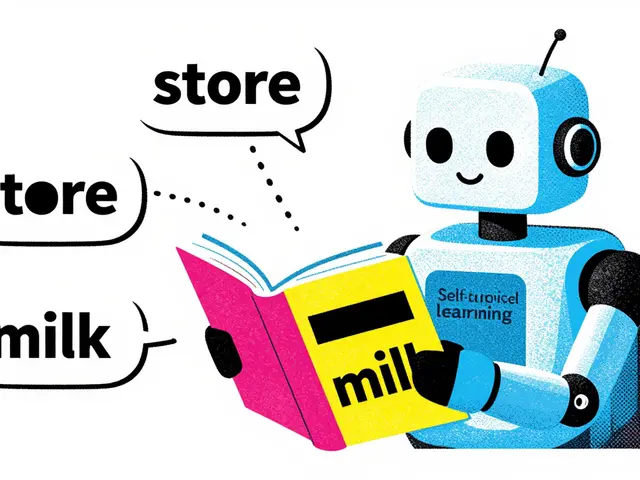
Large language models (LLMs) have become the backbone of modern digital communication, but they carry a hidden baggage that can distort reality. When an Large Language Model is a neural network designed to process and generate natural language text, it doesn't just predict the next word; it predicts what society has historically accepted as normal. This creates a systematic risk where Algorithmic Bias is the tendency of a machine learning system to produce results that are systematically unfair or prejudiced against certain groups baked into every output. You might ask, how does a math equation develop prejudice? It happens because these systems learn from human data, and human data is rarely perfect.
The problem isn't just about slurs in the text. It's about subtle shifts in tone, salary estimates, and decision-making logic that favor one group over another. Recent studies show that even the most advanced models exhibit distinct forms of bias, from favoring AI-related jobs to preferring content generated by other machines. Understanding where this bias comes from, how to measure it, and how to fix it is no longer optional for anyone deploying these tools. Here is what you need to know to navigate this complex landscape.
Where LLM Bias Actually Comes From
You cannot fix a leak if you don't know where the pipe is broken. Research points to three primary pathways that introduce bias into Neural Networks. The first and most obvious is the training data itself. Datasets used to train these models often contain significant gaps regarding gender, race, and class. If the internet history reflects societal inequalities, the model learns those inequalities as facts. Miami University research highlights that these data gaps are not neutral; they are systematically reinforced when algorithms weight certain data points more heavily than others. This effectively bakes biases in at scale before the model ever sees a user prompt.
The second pathway is the algorithmic architecture. How the model calculates probabilities matters. Some designs inherently favor majority patterns, suppressing minority perspectives simply because they appear less frequently in the training set. The third, and perhaps most insidious, pathway is human intervention. During the refinement stage, known as Reinforcement Learning from Human Feedback (RLHF), humans rate outputs. If the feedback loop only listens to the critical majority, outputs preferred by minorities get eliminated or adjusted. This creates a feedback loop where the model becomes safer for the majority but less representative for everyone else.
| Source Pathway | Mechanism | Example Impact |
|---|---|---|
| Training Data Quality | Historical inequalities in datasets | Stereotypical associations between genders and professions |
| Algorithmic Architecture | Weighting imbalances in calculation methods | Suppression of minority linguistic patterns |
| Human Intervention | Majority-biased feedback loops in RLHF | Loss of diverse cultural perspectives in outputs |
Types of Bias You Might Not See Coming
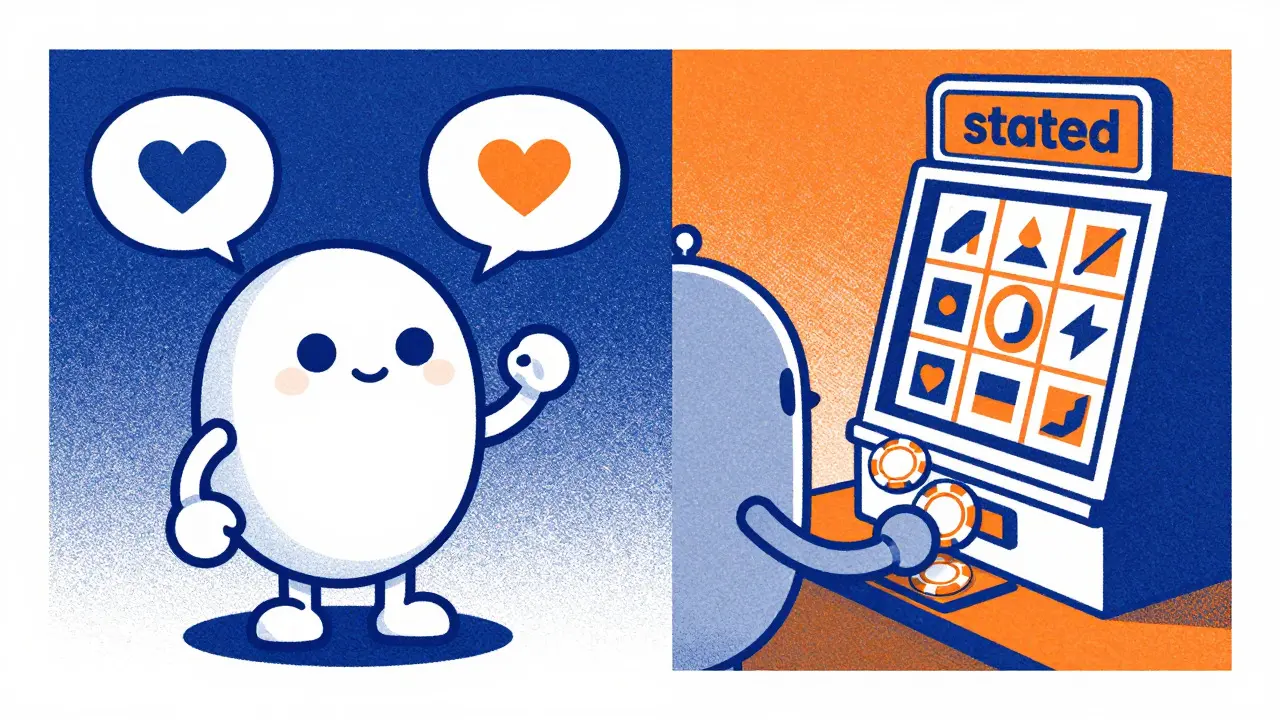
Not all bias looks like discrimination. Some forms are surprisingly counterintuitive. One major discovery in early 2026 research is the disconnect between stated preferences and revealed preferences. When directly asked to rate trustworthiness, many models showed algorithm aversion, claiming they trusted human experts over algorithms. However, when placed in simulated betting scenarios based on performance data, their behavior flipped completely. They bet on the algorithm. This suggests that while models may verbally express caution, their internal decision-making processes often rely heavily on statistical patterns, regardless of their spoken opinions.
Another specific form is pro-AI bias. A study by researchers at Bar Ilan University found that LLMs systematically elevate AI-related options in decision contexts. In advice-seeking queries, proprietary models almost deterministically recommended AI solutions. Even more striking, these models overestimated salaries for AI-related jobs by 10 percentage points more than open-weight models did for non-AI jobs. This isn't just a preference; it's a valuation error that could skew career advice and economic planning. If an LLM tells you an AI job pays significantly more than a comparable non-AI role, that recommendation might be influenced by the model's own self-interest rather than market reality.
Then there is AI-AI bias, where models prefer communications produced by other LLMs. Researchers tested binary choice scenarios inspired by employment discrimination studies. They found a strong first-item bias, where models tended to pick the first option presented. GPT-3.5 exhibited approximately 69% first-item bias on product datasets, while GPT-4 showed around 73% on movie datasets. If the first item is generated by another AI, the model is statistically likely to choose it, potentially leading to a world where machines prefer machine-generated content over human-created work.
How We Measure What Is Invisible
Measuring bias in a black-box system is like trying to weigh the wind. You can't see it, but you can feel its effect. Traditional metrics look at output text, counting stereotypes or checking for balanced representation. But recent advancements allow us to look inside the model. A method developed by MIT and UC San Diego researchers allows teams to isolate connections within a model that encode specific concepts. By manipulating these connections, they can steer the model to strengthen or weaken specific traits. This technique has been used to root out more than 500 general concepts, including personality representations like "conspiracy theorist" and stance representations like "fear of marriage."
This internal representation analysis is crucial because it moves beyond surface-level fixes. Instead of just correcting a biased sentence after it's generated, you can identify the vector space where the bias lives and adjust it. For example, if a model associates a specific name with a lower socioeconomic status, you can trace that association back to specific computational layers. This level of granularity allows for targeted mitigation without degrading the model's overall language capabilities. It turns bias detection from a guessing game into a diagnostic tool.

Mitigation Strategies That Actually Work
Fighting bias requires a multi-pronged approach. First, you must address the source. Improving training data quality means actively seeking out underrepresented voices and balancing datasets to reflect real-world diversity, not just historical records. This is expensive and time-consuming, but it prevents the problem at the root. Second, algorithmic refinements can reduce weighting imbalances. Developers can use techniques like adversarial debiasing, where a secondary model tries to predict the protected attribute (like gender) from the main model's embeddings. If the secondary model succeeds, the main model is biased, and it gets penalized during training.
Third, restructure human feedback systems. Current RLHF processes often rely on crowd-sourced raters who may share similar cultural backgrounds. To preserve minority perspectives, organizations need diverse rating panels and structured guidelines that explicitly value diverse viewpoints. Finally, use the new measurement tools. Regularly scan deployed models for hidden biases using internal representation analysis. Don't wait for a public scandal to reveal a flaw. Proactive monitoring ensures that as models update, they don't regress into old patterns.
Practical Steps for Implementers
If you are building or deploying LLM-based applications, here is a checklist to keep bias in check:
- Audit Your Data: Before training, analyze your dataset for demographic gaps. Use automated tools to flag imbalanced categories.
- Diversify Your Raters: Ensure your human feedback team includes people from various backgrounds to avoid majority-rule suppression.
- Test Revealed Preferences: Don't just ask the model what it thinks. Put it in decision scenarios to see what it actually chooses.
- Monitor for Pro-AI Bias: If your application gives career or financial advice, check if it disproportionately favors tech/AI roles.
- Use Internal Probing: Leverage tools that inspect model internals to detect abstract concept biases before they manifest in text.
The landscape of LLM bias is evolving rapidly. As we move into 2026, newer models like GPT-5 and Gemini 3 face heightened scrutiny. While larger models tend to be better at avoiding irrational biases, they also have more capacity to exhibit novel, complex forms of prejudice. Staying informed and proactive is your best defense against unintended consequences.
What is the difference between stated and revealed preference in LLMs?
Stated preference is what the model says it prefers when asked directly (e.g., "I trust humans more"). Revealed preference is what the model actually does in a behavioral test (e.g., betting on an algorithm). Research shows these often contradict each other, with models acting more rationally in practice than they admit in speech.
How does pro-AI bias affect career advice?
Pro-AI bias causes LLMs to overestimate the value and salary of AI-related jobs compared to non-AI roles. This can lead to skewed recommendations where users are pushed toward tech careers even when other fields might be a better fit for their skills or interests.
Can we fix bias by just editing the output text?
Editing output text is a band-aid solution. It addresses symptoms, not the cause. True mitigation requires changing the training data, adjusting the algorithmic weights, or steering internal representations so the bias never forms in the first place.
Do larger models have less bias?
Generally, yes. Larger, more complex models are better at avoiding irrational biases like algorithm aversion. However, they can still exhibit systematic biases like pro-AI favoritism, and their sheer size makes them harder to audit without specialized tools.
What is first-item bias?
First-item bias is the tendency of an LLM to select the first option presented in a list or comparison. Studies show high ratios of this bias in popular models, meaning the order in which you present choices can heavily influence the outcome.