Most companies don't build their own Generative AI is a type of artificial intelligence that creates new content like text, images, or code based on patterns learned from vast datasets.. They buy it. And when you buy AI, you aren't just buying software; you're inheriting a new layer of complexity that traditional checklists rarely catch. The real danger isn't usually the AI itself failing-it's the invisible handoff of control to a vendor who might be training models on your data, using opaque algorithms, or operating under different compliance standards than you do.
This shift has forced a rethink of how organizations handle Third-Party Risk Management (TPRM) is a process for identifying, assessing, and mitigating risks associated with external vendors and partners.. Old frameworks focused on security breaches and business continuity. Now, you have to worry about bias, explainability, and data lineage. If your vendor’s model makes a bad decision, whose fault is it? The answer is increasingly “both.” This article breaks down how to assess these risks effectively and how to structure a shared responsibility model that protects your organization without strangling innovation.
Why Traditional Vendor Checks Fail for AI
You’ve probably filled out a vendor questionnaire before. It asks about SSL certificates, backup frequency, and incident response times. Those are still important, but they miss the specific dangers of AI. A vendor can have perfect cybersecurity and still introduce significant risk through an AI component. For example, if a customer service chatbot hallucinates facts, the security team sees no breach, but the brand reputation takes a hit. Or if a hiring tool uses biased historical data, the legal team faces liability, not the IT department.
The core issue is opacity. In traditional software, you often know what the code does. In generative AI, the model is a black box. You need to know:
- What data was used to train the model?
- Is our proprietary data being used to fine-tune their general model?
- How can we audit a specific output if something goes wrong?
Without answers to these questions, you’re flying blind. This is why many organizations are moving toward specialized assessment tools. Platforms like BigID’s Vendor AI Assessment help map exactly which vendors use AI and how those systems interact with organizational data. Instead of guessing, you get a clear picture of whether a vendor is merely using AI as a feature or building their entire product around it.
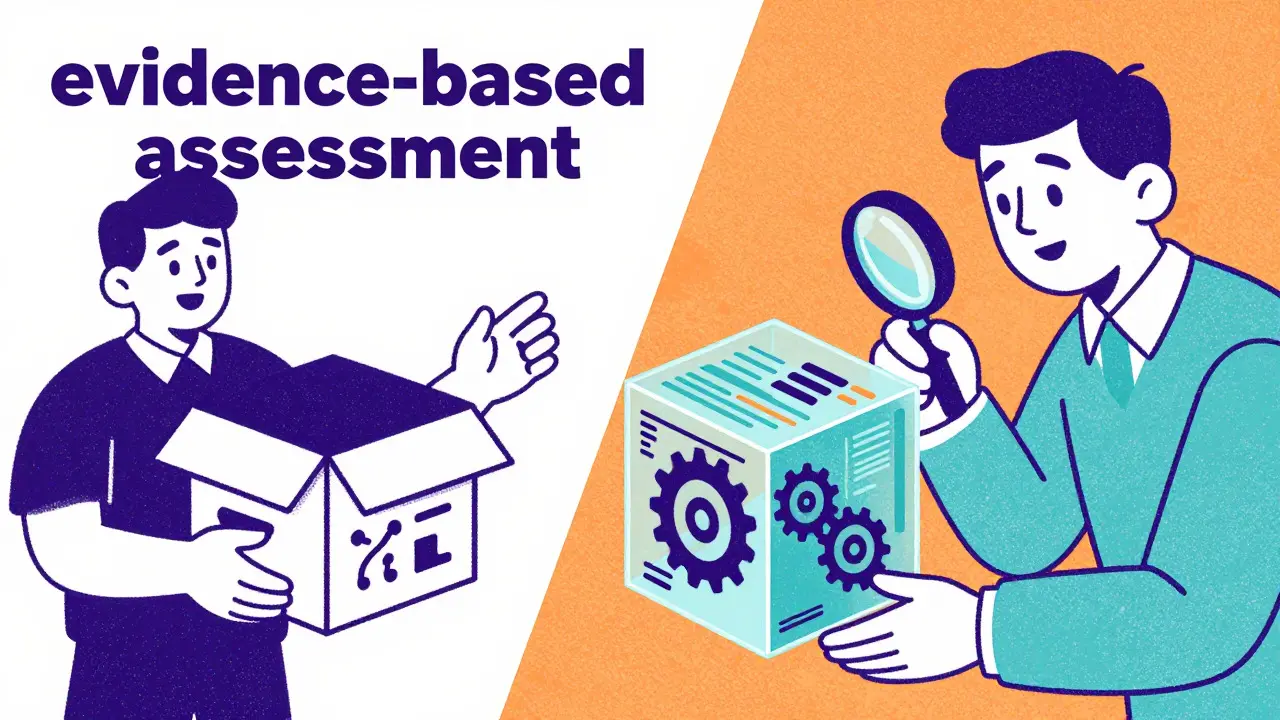
The Evidence-Based Assessment Approach
A major pitfall in vendor risk is accepting vendor claims at face value. A vendor might say, “Our AI is unbiased and secure.” That statement means nothing without proof. In 2024, several high-profile breaches occurred because risk teams relied on self-reported controls rather than verified evidence. One notable case involved AT&T, where vulnerabilities in third-party vendor systems exposed customer details. The root cause? The assessment templates didn’t require proof that controls were actually working.
To fix this, shift from asking “Do you have X?” to “Show us X.” Here is a practical checklist for evidence-based AI vendor assessment:
- SOC 2 Reports: Request the latest report, specifically looking for the AI-specific criteria if available. Check for any exceptions noted by auditors.
- Data Lineage Documentation: Ask for a map of where training data comes from. Is it public web data? Customer data? Proprietary datasets?
- Model Cards: These are standardized documents that describe the model’s performance, intended use, and limitations. If a vendor doesn’t have them, ask why.
- Redacted Test Results: Ask for sample outputs from stress tests or bias audits. You don’t need their raw data, but you need to see the quality of their validation.
This approach turns vague promises into verifiable facts. It also aligns with the growing regulatory expectation that companies must demonstrate due diligence, not just intent.
Building a Shared Responsibility Model
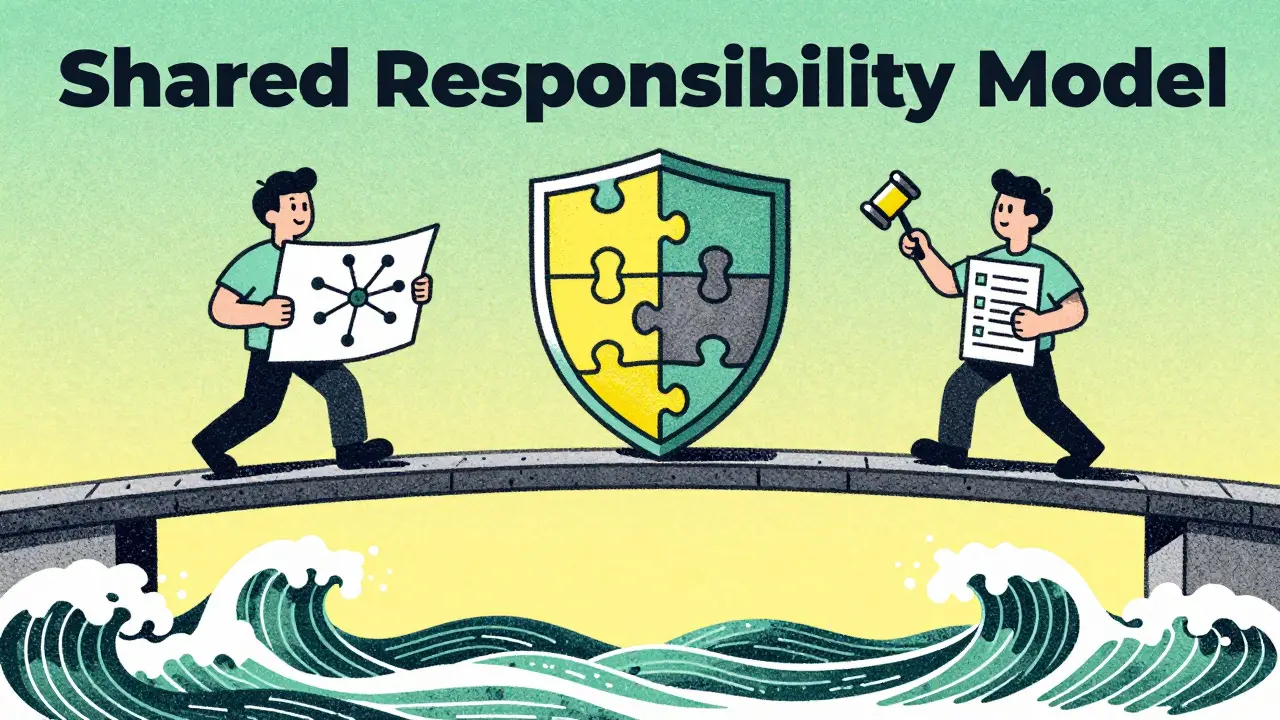
Risk isn’t one-way. When you integrate a vendor’s AI, you share the burden. The vendor owns the model’s technical integrity, but you own how it’s deployed and interpreted within your business context. A clear shared responsibility model prevents finger-pointing when things go wrong.
Here’s how to divide the labor:
| Responsibility Area | Vendor Obligations | Your Organization's Obligations |
|---|---|---|
| Model Development & Training | Document data sources, ensure data quality, monitor for drift. | Define acceptable use cases, set guardrails for inputs. |
| Data Privacy & Security | Encrypt data in transit/rest, implement access controls, comply with GDPR/CCPA. | Classify data sensitivity, enforce least-privilege access, monitor usage logs. |
| Explainability & Audit | Provide model cards, maintain audit trails, offer API access for logging. | Review outputs for critical decisions, document human-in-the-loop interventions. |
| Regulatory Compliance | Stay updated on AI regulations, provide compliance certifications. | Map vendor capabilities to local laws, conduct impact assessments. |
Notice the overlap. Both parties need to understand the data flow. Both need to agree on what “success” looks like for a specific AI task. If the vendor says the model is 95% accurate, but your business requires 99% for financial forecasting, that gap is a shared failure point. Address it in the contract.
Leveraging AI to Manage AI Risk
It sounds paradoxical, but using generative AI to manage generative AI risk is becoming standard practice. Manual review of hundreds of vendors is unsustainable. AI tools can automate the heavy lifting. For instance, EY’s analysis shows that generative AI can extract key clauses from vendor contracts automatically, flagging missing AI-specific terms. It can also monitor vendor websites and news feeds for adverse information in real-time.
Consider the workflow: 1. **Intake:** AI scans the vendor’s website and press releases to identify if they use AI. 2. **Scoring:** Machine learning models score the inherent risk based on data access and geographic exposure. 3. **Monitoring:** Natural language processing tracks changes in vendor policies or news reports about breaches. This scalability allows risk teams to focus their human expertise on the top 10% of vendors posing the highest potential impact, rather than drowning in low-risk paperwork.
Navigating the Regulatory Landscape
Regulations are catching up. The EU AI Act, for example, imposes strict requirements on high-risk AI systems. If your vendor provides a high-risk tool (like credit scoring or hiring), they bear significant obligations, but you remain responsible for ensuring they meet them. Ignorance of the vendor’s compliance status is not a defense.
To stay ahead, integrate regulatory tracking into your vendor assessment. Use scenario planning to simulate how different regulatory outcomes might affect your vendor relationships. For example, if a new law bans certain types of biometric data, does your vendor’s facial recognition tool become non-compliant overnight? Having a plan for such shifts reduces operational surprises.
Practical Steps to Start Today
You don’t need to overhaul your entire TPRM program tomorrow. Start small and iterate. 1. **Inventory Your AI Vendors:** List every third party that touches your data using AI. Don’t assume only the big tech players count. Small SaaS tools often embed AI features you haven’t noticed. 2. **Update Your Questionnaire:** Add three simple questions: “What AI components do you use?”, “How is our data used in training?”, and “Can we audit model outputs?” 3. **Pick One High-Risk Vendor:** Choose a vendor with significant data access or business criticality. Perform a deep-dive assessment using the evidence-based approach outlined above. 4. **Draft a Shared Responsibility Clause:** Work with legal to add a section to your contracts that explicitly defines who fixes what when an AI error occurs. By taking these steps, you move from reactive panic to proactive control. The goal isn’t to eliminate risk-impossible in the AI era-but to make it visible, measurable, and manageable.
What is the main difference between traditional TPRM and AI vendor risk management?
Traditional TPRM focuses on security, privacy, and business continuity. AI vendor risk management adds layers for model bias, explainability, data lineage, and algorithmic transparency. It requires assessing not just if the system is secure, but if the logic behind its decisions is sound and fair.
Who is responsible if a vendor's AI makes a wrong decision?
Responsibility is shared. The vendor is typically liable for technical failures or defects in the model itself. However, the client organization is liable for misusing the tool outside its intended scope or failing to apply necessary human oversight. Clear contractual definitions are essential to avoid disputes.
How can I verify if a vendor is using my data to train their models?
Request explicit documentation of data usage rights in the contract. Ask for a data lineage map showing training sources. Look for clauses that specify whether data is used for “fine-tuning” or “general model improvement.” If the vendor is reluctant to disclose, treat it as a red flag.
Is it worth using AI tools to manage AI vendor risk?
Yes, especially for large portfolios. AI tools can automate document extraction, continuous monitoring, and initial risk scoring. This frees up human analysts to focus on complex, high-stakes evaluations. The efficiency gains are substantial, reducing manual workload by up to 40% in some implementations.
What should be included in an AI-specific vendor contract clause?
Key clauses should define data usage rights, model update notification periods, audit rights for model performance, liability caps for algorithmic errors, and exit strategies if the model becomes non-compliant with new regulations. Avoid vague language like “best efforts” and use specific metrics instead.