AI Infrastructure: Tools, Systems, and Governance for Real-World LLM Deployments
When you build with AI infrastructure, the underlying systems that support training, deploying, and managing large language models in production. Also known as LLM operations, it includes everything from cloud GPUs and vector databases to compliance tools and cost controls. Most people think AI is just about the model—but the real challenge is making it work reliably, securely, and without breaking the bank.
Distributed training, the process of splitting LLM training across thousands of GPUs to handle massive datasets is what lets companies train models like GPT-4 or Llama 3. But that’s just the start. Once trained, you need enterprise data governance, policies and tools to track data sources, prevent bias, and meet legal requirements like GDPR or state AI laws. Without it, even the best model can get you fined or sued. And then there’s confidential computing, hardware-based encryption that protects user data during AI inference—a must-have for healthcare, finance, and any business handling sensitive info.
AI infrastructure isn’t just about tech—it’s about trade-offs. Do you compress a model to save money, or switch to a smaller one? Can you use spot instances to cut cloud bills by 60% without crashing your app? How do you stop AI from hallucinating answers when it pulls from your internal docs? These aren’t theoretical questions. They’re daily decisions for teams running LLMs in production. The posts here cover exactly that: how to build, monitor, secure, and pay for AI systems that don’t just work in a demo—but survive in the real world.
Below, you’ll find practical guides on everything from multi-tenancy in SaaS apps to truthfulness benchmarks and export controls. No fluff. No theory without execution. Just what works when your AI is live, handling real users, and under real scrutiny.
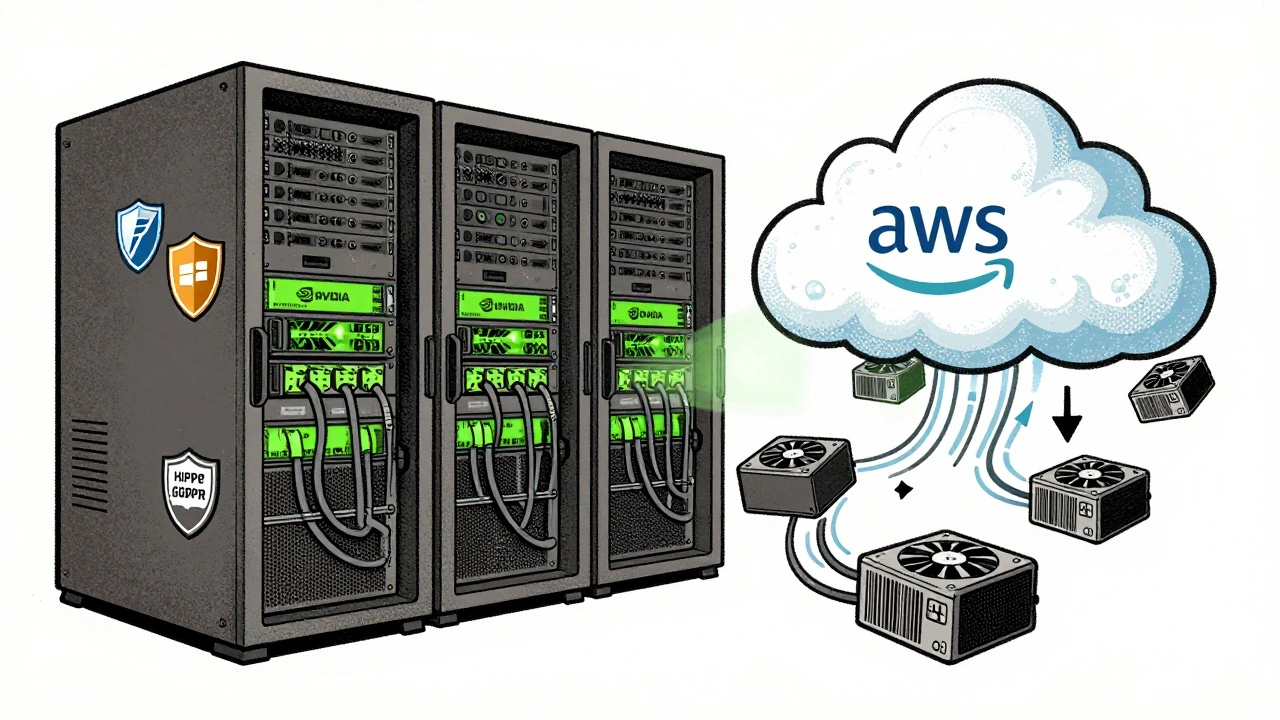
Hybrid Cloud and On-Prem Strategies for Large Language Model Serving
Learn how to balance cost, security, and performance by combining on-prem infrastructure with public cloud for serving large language models. Real-world strategies for enterprises in 2025.
Read More