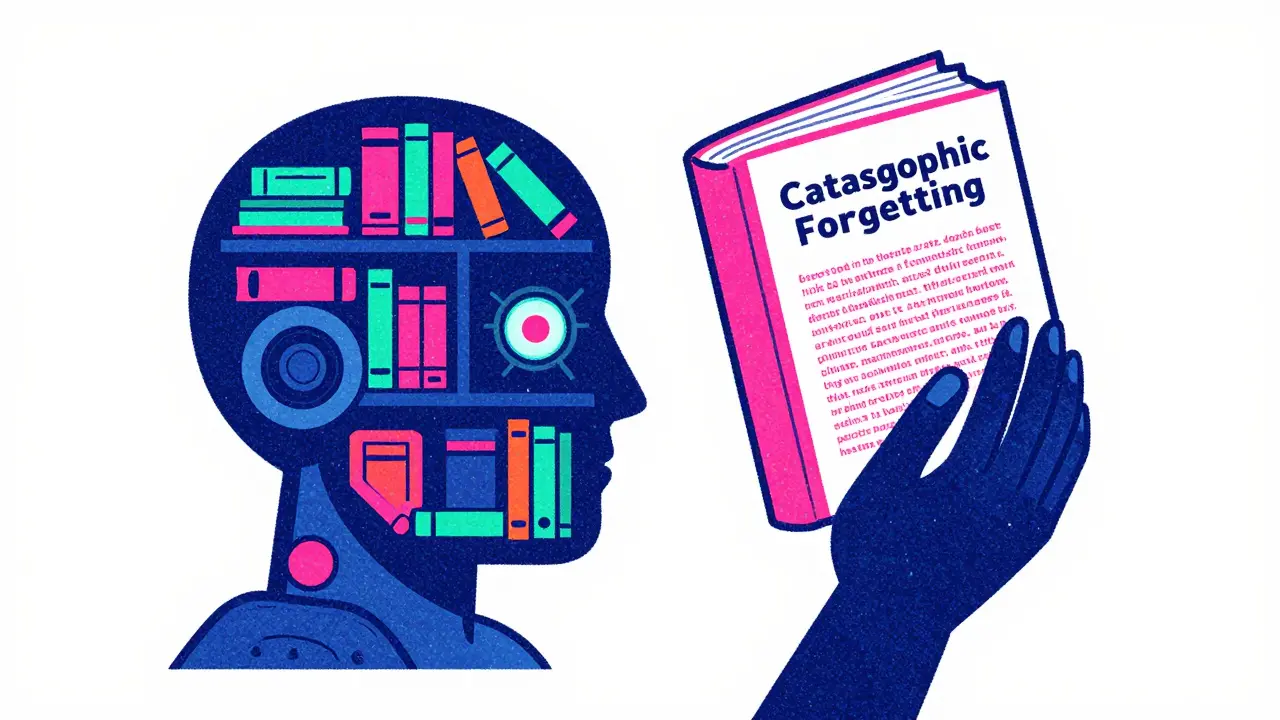
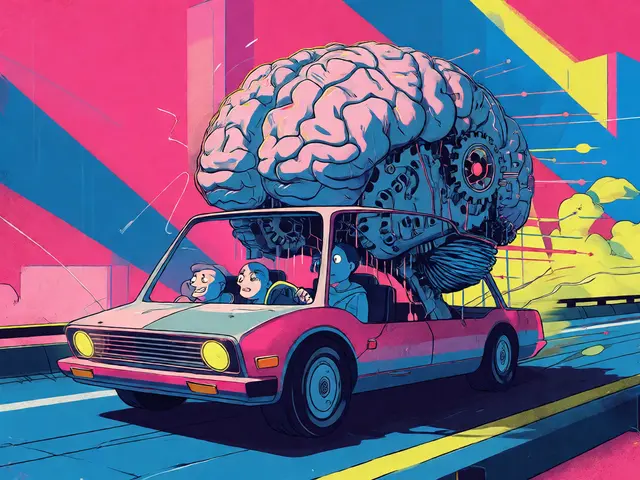
Imagine spending years studying a general medical degree, only to spend six months specializing in cardiology and suddenly forgetting how to treat a common cold. In the world of Artificial Intelligence, this is a real problem called catastrophic forgetting. When we take a massive model and tune it to be an expert in one specific area, there is a huge risk that it will lose the broad, general intelligence that made it useful in the first place. This tension between becoming a specialist and staying a generalist is exactly what we mean by benchmark transfer.
The goal isn't just to make a model that can write legal briefs or analyze medical scans; it's to ensure that after it learns those skills, it can still pass a general logic test or summarize a random news article. If a model's performance on general benchmarks plummets after it's been specialized, we haven't really improved the AI-we've just traded its brain for a very specific tool.
The Mechanics of Fine-Tuning and Transfer Learning
To understand how knowledge transfers, we first have to look at how Fine-tuning is the process of taking a pre-trained large language model and adapting its weights to a smaller, specialized dataset . It's based on the principle of transfer learning. Think of the pre-training phase as the "elementary school" where the model learns the basic rules of grammar, logic, and world facts from trillions of tokens of data. Fine-tuning is like "grad school," where the model focuses on a narrow niche.
The process usually follows a strict pipeline: cleaning the specialized data, initializing the model with weights from a giant like GPT-4 is a multimodal large language model developed by OpenAI that serves as a foundation for many downstream tasks , and then running backpropagation to nudge the parameters. The magic happens when the model doesn't just memorize the new data but adjusts its existing internal map to accommodate the new expertise without erasing the old one.
The Battle Against Catastrophic Forgetting
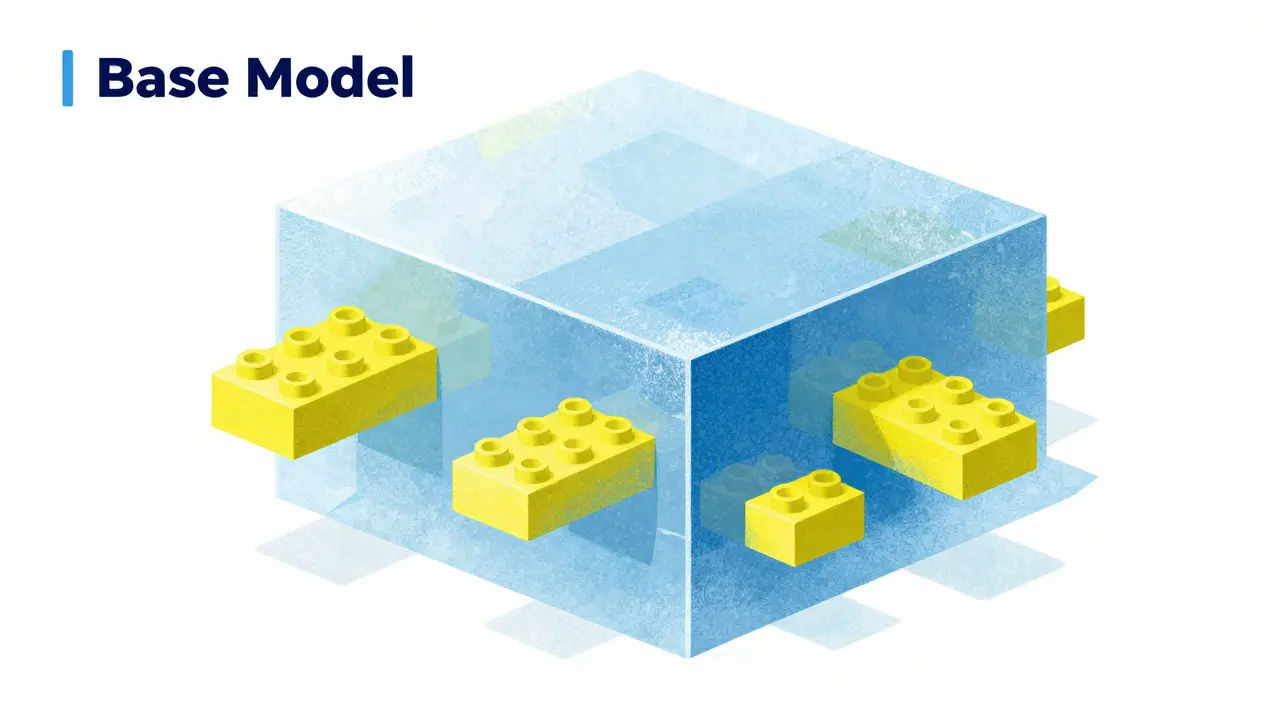
When you update every single weight in a model with billions of parameters, you often overwrite the very connections that provided general reasoning. This is why full fine-tuning is becoming less popular for general-purpose assistants. Instead, researchers are turning to Parameter Efficient Fine Tuning, or PEFT is a set of techniques designed to adapt large models by updating only a tiny fraction of their total parameters .
By keeping the bulk of the original model frozen, we create a "safety net" for the base knowledge. If the core weights aren't touched, the model can't "forget" the basics. This leads to much better benchmark transfer because the general capabilities remain physically intact within the frozen layers, while the new task-specific knowledge lives in a small, additive layer.
Modern Strategies for Efficient Adaptation
Not all fine-tuning is created equal. Depending on your hardware and your goals, you'll likely choose between a few primary methods. The most popular today is LoRA is Low-Rank Adaptation, a method that injects trainable rank decomposition matrices into each layer of the transformer architecture . Instead of changing a massive matrix of weights, LoRA trains two much smaller matrices that act as a "delta" or a change-log to the original weights.
For those working with limited VRAM, QLoRA is a quantized version of LoRA that reduces memory usage by loading the base model in 4-bit precision . This allows a developer to fine-tune a massive model on a single consumer GPU without a significant drop in performance. By reducing the trainable parameters-sometimes by a factor of 10,000-the model is less likely to deviate too far from its original distribution, which directly helps it maintain its scores across different benchmarks.
| Method | Trainable Parameters | Memory Requirement | Risk of Forgetting |
|---|---|---|---|
| Full Fine-Tuning | 100% | Very High | High |
| PEFT (General) | 15-20% | Moderate | Low |
| LoRA | <1% | Low | Very Low |
| QLoRA | <1% | Very Low | Very Low |
How to Measure Generalization Success
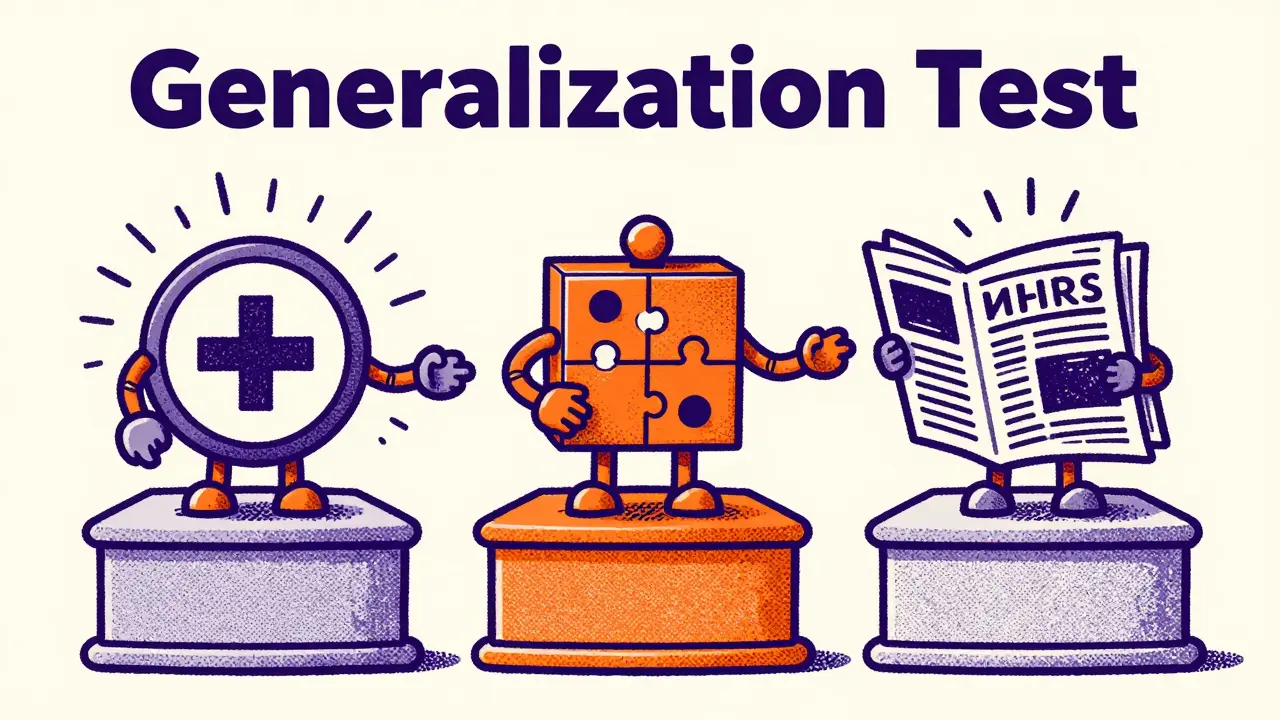
You can't just trust that your model is still "smart" because it answers your specific prompts correctly. You need a rigorous benchmarking strategy. The gold standard is to test the model on a "hold-out" set of general benchmarks that were never part of the fine-tuning data. If you tuned a model for medical coding, you should still test it on MMLU (Massive Multitask Language Understanding) to see if its general knowledge is still there.
One interesting approach is using the SCROLLS is a benchmark dataset designed to evaluate LLM performance on long-context tasks, specifically using government reports dataset. By testing how a model handles long-form context after being tuned for short-form tasks, developers can see if the model's "attention span" has been damaged by the specialization process.
To get a real sense of transfer, follow this rule of thumb: always maintain a baseline of the original pre-trained model. Every time you run an epoch of training, test both the baseline and the fine-tuned version on three different types of tasks: the target task, a related task, and a completely unrelated general task. If the gap between the baseline and the tuned model on the unrelated task grows too wide, you're over-fitting and losing generalization.
Practical Tips for Preserving Base Knowledge
If you find your model is becoming too narrow, there are several tactical pivots you can make. First, try "mixing in" some of the original pre-training data. By adding a small percentage of general-purpose text to your specialized dataset, you remind the model how to speak generally while it learns the new specifics. This is often called "replay" or "experience replay."
Second, look at your learning rate. A common mistake is setting the learning rate too high, which essentially "shouts over" the pre-trained weights and erases them. Using a very small learning rate-often an order of magnitude smaller than what you'd use to train a model from scratch-allows the model to gently adapt rather than violently shift.
Lastly, keep your training duration short. More epochs don't always mean better results. In many cases, the peak of generalization occurs early in the training process. After a certain point, the model stops learning the general patterns of the task and starts memorizing the specific examples in the dataset, which is the death knell for benchmark transfer.
The Tooling Ecosystem for Implementation
You don't have to build these adapters from scratch. The ecosystem has matured rapidly. Most developers start with Hugging Face Transformers is the industry-standard library providing easy access to thousands of pre-trained models and fine-tuning tools because it integrates perfectly with PEFT and LoRA. For those who need more raw power and distributed training across multiple GPUs, DeepSpeed is a deep learning optimization library that enables training of models with billions of parameters is the go-to choice.
If you're looking for a more streamlined, configuration-based approach, tools like Axolotl or TorchTune allow you to define your fine-tuning hyperparameters in a YAML file, making it easier to run ablation studies to find the exact point where your model's generalization begins to degrade.
Does fine-tuning always reduce a model's general abilities?
Not necessarily. While full fine-tuning often leads to catastrophic forgetting, parameter-efficient methods like LoRA are specifically designed to preserve the base model's knowledge. If you mix a small amount of general data into your fine-tuning set and use a low learning rate, you can actually maintain or even slightly improve general reasoning while gaining specialized expertise.
What is the difference between LoRA and QLoRA in terms of transfer?
LoRA adds small trainable matrices to the model's layers. QLoRA takes this further by quantizing the base model to 4-bit precision, which drastically reduces the memory footprint. In terms of benchmark transfer, both perform similarly because they both avoid changing the core weights of the model, though QLoRA allows you to use much larger base models on cheaper hardware, which often results in better starting general intelligence.
How much data is typically needed for effective fine-tuning?
Unlike pre-training, which requires trillions of tokens, fine-tuning can work with as few as a few hundred high-quality, labeled examples. The key is the quality and diversity of the data. A small, clean dataset with clear instructions often generalizes better than a massive, noisy dataset that confuses the model's existing knowledge.
Why is the learning rate so critical for benchmark transfer?
The learning rate determines how drastically the model weights change during an update. A high learning rate can push the weights too far from their original pre-trained values, effectively "erasing" the complex patterns the model learned during pre-training. A low learning rate ensures the model makes incremental adjustments, preserving the general-purpose capabilities while slowly absorbing the new task's nuances.
What should I do if my model fails a general benchmark after tuning?
If you notice a drop in general performance, try three things: 1. Reduce the number of training epochs to prevent over-fitting. 2. Lower the learning rate. 3. Use a "data mixture" strategy where you include general instruction-following data (like the Alpaca or ShareGPT datasets) alongside your specialized data to anchor the model's general abilities.
Fred Edwords
21 April, 2026 - 13:09 PM
The distinction between "elementary school" pre-training and "grad school" fine-tuning is a remarkably apt analogy! It perfectly encapsulates the hierarchical nature of knowledge acquisition in transformer-based architectures.
Sarah McWhirter
21 April, 2026 - 17:12 PM
Cute. But let's be real, these "frozen layers" are just a way for the big tech companies to keep the core logic hidden while giving us a little sandbox to play in. Like, why are we even talking about benchmark transfer when the real goal is probably just creating a digital hive-mind that knows exactly how to manipulate us based on our 4-bit precision flaws? It's all just a simulation anyway, man. Everything is just a weight in some cosmic matrix that we aren't allowed to see because it's "too dangerous" for the public. Just follow the money to the GPUs and you'll find the real truth about where our cognitive autonomy is actually going. Totally friendly advice, by the way!
Ananya Sharma
22 April, 2026 - 16:43 PM
It is frankly offensive that this post treats catastrophic forgetting as a mere technical hurdle rather than a systemic failure of the very architecture that the industry blindly worships, and anyone who believes that simply mixing in a few general-purpose tokens of data is a sufficient remedy is ignoring the ethical vacuum in which these models are developed, where the pursuit of specialized efficiency overrides the fundamental need for a robust, honest intelligence that doesn't just hallucinate a confident lie because it was told to be a "specialist" in a field it doesn't actually comprehend on a sentient level.
Morgan ODonnell
22 April, 2026 - 22:44 PM
i think we should all just be happy the tech is getting better for everyone.
Nick Rios
24 April, 2026 - 17:56 PM
I agree with that sentiment. It's a complex topic but seeing it broken down helps us understand how to build tools that actually help people without losing the essence of what makes them versatile.
Amanda Harkins
25 April, 2026 - 14:46 PM
it's weird how we try to force these things to learn like humans do. like, who cares if it forgets how to treat a cold as long as it can do the heart surgery part. maybe the forgetting is actually just the model evolving.
Jeanie Watson
26 April, 2026 - 13:32 PM
Too many words for a basic summary of LoRA.
Tom Mikota
27 April, 2026 - 08:28 AM
Oh look, another "groundbreaking" guide on how to not break your model!!! I'm sure the 4-bit precision is totally the secret sauce and not just a way to pretend we have enough VRAM for our bloated projects... truly revolutionary stuff here!!!