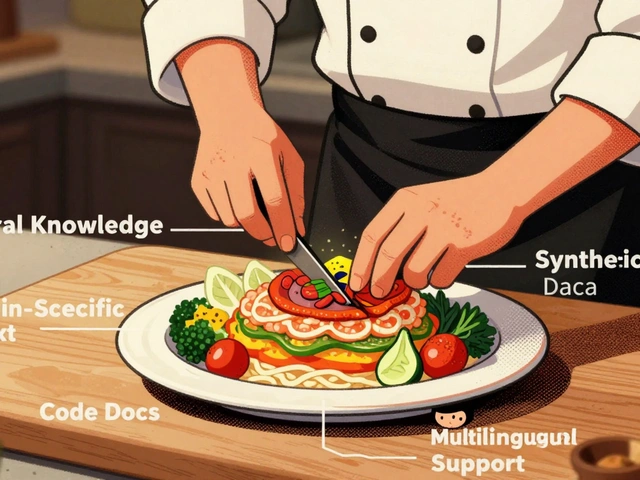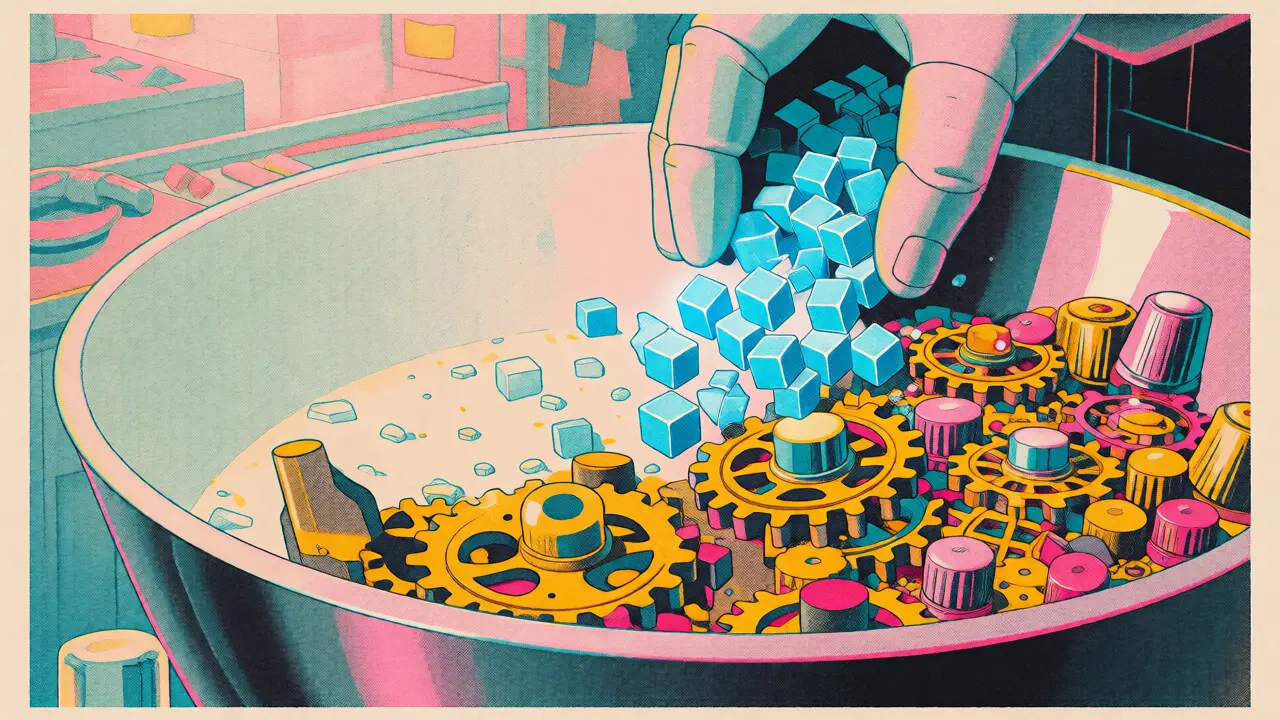
Imagine you are baking a cake. You have a specific amount of flour (parameters) and you need to know exactly how much sugar and eggs (training tokens) to add for the best taste. Add too little, and it’s bland. Add too much, and you waste ingredients without improving the flavor. For years, AI researchers operated on a hunch that bigger models needed proportionally more data. Then, in 2022, a paper called "Training Compute-Optimal Large Language Models" (commonly known as the Chinchilla paper) flipped the script. It revealed that most large language models were actually under-trained.
The core metric everyone talks about now is tokens per parameter. This ratio determines whether your model is truly intelligent or just memorizing noise. If you want to understand why some small models outperform massive ones, or why training costs skyrocket, you need to grasp this relationship. It’s not just academic trivia; it dictates how much money you spend on GPUs and how smart your final product actually is.
What Are Tokens and Parameters Really?
Before we talk about ratios, let’s clear up the jargon. A token is the smallest unit of text an AI reads. It isn’t always a word. Sometimes it’s a subword like "ing" or "un," sometimes it’s punctuation, and sometimes it’s a character. When you type "Hello world," the model might see ["Hello", " world"]. These tokens get converted into numbers because computers don’t read English-they do math.
Parameters, often called weights, are the internal knobs the model adjusts during training. Think of them as the connections between neurons in the brain-like network. A model with 7 billion parameters has 7 billion adjustable numbers. These numbers store the patterns the model learns from the data. More parameters mean more capacity to store complex relationships, but they don’t guarantee intelligence if you don’t feed them enough information.
The critical insight here is that parameters are static after training, while tokens are dynamic inputs. You can change the input (prompt) anytime, but changing the parameters requires retraining, which is expensive. Therefore, getting the balance right during training is crucial.
The Old Rule vs. The New Reality
For a long time, the industry followed a heuristic suggested by OpenAI researcher Jared Kaplan in 2020. His work, part of the broader field of scaling laws, indicated that you should scale model size primarily, increasing data only slightly. This led to models like GPT-3, which had 175 billion parameters but was trained on roughly 300 billion tokens. That’s a ratio of about 1.7 tokens per parameter.
DeepMind’s Chinchilla paper challenged this. They argued that compute efficiency matters more than raw size. They proposed that for optimal performance, you should increase both parameters and training tokens at roughly the same rate. Their target? Around 20 tokens per parameter. Let’s look at the difference:
| Model Type | Parameters | Training Tokens | Tokens/Param Ratio | Status |
|---|---|---|---|---|
| GPT-3 (Legacy) | 175 Billion | ~300 Billion | ~1.7 | Under-trained |
| Chinchilla | 70 Billion | ~1.4 Trillion | ~20 | Compute Optimal |
| Llama 3 (8B) | 8 Billion | ~15 Trillion | ~1,875 | Data Heavy |
Notice the jump? Modern models like Meta’s Llama 3 push this even further, using trillions of tokens for smaller parameter counts. Why? Because inference (running the model) is cheaper when the model is smaller, provided you have enough data to make it smart. Training is a one-time cost; inference happens millions of times a day.
Why 20 Tokens Per Parameter Is The Magic Number
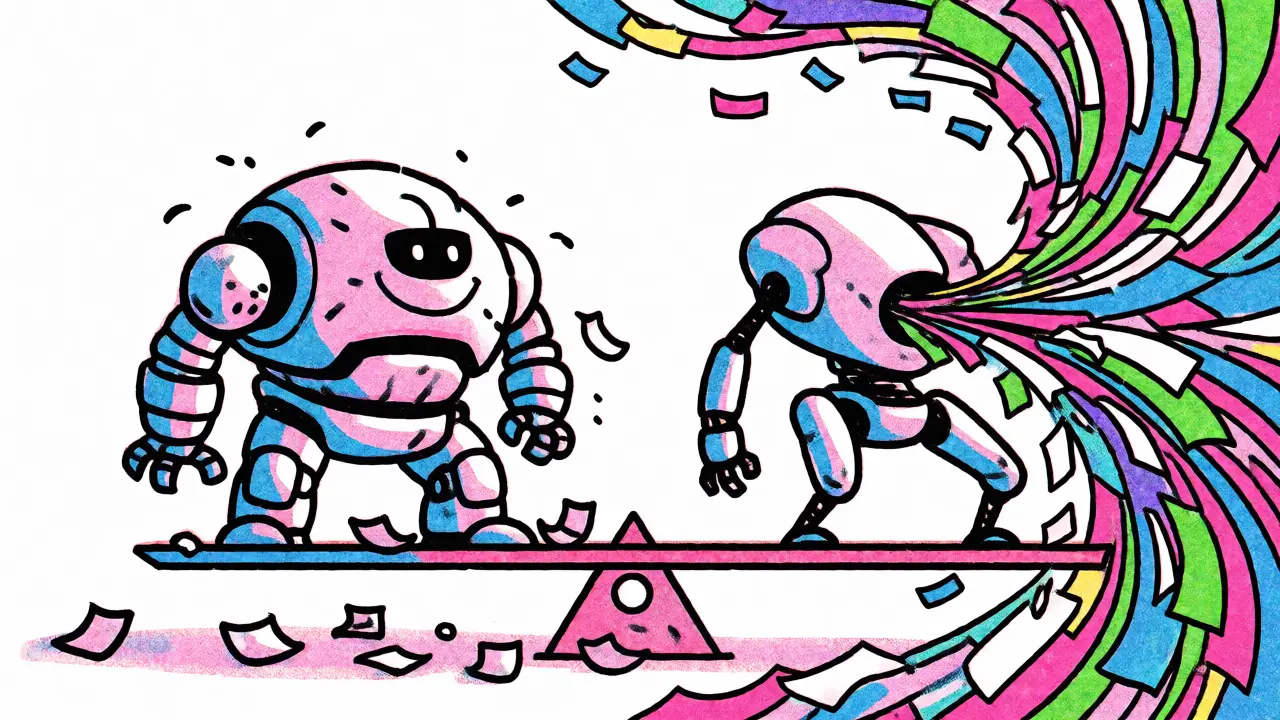
The Chinchilla scaling law suggests that for every parameter, you need about 20 tokens of high-quality data to reach peak performance given a fixed compute budget. If you train a 7-billion parameter model, you should aim for 140 billion tokens. If you stop at 30 billion, the model will plateau early. It hits a point where adding more layers doesn’t help because the existing layers haven’t learned enough patterns yet.
This is counterintuitive. We tend to think bigger is better. But if you build a huge library (more parameters) but only buy a few books (fewer tokens), the librarians (the model) run out of things to organize. They start hallucinating or repeating themselves because there’s no new content to process. Conversely, if you have a tiny library but millions of books, you can’t store them all. You lose information. The sweet spot balances storage capacity with information flow.
Research shows that deviating significantly from this ratio hurts loss curves. Under-training leads to poor generalization. Over-training (too many tokens for the size) yields diminishing returns. You’re spending GPU hours squeezing juice from a stone. The marginal gain per additional token drops sharply once you pass the optimal ratio for that model size.
The Shift Toward Data-Centric AI
Because of these insights, the focus has shifted from "how big can we make the model?" to "how good is our data?" This is the era of data-centric AI. Companies realized that cleaning data, removing duplicates, and curating diverse sources yields better results than simply throwing more raw web scrapes at a model.
Consider the token quality issue. Not all tokens are created equal. A token from a peer-reviewed scientific paper carries different semantic weight than a token from a random tweet. Early models ingested everything, including low-quality spam. Modern pipelines filter aggressively. They use heuristics to score text quality. If a paragraph is repetitive or nonsensical, it gets dropped. This means the effective tokens-per-parameter ratio changes based on data quality. 100 billion high-quality tokens might be worth 500 billion noisy tokens.
Furthermore, tokenizer efficiency plays a role. Different models use different vocabularies. A tokenizer with a larger vocabulary compresses text better, meaning fewer tokens are needed to represent the same amount of information. However, this makes comparing models tricky. A "token" in one model isn’t identical to a "token" in another. When discussing scaling laws, we assume standard byte-pair encoding (BPE) practices, but real-world comparisons require normalizing for tokenizer differences.
Practical Implications for Developers and Businesses
If you are building custom models or fine-tuning open-source ones, this ratio affects your budget directly. Suppose you want to fine-tune a 7-billion parameter model. Standard advice says you don’t need trillions of tokens. Fine-tuning is different from pre-training. Here, you might only need thousands to millions of high-quality examples. The goal isn’t to teach the model language from scratch, but to specialize its behavior.
However, if you are pre-training from scratch, the stakes are higher. Let’s say you have $1 million for compute. Do you buy a 10-billion parameter model and train it lightly? Or a 1-billion parameter model and train it heavily? The Chinchilla logic says go smaller and train longer. Your inference costs will drop dramatically because running a 1B model is way cheaper than a 10B model. Since you’ll likely serve millions of queries, those savings compound over time.
Here’s a quick rule of thumb for decision-making:
- High Inference Volume: Choose smaller models with high tokens-per-parameter ratios (e.g., >50). You save on server costs.
- Low Latency Requirements: Smaller models respond faster. Again, favor data-heavy training.
- Specialized Tasks: If you have niche data (like legal contracts), you might over-train relative to the general ratio because domain-specific knowledge is dense.

Beyond Pre-Training: The Role of Context Windows
There’s another dimension to this conversation: context length. Recent models support 128k or even 200k tokens in context. Does this change the tokens-per-parameter rule? Sort of. Longer contexts allow the model to attend to more information at once, effectively increasing its working memory. This doesn’t replace training data, but it changes how efficiently the model uses what it knows.
Models trained with longer sequences during pre-training learn to handle dependencies across vast distances. This requires careful adjustment of positional embeddings and attention mechanisms. While the core scaling law regarding total training tokens remains, the architecture tweaks needed for long context mean that simple linear extrapolation of old rules might fail. You need to ensure your training data includes long documents, not just short sentences, otherwise, the model won’t learn to utilize that extended context window effectively.
Key Takeaways
- Balance is Key: Don’t just maximize parameters. Match them with sufficient training tokens (~20:1 for compute-optimal).
- Data Quality Matters: Clean, curated data beats massive amounts of noisy web scrapes.
- Inference Costs Drive Design: Smaller, well-trained models are often cheaper to run than huge, under-trained ones.
- Tokenizer Variance: Be cautious when comparing token counts across different model families due to differing vocabularies.
What is the ideal tokens per parameter ratio for modern LLMs?
The widely accepted benchmark from DeepMind's Chinchilla paper is approximately 20 tokens per parameter for compute-optimal training. However, newer trends like Llama 3 suggest pushing this ratio much higher (into the hundreds or thousands) to prioritize inference efficiency, especially for smaller models.
Why are older models like GPT-3 considered under-trained?
GPT-3 had 175 billion parameters but was trained on only about 300 billion tokens, resulting in a ratio of ~1.7. Research showed that with the same compute budget, a smaller model trained on significantly more data would achieve lower loss and better performance, indicating GPT-3 hadn't fully utilized its capacity.
Does data quality affect the tokens per parameter requirement?
Yes, significantly. High-quality, deduplicated, and diverse data allows models to learn more efficiently. Noisy or redundant data wastes computational resources, effectively requiring more tokens to achieve the same level of understanding as cleaner datasets.
How does the tokenizer impact the tokens per parameter metric?
Different tokenizers split text differently. A model with a larger vocabulary may represent the same text in fewer tokens. This makes direct comparison of "tokens per parameter" across different model architectures difficult unless normalized for tokenizer efficiency.
Should I always choose a smaller model with more training data?
Generally, yes, if inference cost is a priority. Smaller models are faster and cheaper to run. As long as they are trained on sufficient data to capture necessary patterns, they often outperform larger, under-trained models in practical applications.