TEEs in AI Development: What They Are and Why They Matter for LLMs
When you run a large language model in production, you're not just processing text—you're handling sensitive data, proprietary prompts, and sometimes personal user information. That’s where TEEs, Trusted Execution Environments are hardware-backed secure zones inside a processor that isolate code and data from the rest of the system, even from the operating system. Also known as secure enclaves, they let you run AI workloads without exposing your data to the cloud provider, hypervisor, or even system admins. Think of it like a locked safe inside a bank vault—only the AI process can access what’s inside, and no one else, not even the server owner, can peek in.
TEEs aren’t just for hiding data. They’re critical for LLM security, the practice of protecting large language models from tampering, data extraction, and unauthorized access during inference and training. If you’re using RAG, function calling, or fine-tuned models with private documents, a breach could leak customer records, trade secrets, or compliance-sensitive info. TEEs stop that. They’re used in healthcare AI to process patient notes, in finance to analyze private transactions, and in enterprise SaaS to keep tenant data isolated—exactly the scenarios covered in posts about multi-tenancy, supply chain security, and enterprise data governance.
They also solve a bigger problem: trust. When you rely on OpenAI, Anthropic, or a self-hosted LLM, you’re trusting someone else’s infrastructure. TEEs let you prove you’re not just using an API—you’re running your own secure copy. That’s why companies building AI tools for government, legal, or regulated industries are turning to TEEs. It’s not just about encryption at rest or in transit. It’s about AI isolation, the principle of ensuring AI processes run in environments where no external entity can interfere or observe internal operations. This is what makes TEEs the backbone of compliant AI deployments, especially under laws like California’s AI regulations or EU’s AI Act.
You’ll find posts here that dig into how TEEs interact with container security, model weights, and autoscaling policies. They show how to combine TEEs with SBOMs and signed dependencies to lock down the entire AI stack. You’ll also see how they reduce risk-adjusted ROI by cutting legal exposure and preventing costly breaches. This isn’t theory—it’s what teams are using right now to ship AI apps that are both powerful and legally defensible.
TEEs don’t fix everything. They need compatible hardware (Intel SGX, AMD SEV, Apple Secure Enclave), add complexity, and aren’t always cost-effective for small projects. But if you’re building anything that handles sensitive data—especially at scale—they’re not optional. They’re the difference between a prototype that works and a product you can actually deploy without fear.
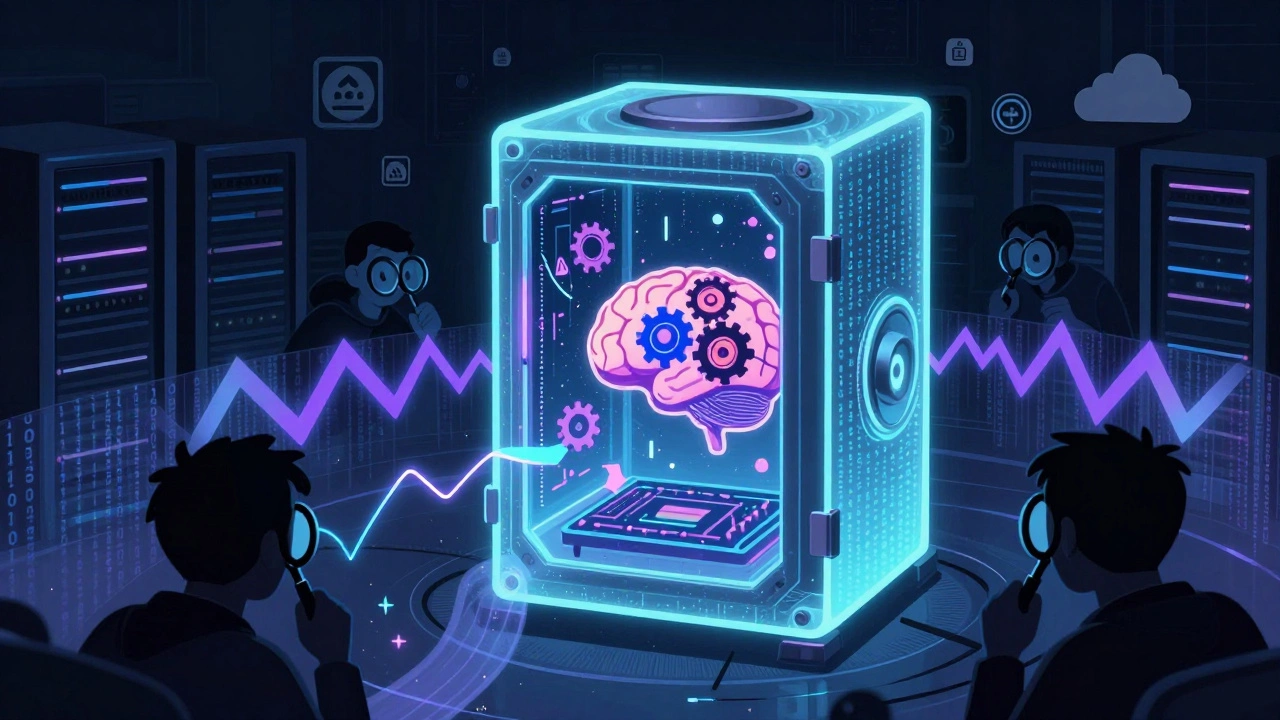
Confidential Computing for LLM Inference: How TEEs and Encryption-in-Use Protect AI Models and Data
Confidential computing uses hardware-based Trusted Execution Environments to protect LLM models and user data during inference. Learn how encryption-in-use with TEEs from NVIDIA, Azure, and Red Hat solves the AI privacy paradox for enterprises.
Read More