Software Development Surveys: What Developers Really Think About AI, Tools, and Workflows
When you look at software development surveys, systematic collections of data from developers about their tools, challenges, and habits. Also known as developer sentiment studies, they reveal what’s actually happening on the ground—not what vendors claim. These aren’t just polls. They’re maps of how teams are adapting to AI, managing cloud bills, and deciding between building or buying code. And the results? Often surprising.
Take LLM adoption, how developers integrate large language models into daily coding tasks. Surveys show over 60% of professional developers now use AI assistants daily—not for writing full apps, but for generating boilerplate, explaining errors, or translating comments. But here’s the catch: those same developers report that 70% of AI-generated code needs manual review. That’s not a failure. It’s a shift in role. Developers aren’t being replaced—they’re becoming editors of machine output.
Then there’s code automation, the use of tools to handle repetitive tasks like testing, deployment, or config management. Surveys point to a clear trend: teams that automate deployment cycles ship features 3x faster. But automation isn’t just about speed. It’s about reducing burnout. One survey of 2,000 engineers found that teams using automated testing reported 40% fewer late-night outages. That’s not a metric—it’s a quality-of-life win.
And what about developer workflows, the sequence of tools, practices, and rituals developers follow to turn ideas into code? The old model—write, commit, test, deploy—is gone. Today’s workflows are messy, hybrid, and AI-powered. Developers jump between ChatGPT, Cursor.sh, GitHub Copilot, and custom internal tools. Surveys show the most productive teams aren’t the ones using the most tools—they’re the ones who’ve built a consistent, repeatable flow that includes human oversight at every AI step.
What’s missing from most surveys? The quiet truth: companies aren’t failing because their AI models are bad. They’re failing because they skip governance. Surveys from enterprise teams show that 80% of AI projects stall not from technical limits, but from legal uncertainty. Who owns the output? How do you audit training data? Can you prove compliance? These aren’t IT questions—they’re business questions. And the developers who succeed are the ones who speak both code and compliance.
There’s also a growing gap between startups and big teams. Startups use vibe coding and vertical slices to ship in days. Enterprises still wrestle with multi-tenancy, export controls, and data sovereignty laws. Surveys confirm: the same AI tools are used everywhere—but the rules around them aren’t. What works in California might get you fined in Colorado. What’s safe in a sandbox isn’t safe in production.
And here’s something no one talks about enough: cost. Surveys on AI in development, the integration of artificial intelligence into software creation processes show that teams who track token usage per feature reduce cloud bills by over 50%. It’s not about using less AI—it’s about using it smarter. Knowing when to compress a model, when to switch to a smaller one, or when to schedule inference during off-peak hours isn’t optional anymore. It’s survival.
These aren’t guesses. These are patterns pulled from real data—survey after survey, team after team. Below, you’ll find deep dives into exactly what those surveys uncovered: how multi-head attention affects code quality, why function calling reduces hallucinations, how governance KPIs actually work, and what happens when you combine AI with blockchain for trust. This isn’t theory. It’s what developers are doing right now—and what you need to know to keep up.
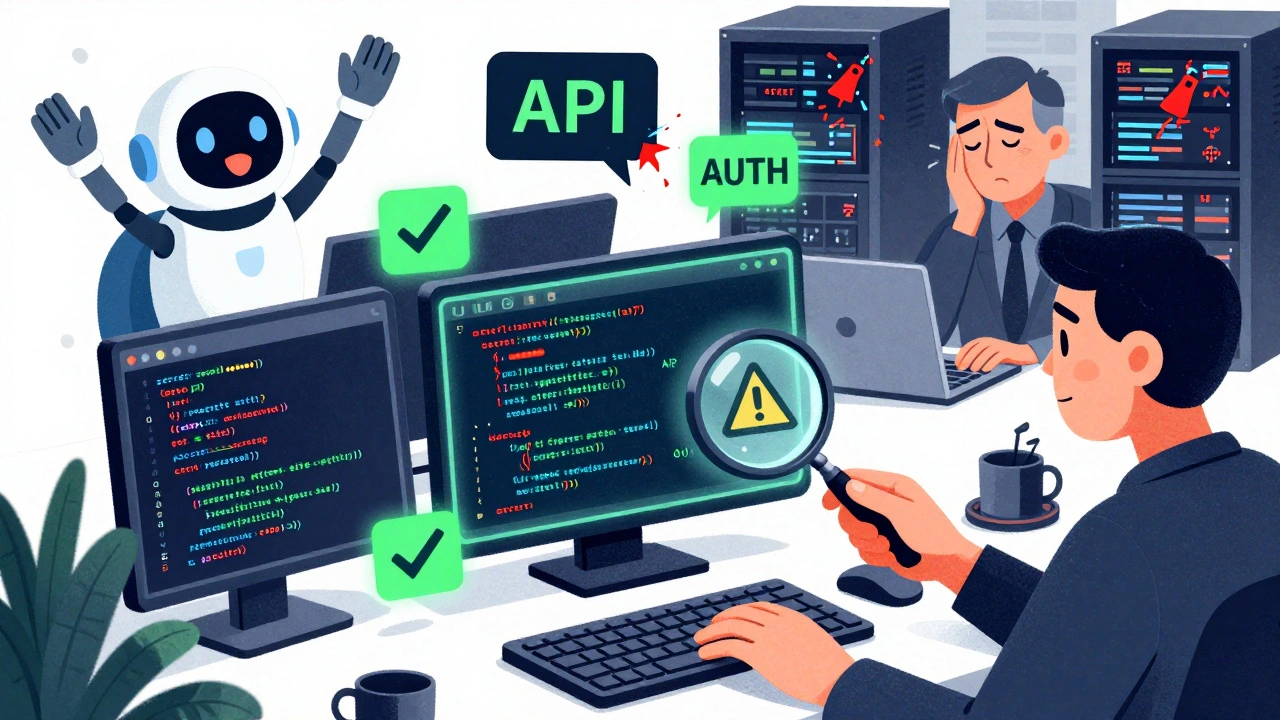
Developer Sentiment Surveys on Vibe Coding: What Questions to Ask and Why They Matter
Developer sentiment surveys on vibe coding reveal a split between productivity gains and security risks. Learn the key questions to ask to understand real adoption, hidden costs, and how to use AI tools safely.
Read More