Privacy Technology in AI: Secure LLMs, Data Governance, and Confidential Computing
When you use privacy technology, tools and practices designed to protect sensitive data during AI processing. Also known as data protection in AI, it ensures your models don’t accidentally expose user info, training data, or business secrets. This isn’t just about passwords or firewalls—it’s about how AI systems handle data at every step, from training to inference. If your LLM is talking to customers, processing medical records, or analyzing financial logs, privacy technology makes sure nothing leaks out.
One major piece of this puzzle is confidential computing, hardware-backed protection that keeps data encrypted even while being processed. This means your model can run on a cloud server and still keep user inputs and outputs locked down—no one, not even the cloud provider, can see what’s inside. Companies like NVIDIA and Microsoft use Trusted Execution Environments, secure areas inside CPUs where code runs isolated from the rest of the system. Also known as TEEs, they’re the backbone of enterprise-grade AI privacy today. Without TEEs, even the most advanced models risk violating GDPR, HIPAA, or state-level laws like California’s AI transparency rules.
Then there’s enterprise data governance, the policies and tools that track where training data came from, who accessed it, and how it’s being used. It’s not enough to just train an LLM—you need to prove you didn’t use stolen data, biased sources, or private customer records. Tools like Microsoft Purview and Databricks help teams audit data pipelines, set access rules, and flag risky patterns before they become legal problems. And when you’re scaling AI across teams or clients, you can’t afford one bad data leak. That’s why governance isn’t optional—it’s the difference between launching safely and getting fined $20 million.
These systems don’t work in isolation. Privacy technology ties directly to how you manage model costs, who can access your AI, and whether your outputs are safe. If your LLM is hallucinating sensitive info, or your SaaS app shares tenant data by accident, you’re not just breaking rules—you’re breaking trust. The posts below show exactly how top teams handle this: from using RAG to avoid storing raw data, to deploying safety classifiers that auto-redact private details, to cutting cloud bills with autoscaling that respects privacy limits. You’ll see real examples of how companies protect data without slowing down innovation. No theory. No fluff. Just what works in production today.
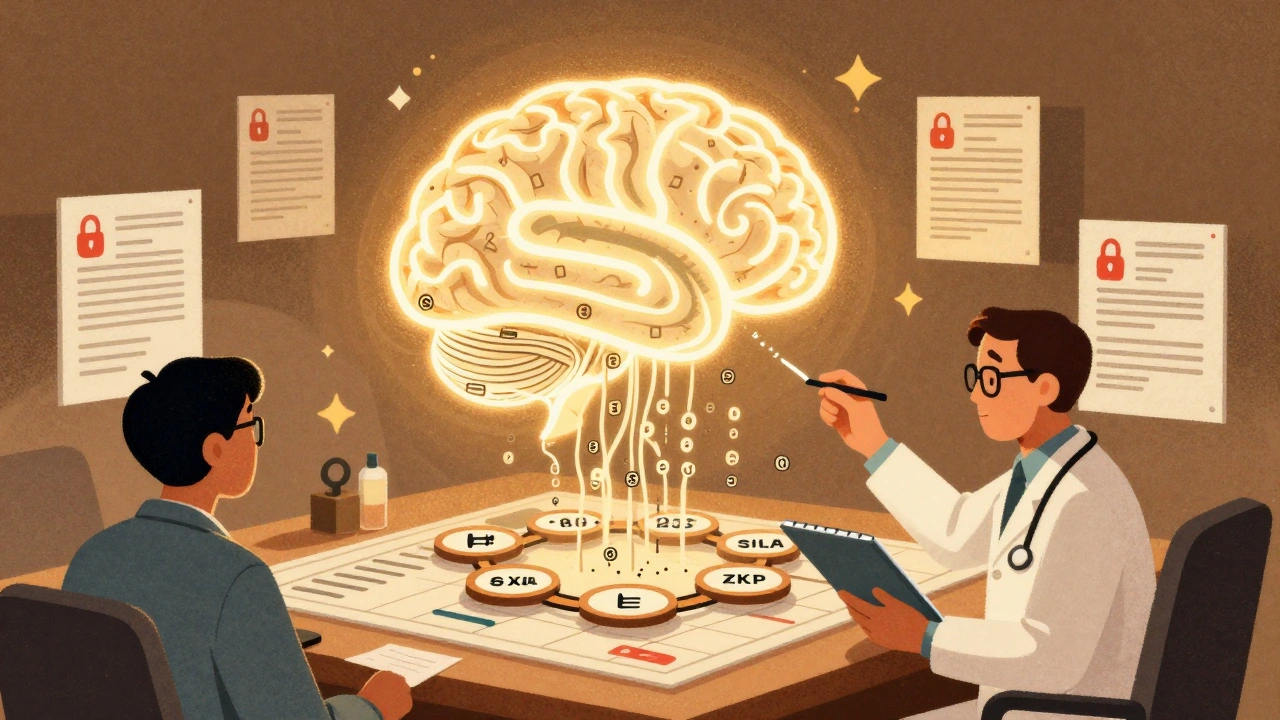
How Generative AI, Blockchain, and Cryptography Are Together Building Trust in Digital Systems
Generative AI, blockchain, and cryptography are merging to create systems that prove AI decisions are trustworthy, private, and unchangeable. This combo is already reducing fraud in healthcare and finance - and it’s just getting started.
Read More