Multi-tenancy in AI Apps: How PHP Scripts Handle Shared Systems Safely
When you run an AI app for multiple customers—like a chatbot service or automated content tool—you can’t let one user’s data leak into another’s. That’s where multi-tenancy, a software architecture that lets a single application serve multiple clients with isolated data and settings. Also known as shared-instance architecture, it’s the backbone of most SaaS AI tools built with PHP. Without it, your app becomes a security risk. Imagine a customer’s private training data showing up in another user’s AI output. That’s not just a bug—it’s a lawsuit waiting to happen.
Building multi-tenancy into PHP AI scripts means more than just adding user IDs to database queries. It requires data isolation, the practice of ensuring each tenant’s data, models, and configurations are completely separated. This isn’t just about databases. It affects how you load AI models, manage API keys, handle caching, and even schedule background jobs. For example, if you’re using OpenAI’s API through a PHP wrapper, each tenant might need their own API key, rate limits, and prompt templates. Tools like LLM interoperability, patterns that let you switch between AI providers without rewriting your code help here—they let you route requests based on tenant rules without hardcoding providers.
Multi-tenancy also changes how you scale. If one tenant runs heavy LLM queries during peak hours, you don’t want their traffic to slow down everyone else. That’s where LLM autoscaling, automatically adjusting GPU resources based on real-time demand comes in. Smart PHP systems track per-tenant usage patterns and spin up separate inference containers only when needed. You’re not just scaling servers—you’re scaling isolation.
And it’s not just technical. Multi-tenancy ties into compliance. If one tenant is in California and another in the EU, your system must respect different data laws—right out of the box. That’s why enterprise data governance, the framework for tracking, controlling, and auditing how AI systems use data is non-negotiable. You need logs that show who accessed what, when, and why. Without it, you can’t prove you’re following multi-tenancy best practices.
What you’ll find below are real PHP scripts and patterns that solve these exact problems. From tenant-aware Composer packages to secure database routing, these posts show how developers are building AI apps that scale without sacrificing safety or control. No theory. No fluff. Just working code for systems that serve many—and protect each one.
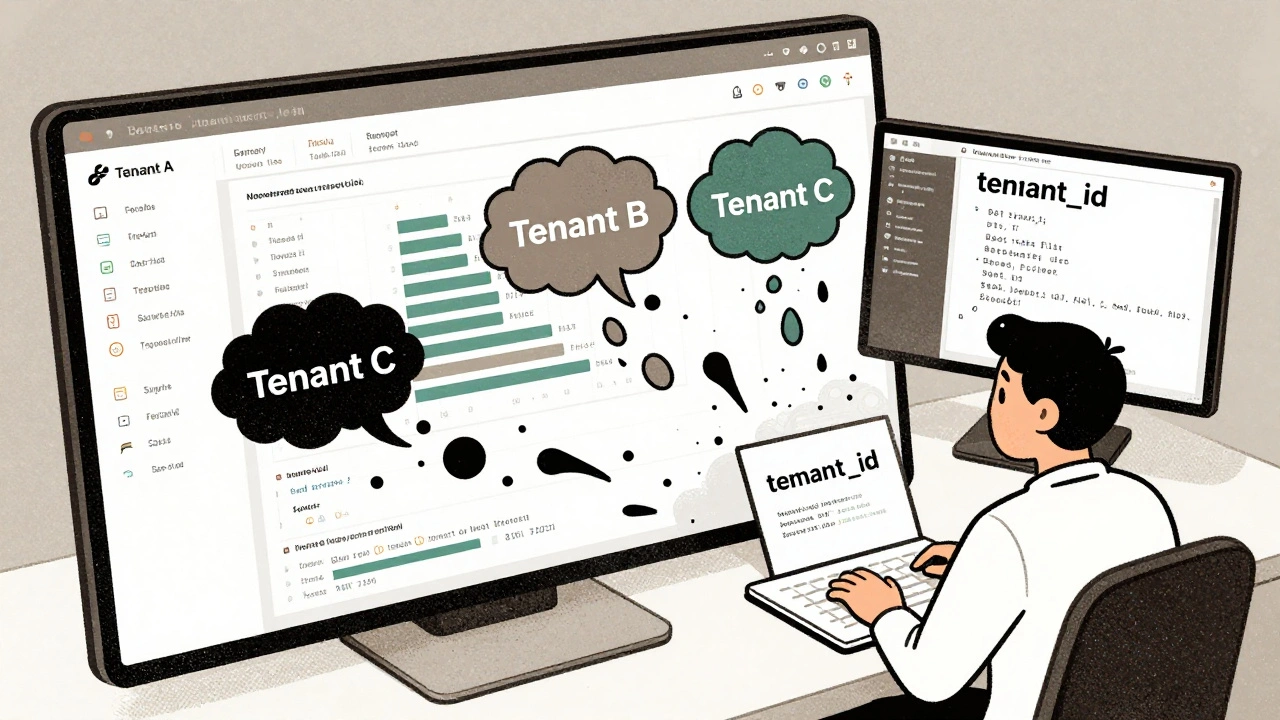
Multi-Tenancy in Vibe-Coded SaaS: How to Get Isolation, Auth, and Cost Controls Right
Learn how to implement secure multi-tenancy in AI-assisted SaaS apps using vibe coding. Avoid data leaks, cost overruns, and authentication failures with proven strategies for isolation, auth, and usage controls.
Read More