LLM Billing: How Much Are You Really Spending on Large Language Models?
When you use a large language model, an AI system trained to understand and generate human-like text. Also known as LLM, it powers chatbots, content tools, and automation—but it doesn’t run for free. Every time you ask it a question, send a prompt, or generate text, you’re using compute power. And that costs money. LLM billing isn’t like paying for a subscription. It’s usage-based, unpredictable, and often hidden in fine print. If you’re running even a small AI feature in your PHP app, you could be spending hundreds—or thousands—without realizing it.
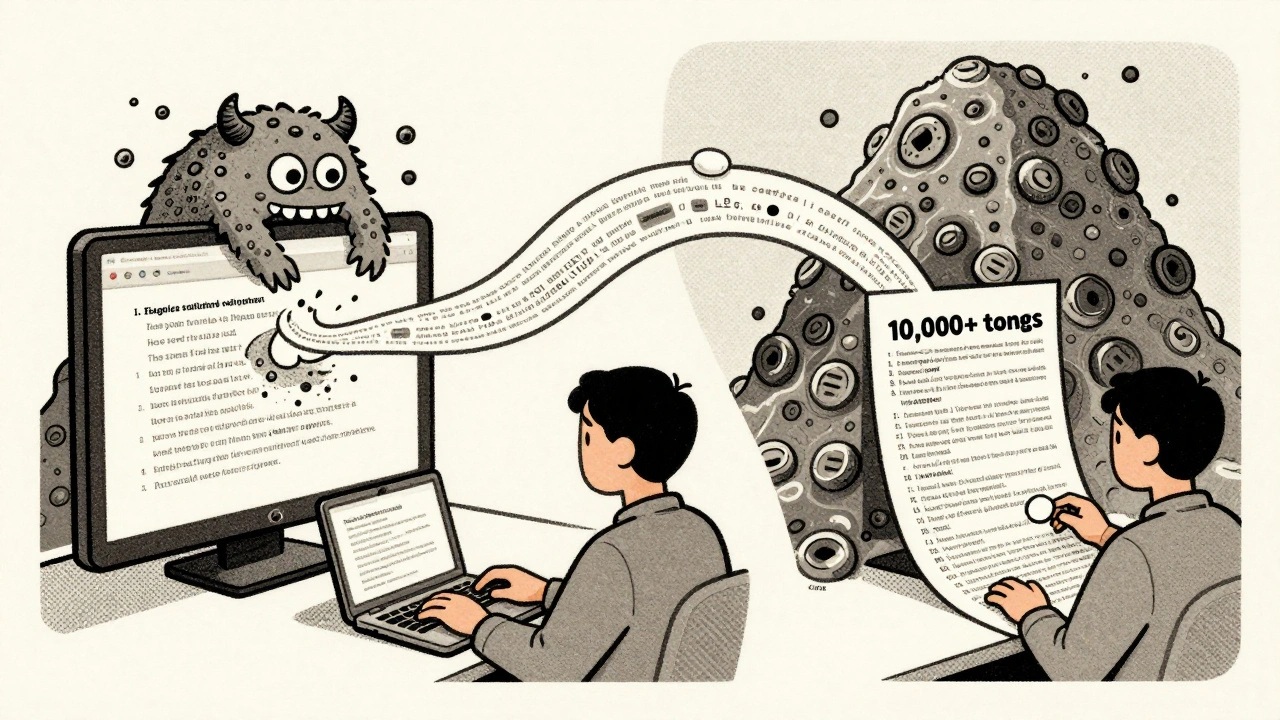
What drives the cost? Three things: input tokens, output tokens, and inference time. Tokens are chunks of text—words, punctuation, even parts of words. OpenAI, Anthropic, and other providers charge per thousand tokens. A simple chat reply might cost a penny. A long report? That could be a dollar. Then there’s model inference, the process of running a model to generate a response. Larger models like GPT-4 or Claude 3 Opus take more GPU time, which means higher bills. And if you’re autoscaling services to handle traffic spikes, you’re multiplying those costs. Even cloud AI expenses, the costs of running AI workloads on platforms like AWS, Azure, or Google Cloud, add up fast if you’re not monitoring usage patterns.
Most developers think they’re saving money by switching to cheaper models. But that’s only half the story. A smaller model might cost less per request—but if it hallucinates more, you’ll need extra checks, filters, or human reviews. That adds labor, time, and hidden overhead. The real trick isn’t just picking the cheapest model. It’s understanding your usage patterns. Are you calling the API 10 times a minute? Are you sending the same prompt over and over? Are you caching responses? Tools like LiteLLM and LangChain help you abstract providers, but they don’t fix bad usage habits. You need to track token volume, set spending caps, and automate alerts before you get a surprise bill.
And it’s not just about the API. If you’re hosting models yourself—on GPU servers or in the cloud—you’re also paying for memory, cooling, and maintenance. generative AI pricing, the cost structure for running AI models that create new content includes everything from the hardware to the electricity. Spot instances can cut costs by 60%, but they vanish when demand spikes. Autoscaling helps, but only if you know which metrics to watch—like prefill queue size or HBM usage. Without those signals, you’re flying blind.
What you’ll find below isn’t a list of prices. It’s a collection of real-world strategies from developers who’ve been burned by unexpected bills. You’ll see how teams cut costs by switching models at the right time, how they built billing dashboards in PHP, and how they avoided vendor lock-in while keeping spending under control. No fluff. No theory. Just what works when your app is live and the bills are piling up.
How Usage Patterns Affect Large Language Model Billing in Production
LLM billing in production depends on how users interact with the model-not just how many users you have. Token usage, model choice, and peak demand drive costs. Learn how usage patterns affect your bill and what pricing models work best.
Read More