LangChain: Build AI Apps That Remember, Reason, and Act
When you build apps with large language models, you quickly hit a wall: LangChain, a framework for connecting LLMs to data sources, tools, and memory. Also known as AI orchestration layer, it lets you move beyond simple prompts and create apps that actually do things. Without LangChain, your AI is just a fancy autocomplete. With it, your app can pull live data from your database, remember past conversations, call APIs, and even break big tasks into steps — like a human would.
LangChain isn’t a model. It’s the glue. It connects your LLM to retrieval-augmented generation, a method where AI pulls facts from your own documents before answering, so it doesn’t make stuff up. It ties into AI agents, systems that plan, act, and react using tools like search or databases, turning your chatbot into a task runner. And it handles prompt chaining, breaking complex requests into smaller, connected steps — like asking for a summary, then comparing it to another document, then emailing the result. These aren’t side features. They’re the core of what makes modern AI apps useful.
Every post in this collection shows how real developers use LangChain to solve actual problems. You’ll find guides on using it with vector databases to make your AI aware of your internal docs. You’ll see how to build agents that handle customer support tickets by pulling from your CRM. You’ll learn how to chain prompts so your AI writes a report, checks its facts against your spreadsheets, then formats it for Slack. None of this works without LangChain. And none of it is theory — these are working systems built by teams who needed their AI to do more than talk.
What you’ll find here isn’t a beginner’s intro to prompts. It’s the next step: how to make AI remember, act, and adapt — using the tools and patterns that top developers rely on today.
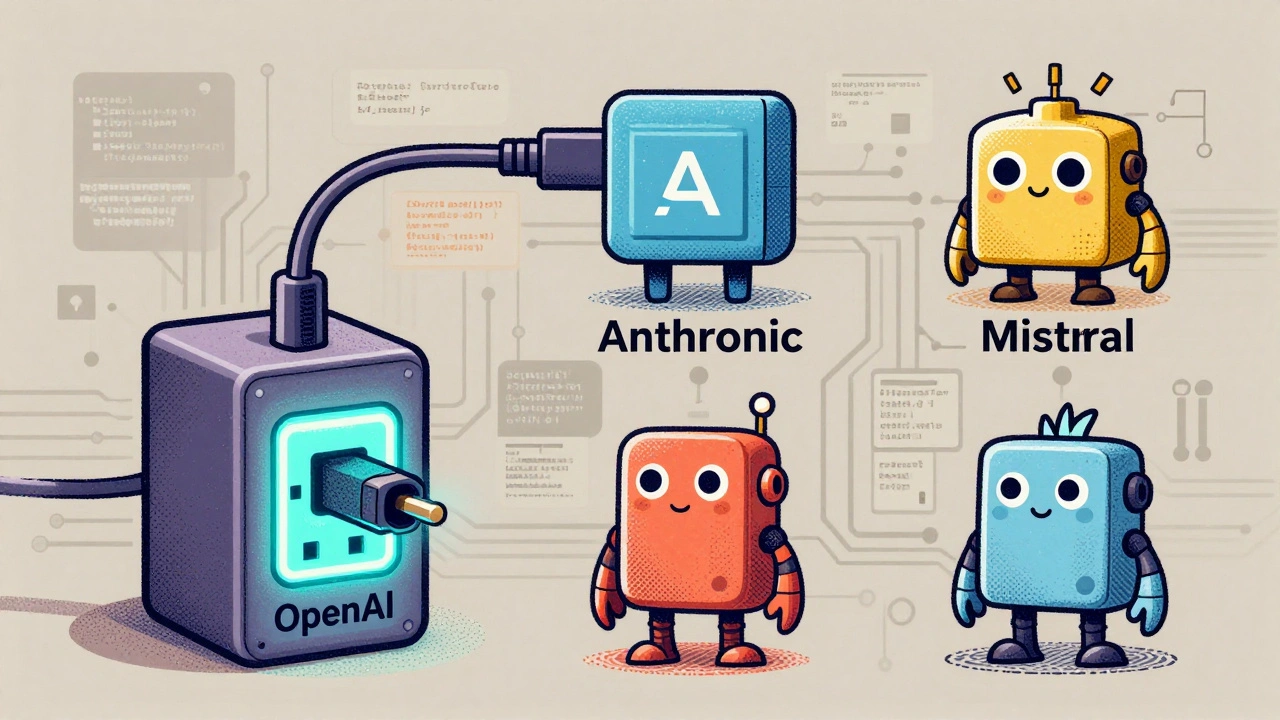
Interoperability Patterns to Abstract Large Language Model Providers
Learn how to abstract large language model providers using proven interoperability patterns like LiteLLM and LangChain to avoid vendor lock-in, reduce costs, and maintain reliability across model changes.
Read More