Generative AI Errors: Common Mistakes, Causes, and How to Fix Them
When you ask a generative AI model a question, you expect a useful answer—not a made-up fact, a biased statement, or a confusing mess. But generative AI errors, mistakes made by AI systems that produce false, misleading, or unsafe outputs. Also known as AI hallucinations, these errors happen even in the most advanced models because they predict text based on patterns, not truth. You’re not alone if you’ve seen an AI confidently claim the moon is made of cheese or invent a fake court case. These aren’t bugs—they’re fundamental limits of how these models work.
One major cause is truthfulness benchmarks, tests like TruthfulQA that measure how often AI models spread misinformation. Even top models score poorly. Another is poor training data: if the model learned from unreliable sources, it repeats those mistakes. And when you use content moderation, systems that filter harmful or inappropriate AI outputs poorly, you get unsafe results—even if the model itself isn’t broken. Tools like safety classifiers help, but they’re not perfect. The real issue? Many teams treat AI like a magic box. They feed it data, get output, and move on—without checking if the output makes sense.
Fixing these errors isn’t about using bigger models. It’s about smarter design. Generative AI errors drop when you use retrieval-augmented generation (RAG) to ground answers in your own data. They shrink when you add human review steps before deployment. And they’re reduced when you monitor usage patterns—because the same model can behave wildly differently under heavy load or unusual prompts. Companies that succeed don’t just deploy AI; they build checks, balances, and fallbacks into every step.
Below, you’ll find real-world guides on how top teams handle these problems—from detecting hallucinations with truthfulness tests, to locking down outputs with moderation tools, to cutting costs without sacrificing safety. These aren’t theory pieces. They’re battle-tested strategies from developers who’ve seen AI go off the rails—and fixed it.
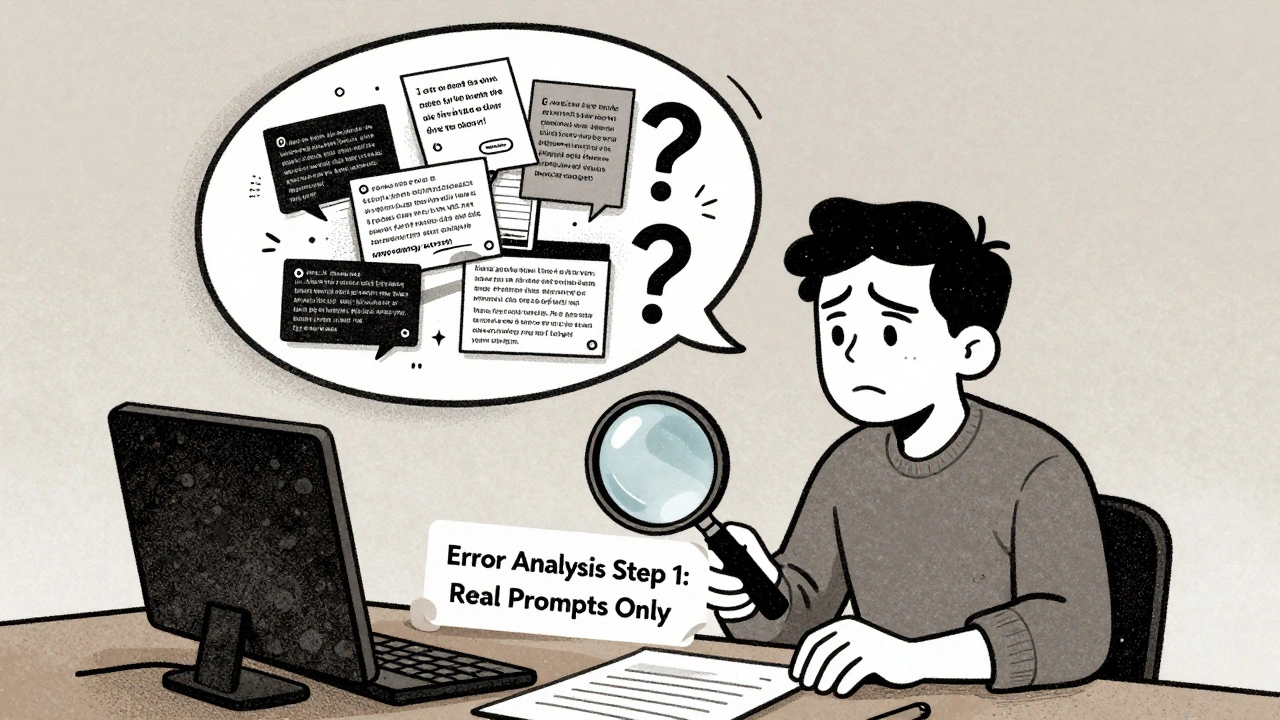
Error Analysis for Prompts in Generative AI: Diagnosing Failures and Fixes
Error analysis for prompts in generative AI helps diagnose why AI models give wrong answers-and how to fix them. Learn the five-step process, key metrics, and tools that cut hallucinations by up to 60%.
Read More