GANs Explained: How Generative Adversarial Networks Create Realistic AI Images and Data
When you see an AI-generated photo that looks real—like a person who doesn’t exist or a painting in the style of Van Gogh—you’re looking at the work of a Generative Adversarial Network, a type of deep learning model that pits two neural networks against each other to create new data. Also known as GANs, it’s one of the most powerful tools in generative AI today. Unlike models that just predict what comes next, GANs invent something entirely new from scratch. One network, the generator, tries to create fake data that looks real. The other, the discriminator, tries to spot the fakes. They keep learning from each other until the generator gets so good that even the discriminator can’t tell the difference.
This back-and-forth isn’t just theory—it’s what powers tools like Deepfake videos, AI art generators, and even synthetic medical images used in research. GANs don’t just copy existing data; they learn patterns and then remix them in ways no human could easily predict. That’s why they’re used in industries from fashion (designing new clothing styles) to pharmaceuticals (creating novel molecular structures). The real magic happens when you pair GANs with other AI techniques, like vector databases, systems that store and retrieve high-dimensional data for fast similarity searches, to control what kind of output the generator produces. Or when you combine them with confidential computing, hardware-based security that protects AI models during use to ensure sensitive training data stays private.
But GANs aren’t perfect. They can be unstable to train, require huge amounts of computing power, and sometimes produce weird artifacts—like extra fingers or distorted faces. That’s why developers are now using techniques like autoscaling, automatically adjusting GPU resources based on demand to manage costs, or applying model compression, reducing model size without losing quality to make them run faster on smaller systems. The posts below show exactly how real developers are using GANs in PHP-based apps: from generating product images on e-commerce sites to building custom AI tools that integrate with OpenAI and other APIs. You’ll find working code examples, performance benchmarks, and tips to avoid the most common pitfalls—so you don’t waste weeks trying to get GANs to behave.
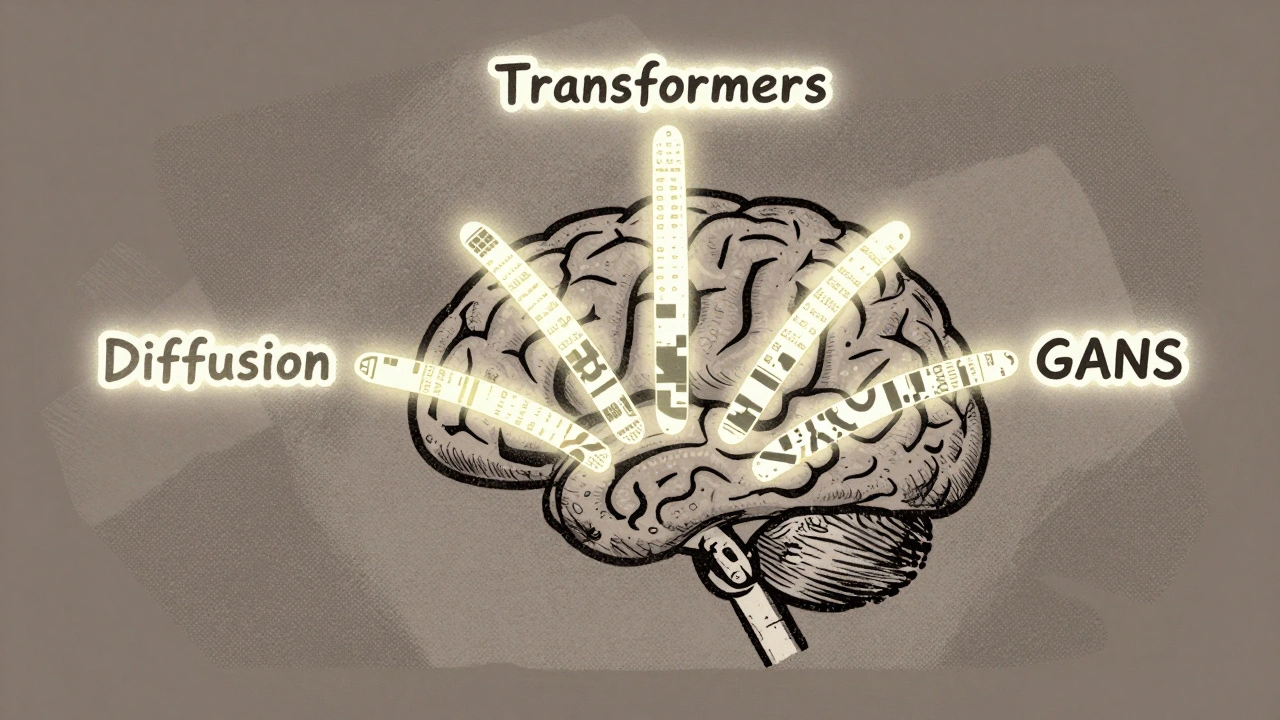
Foundational Technologies Behind Generative AI: Transformers, Diffusion Models, and GANs Explained
Transformers, Diffusion Models, and GANs are the three core technologies behind today's generative AI. Learn how each works, where they excel, and which one to use for text, images, or real-time video.
Read More