Dependency Management in PHP AI Projects
When you’re building AI apps in PHP, dependency management, the process of tracking and controlling external code libraries your app relies on. Also known as package management, it’s what keeps your project from collapsing under its own weight. You don’t just install a library—you manage its version, its updates, its security holes, and how it talks to other parts of your system. Without it, your AI chatbot might break when OpenAI changes its API. Your NLP tool could stop working after a Composer update. And you’ll spend more time fixing broken dependencies than building features.
That’s why Composer, the standard dependency manager for PHP projects. Also known as PHP package manager, it’s not optional—it’s the foundation. It’s what lets you pull in tools like LangChain or LiteLLM without copying and pasting code into your project. It handles version conflicts, auto-loads classes, and lets you lock dependencies to specific releases so your production app doesn’t break overnight. But Composer alone isn’t enough. You also need to understand semantic versioning, a system that tells you if a library update is safe, breaking, or just a minor fix. When you see `^1.2.3`, you’re saying "I want 1.x.x but not 2.0.0"—because 2.0.0 might change how your AI model connector works. And if you’re using AI APIs like OpenAI, Hugging Face, or Anthropic, your dependency list isn’t just about code—it’s about API keys, rate limits, and fallback models.
Think about it: your PHP app doesn’t run in a vacuum. It talks to LLMs, vector databases, authentication services, and cloud APIs. Each connection is a dependency. If you don’t track them, you can’t debug failures. You can’t audit security. You can’t scale. That’s why the posts here cover real-world cases: how to abstract LLM providers so you’re not locked in, how to manage costs when scaling inference, and how to keep your codebase clean when you’re juggling ten different AI tools. You’ll find guides on using Composer with AI libraries, how to lock down versions for production, and how to test updates before they break your chatbot. This isn’t theory—it’s what teams doing this at scale actually do.
Whether you’re a solo developer building your first AI tool or part of a team deploying enterprise-grade LLM apps, dependency management is the silent hero—or the silent killer. Get it right, and your app stays stable. Get it wrong, and you’ll be chasing ghosts in your logs. Below, you’ll find practical, no-fluff guides that show you exactly how to handle this in real PHP AI projects—no jargon, no theory, just what works.
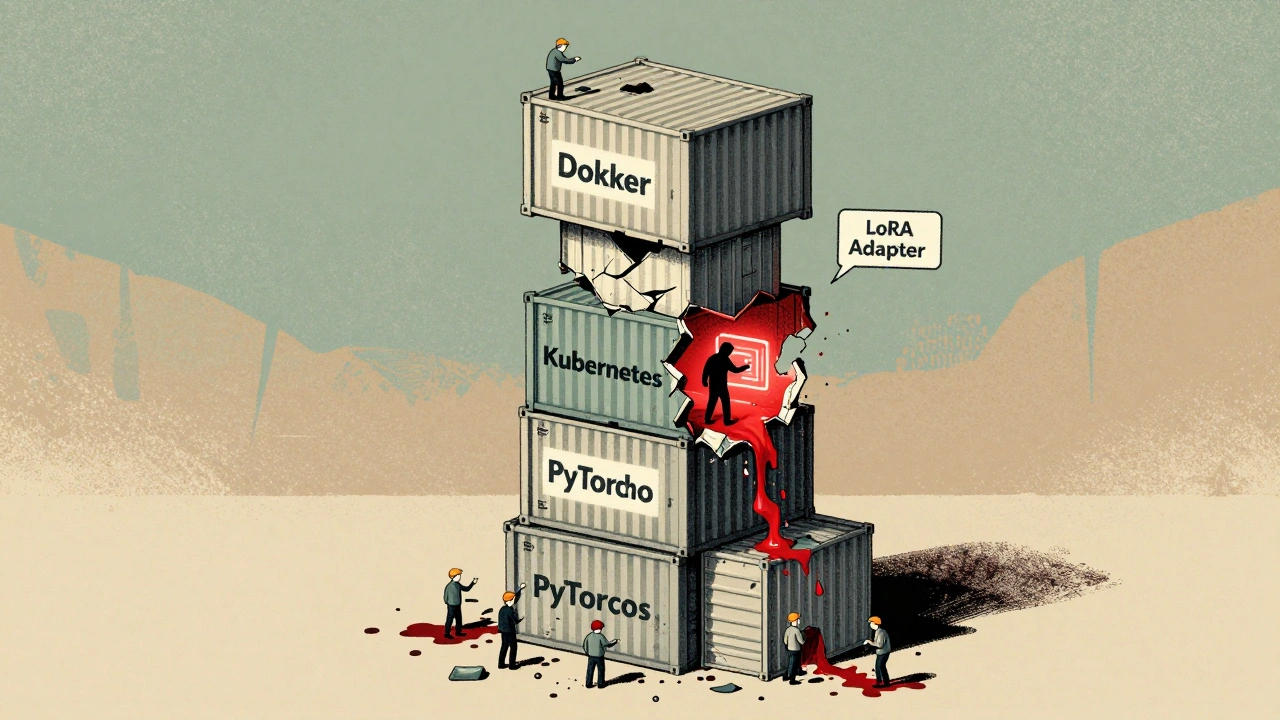
Supply Chain Security for LLM Deployments: Securing Containers, Weights, and Dependencies
LLM supply chain security protects containers, model weights, and dependencies from compromise. Learn how to secure your AI deployments with SBOMs, signed models, and automated scanning to prevent breaches before they happen.
Read More