Compliance Metrics for AI: Track, Measure, and Stay Legal
When you deploy AI, especially large language models, you’re not just building software—you’re managing compliance metrics, quantifiable measures that prove your AI system follows legal, ethical, and operational rules. Also known as AI governance indicators, these metrics turn vague requirements like "be responsible" into clear, auditable numbers. Without them, you’re flying blind. One misstep in data handling, content moderation, or cross-border model sharing can mean fines, lawsuits, or a broken reputation.
These metrics don’t exist in a vacuum. They connect directly to data privacy, how personal or sensitive user information is handled, stored, and protected under laws like GDPR or CCPA, and LLM governance, the policies and controls that ensure your AI model doesn’t hallucinate, leak data, or violate ethical boundaries. You can’t fix what you don’t measure. If you don’t track how often your model generates harmful content, you can’t prove you’re reducing it. If you don’t log where training data came from, you can’t prove you didn’t use copyrighted material. Compliance metrics are your audit trail, your shield, and your roadmap all at once.
Real teams use these metrics to answer hard questions: Did our content moderation system catch 98% of harmful outputs? Are we staying under the 100ms latency threshold for EU users? Did we properly anonymize user inputs before feeding them into the model? These aren’t theoretical checks—they’re daily operations. Companies that skip this step end up caught off guard when regulators ask for proof. The posts below show exactly how top teams measure these things: from tracking token usage to enforce billing compliance, to using tools like Microsoft Purview for data lineage, to setting up truthfulness benchmarks that expose hallucinations before they reach users.
You’ll find practical guides on building compliance into your AI stack—not as an afterthought, but as part of your core architecture. Whether you’re handling state-level AI laws in California, securing model weights against supply chain attacks, or calculating risk-adjusted ROI with legal costs built in, these posts give you the metrics that actually move the needle. No fluff. Just what works.
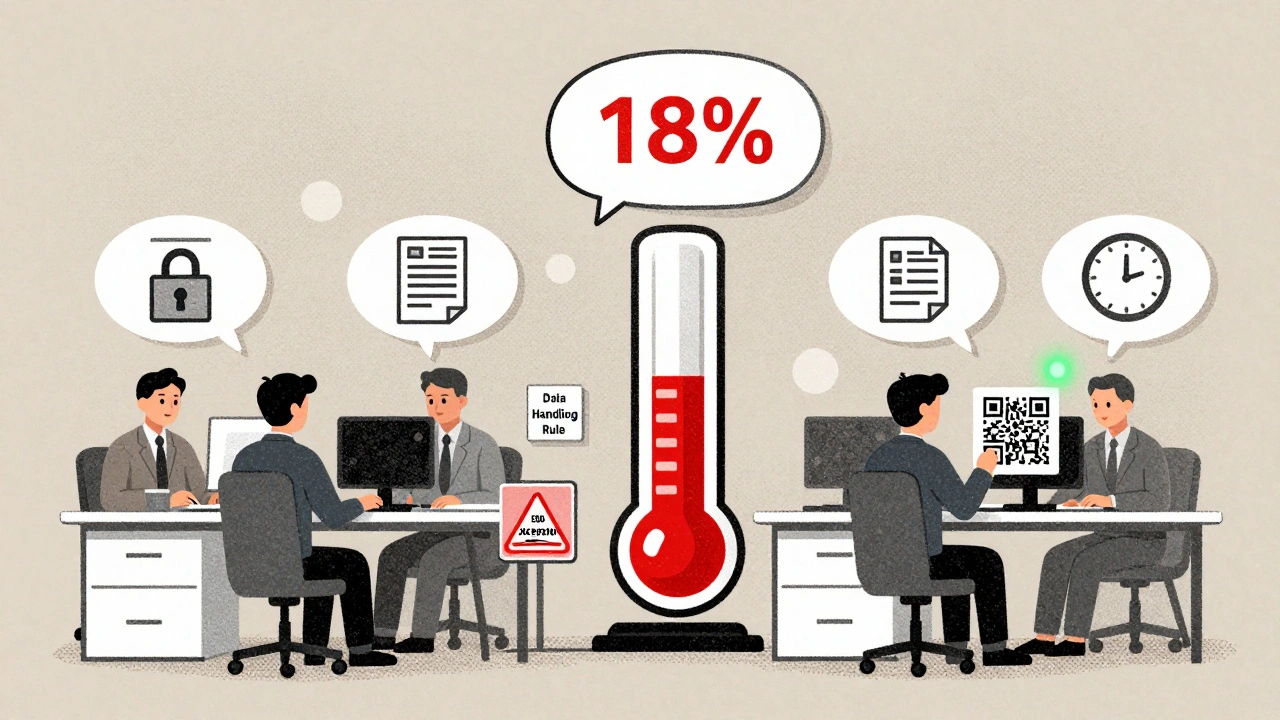
KPIs for Governance: How to Measure Policy Adherence, Review Coverage, and MTTR
Learn how to measure governance effectiveness with policy adherence, review coverage, and MTTR-three critical KPIs that turn compliance into real business resilience.
Read More