AI Transparency: Understand How AI Decisions Are Made and Why It Matters
When you use an AI system and it makes a decision—like rejecting a loan, flagging content, or writing a customer reply—you deserve to know AI transparency, the practice of making AI decision-making processes clear, traceable, and understandable to users and regulators. Also known as explainable AI, it’s not about showing lines of code—it’s about answering the simple question: Why did the AI do that? Without it, even the most accurate AI becomes a black box, and black boxes fail audits, scare users, and invite lawsuits.
AI transparency isn’t optional anymore. States like California and Colorado now require companies to disclose when AI is used in hiring, insurance, or public services. Tools like enterprise data governance, the framework for managing how data is collected, used, and audited in AI systems and truthfulness benchmarks, tests that measure how often AI models generate false or misleading information are now part of standard deployment checklists. You can’t just train a model and hope it behaves. You need to track where its training data came from, how it handles bias, and whether its outputs can be verified. That’s why posts in this collection cover everything from AI transparency in content moderation to how blockchain and cryptography are being used to prove AI decisions haven’t been tampered with.
What you’ll find here isn’t theory. These are real strategies used by teams shipping AI in production. You’ll see how safety classifiers, automated systems that detect and block harmful or inappropriate AI outputs work under the hood, how model governance, the set of policies, roles, and tools that ensure AI systems follow legal and ethical standards ties into KPIs like MTTR and review coverage, and why even the smartest models still fail truthfulness tests. You’ll learn how to measure if your AI is being honest, if it’s following rules, and if you can explain its actions to a customer, lawyer, or regulator—all without needing a PhD in machine learning.
This isn’t about making AI sound simple. It’s about making it accountable. Whether you’re building a chatbot, moderating user content, or deploying AI in a regulated industry, the questions are the same: Can you prove it works? Can you explain why? And if something goes wrong, can you fix it fast? The posts below give you the tools, benchmarks, and real-world examples to answer those questions—before your next audit, lawsuit, or PR crisis hits.
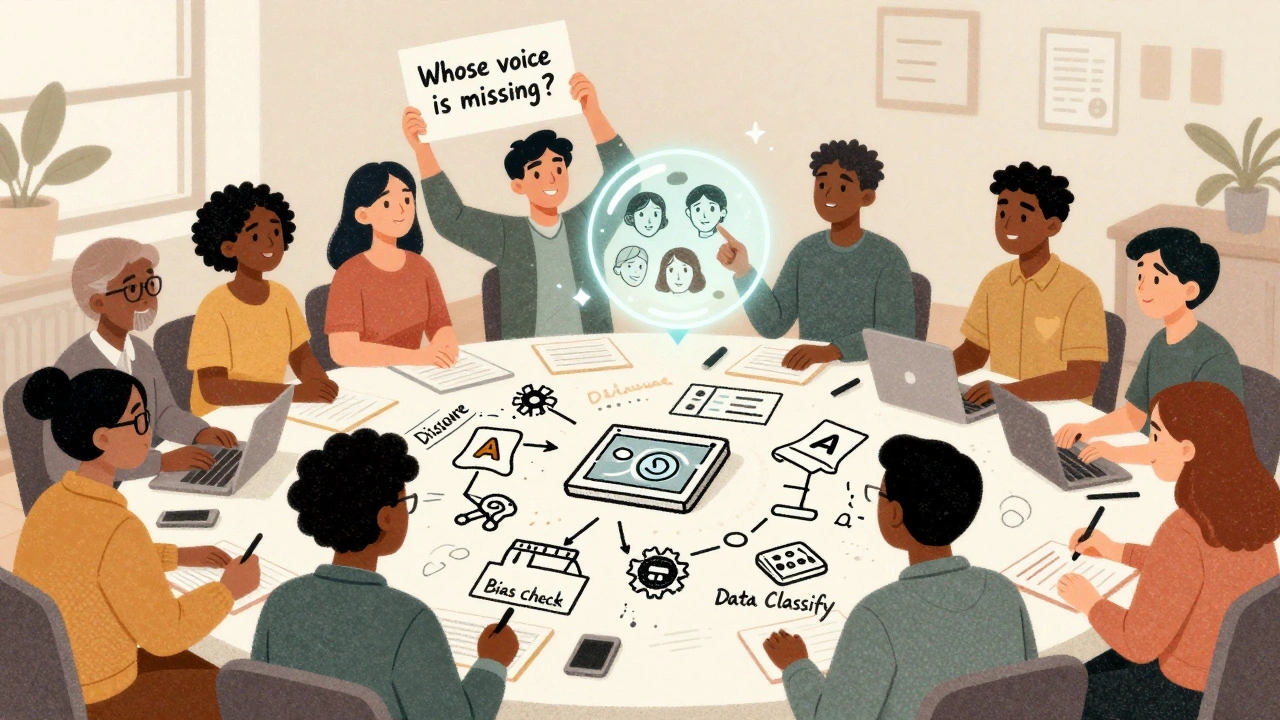
Community and Ethics for Generative AI: How to Build Transparency and Trust in AI Programs
Learn how to build ethical generative AI programs through stakeholder engagement and transparency. Real policies from Harvard, Columbia, UNESCO, and NIH show what works-and what doesn’t.
Read More