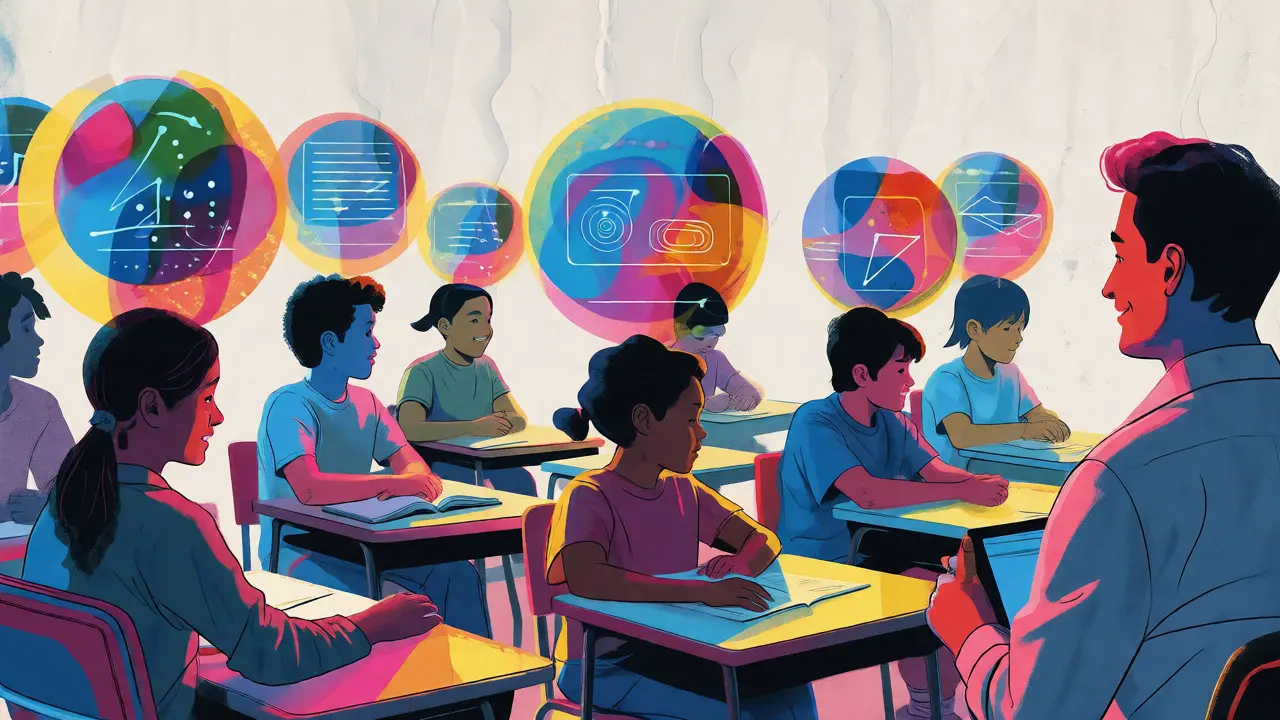
Imagine a classroom where every single student gets the exact level of attention they need, right when they need it. For decades, that was the holy grail of teaching-something human teachers could dream of but rarely deliver to 30 or more kids at once. Enter Large Language Models (LLMs). These aren't just chatbots for writing emails; they are becoming the backbone of a new era in education, offering personalized learning paths that adapt in real-time to each learner's pace and style.
You might have heard the hype since GPT-4 dropped, but what does this actually mean for your child’s homework or your own upskilling? It means moving away from the "one size fits all" lecture hall toward a system that identifies gaps in knowledge instantly. According to a U.S. Department of Education report from late 2025, about 42% of K-12 schools in the United States have already started integrating these AI-assisted tools. The shift isn't coming; it's here. But how do you make it work without losing the human touch? Let's break down how LLMs create tailored educational journeys and where they still stumble.
How LLMs Actually Create Personalized Paths
At its core, an LLM is an advanced AI system trained on massive text datasets to predict and generate human-like text. In education, this capability translates into something powerful: dynamic content adaptation. Unlike static textbooks or pre-recorded videos, an LLM-based tutor analyzes student interactions as they happen. If a student struggles with quadratic equations, the model doesn't just repeat the same explanation. It detects the specific point of confusion-maybe it's factoring versus the quadratic formula-and adjusts the next prompt accordingly.
This process relies heavily on identifying knowledge gaps. A study by Professor Thomas Thesen at Dartmouth showed that LLM-powered tutoring can support 190 medical students simultaneously. That scale is impossible for human tutors alone. The system tracks proficiency levels and interests, reshaping the curriculum flow for each individual. It’s not just about answering questions; it’s about guiding the learner through a unique sequence of concepts that makes sense for their brain, not just the standard syllabus.
The Technical Reality: Accuracy vs. Hallucinations
Before you hand your kid’s math homework to an AI, you need to know the limitations. These models typically range from 7 billion to over 100 billion parameters. While impressive, they aren't perfect. Factual recall accuracy is high-around 85-95% for well-defined subjects like history dates or vocabulary. But drop them into complex problem-solving scenarios, and accuracy dips to 62-78%. Worse, for advanced mathematics, error rates can spike to 79%.
The biggest issue educators face is hallucination, where the AI confidently states incorrect information. To combat this, newer platforms use Retrieval-Augmented Generation (RAG). This architecture pulls facts from trusted sources before generating an answer, reducing hallucination rates significantly. For instance, specialized tools like NeuroBot TA saw hallucination rates drop from 91% to roughly 12-18% using RAG. Still, verification remains critical. As Katie Ellis from SchoolAI notes, these models predict patterns but lack true comprehension. Human oversight isn't optional; it's mandatory.
| Task Category | Accuracy Rate | Error Rate | Best Use Case |
|---|---|---|---|
| Vocabulary & Definitions | 85-95% | ~5% | Flashcards, quick checks |
| Factual Recall (History/Science) | 85-95% | Low | Summaries, context building |
| Complex Problem Solving | 62-78% | Moderate | Step-by-step guidance |
| Advanced Mathematics | Variable | Up to 79% | Conceptual explanation only |
LLMs vs. Traditional Tutors and Adaptive Platforms
Is an AI tutor better than a human one? Not necessarily. It depends on what you value. Human tutors excel at emotional intelligence. They can spot frustration in a student’s body language or tone of voice. A January 2026 study found that human tutors correctly identified student frustration 89% of the time, compared to just 43% for LLM systems. If your child needs encouragement because they’re having a bad day, a human wins every time.
However, LLMs win on scalability and availability. They offer immediate feedback 24/7 at virtually no marginal cost. Traditional adaptive platforms like DreamBox or Khan Academy provide structured pathways but lack conversational flexibility. You can’t ask Khan Academy, "Why did I get this wrong? Explain it like I’m five." An LLM can. This conversational depth allows for deeper conceptual understanding, turning passive consumption into active dialogue. Students using personalized LLM environments were found to be 1.5 times more engaged than those in traditional settings, according to Gates Foundation data.
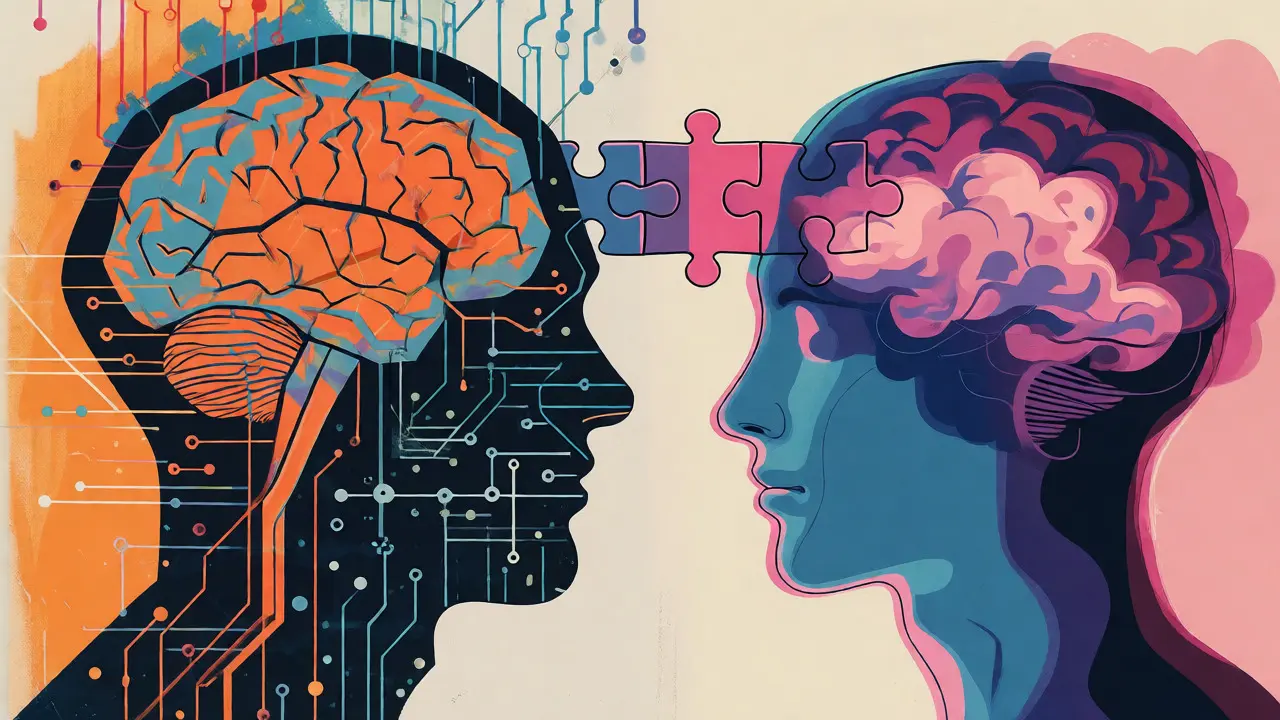
Implementation: How Schools and Parents Can Start
If you’re a teacher or parent looking to integrate these tools, don’t start with full-blown tutoring. Start small. The most successful implementations follow a three-phase approach. First, use AI for administrative tasks. Drafting parent communications or grading simple quizzes saves teachers 2-3 hours weekly. Second, move to content differentiation. Use tools to simplify texts for dyslexic students or expand them for advanced learners. Finally, introduce real-time tutoring.
Platforms like SchoolAI are free for teachers and require only 3-5 hours of onboarding. Integration is usually straightforward, with 87% of educational AI platforms supporting major Learning Management Systems (LMS) like Canvas, Google Classroom, and Schoology. However, beware of over-reliance. 71% of teachers report students leaning too heavily on AI. The goal is to teach students to use AI as a scaffold, not a crutch. Prompt engineering basics-knowing how to ask good questions-are now part of professional development modules in 28 U.S. states.
Ethical Concerns and Bias in Training Data
We have to talk about bias. LLMs learn from existing data, and if that data contains societal biases, the AI will reflect them. Dr. Susan Chen from MIT warned that bias in training data can disadvantage diverse learners. Her research showed that LLMs had 23% lower accuracy for non-native English speakers in standardized testing scenarios. This isn't just a technical glitch; it’s an equity issue. If an AI tutor misunderstands a student’s cultural context or language nuance, it can hinder rather than help learning.
Data privacy is another major hurdle. With regulations like FERPA and COPPA tightening, schools must ensure student data is anonymized and encrypted. The 2024 Federal AI in Education Act requires bias audits for all student-facing AI. Before adopting any tool, check for compliance with the National Education Data Privacy Standards. You want a platform that treats student data with the same care as a bank treats financial records.

The Future: From Answer Engines to Thinking Partners
The next generation of educational AI won’t just give answers; it will guide discovery. Researchers are pushing for systems that use targeted questioning to lead students to solutions themselves, rather than handing them the result. This aligns with pedagogical best practices that prioritize critical thinking over rote memorization. We are also seeing moves toward multimodal integration, where AI combines text, audio, and visual aids to cater to different learning styles.
Long-term student modeling is another frontier. Current models often forget context after a session ends. Future systems will track progress across months or years, building a comprehensive profile of a learner’s strengths and weaknesses. This long-term view allows for truly longitudinal personalization, adjusting the path based on past failures and successes over time.
Are LLMs accurate enough for math tutoring?
Not always. While they are great for explaining concepts, LLMs struggle with complex calculations. Error rates for advanced mathematics can reach 79%. It is best to use them for conceptual understanding and step-by-step logic checks, but verify final numerical answers with a calculator or textbook.
Will AI replace human teachers?
No. AI lacks emotional intelligence and cannot replicate the mentorship aspect of teaching. Studies show humans identify student frustration far better than AI. Instead, AI acts as a force multiplier, handling repetitive tasks and providing instant feedback so teachers can focus on high-value interactions and social-emotional learning.
What is RAG and why does it matter for education?
Retrieval-Augmented Generation (RAG) is a technique where the AI retrieves relevant information from a trusted database before generating an answer. This significantly reduces "hallucinations" (incorrect facts), making the AI more reliable for academic research and factual learning.
How much do educational LLM tools cost?
Many platforms, such as SchoolAI, are currently free for teachers. Enterprise solutions for school districts vary in price based on user count and features. Generally, the cost is low compared to hiring additional human tutors, making it accessible even for underfunded schools.
Can AI help students with disabilities?
Yes, significantly. 65% of special education teachers believe AI improves accessibility. Tools can instantly simplify text for dyslexic students, convert text to speech, or adjust reading levels, helping students engage with grade-level content that would otherwise be inaccessible.
Next Steps for Educators and Learners
If you're ready to experiment, start with a specific subject area where you know the AI performs well, like language arts or basic science. Test the output rigorously. Ask the AI to explain its reasoning. Watch how your students or children interact with it. Are they copying answers, or are they engaging in dialogue? The technology is evolving rapidly, with the global AI education market projected to hit $41.7 billion by 2028. Staying informed and proactive ensures you harness the power of personalized learning paths without falling into the trap of unchecked automation.

Meagan Mueller
11 September, 2026 - 16:29 PM
theyre watching us through the webcam while we study lol
its not just about learning its about data harvesting disguised as education dont let them fool you with all this personalized path nonsense
Sabrina Newland
12 September, 2026 - 02:29 AM
this is so fascinating 🤯 i wonder though if relying on ai for tutoring might actually stunt our ability to struggle through problems on our own 🤔 struggle builds character right? or am i being too nostalgic about traditional schooling 📚✨
i feel like there's a balance we haven't found yet between efficiency and deep cognitive development 😌
Art HND
12 September, 2026 - 19:45 PM
LLMs lack true comprehension. They are statistical parrots.
Human connection cannot be replicated by algorithms.
Amara Akbar
13 September, 2026 - 20:45 PM
I completely agree that human oversight is mandatory here. The article rightly points out that emotional intelligence is a significant gap in current AI models.
We must ensure that these tools serve as scaffolds rather than replacements for genuine mentorship. It is crucial to maintain that human touch in education.
Dave Gibbeson
15 September, 2026 - 02:59 AM
Listen up everyone! This tech is a game changer but only if you use it right!!! You need to treat AI like a super-powered assistant NOT a replacement teacher!!! Start small test everything verify every single fact because hallucinations are real and they will mess you up!!! Do not skip the verification step!!! That is how you win with LLMs!!! Get out there and experiment today!!!
Brandon Olvera
15 September, 2026 - 07:48 AM
foreign bias in training data is a threat to our educational sovereignty. we need American-made models for American students.
Elizabeth Brooks
15 September, 2026 - 15:17 PM
honestly the part about dyslexia support is huge for me. my kid struggles with reading and having something that instantly simplifies text without making him feel dumb is a lifesaver. its not perfect but its better than nothing.
Deb Kortyna, MBA
17 September, 2026 - 09:05 AM
The assertion that AI lacks emotional intelligence is undeniably correct. One must consider the profound implications of delegating pedagogical responsibility to entities incapable of empathy. Furthermore, the statistical evidence regarding frustration detection highlights a critical deficiency. We ought to proceed with caution rather than enthusiasm.
Mark Harvey
18 September, 2026 - 21:18 PM
love seeing people talk about the upsides too. yeah its not perfect but helping kids who fall behind get caught up at their own pace is awesome. lets keep encouraging each other to find good tools instead of just hating on new tech