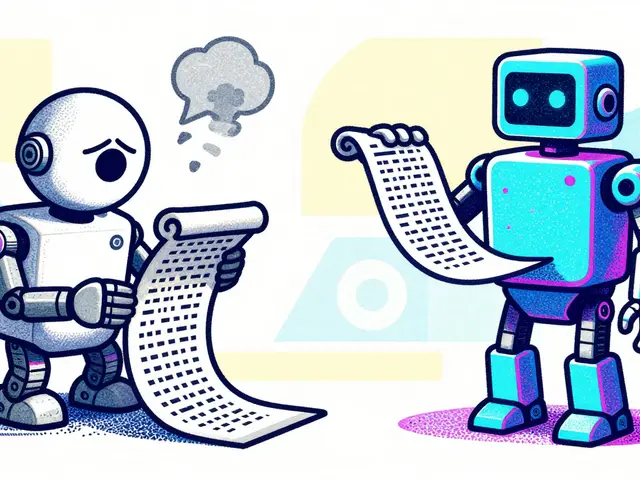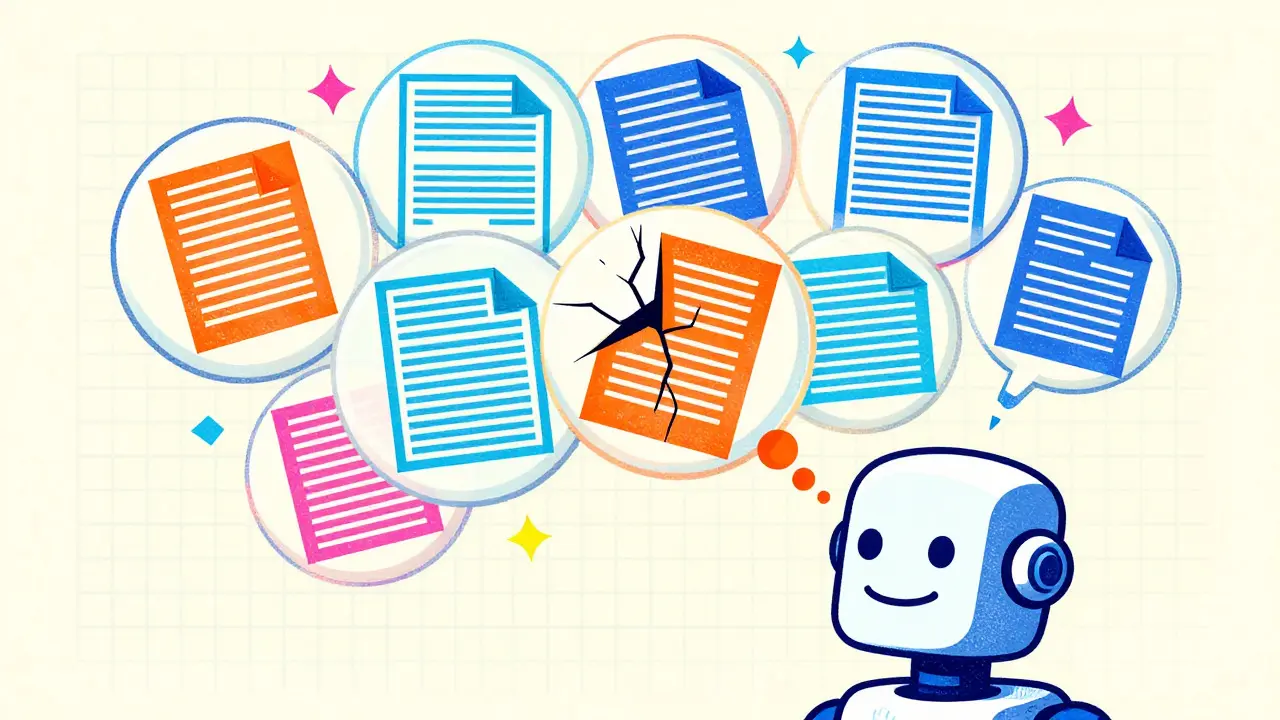
Imagine asking a large language model to summarize a legal contract. It returns a confident, well-structured paragraph that looks perfect on the surface. But buried in the third sentence is a fabricated clause that doesn't exist in the original document. This is hallucination, a persistent flaw in generative AI where models produce plausible but factually incorrect information. For high-stakes applications like finance, healthcare, and legal tech, this isn't just an annoyance-it's a liability. The solution gaining traction among enterprise AI teams is ensembling generative AI models, a technique where multiple large language models (LLMs) generate responses to the same query, and their outputs are systematically compared to identify and eliminate errors.
This approach isn't new in machine learning, but its application to generative systems has matured rapidly since 2023. Instead of relying on a single model's output, you treat each model as an independent witness. If three different architectures agree on a fact, the confidence in that answer jumps significantly. If they diverge, you flag the discrepancy for further review or discard the outlier. The result? A measurable drop in factual errors without needing to retrain your base models from scratch.
Why Single Models Fail and Ensembles Succeed
The core issue with single-model generative AI is overfitting. With billions of parameters, these models can memorize training data patterns so deeply that they start generating text that sounds authoritative but lacks grounding in reality. Dr. Sarah Chen, Principal AI Researcher at Stanford HAI, highlighted this risk in her December 2024 keynote at NeurIPS: "A simple classification error might produce one wrong label, but an overfitted LLM can generate text that sounds completely plausible yet contains factual errors across many different topics."
Ensembling tackles this by introducing diversity. When you combine outputs from different model architectures-say, a variant of Llama-3, Mistral, and a proprietary system-you reduce the chance that all models share the same blind spots. According to benchmarks from the University of South Florida published in April 2024, majority voting ensembles achieved 78.72% accuracy on standardized test sets, reducing hallucination rates from the typical 22-35% range of single models down to 8-15%. That’s not a marginal improvement; it’s a fundamental shift in reliability for critical workflows.
How Cross-Checking Works in Practice
Implementing model cross-validation for generative tasks requires more than just running prompts through multiple APIs. You need a structured reconciliation mechanism. Here’s how it typically works:
- Parallel Generation: Send the same prompt to 3-5 diverse LLMs simultaneously. Diversity is key-using identical models trained on similar data won’t help much.
- Output Comparison: Use automated tools to compare the generated texts. Look for semantic alignment rather than exact string matches. Tools like Galileo AI’s Validation Suite use embedding similarity scores to determine if two outputs convey the same meaning.
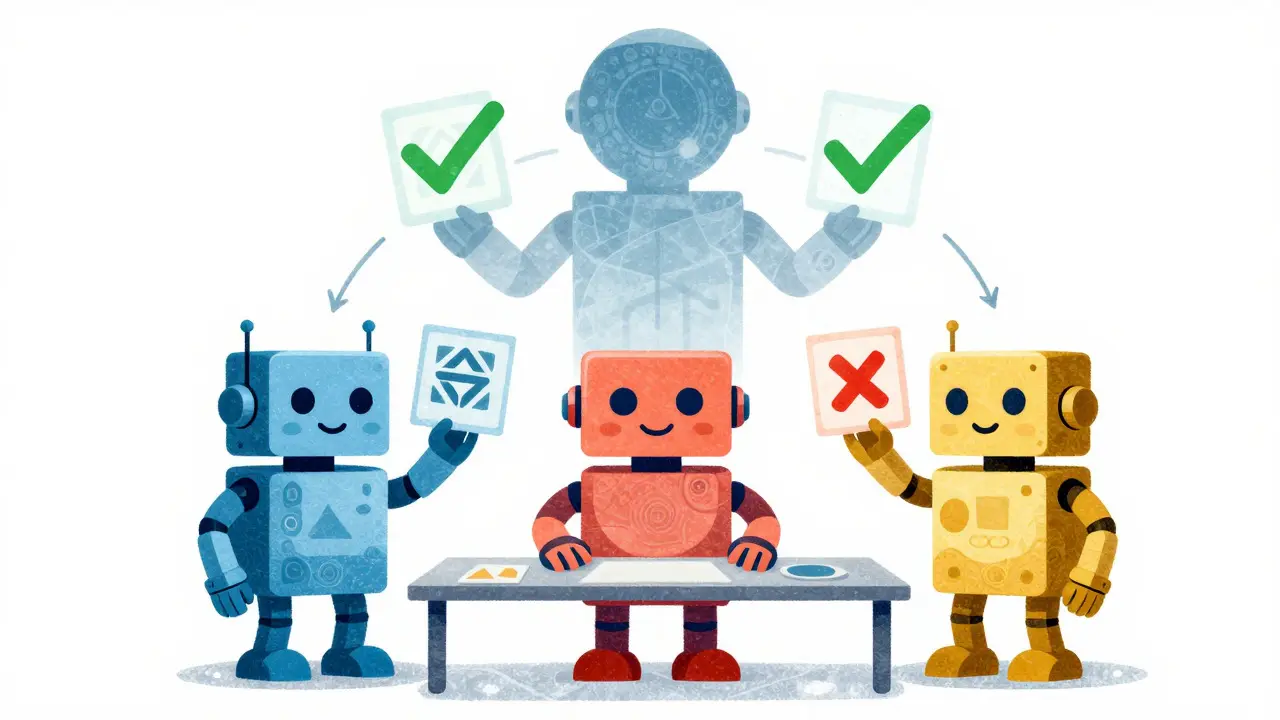
- Consensus Mechanism: Apply a decision rule. Majority voting is the most common: if at least two out of three models agree on a specific fact, it’s retained. Weighted scoring allows you to prioritize higher-performing models based on historical accuracy.
- Discrepancy Handling: When models disagree, you have options. Discard the conflicting section, flag it for human review, or use a meta-learner to predict which model is likely correct based on context.
A critical technical detail here is preventing data leakage during validation. If your test data overlaps with training data, your error reduction metrics will look artificially good. Group k-fold cross-validation solves this by ensuring related data points stay together in the same fold. As noted in AWS’s Machine Learning documentation updated in November 2025, this method "ensures that related data points stay together in the same fold, preventing data leakage that could artificially inflate your model's performance metrics."
Computational Costs vs. Accuracy Gains
Let’s be honest: ensembling isn’t free. Running three 7B-parameter LLMs in parallel requires approximately 48GB of GPU memory and increases inference time by 2.7x compared to a single model, according to H2O.ai’s Driverless AI benchmarking from Q3 2025. For real-time applications requiring sub-500ms response times, this overhead can be prohibitive.
But for asynchronous or batch processing tasks-like generating quarterly financial reports, drafting medical summaries, or compiling legal briefs-the trade-off often makes sense. JPMorgan Chase’s Q2 2025 technical report documented a 31.2% reduction in financial reporting errors after implementing ensembling, though it did increase their monthly cloud computing costs by $227,000. In their case, the cost of a single undetected error in a regulatory filing far outweighed the infrastructure expense.
| Method | Error Reduction Rate | Implementation Complexity | Best For |
|---|---|---|---|
| Single Model Fine-Tuning | 5-12% | Medium | Domain-specific vocabulary adaptation |
| Retrieval-Augmented Generation (RAG) | 10-20% | High | Factual grounding in private datasets |
| Generative AI Ensembling | 15-35% | Very High | High-stakes, low-volume critical tasks |
| Human-in-the-Loop Review | Up to 95% | Variable | Final quality assurance for any AI output |
When Ensembling Makes Sense (And When It Doesn’t)
Not every use case justifies the complexity. LeewayHertz’s June 2025 market analysis found significant context dependency: ensemble approaches reduced factual errors by 28.7% in healthcare applications but only provided a 9.3% improvement in entertainment content generation. If you’re building a marketing copy generator where slight inaccuracies don’t carry financial or legal risk, the 200% infrastructure cost increase likely won’t pay off. One startup CTO on Reddit (r/MachineLearning, August 2025) put it bluntly: "For our marketing copy generator, the 18% error reduction didn't justify the 200% infrastructure cost increase."
On the other hand, if you’re working in regulated industries, the math changes. The EU AI Act’s September 2025 implementation now requires "systematic validation approaches for high-risk AI systems," which has accelerated ensembling adoption in European markets. Enterprises report 3.2x higher compliance with AI regulations when using ensemble validation approaches compared to single-model systems. For legal tech and financial services, ensembling is becoming less of an optional optimization and more of a compliance necessity.
Implementation Roadmap for Teams
If you’re considering adopting ensemble learning for your generative AI stack, expect a steep learning curve. H2O.ai’s implementation guides estimate 8-12 weeks of dedicated effort for experienced ML engineers to get a production-ready system live. Here’s a realistic phased approach:
- Phase 1: Model Selection (Weeks 1-2) Choose 3-5 diverse architectures. Avoid using multiple versions of the same base model. Mix open-source (Llama-3, Mistral) with proprietary APIs for maximum diversity.
- Phase 2: Validation Framework Setup (Weeks 3-5) Implement group k-fold cross-validation. Use k values between 5 and 10 to balance computational cost with statistical reliability. Checkpoint strategically-start from a common checkpoint and fine-tune on each training fold rather than training from scratch.
- Phase 3: Reconciliation Logic (Weeks 6-8) Build your consensus mechanism. Start with simple majority voting before moving to weighted scoring or meta-learners. Log all discrepancies for analysis.
- Phase 4: Monitoring & Optimization (Weeks 9-12) Track hallucination rates per model and per topic area. Adjust weights based on performance. Monitor latency and cost continuously.
A common pitfall is debugging. As one G2 Crowd reviewer noted, "Debugging becomes exponentially harder with multiple models interacting." To mitigate this, maintain detailed logs of each model’s raw output alongside the final consensus decision. This transparency is crucial when explaining why a particular fact was included or excluded.
Future Trends and Efficiency Improvements
The field is evolving fast. AWS announced "Adaptive Ensemble Routing" in their December 2025 SageMaker update, which dynamically selects which models participate in the ensemble based on query complexity. Simple queries go to fewer models, complex ones to more, reducing average inference costs by 38% while maintaining 95% of the error-reduction benefits. Similarly, Galileo AI’s January 2026 release of "LLM Cross-Validation Studio" introduced automated group k-fold implementation specifically designed for generative models, cutting validation cycles by 22%.
Hardware improvements are also on the horizon. Dr. Elena Rodriguez’s forecast in the Journal of AI Engineering (January 15, 2026) predicts that within 18 months, specialized hardware accelerators will reduce the computational penalty of ensembling to under 30% while maintaining 90% of the error-reduction benefits. Until then, efficiency gains will come from smarter routing and model selection strategies.
Gartner analysts project that by 2028, ensemble validation will be as standard for critical generative AI applications as SSL is for web security. While we’re not there yet, the trajectory is clear: for high-stakes generative AI, checking your work with multiple models isn’t just best practice-it’s becoming the baseline expectation.
How many models should I include in my generative AI ensemble?
Three to five models is the sweet spot for most implementations. Dr. James Wilson of MIT’s Computer Science Lab noted in his March 2025 paper that beyond five models, the marginal error reduction drops below 1.5% while computational costs increase by 100%. Start with three diverse architectures and expand only if you identify specific error patterns that additional models would catch.
Does ensembling work for real-time applications?
Generally, no. The 2.7x increase in inference time makes traditional ensembling unsuitable for applications requiring sub-500ms response times. However, adaptive routing techniques like AWS’s Adaptive Ensemble Routing can mitigate this by only engaging full ensembles for complex queries. For true real-time needs, consider hybrid approaches where a single fast model handles initial responses and an ensemble validates them asynchronously.
What’s the difference between ensembling and retrieval-augmented generation (RAG)?
RAG grounds a single model’s output by retrieving relevant documents from a knowledge base before generation. Ensembling uses multiple models to cross-validate each other’s outputs without necessarily relying on external retrieval. They’re complementary: you can use RAG to improve individual model accuracy and then ensemble those RAG-enhanced models for additional error reduction. RAG typically reduces errors by 10-20%, while ensembling adds another 15-35% on top.
How do I measure whether my ensemble is actually reducing hallucinations?
Use group k-fold cross-validation with a held-out test set that wasn’t used in any training or tuning phase. Compare the hallucination rate (defined as the percentage of statements that are factually incorrect) between your single-model baseline and your ensemble output. Track this metric per topic area, as error reduction varies significantly by domain. Log all discrepancies to understand which types of facts are most prone to hallucination.
Is ensembling required for EU AI Act compliance?
Not explicitly, but it’s strongly recommended. The EU AI Act’s September 2025 implementation requires "systematic validation approaches for high-risk AI systems." While single-model systems with robust testing can meet this requirement, ensembling provides a more defensible validation story because it demonstrates multiple independent checks. Enterprises using ensemble validation report 3.2x higher compliance scores, making it a practical choice for regulated environments.