Token Pricing: How AI Costs Work and How to Cut Them
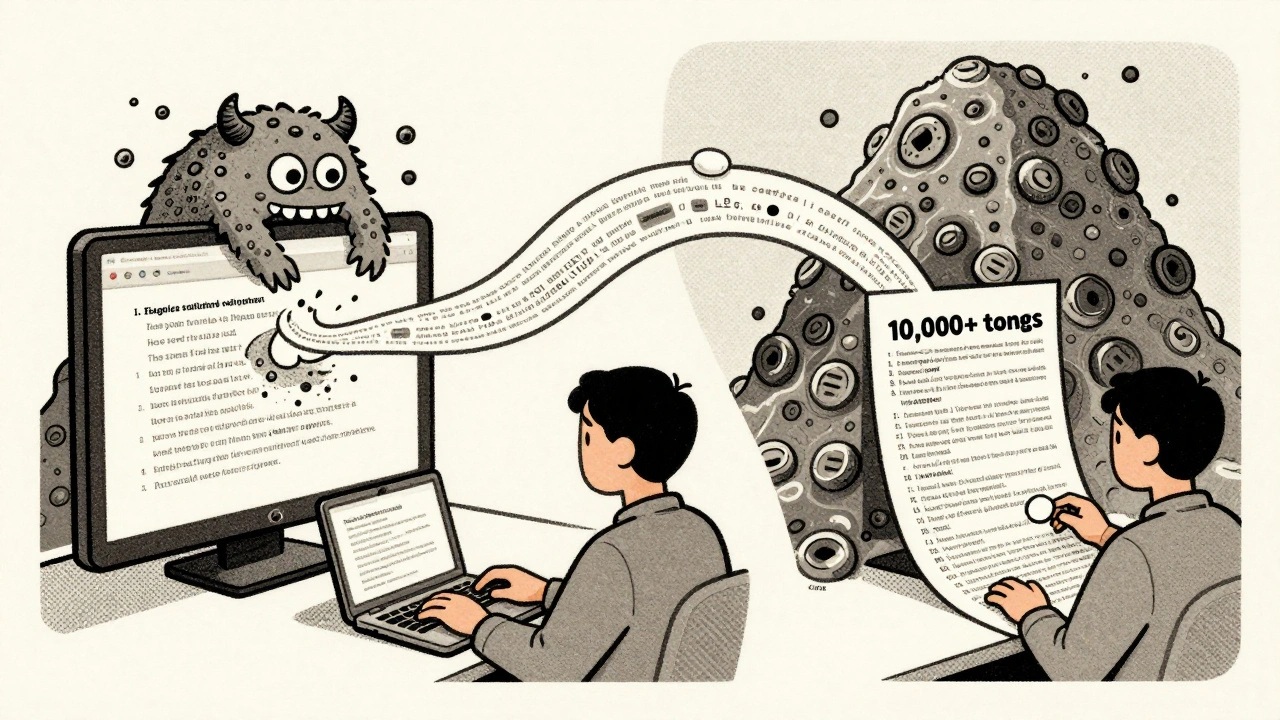
When you use an AI model, you’re not paying for time—you’re paying for tokens, individual units of text that AI models process, from words to punctuation. Also known as text units, they’re the currency of AI usage. Every word you type, every answer the model gives, gets broken into tokens—and each one costs money. This is the core of LLM costs, the expenses tied to running large language models like GPT, Claude, or Llama. If you don’t understand tokens, you’re guessing at your bill.
Token pricing isn’t just about OpenAI. It’s the same for Anthropic, Mistral, and most cloud-based AI APIs. A single token can be as small as a letter or as big as a full word. "Chatbot" is one token. "Artificial" is two: "Art" and "ificial". Punctuation counts too. That means long responses, detailed prompts, and even repeated phrases add up fast. AI inference costs, the price of running AI models in real time to answer questions or generate content depend entirely on how many tokens you send and receive. If your app sends 10,000 tokens per user and has 1,000 users a day, you’re at 10 million tokens daily. At $0.0005 per token, that’s $5,000 a day. No wonder companies are scrambling to optimize.
Most people think cheaper models are the answer. But switching from GPT-4 to GPT-3.5 only cuts costs by 30–50%. The real savings come from reducing token use. Shorter prompts. Better caching. Smarter retries. Avoiding unnecessary context. Using generative AI expenses, the total financial impact of deploying AI, including tokens, infrastructure, and error handling as a metric, not just API rates. Companies that track tokens per task—like how many tokens it takes to answer a support question—see 60% drops in cost. They don’t just use AI. They engineer around it.
Token pricing is the invisible hand behind every AI app’s budget. It’s why some startups fail after a few thousand users. And why others scale to millions with barely any cost increase. If you’re building with AI, you’re not just writing code—you’re managing a spending engine. The good news? You don’t need to be a data scientist to fix it. You just need to know what tokens are, how they add up, and how to make them work harder.
Below, you’ll find real-world guides on cutting AI costs, optimizing prompts to use fewer tokens, scaling inference without blowing budgets, and choosing models that fit your spending limits—all based on what actually works in production.
How Usage Patterns Affect Large Language Model Billing in Production
LLM billing in production depends on how users interact with the model-not just how many users you have. Token usage, model choice, and peak demand drive costs. Learn how usage patterns affect your bill and what pricing models work best.
Read More