SBOM: What It Is and Why Every PHP AI Project Needs One
When you build an AI app in PHP, you're not writing everything from scratch. You're using Composer packages, open-source libraries, and maybe even pre-trained models pulled from GitHub. That’s fine—until one of those dependencies has a security flaw. That’s where a SBOM, a Software Bill of Materials that lists every component in your software stack. Also known as software inventory, it’s not just paperwork—it’s your first line of defense against supply chain attacks. Without an SBOM, you’re flying blind. You might not even know you’re using a library that was flagged for CVE-2024-12345 last month.
SBOMs aren’t just for big enterprises. If your PHP app talks to OpenAI, uses a vector database like Pinecone, or pulls in LangChain via Composer, you’re already in the crosshairs of attackers targeting dependency chains. The open-source risk, the chance that a freely used library contains hidden vulnerabilities is real. A 2023 study by the Linux Foundation found that 92% of modern apps contain at least one vulnerable dependency. And in AI systems? The stakes are higher. A compromised library could leak user data, poison training inputs, or even let attackers hijack your LLM prompts.
That’s why teams building AI tools in PHP are starting to automate SBOM generation. Tools like Syft and CycloneDX can scan your vendor folder and spit out a JSON file listing every package, version, and license. You can tie that into your CI/CD pipeline so every deploy comes with a built-in audit trail. It’s not about being perfect—it’s about being able to answer the question: "Which of our dependencies are risky?" in under five minutes.
And it’s not just security. Regulators are catching up. The U.S. Executive Order on Improving the Nation’s Cybersecurity now requires federal contractors to provide SBOMs. Similar rules are rolling out in the EU and California. If your PHP AI app handles healthcare data, financial records, or personal info, you’re already under pressure to prove you know what’s in your code.
What you’ll find in the posts below isn’t theory. It’s real-world guidance from developers who’ve been burned by broken dependencies. You’ll see how to generate SBOMs for PHP projects, how to scan them for known exploits, and how to integrate them into your deployment workflow without slowing things down. Some posts even show how SBOMs connect to other critical practices like enterprise data governance, the process of tracking and controlling how data is used in AI systems, and confidential computing, hardware-based protection for AI models during runtime. This isn’t just about compliance—it’s about building trustworthy AI that doesn’t break under pressure.
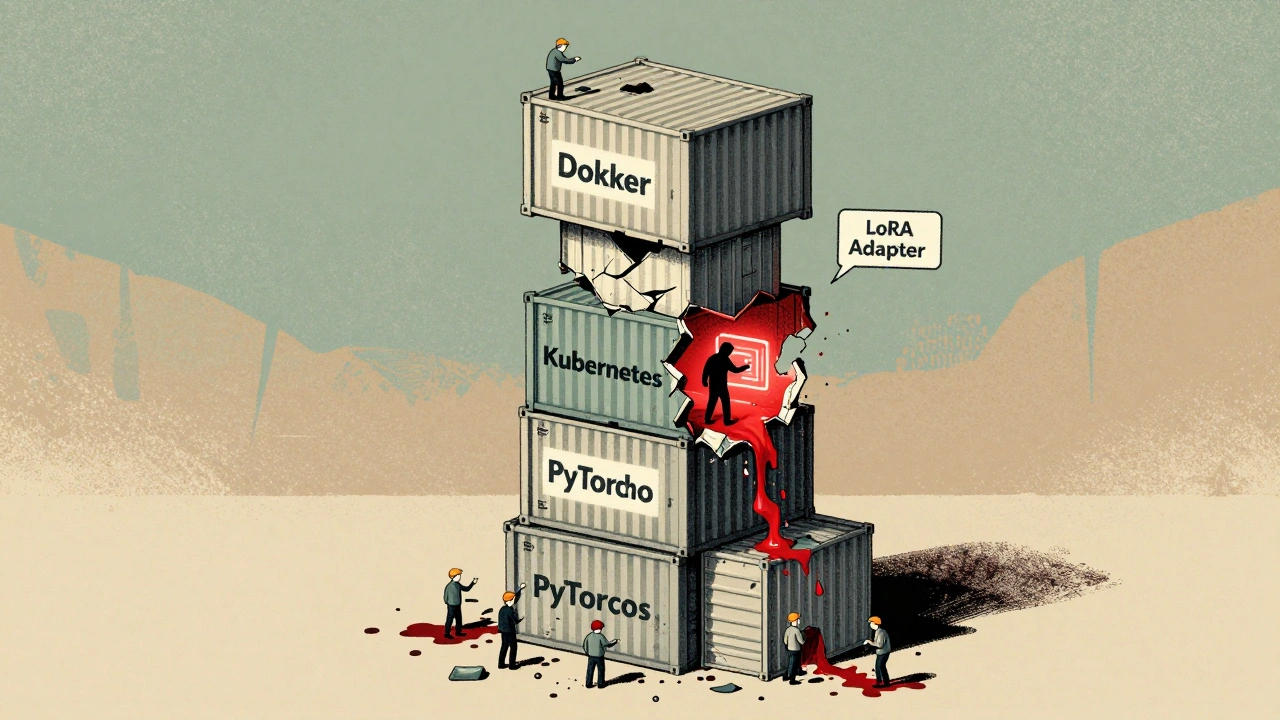
Supply Chain Security for LLM Deployments: Securing Containers, Weights, and Dependencies
LLM supply chain security protects containers, model weights, and dependencies from compromise. Learn how to secure your AI deployments with SBOMs, signed models, and automated scanning to prevent breaches before they happen.
Read More