Multi-Head Attention: How AI Models Focus on Multiple Parts of Data at Once
When you read a sentence like "The cat sat on the mat because it was tired," your brain doesn’t just look at one word at a time. You connect "cat" to "it," and "tired" to why it sat. That’s exactly what multi-head attention, a mechanism in neural networks that lets AI models analyze multiple parts of input data in parallel. Also known as parallel attention, it’s the reason modern AI understands context, not just words. Without it, models would struggle to link "it" to "cat" instead of "mat"—and you’d get nonsense answers from chatbots.
Multi-head attention is a core part of transformers, the architecture behind most large language models today. Instead of one attention head trying to handle everything, it splits the job into multiple heads—each focusing on different relationships. One head might track pronouns, another tracks cause-and-effect, and another picks up on tone or style. Think of it like having a team of editors, each spotting different errors in a document. Together, they catch far more than any single person could. This is why models like GPT and Llama can write coherent essays, answer complex questions, and even code.
It’s not just for text. The same idea works for images, audio, and even code. A model looking at a photo might use one head to spot faces, another to detect colors, and a third to recognize patterns like "sky" or "road." In AI-powered tools, this ability to process multiple signals at once makes responses faster, more accurate, and less likely to hallucinate. And because it scales well with data, it’s the reason companies can train models on millions of documents without losing meaning.
But multi-head attention isn’t magic—it’s math. Each head learns weights that show how important one piece of data is to another. The more data you feed it, the better those weights get. That’s why training large models takes so much power: every head needs to be tuned across billions of connections. That’s also why tools like LLM autoscaling, a technique to adjust computing resources based on real-time demand exist—to handle the load without breaking the bank.
You won’t find multi-head attention in old-school AI. It’s a recent breakthrough that turned AI from pattern-matching machines into context-aware systems. That’s why every post in this collection—whether it’s about RAG, distributed training, or model interoperability—relies on it. If you’re building or using AI today, you’re already using multi-head attention, even if you don’t see it. What you *can* control is how well you use the models that depend on it. Below, you’ll find real guides on how to make those models smarter, cheaper, and safer—without guessing what’s happening under the hood.
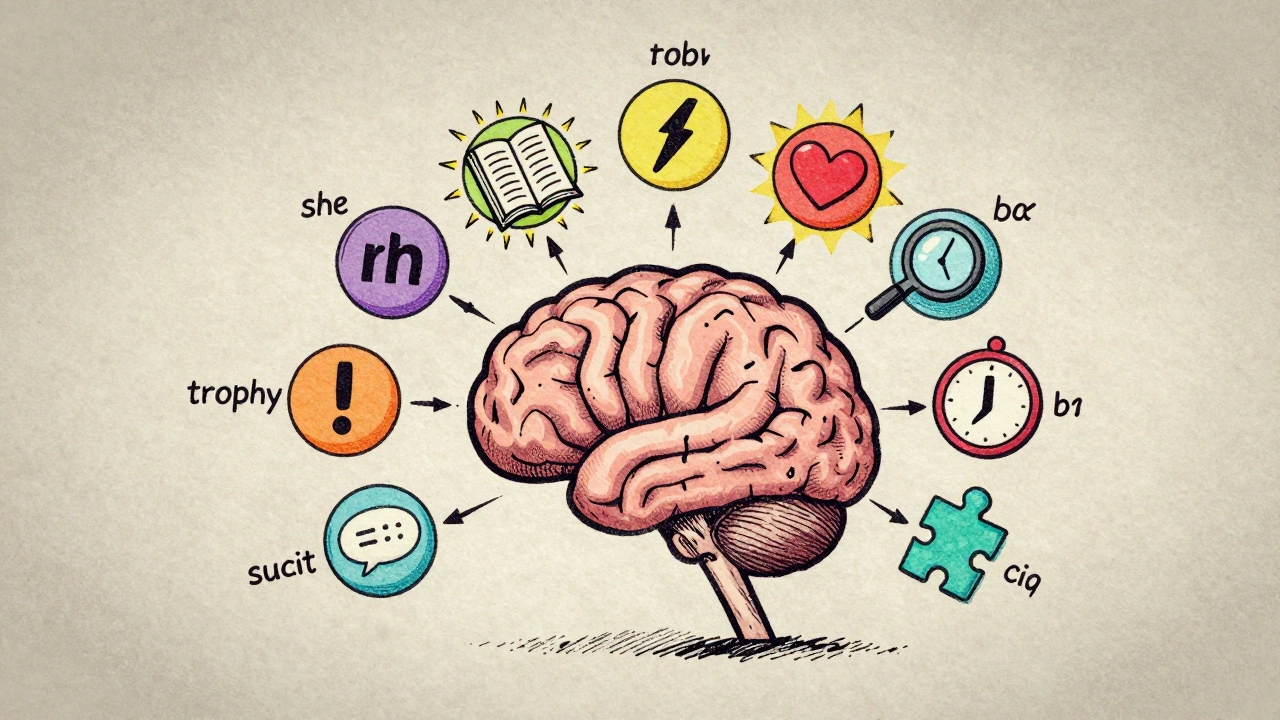
Multi-Head Attention in Large Language Models: How Parallel Perspectives Power Modern AI
Multi-head attention lets large language models understand language from multiple angles at once, enabling breakthroughs in context, grammar, and meaning. Learn how it works, why it dominates AI, and what's next.
Read More