Illinois Deepfake Law: What You Need to Know About AI Fabrication Rules
When someone uses Illinois deepfake law, a state law that bans creating and sharing synthetic media without consent for malicious purposes. Also known as Illinois Biometric Information Privacy Act (BIPA) extension, it was one of the first in the U.S. to treat AI-generated impersonation as a legal violation. This isn’t just about celebrities—it hits anyone whose voice or face gets cloned without permission. If you’re building AI tools in PHP that interact with video, audio, or facial recognition, this law matters.
The law targets deepfake legislation, laws that criminalize non-consensual synthetic media by making it illegal to create or distribute AI-generated content meant to harm, deceive, or defraud. It doesn’t ban all AI video editing—just when it’s used to impersonate someone in a way that could damage their reputation, cause emotional harm, or influence elections. For developers, this means your PHP scripts that generate or modify media need to check for consent signals, especially if they’re used in Illinois or by Illinois residents.
It also ties into generative AI regulation, the growing set of rules controlling how AI models produce realistic human-like content. Illinois doesn’t act alone. Federal agencies and other states are watching. If your app uses OpenAI, Stable Diffusion, or custom LLMs to create synthetic voices or faces, you’re already in the crosshairs of regulators. The Illinois law gives victims a private right to sue—meaning one complaint could cost you more than a server bill.
What does this mean for your code? You can’t just assume "it’s just AI" and move on. You need to build in consent checks, watermarking, and clear disclaimers. If you’re using PHP to process media files, make sure your scripts log who uploaded what, when, and under what terms. Even if your app is hosted outside Illinois, if a user from Chicago uses it, you’re subject to the law.
There’s no federal deepfake law yet, but Illinois set a template. Other states like California and New York are following. And if you’re deploying AI tools in enterprise environments, you’re not just dealing with tech—you’re dealing with legal risk. This is why enterprise data governance and AI compliance tools are no longer optional.
Below, you’ll find real-world guides on how to build AI systems that respect privacy, avoid legal traps, and still deliver value. From how to detect synthetic media to how to design consent flows in PHP apps, these posts help you stay ahead—not just of the tech, but of the law.
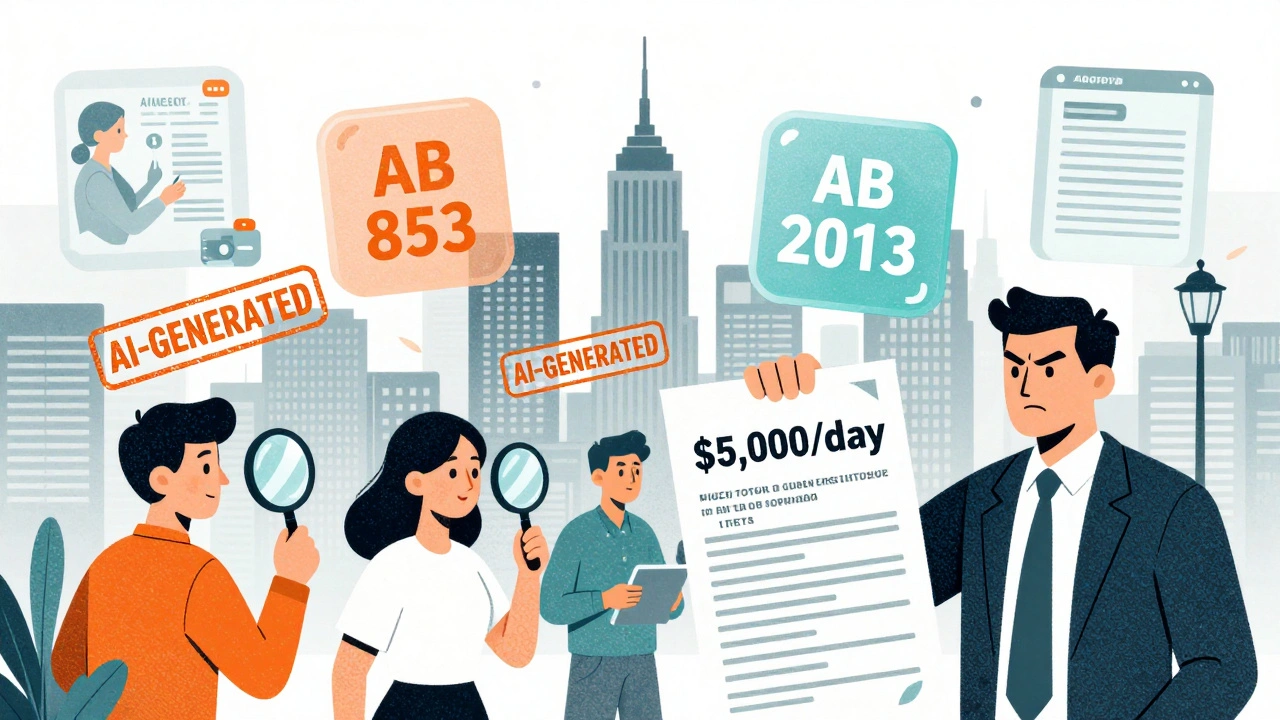
State-Level Generative AI Laws in the United States: California, Colorado, Illinois, and Utah
California leads U.S. state-level AI regulation with strict transparency, consent, and training data laws. Colorado, Illinois, and Utah have narrower rules focused on insurance, deepfakes, and privacy. Businesses must understand state-specific requirements to avoid penalties.
Read More