Cost Controls for Generative AI: Manage Spending Without Sacrificing Performance
When you're running cost controls, systematic methods to manage and reduce expenses in AI systems while maintaining output quality. Also known as AI budgeting, it's not just about cutting corners—it's about making smart trade-offs so your AI stays profitable and scalable. Too many teams launch powerful LLMs without thinking about the bill, only to get shocked when their cloud costs spike. The truth? You don’t need to run the biggest model 24/7 to get great results. Cost controls help you match the right tool to the task—whether that’s switching models, scheduling jobs, or using spot instances.
It’s not just about the cloud. LLM billing, how you’re charged based on token usage, model size, and request volume. Also known as consumption-based pricing, it means your cost rises every time a user asks a question or generates text. If your app has 10,000 users asking 5 questions each, you’re not paying for 50,000 queries—you’re paying for 500,000+ tokens. That adds up fast. Cost controls force you to track usage patterns: Who’s using it? When? How long are their prompts? Tools like autoscaling and prefill queue monitoring help you shut down idle resources before they drain your budget.
And then there’s cloud cost optimization, techniques like spot instances, scheduling, and autoscaling to reduce infrastructure spending without losing reliability. One team cut their AI cloud bill by 65% just by running inference jobs only during off-peak hours and using cheaper GPU instances when accuracy wasn’t critical. Another switched from a single large model to a chain of smaller, specialized ones—saving money while improving response time. Cost controls aren’t about being cheap. They’re about being precise.
Compliance and governance also tie into cost. AI compliance, adhering to legal, ethical, and data privacy rules that can add overhead to AI deployments. If you’re not tracking training data sources or filtering outputs for safety, you risk fines, lawsuits, or brand damage—all of which cost far more than running a slightly more expensive model. Cost controls include these hidden expenses. You can’t ignore them.
What you’ll find here isn’t theory. These are real tactics from teams who’ve been burned by runaway AI bills. You’ll see how to measure what actually matters—token usage, model switching, inference latency, and policy adherence—not just guesses. You’ll learn when to compress a model and when to swap it out entirely. You’ll see how export controls, data governance, and even style transfer prompts can quietly inflate your costs if left unchecked.
Cost controls aren’t a one-time setup. They’re a habit. A daily check. A conversation between your engineering team, finance, and legal department. The posts below show you exactly how to build that habit—without overcomplicating it or sacrificing quality. No fluff. Just what works.
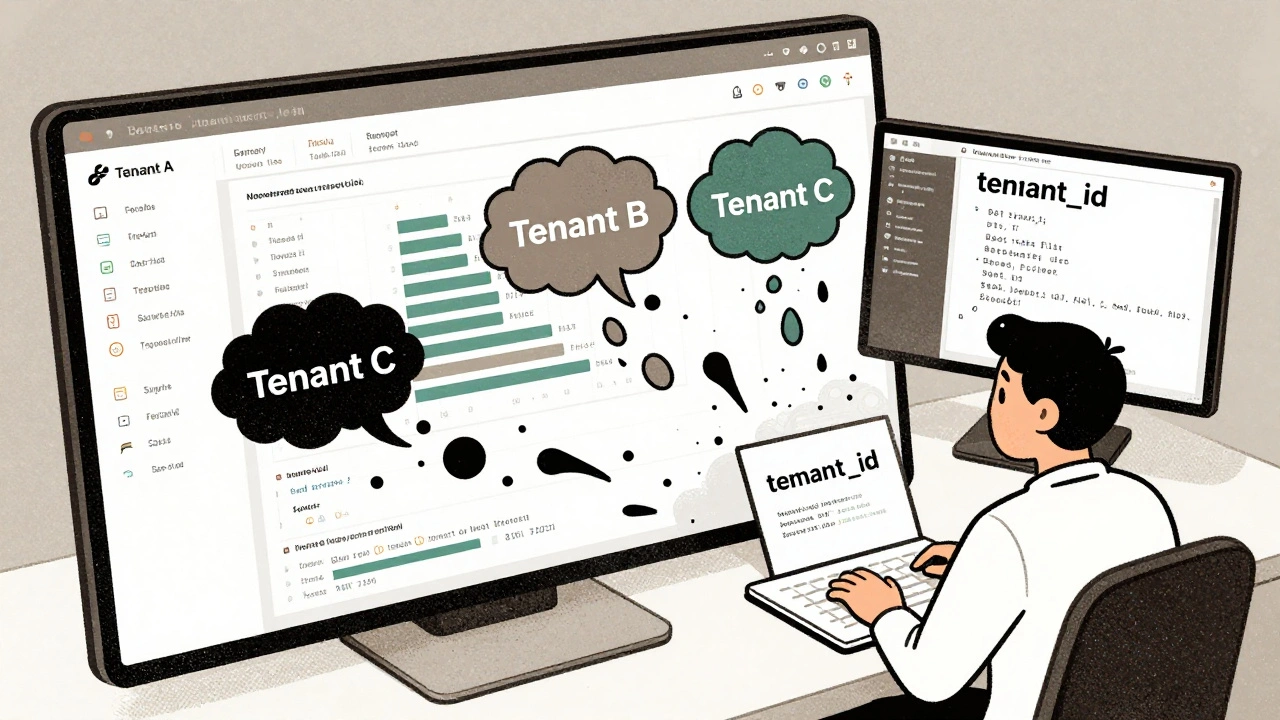
Multi-Tenancy in Vibe-Coded SaaS: How to Get Isolation, Auth, and Cost Controls Right
Learn how to implement secure multi-tenancy in AI-assisted SaaS apps using vibe coding. Avoid data leaks, cost overruns, and authentication failures with proven strategies for isolation, auth, and usage controls.
Read More