AI Tool Integration: Connect LLMs, APIs, and Systems Without Vendor Lock-In
When you build with AI tool integration, the process of connecting large language models, APIs, and internal systems to work together reliably. Also known as AI system orchestration, it’s what turns a cool prototype into a production app that doesn’t break every time a model updates. Most teams start by plugging OpenAI directly into their PHP app—then get stuck. When OpenAI changes pricing, or you need to switch to Claude or Mistral for cost or latency reasons, your whole codebase starts to crumble. That’s not AI integration—that’s dependency.
True AI tool integration, the process of connecting large language models, APIs, and internal systems to work together reliably. Also known as AI system orchestration, it’s what turns a cool prototype into a production app that doesn’t break every time a model updates. means building layers of abstraction. Tools like LiteLLM, an open-source proxy that unifies API calls across OpenAI, Anthropic, Cohere, and local models and LangChain, a framework for chaining prompts, data sources, and tools into automated workflows let you swap models without rewriting your app. You’re not just calling an API—you’re designing a system that adapts. This isn’t theory. Companies using these patterns cut cloud costs by 40% and reduce deployment time by 70% when switching models.
But integration isn’t just about models. It’s about data, security, and scaling. If your AI tool talks to a vector database, you need to manage authentication and rate limits. If it generates content for users, you need moderation filters built in before the response leaves the server. And if you’re serving multiple clients, multi-tenancy becomes critical—each user’s data must stay isolated, even when sharing the same LLM instance. That’s why posts here cover everything from LLM interoperability to confidential computing, from cost optimization to supply chain security. You won’t find fluff here. Just real patterns used by teams shipping AI apps in production.
Below, you’ll find deep dives into how to abstract providers, handle errors without crashing, reduce costs with autoscaling, and keep your code maintainable as AI tools evolve. Whether you’re using PHP to glue together OpenAI, Hugging Face, or your own fine-tuned model, these posts show you how to build something that lasts.
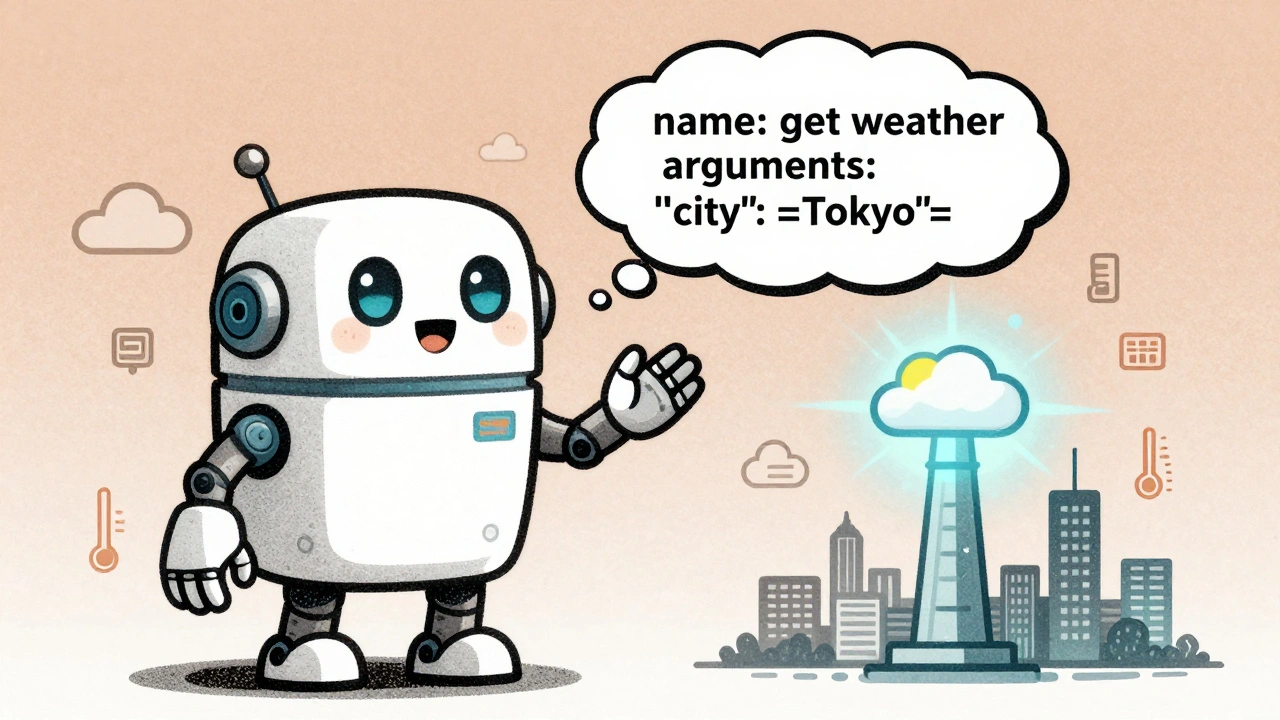
Tool Use with Large Language Models: Function Calling and External APIs Explained
Function calling lets large language models interact with real tools and APIs to access live data, reducing hallucinations and improving accuracy. Learn how it works, how major models compare, and how to build it safely.
Read More